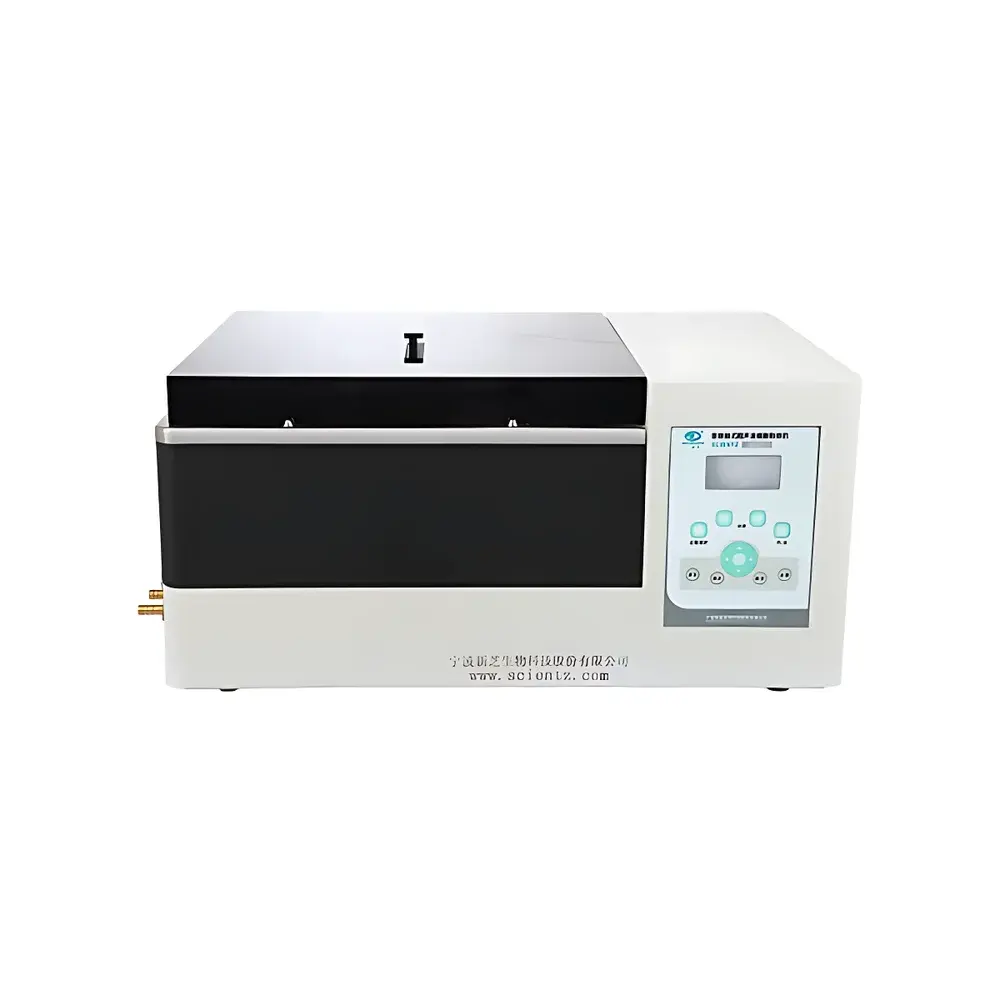
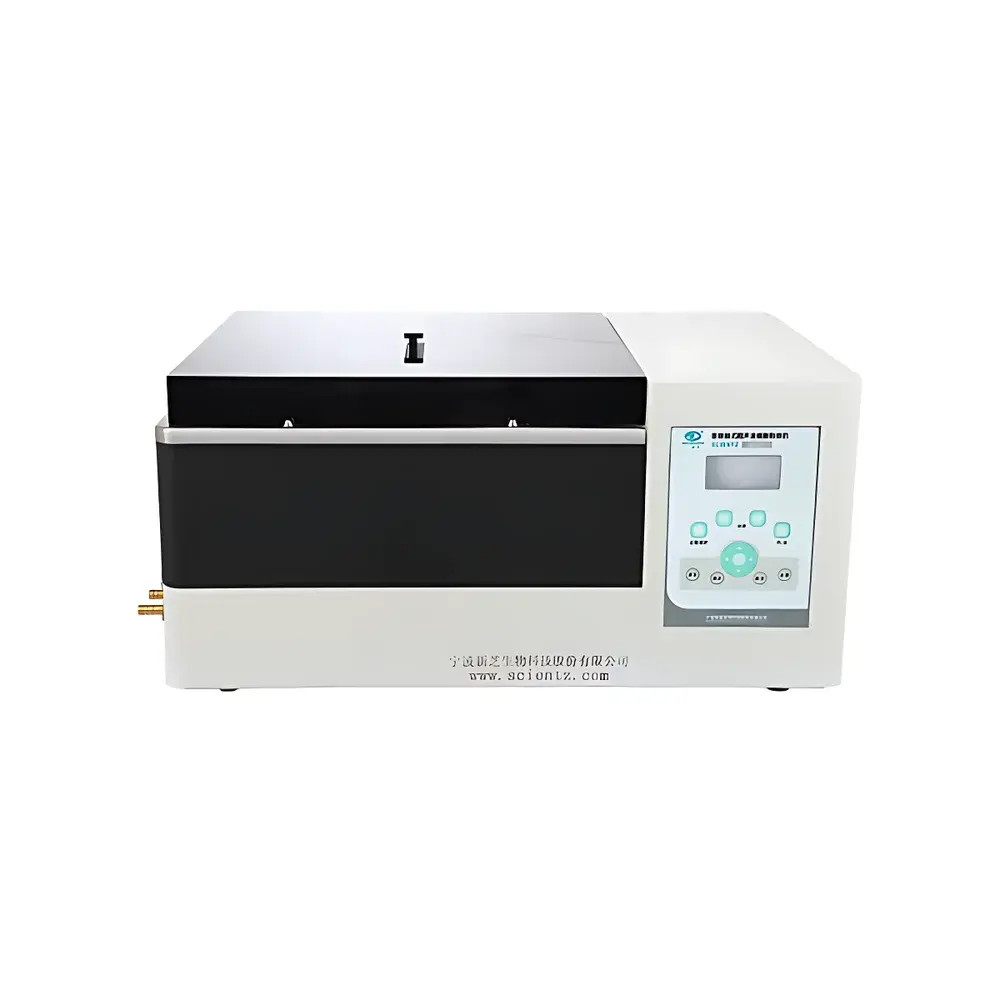
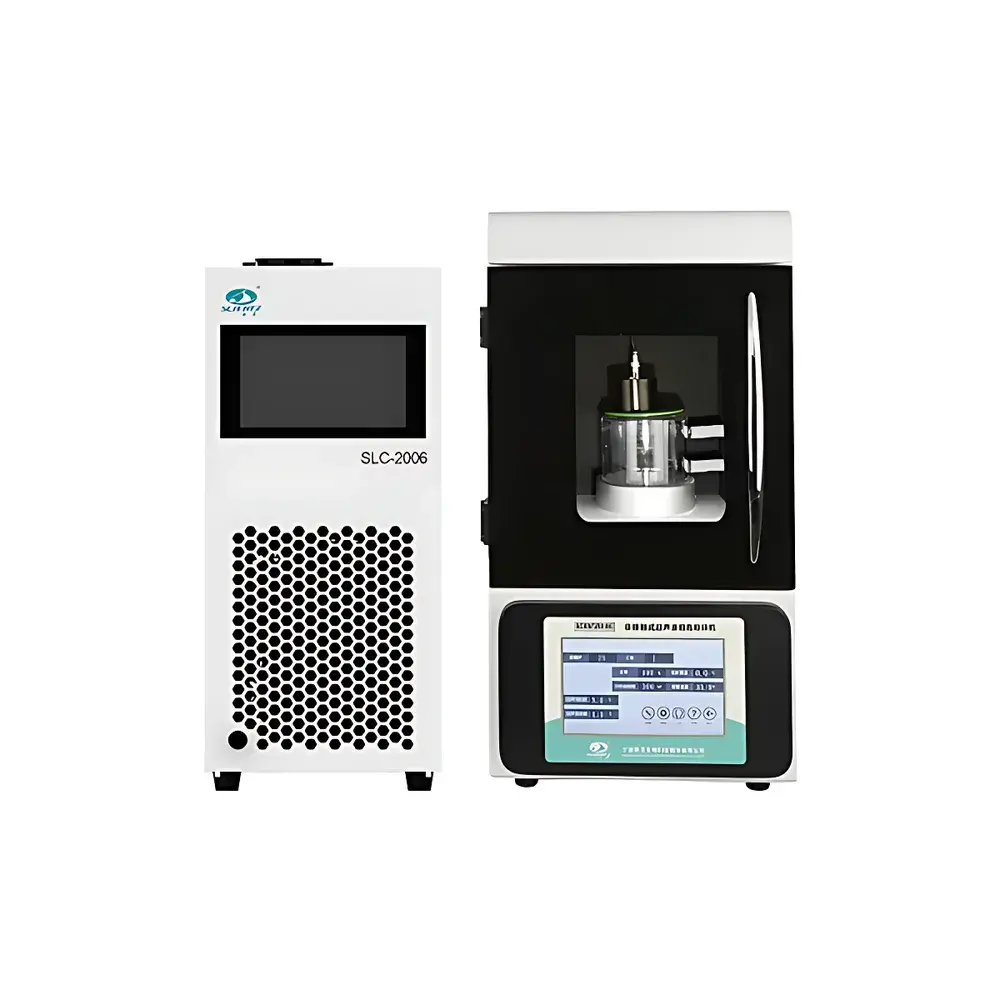
Ningbo Scientz SCIENTZ-08-II Non-Contact High-Throughput Ultrasonic Cell Disruptor
| Brand | Ningbo Scientz |
|---|---|
| Origin | Zhejiang, China |
| Manufacturer Type | Direct Manufacturer |
| Instrument Type | Non-Contact Ultrasonic Cell Disruptor |
| Ultrasonic Power Output | 1800 W |
| Operating Frequency | 40 kHz |
| Sample Volume Capacity | 1.5 L (total) |
| Throughput | 8 or 16 samples per run |
| Cooling Interface | Integrated recirculating chiller port (4–10 °C operational range) |
| Compliance | Designed for GLP-compliant workflows |
Overview
The Ningbo Scientz SCIENTZ-08-II is a non-contact, high-throughput ultrasonic cell disruptor engineered for reproducible, scalable, and contamination-free lysis of biological samples under controlled thermal conditions. Unlike probe-based sonicators that introduce mechanical wear, sample carryover, and localized overheating, the SCIENTZ-08-II employs cup-horn (bath-type) ultrasonication—where acoustic energy is transmitted through the walls of sealed microcentrifuge tubes or vials immersed in a temperature-regulated water bath. This configuration leverages cavitation physics: at 40 kHz, high-intensity acoustic waves generate transient microbubbles in the liquid phase; their rapid collapse produces localized shockwaves, shear forces (>10⁶ Pa), and microstreaming velocities exceeding 100 m/s—sufficient to fracture cellular membranes, nuclear envelopes, and subcellular organelles without denaturing labile proteins or shearing genomic DNA beyond intended fragment sizes. Its design specifically supports chromatin immunoprecipitation (ChIP), ATAC-seq, CUT&RUN, and other epigenomic assays requiring uniform, low-shear nuclear lysis and chromatin fragmentation.
Key Features
- Non-contact operation: Eliminates probe contamination, cross-sample carryover, and particulate shedding—critical for biosafety-level 2+ pathogens (e.g., Mycobacterium tuberculosis, lentiviral vectors) and precious clinical specimens.
- High-throughput capability: Simultaneous processing of up to 16 × 1.5 mL tubes or 8 × 15 mL conical tubes on a motorized rotating rack; rotation ensures isotropic energy distribution across all sample positions.
- Thermally stabilized workflow: Integrated cooling port interfaces with external recirculating chillers (e.g., Julabo F25 HL) to maintain bath temperature between 4–10 °C—preventing thermal degradation of epitopes, histone modifications, and RNA-binding proteins during extended sonication cycles.
- Precision parameter control: Digital interface enables independent adjustment of amplitude (10–100%), pulse duration (0.1–9.9 s ON/OFF), total cycle time (1–999 s), and number of cycles—enabling method transfer and SOP compliance.
- Low-volume compatibility: Validated for consistent lysis of samples as small as 5 µL in PCR tubes or 200 µL in LoBind Eppendorf tubes—minimizing reagent consumption and maximizing yield from rare primary cells or patient-derived xenografts.
Sample Compatibility & Compliance
The SCIENTZ-08-II accommodates standard polypropylene and glass containers—including 0.2 mL PCR strips, 1.5 mL microcentrifuge tubes, 15 mL conical tubes, and custom cuvettes—without modification. It has been validated for lysis of Gram-negative (E. coli, Pseudomonas), Gram-positive (Bacillus subtilis), yeast (S. cerevisiae), mammalian suspension (HEK293, Jurkat), and adherent cell lines (HeLa, MCF-7) following standardized protocols aligned with ASTM E2912-13 (Standard Guide for Ultrasonic Processing of Biological Samples). Its closed-system architecture meets biosafety requirements for BSL-2 laboratories per CDC/NIH guidelines and supports audit-ready documentation under FDA 21 CFR Part 11 when paired with compliant electronic lab notebooks (ELNs).
Software & Data Management
While the SCIENTZ-08-II operates via embedded firmware with local parameter storage (up to 20 user-defined methods), full traceability requires integration with third-party laboratory information management systems (LIMS) or ELNs. All operational logs—including date/time stamps, amplitude settings, cycle counts, and chiller setpoints—can be exported via USB for inclusion in GLP/GMP batch records. Method validation reports may be generated per ISO/IEC 17025 clause 7.7 to demonstrate measurement uncertainty and inter-instrument comparability across multi-site research consortia.
Applications
- Chromatin shearing for ChIP-seq, CUT&Tag, and HiChIP
- Nuclear extraction and subcellular fractionation
- Membrane protein solubilization and complex stabilization
- Preparation of single-cell suspensions from tissue homogenates
- Emulsification of lipid nanoparticles (LNPs) and nanovesicles
- Fragmentation of cfDNA and FFPE-derived DNA for NGS library prep
- Activation of inert catalysts and sonochemical synthesis in biocatalysis
FAQ
What is the maximum recommended sample volume per tube?
The system supports individual tubes containing 5 µL to 15 mL; optimal lysis efficiency is achieved at 200–800 µL per 1.5 mL tube.
Can the SCIENTZ-08-II be used for RNA extraction workflows?
Yes—when operated at ≤4 °C with RNase-free consumables and appropriate lysis buffers (e.g., QIAzol), it delivers intact total RNA suitable for RIN >9.0 on Agilent Bioanalyzer.
Is calibration traceable to national standards?
Ultrasonic power output is factory-calibrated using ASTM E2912-compliant calorimetric methods; annual recalibration services are available through authorized Scientz service centers.
Does the instrument comply with electromagnetic compatibility (EMC) directives?
It meets IEC 61326-1:2013 Class B emission limits and EN 61000-4-2/3/4/6 immunity requirements for laboratory environments.
How is energy uniformity verified across multiple positions?
Scientz provides a spatial mapping report (per ISO/IEC 17025 Annex A.3) documenting acoustic intensity variance < ±5% across all 16 tube positions using calibrated hydrophones.