
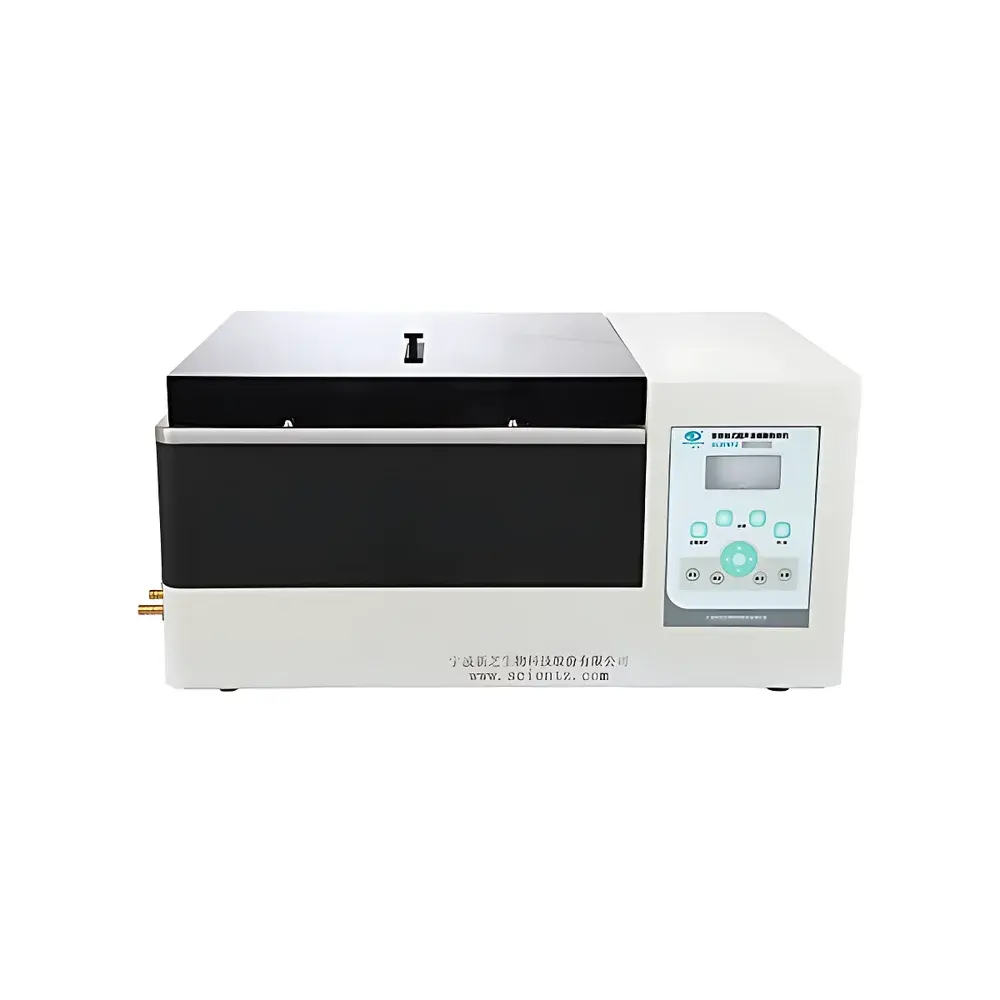
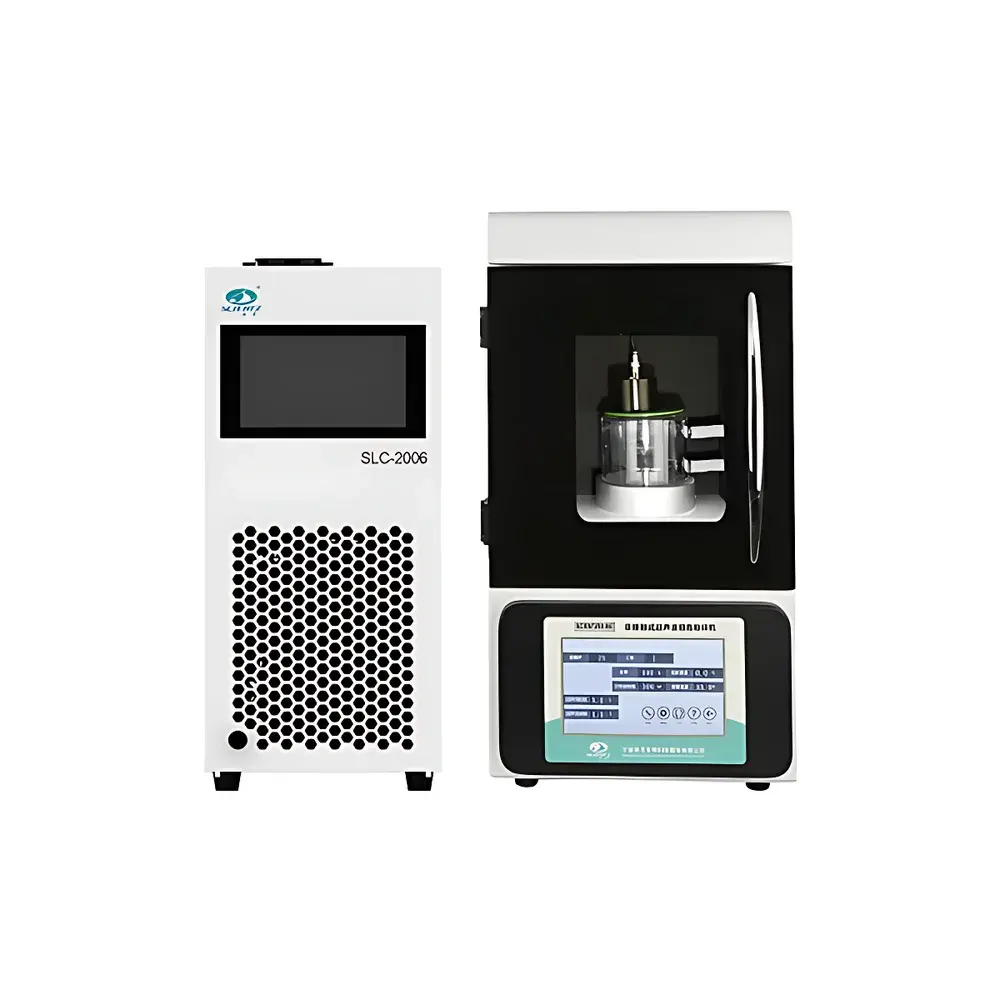
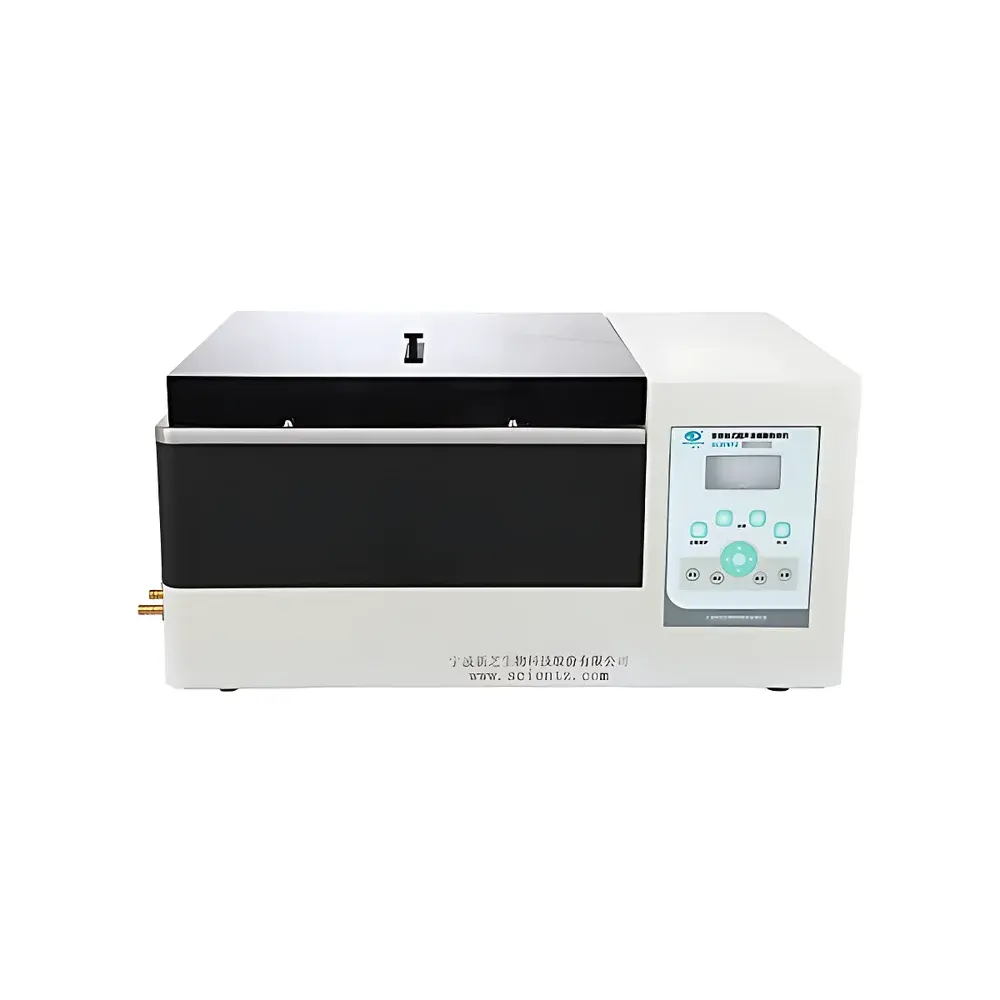
Ningbo Scientz SCIENTZ-08-III Non-Contact High-Throughput Ultrasonic Cell Disruptor
| Brand | Ningbo Scientz |
|---|---|
| Origin | Zhejiang, China |
| Manufacturer Type | Direct Manufacturer |
| Instrument Type | Non-Contact Ultrasonic Cell Disruptor |
| Ultrasonic Power | 2200 W |
| Operating Frequency | 40 kHz |
| Sample Volume Capacity | 1–2 mL, 5 mL, or 10–15 mL per tube |
| Throughput | 17, 20, or 32 samples per run |
| Cooling System | Integrated recirculating chiller-compatible jacket (operating range: 4–10 °C) |
| Sample Container Compatibility | Standard microcentrifuge tubes (1.5/2.0 mL), PCR strips, and custom cryovials |
| Control Interface | Digital touchscreen with programmable protocols (time, amplitude, pulse mode, cycle count) |
| Safety Certification | CE-compliant design |
Overview
The Ningbo Scientz SCIENTZ-08-III is a non-contact, high-throughput ultrasonic cell disruptor engineered for reproducible, contamination-free lysis of biological samples under precisely controlled thermal conditions. Unlike conventional probe-type sonicators that introduce mechanical wear, aerosol generation, and cross-contamination risks, the SCIENTZ-08-III employs a cup-horn transducer architecture: ultrasonic energy is transmitted through the walls of sealed sample vessels immersed in a temperature-regulated water bath. This design leverages acoustic cavitation—localized formation and violent collapse of microbubbles in liquid media—to generate intense shear forces, microstreaming, and shockwaves capable of disrupting cellular membranes, chromatin complexes, and subcellular organelles without direct physical contact. Its primary application domain includes chromatin immunoprecipitation (ChIP), native chromatin shearing for ATAC-seq and CUT&RUN, bacterial lysis for protein extraction, and gentle yet efficient disruption of sensitive mammalian cells and exosomes. The system is purpose-built for laboratories requiring GLP-aligned workflow integrity, minimal sample handling, and strict biosafety compliance—particularly when processing pathogenic agents such as Mycobacterium tuberculosis or enveloped viruses.
Key Features
- Non-contact, closed-vessel operation: Eliminates probe erosion, metal ion leaching, and aerosol-mediated biohazard exposure—critical for BSL-2+ workflows and precious low-volume samples.
- Programmable multi-sample processing: Supports parallel processing of 17, 20, or 32 samples using standardized rotor configurations, reducing inter-run variability and increasing throughput consistency.
- Integrated thermal management: Compatible with external recirculating chillers to maintain sample temperatures between 4 °C and 10 °C throughout sonication—preserving epitope integrity in ChIP-grade chromatin and preventing protease activation.
- Uniform energy distribution: Motorized rotating sample holder ensures continuous 360° orbital motion during sonication, mitigating standing-wave nodes and improving spatial homogeneity of cavitation intensity across all tubes.
- Digital protocol control: Touchscreen interface enables precise adjustment of amplitude (10–100%), pulse duration (0.1–9.9 s), cycle count (1–99), and total treatment time—facilitating method transfer and SOP documentation.
- Low-volume compatibility: Validated for effective lysis down to 5 µL input volumes in 0.2-mL PCR tubes, minimizing reagent consumption and enabling single-cell or limited-biopsy applications.
Sample Compatibility & Compliance
The SCIENTZ-08-III accommodates standard polypropylene microcentrifuge tubes (1.5 mL and 2.0 mL), 8-well PCR strips, and custom-fitted cryovials—no adapters required. It is routinely used for Gram-positive and Gram-negative bacteria (e.g., E. coli, B. subtilis), yeast (S. cerevisiae), cultured mammalian cells (HEK293, HeLa), plant protoplasts, and isolated nuclei. All operational parameters comply with ISO 13485-aligned manufacturing practices. While not FDA-cleared as a medical device, its design supports 21 CFR Part 11–ready data logging when paired with Scientz’s optional PC-based software (SCIENTZ-UltraControl v3.2), including electronic signatures, audit trails, and user-access-level configuration. The instrument meets essential requirements of the EU Machinery Directive 2006/42/EC and Electromagnetic Compatibility Directive 2014/30/EU.
Software & Data Management
The SCIENTZ-08-III operates autonomously via its embedded controller but integrates with Scientz’s SCIENTZ-UltraControl software for advanced method development, remote monitoring, and regulatory-compliant recordkeeping. The software enables batch protocol creation, real-time power and temperature logging, automatic report generation (PDF/CSV), and export of timestamped metadata—including operator ID, lot numbers, and environmental conditions. Audit trail functionality records all parameter changes, start/stop events, and system alerts with immutable timestamps—supporting internal QA audits and external inspections under GLP or GMP frameworks. Data files are stored locally on removable USB drives or networked NAS devices, ensuring full traceability without cloud dependency.
Applications
- Chromatin fragmentation for ChIP-seq, CUT&Tag, and HiChIP assays
- Preparation of native nuclear extracts for epigenetic profiling
- High-yield lysis of Mycobacterium spp. and other acid-fast organisms
- Exosome isolation and membrane protein solubilization
- Shearing of genomic DNA for long-read sequencing library prep
- Emulsification and nano-dispersion of liposomal formulations
- Cellular homogenization for metabolomics and lipidomics workflows
FAQ
What distinguishes the SCIENTZ-08-III from probe-based sonicators?
It uses indirect ultrasonic transmission through vessel walls—eliminating probe contamination, inconsistent tip wear, and operator-dependent positioning errors.
Can it be validated for regulated environments (e.g., clinical labs)?
Yes—when configured with UltraControl software and connected to a calibrated chiller, it supports IQ/OQ documentation packages compliant with ISO/IEC 17025 and CLIA requirements.
Is the cooling system built-in or external?
The unit features a jacketed cup-horn assembly designed for connection to an external recirculating chiller; no internal compressor is included.
Does it support variable frequency operation?
No—it operates at a fixed resonant frequency of 40 kHz optimized for broad-spectrum cavitation efficiency across aqueous biological matrices.
How is sample rotation synchronized with ultrasonic pulsing?
Rotation speed (10–30 rpm) and pulse timing are independently adjustable; synchronization is managed via firmware to ensure consistent angular displacement per sonication burst.



