
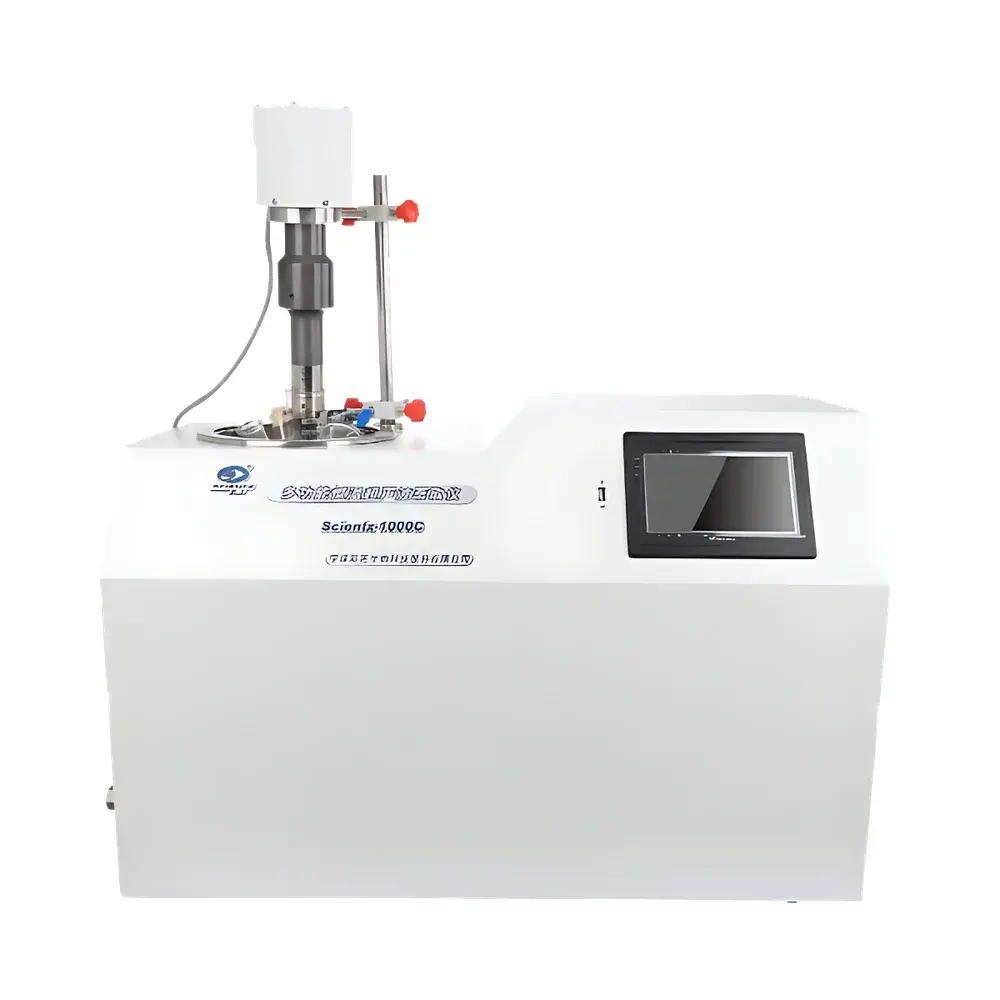
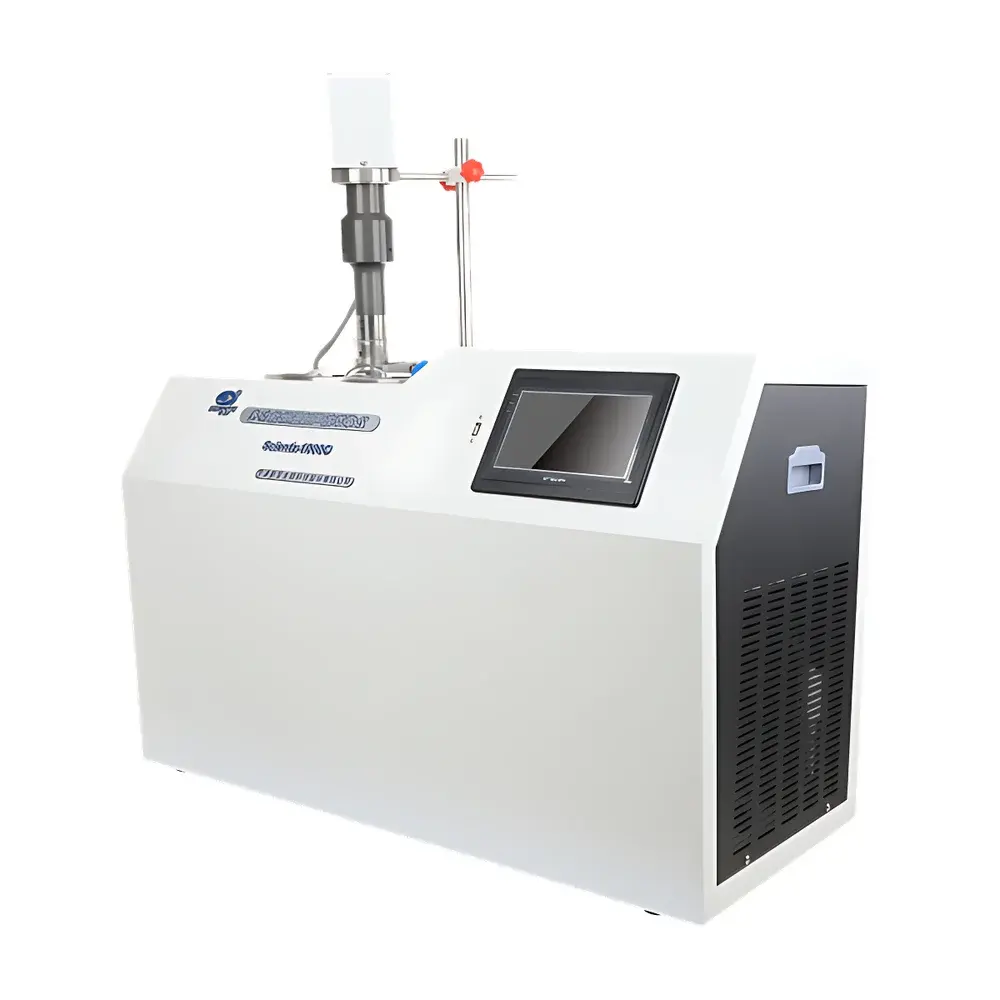
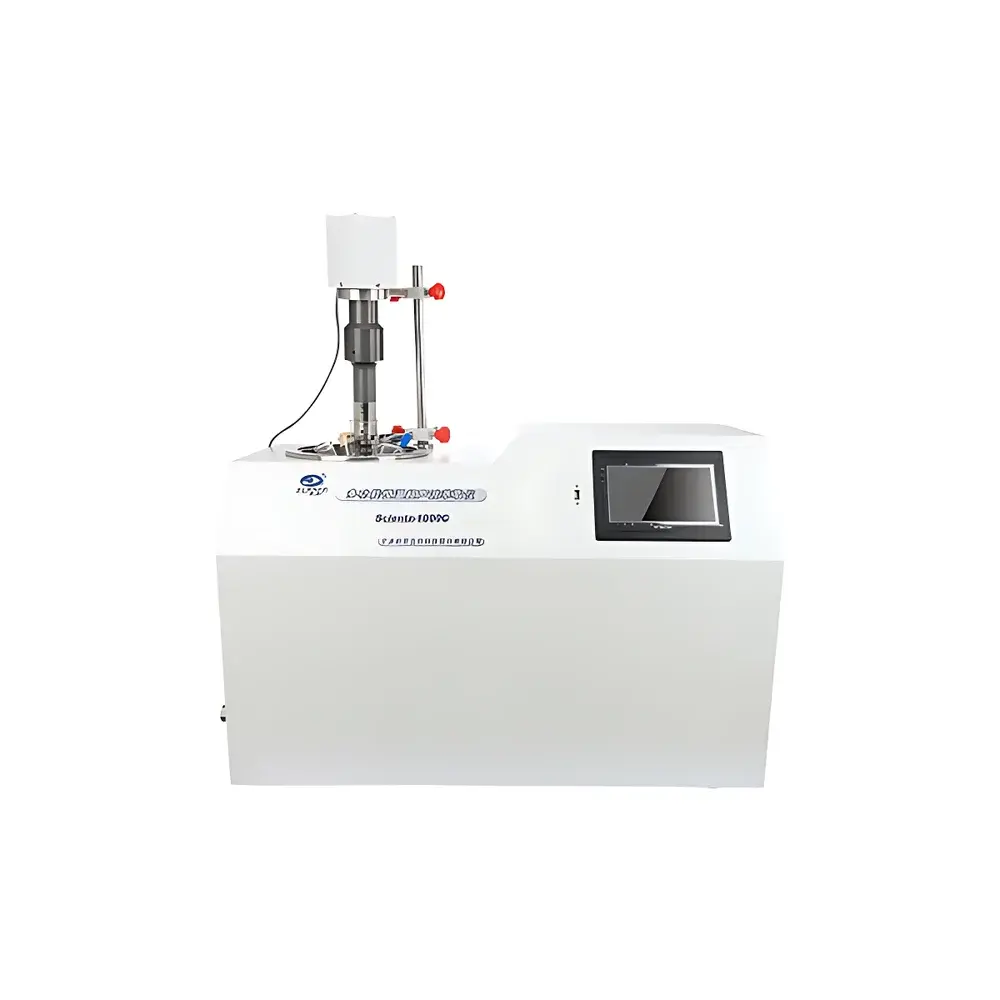
Ningbo Scientz SCIENTZ-1000C Intelligent Temperature-Controlled Ultrasonic Extractor
| Brand | Ningbo Scientz |
|---|---|
| Origin | Zhejiang, China |
| Manufacturer Type | Direct Manufacturer |
| Country of Origin | China |
| Model | SCIENTZ-1000C |
| Ultrasonic Power | 1800 W |
| Ultrasonic Frequency | 20 ± 1 kHz |
| Heating Power (Max) | 2000 W |
| Temperature Range | 0–99 °C |
| Chamber Capacity | 1000 mL |
Overview
The Ningbo Scientz SCIENTZ-1000C Intelligent Temperature-Controlled Ultrasonic Extractor is a laboratory-scale extraction system engineered for precision, reproducibility, and operational flexibility in solid–liquid and liquid–liquid extraction processes. It operates on the physical principle of acoustic cavitation—where high-intensity ultrasonic waves (20 ± 1 kHz) generate transient microbubbles in the solvent medium; their rapid collapse produces localized extreme conditions (up to ~5000 K and ~1000 atm), enhancing mass transfer, cell wall disruption, and solute desorption. Unlike thermal or mechanical agitation alone, this non-thermal energy input accelerates molecular diffusion while preserving thermolabile compounds. Integrated with a PID-controlled heating/cooling system and real-time temperature feedback, the SCIENTZ-1000C enables precise thermal management across the full 0–99 °C range—critical for optimizing yield and selectivity in sensitive extractions such as phytochemical isolation or nanomaterial synthesis.
Key Features
- 1800 W adjustable ultrasonic power output with automatic frequency tracking to maintain optimal resonance under varying load and solvent conditions
- Dual-mode operation: independent or simultaneous activation of ultrasonication and temperature control (0–99 °C)
- Robust stainless-steel ultrasonic horn and titanium alloy transducer assembly designed for continuous duty and chemical resistance
- Intelligent digital interface with programmable protocols—including time, power, temperature setpoints, and ramp profiles
- Self-diagnostic safety system with audible/visual alerts for overtemperature, dry-run, or transducer impedance mismatch
- Modular reaction chamber accommodating standard 1000 mL jacketed glass vessels with multiple neck ports for inert gas purging, reflux condensation, or reagent addition
Sample Compatibility & Compliance
The SCIENTZ-1000C supports a broad spectrum of sample matrices—including plant tissues, microbial biomass, soil suspensions, polymer composites, and colloidal precursors—without requiring organic co-solvents in many cases. Its design adheres to general laboratory safety standards (IEC 61010-1) and incorporates features aligned with Good Laboratory Practice (GLP) workflows, including parameter logging, user-accessible calibration records, and traceable operation history. While not certified for GMP manufacturing environments, its stable temperature control and repeatable ultrasonic delivery support method validation per ISO 17025-accredited laboratories conducting extractive method development for pharmacopoeial applications (e.g., USP , EP 2.8.23).
Software & Data Management
The instrument includes an embedded microcontroller-based operating system with non-volatile memory for storing up to 50 user-defined extraction protocols. All active parameters—including real-time temperature, applied power, elapsed time, and fault logs—are timestamped and exportable via USB interface in CSV format. No proprietary cloud platform or remote access functionality is included; data integrity is maintained through local storage only—ensuring compliance with institutional data sovereignty policies and facilitating audit-ready documentation for internal QA/QC review.
Applications
- Accelerated extraction of bioactive alkaloids, flavonoids, and polysaccharides from botanical materials under controlled thermal conditions
- Preparation of TiO₂, ZnO, and Fe₃O₄ nanoparticle dispersions with improved colloidal stability and reduced agglomeration
- Residue analysis: extraction of organohalogen compounds (e.g., PBDEs, PCBs) from textile fibers and environmental samples prior to GC-MS quantification
- Enhanced leaching of soluble salts (e.g., Na⁺, K⁺, NO₃⁻) from agricultural soils for ion chromatography-based nutrient profiling
- Facilitation of heterogeneous catalysis reactions where ultrasonic mixing improves catalyst–substrate contact in low-viscosity media
FAQ
What is the maximum recommended duty cycle for continuous operation?
For sustained reliability and transducer longevity, continuous ultrasonication should not exceed 60 minutes per cycle, followed by a minimum 10-minute cooling interval.
Can the SCIENTZ-1000C be used with corrosive solvents such as concentrated HCl or HF?
No. The standard titanium horn and stainless-steel bath are incompatible with hydrofluoric acid and strongly oxidizing acids. For aggressive chemistries, consult Scientz’s chemical compatibility guide and consider optional PTFE-coated accessories.
Is temperature calibration traceable to NIST standards?
The built-in PT100 sensor is factory-calibrated; users may perform field verification using a certified reference thermometer, though formal NIST-traceable recalibration requires third-party metrology service.
Does the device meet FDA 21 CFR Part 11 requirements for electronic records?
No. The SCIENTZ-1000C does not include electronic signature capability, audit trail generation, or role-based access control required under Part 11; it is intended for research and development—not regulated production environments.
What is the typical cavitation intensity distribution within the 1000 mL chamber?
Cavitation energy is highest within 2–4 cm of the horn tip and decays exponentially with distance; optimal results require sample homogenization via magnetic stirring or vessel rotation during extended runs.



