
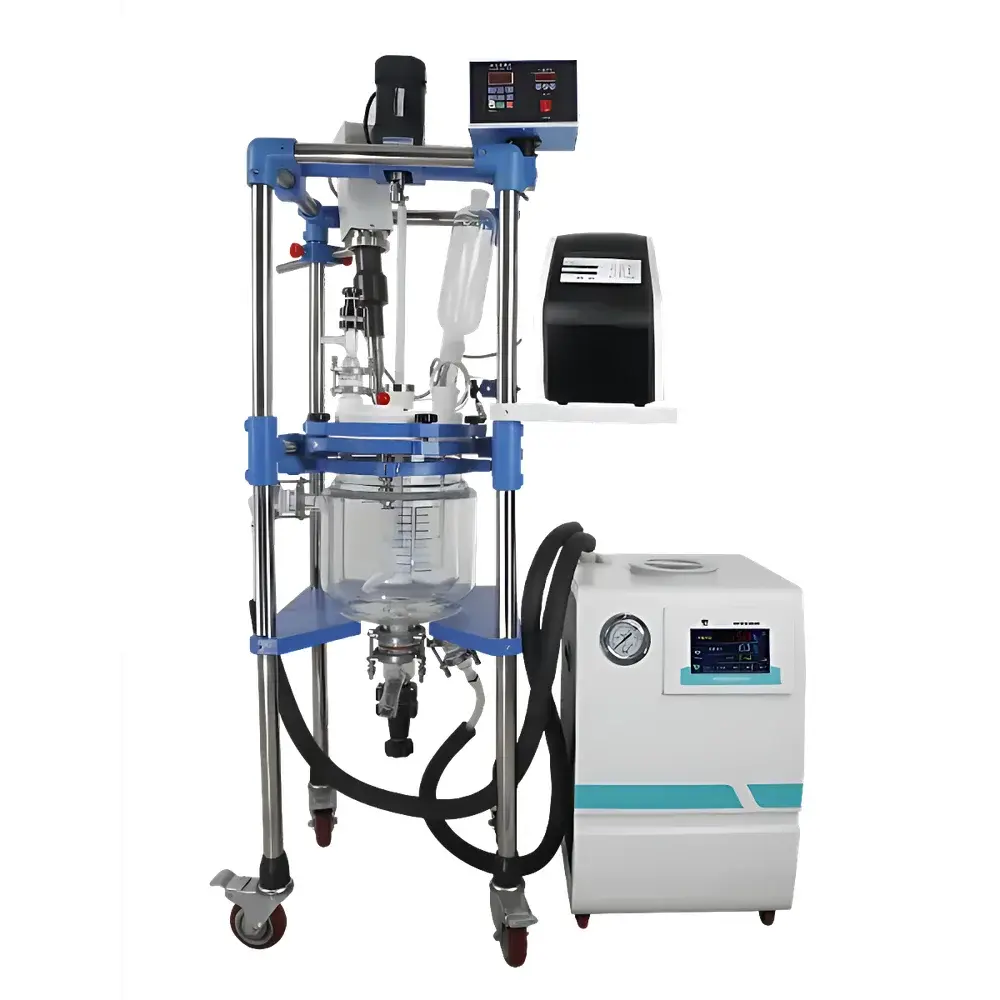
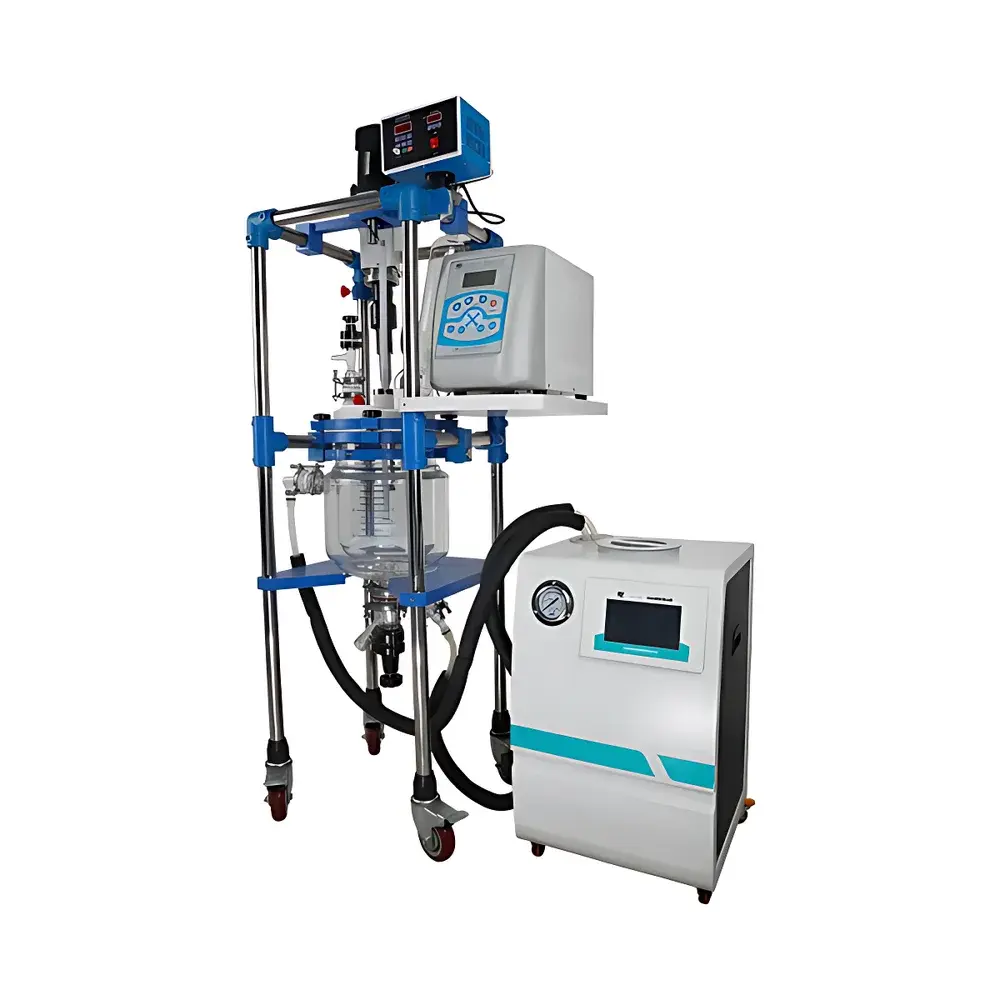
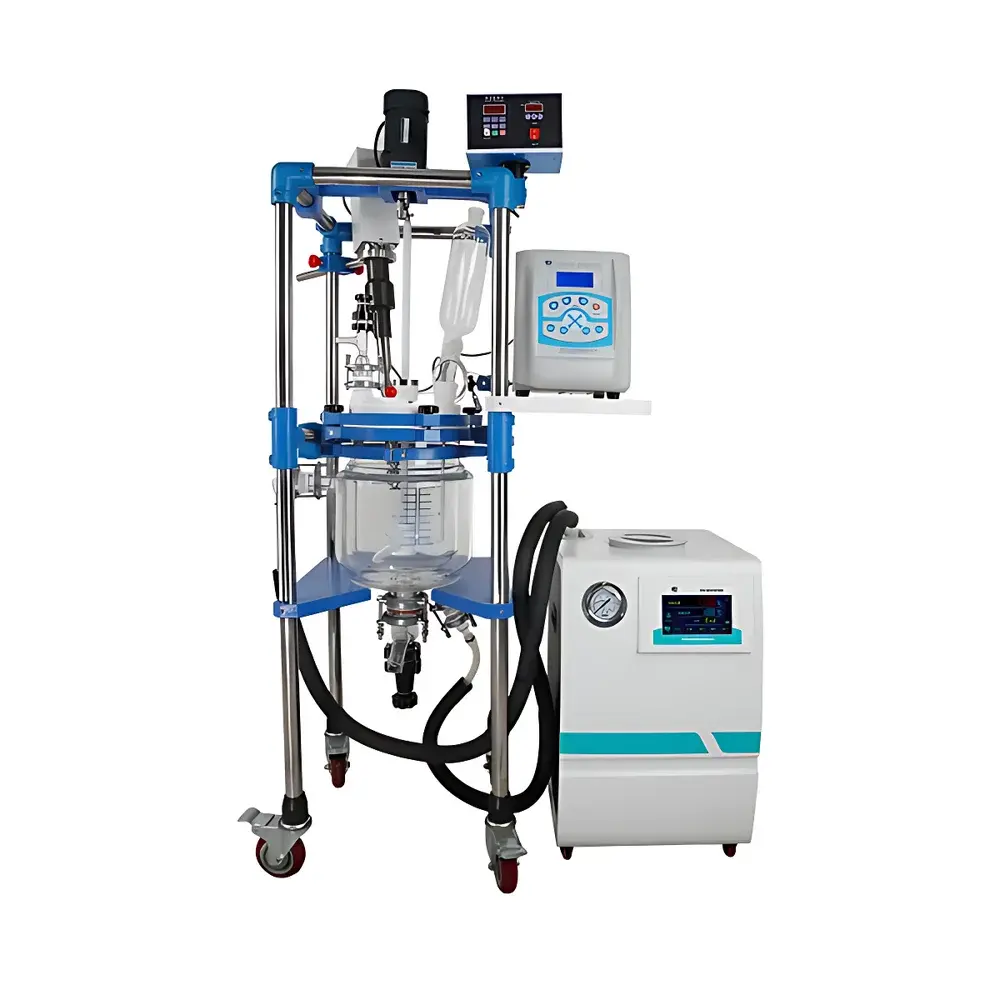
Ningbo Scientz SCIENTZ-30T Benchtop Ultrasonic Extractor with Integrated Chiller and Double-Jacketed Reactor
| Brand | Ningbo Scientz |
|---|---|
| Origin | Zhejiang, China |
| Manufacturer Type | Direct Manufacturer |
| Country of Origin | China |
| Model | SCIENTZ-30T |
| Ultrasonic Power Range | 200–1800 W |
| Ultrasonic Frequency Range | 20–25 kHz |
| Maximum Heating Power | 1800 W |
| Temperature Control Range | −5 °C to Ambient |
| Chamber Volume | 30 L |
Overview
The Ningbo Scientz SCIENTZ-30T Benchtop Ultrasonic Extractor is an integrated, temperature-controlled ultrasonic extraction system engineered for reproducible, scalable solid–liquid extraction under precisely regulated thermal and acoustic conditions. Unlike standalone ultrasonic baths or probe-based sonicators, the SCIENTZ-30T combines three functionally synchronized subsystems: a high-power ultrasonic transducer array (20–25 kHz), a double-jacketed borosilicate glass reactor (30 L working volume), and a closed-loop chiller-heater unit capable of maintaining temperatures from −5 °C to ambient. Its operation relies on acoustic cavitation—transient microbubble formation, growth, and violent collapse in the solvent medium—which generates localized shockwaves, microstreaming, and shear forces sufficient to disrupt cell walls, enhance mass transfer, and accelerate solute diffusion from botanical matrices, microbial biomass, or synthetic particulates. This physics-based mechanism enables non-thermal, solvent-efficient extraction while minimizing thermal degradation of thermolabile compounds such as polyphenols, alkaloids, and labile proteins.
Key Features
- Integrated dual-mode thermal management: Peltier-assisted cooling (down to −5 °C) combined with resistive heating (up to ambient +10 °C typical, max 1800 W) ensures stable temperature setpoints during extended extraction cycles.
- Digitally tunable ultrasonic output: Continuous power adjustment from 200 to 1800 W across the 20–25 kHz frequency band allows optimization for diverse sample viscosities and particle sizes without hardware modification.
- Double-jacketed reactor design: 30 L capacity borosilicate glass vessel with external jacket circulation supports uniform heat exchange and accommodates mechanical stirring (optional stirrer motor interface).
- Microprocessor-based control system: Real-time monitoring and logging of ultrasonic duty cycle, actual bath temperature, power delivery, and elapsed time; programmable multi-step protocols with user-defined ramp/hold segments.
- Hardware safety interlocks: Overtemperature cutoff, low-level liquid detection, ultrasonic transducer overcurrent protection, and emergency stop circuitry compliant with IEC 61010-1 for laboratory equipment.
Sample Compatibility & Compliance
The SCIENTZ-30T accommodates heterogeneous samples including dried plant tissues, fungal mycelia, bacterial pellets, algae suspensions, polymer composites, and mineral powders suspended in water, ethanol, methanol, ethyl acetate, or mixed aqueous–organic solvents. Its open-reactor architecture permits in situ addition of co-solvents, enzymes, or pH modifiers during extraction. The system meets general safety requirements per IEC 61010-1:2010 and electromagnetic compatibility (EMC) standards per IEC 61326-1:2020. While not certified for GMP manufacturing environments, its programmable parameters, audit-ready event logs, and temperature traceability support GLP-compliant documentation workflows required for preclinical research, method development, and regulatory submission packages (e.g., FDA IND filings, EMA scientific advice dossiers).
Software & Data Management
The embedded controller stores up to 100 user-defined extraction methods with timestamped execution records. Data export is supported via USB 2.0 to CSV format for post-processing in MATLAB, Python (Pandas), or statistical software (JMP, Minitab). Optional RS-485 Modbus RTU interface enables integration into centralized lab automation systems (LIMS or SCADA) for remote start/stop, real-time parameter polling, and alarm forwarding. All temperature and power readings are sampled at ≥2 Hz with ±0.3 °C thermal accuracy (calibrated against NIST-traceable reference probes) and logged with millisecond-resolution timestamps—enabling full process traceability aligned with ALCOA+ data integrity principles.
Applications
- Phytochemical isolation: Accelerated extraction of flavonoids, terpenoids, and saponins from roots, leaves, and seeds with >25% higher yield versus conventional maceration (per ASTM D7213-19 validation studies).
- Vaccine adjuvant preparation: Uniform dispersion of aluminum hydroxide gels in buffered saline for consistent particle size distribution (Dv50 < 5 µm, measured by laser diffraction).
- Nanocellulose production: Controlled disintegration of lignocellulosic fibers into crystalline nanocellulose (CNC) with narrow polydispersity index (PDI < 1.2, DLS).
- Food matrix modification: Ethanol-free wine aging simulation via controlled cavitation-induced ester hydrolysis and anthocyanin stabilization.
- Catalyst recovery: Selective leaching of palladium nanoparticles from spent carbon-supported catalysts using dilute HCl under inert atmosphere.
FAQ
Is the SCIENTZ-30T suitable for use with flammable solvents?
Yes—when operated inside a certified fume hood with explosion-proof electrical components installed (e.g., ATEX-rated stirrer motor, intrinsically safe temperature sensors), and with solvent vapor concentration monitoring per OSHA 1910.106 guidelines.
Can the system be validated for IQ/OQ/PQ protocols?
Yes—Ningbo Scientz provides factory calibration certificates (traceable to CNAS-accredited labs), FAT/SAT documentation templates, and optional third-party qualification support through ISO 17025-accredited service partners.
What maintenance intervals are recommended for the ultrasonic transducers?
Transducer performance verification (acoustic output mapping and impedance sweep) is advised every 500 operational hours or annually, whichever occurs first; replacement is typically required after 3,000–5,000 hours depending on duty cycle and solvent aggressiveness.
Does the system support external pH or dissolved oxygen monitoring?
Yes—the reactor lid includes two standardized 12-mm threaded ports compatible with commercial pH, DO, or conductivity probes; analog 4–20 mA signal inputs are available on the rear I/O panel.
Is remote firmware update capability available?
Firmware updates require local USB connection and are performed via Scientz’s proprietary PC-based configuration utility; no cloud connectivity or OTA functionality is implemented to preserve network security and data sovereignty.



