
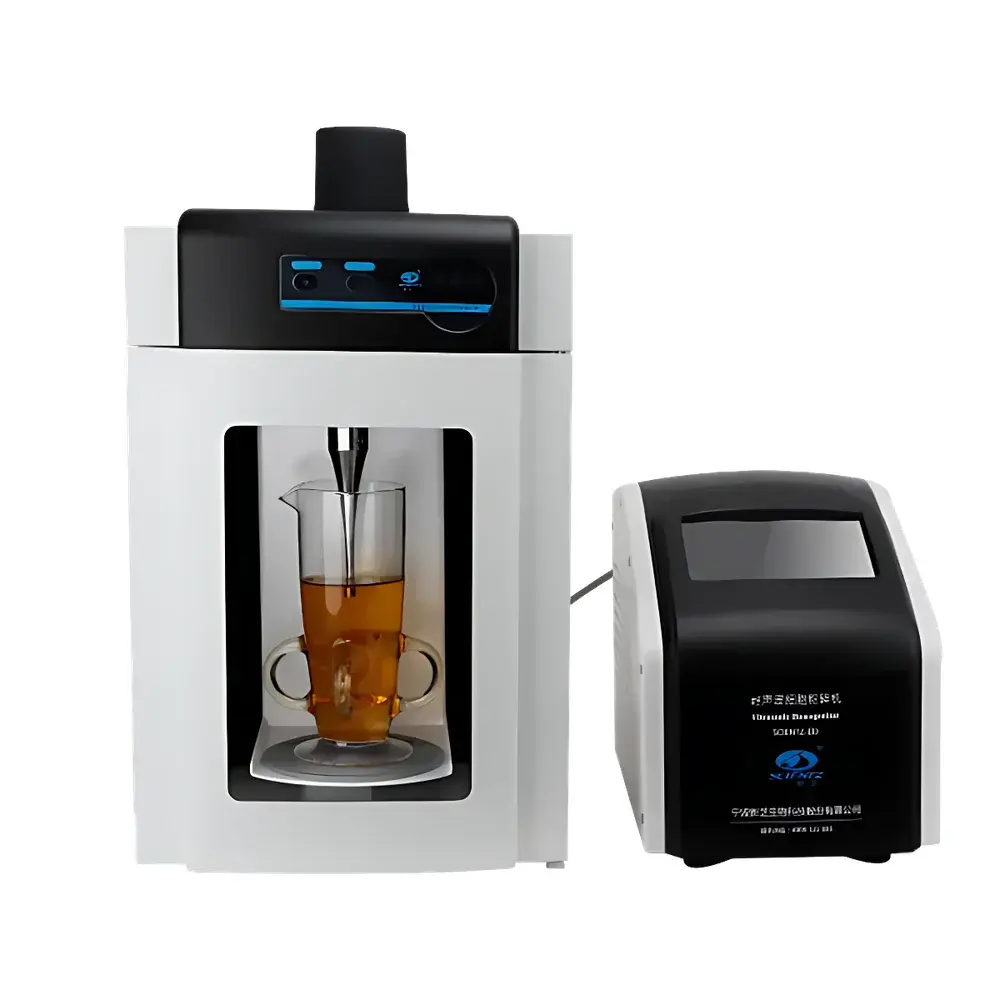
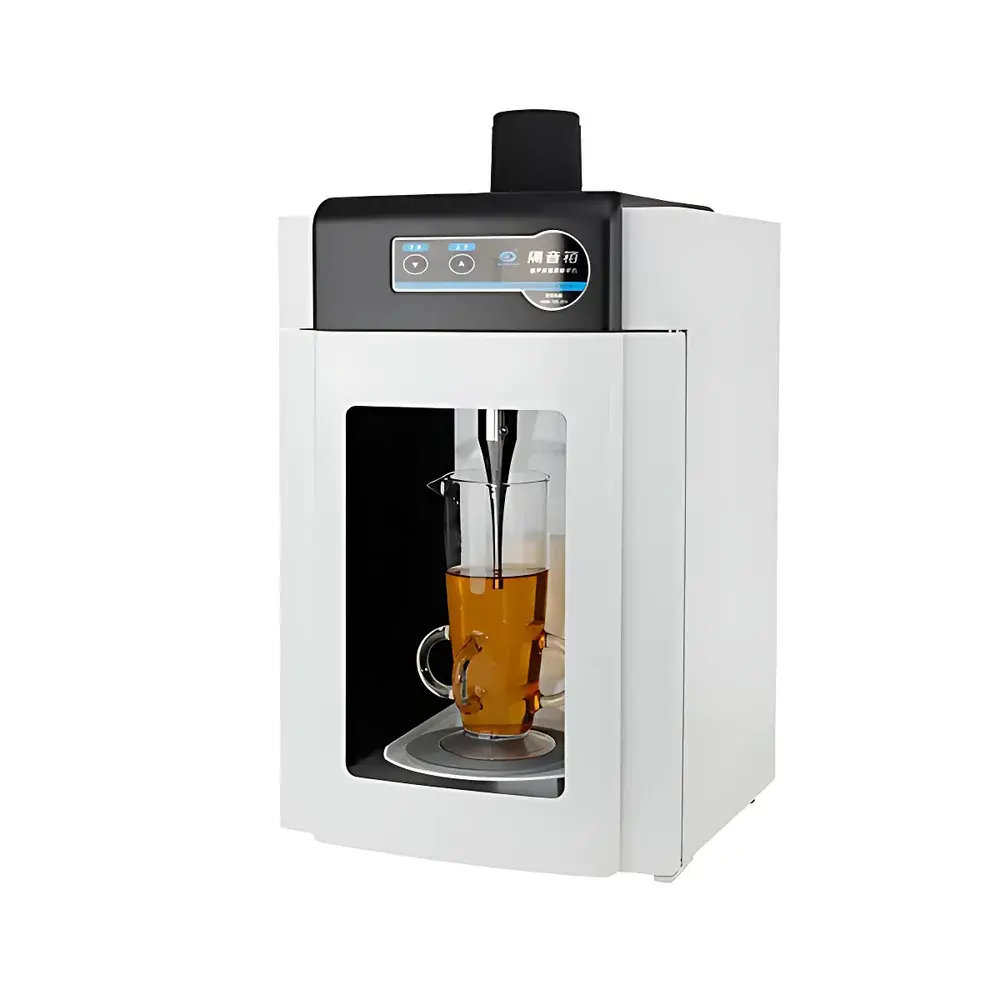
Ningbo Scientz Scientz-IID Ultrasonic Cell Disruptor
| Brand | Ningbo Scientz |
|---|---|
| Origin | Zhejiang, China |
| Manufacturer Type | Direct Manufacturer |
| Country of Origin | China |
| Model | Scientz-IID |
| Instrument Type | Ultrasonic Cell Disruptor |
| Temperature Range | 0–99.9 °C |
| Operating Frequency | 20–25 kHz |
| Ultrasonic Power Output | 20–1000 W |
| Sample Volume Capacity | 100 μL to 600 mL |
| Sample Throughput | Single-sample processing per cycle |
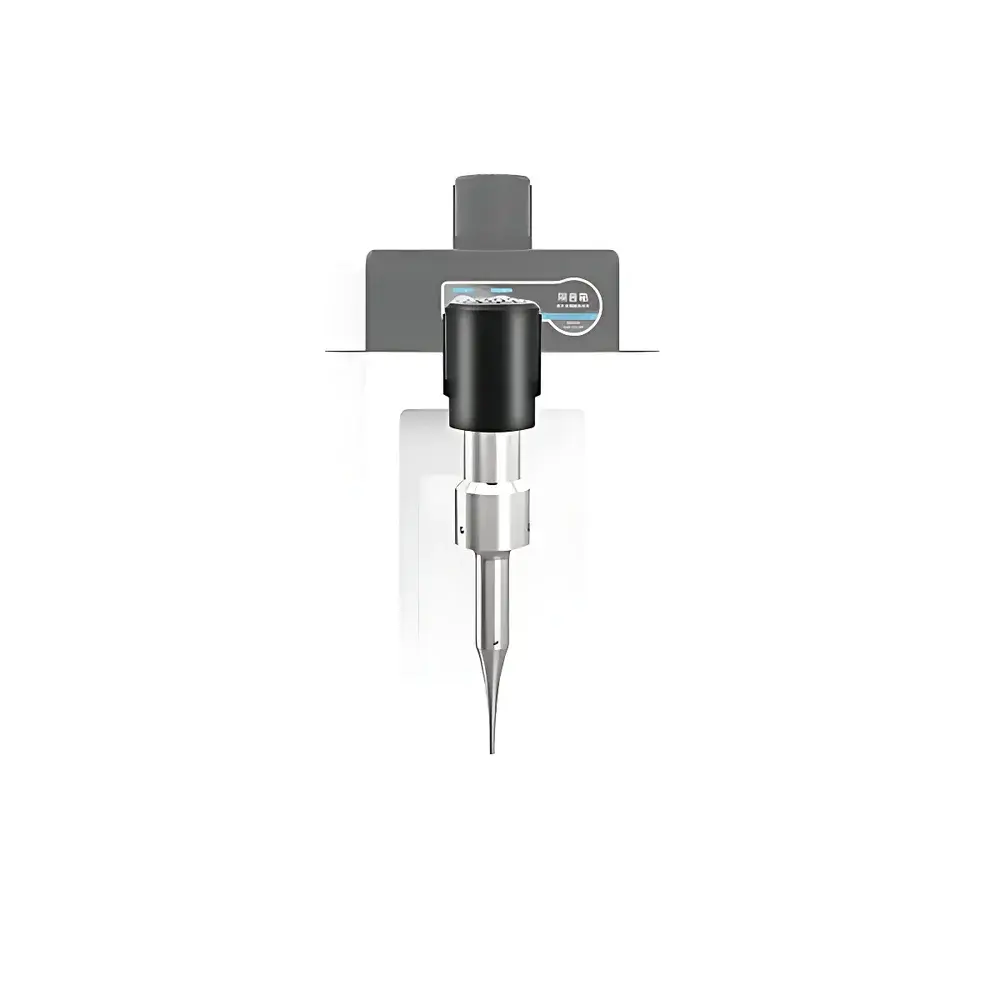
| Transducer Material | Titanium Alloy |
Overview
The Ningbo Scientz Scientz-IID Ultrasonic Cell Disruptor is an engineered benchtop system designed for controlled mechanical lysis of biological and material samples via high-intensity ultrasonic cavitation. It operates on the physical principle of acoustic cavitation—where rapid pressure fluctuations generated by 20–25 kHz ultrasonic waves induce transient microbubble formation, growth, and violent collapse in liquid media. This collapse produces localized shockwaves, microstreaming, and shear forces exceeding 104 g acceleration, sufficient to disrupt cell membranes, bacterial walls, viral envelopes, and subcellular organelles without significant thermal denaturation when properly temperature-regulated. The instrument integrates a titanium-alloy transducer and horn assembly, delivering superior energy conversion efficiency (>85% electroacoustic coupling), minimal harmonic distortion, and extended operational stability under repetitive or prolonged duty cycles—critical for reproducible nucleic acid shearing (e.g., chromatin fragmentation for ChIP-seq) or consistent nanoparticle dispersion.
Key Features
- Titanium-alloy transducer and probe assembly ensures high power transfer efficiency, corrosion resistance, and long-term dimensional stability under continuous ultrasonication
- Precise digital control of ultrasonic power (20–1000 W, 1 W resolution) and time (0.1–999 s, with 0.1 s increment), supporting both continuous and pulsed (on/off interval) modes for thermal management
- Integrated Peltier-assisted temperature regulation (0–99.9 °C) with real-time feedback loop, enabling thermally sensitive applications such as native protein extraction or RNA integrity preservation
- Programmable memory for up to 20 user-defined protocols—including power ramping, multi-step pulsing, and temperature-triggered shutdown—ensuring method traceability and inter-laboratory reproducibility
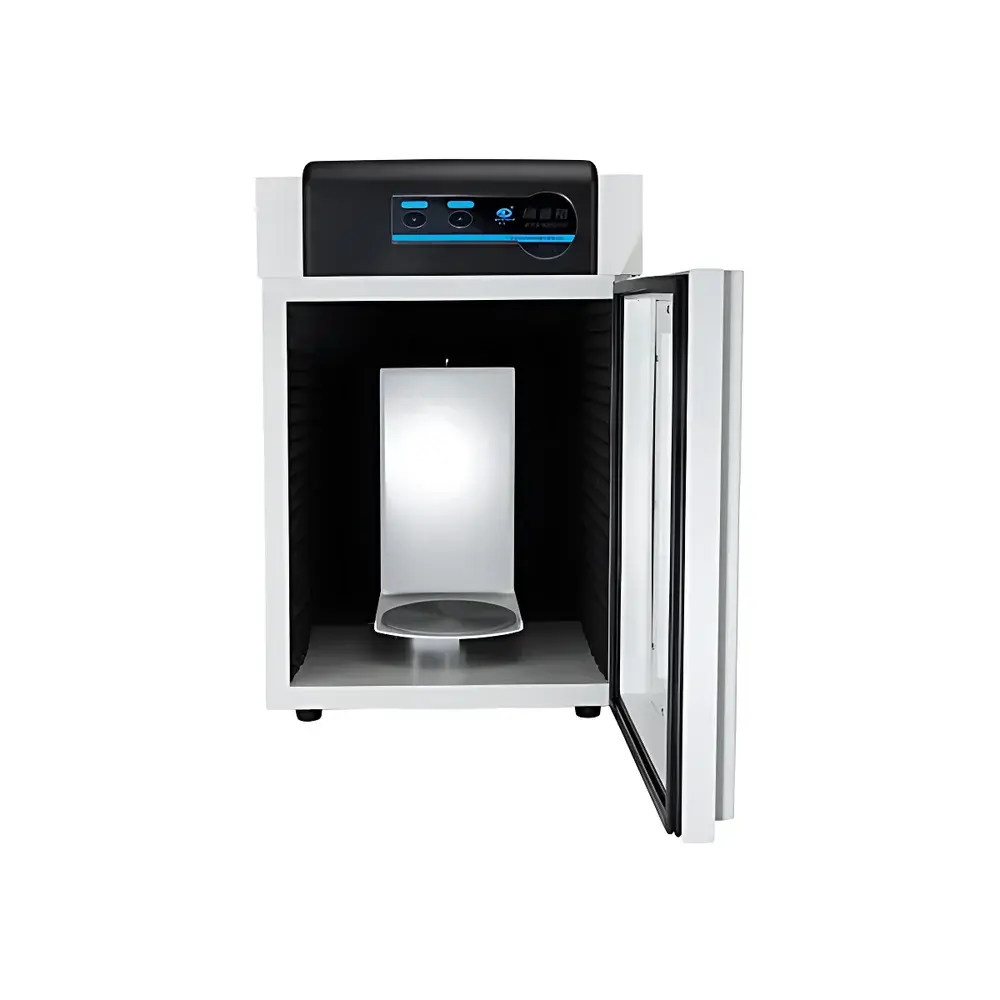
- Comprehensive safety architecture: over-temperature cutoff, overload protection, lid-interlock sensor, and audible/visual alarm for abnormal transducer impedance or cooling failure
Sample Compatibility & Compliance
The Scientz-IID accommodates sample volumes from 100 μL (microcentrifuge tube configuration) to 600 mL (beaker or jacketed vessel), supporting standard labware including Eppendorf tubes, glass vials, flat-bottom flasks, and custom immersion wells. It is routinely validated for use in ISO/IEC 17025-accredited laboratories performing cell lysis per ASTM D7348 (standard guide for ultrasonic disruption of microbial cells), and supports GLP-compliant workflows through audit-trail-capable protocol logging. While not FDA 21 CFR Part 11–certified out-of-the-box, its programmable parameter locking and timestamped operation logs align with basic data integrity requirements for preclinical bioprocessing and analytical development.
Software & Data Management
Operation is managed via an intuitive front-panel LCD interface with tactile keypad navigation; no external PC or proprietary software is required for routine use. All executed parameters—including actual power delivered (monitored via impedance-sensing circuitry), elapsed time, peak temperature, and pulse duty cycle—are logged internally with UTC timestamps and stored in non-volatile memory. Export is supported via USB port (CSV format) for integration into LIMS or ELN systems. Protocol files may be backed up externally and reloaded, facilitating SOP standardization across multiple instruments in core facilities or QC labs.
Applications
- Preparation of fragmented genomic DNA for next-generation sequencing library construction (ChIP-seq, ATAC-seq, CUT&RUN)
- Lysis of Gram-positive bacteria (e.g., Bacillus subtilis, Staphylococcus aureus) and yeast (Saccharomyces cerevisiae) for proteomic analysis
- Dispersion and deagglomeration of carbon nanotubes, graphene oxide, and rare-earth oxide nanoparticles in aqueous or organic solvents
- Accelerated solvent extraction of bioactive compounds from herbal matrices (e.g., ginsenosides, curcuminoids) under controlled thermal conditions
- Mechanical homogenization of soil, sediment, or mineral suspensions for geochemical speciation studies
- Ultrasonic aging of alcoholic beverages via controlled free-radical generation and esterification kinetics modulation
FAQ
Is the Scientz-IID suitable for cryogenic lysis?
No—it is not designed for sub-zero operation; the minimum setpoint is 0 °C. For cryo-lysis, dry ice–cooled baths or dedicated cryo-probes are recommended.
Can the instrument process multiple samples simultaneously?
It is configured for single-sample processing per cycle. High-throughput alternatives require multi-probe arrays or sonication baths, which offer lower energy density but greater parallelism.
What maintenance is required for the titanium horn?
Regular visual inspection for pitting or erosion at the tip is advised; cleaning with ethanol or mild detergent followed by distilled water rinse prevents residue buildup that may impair cavitation efficiency.
Does the system comply with electromagnetic compatibility (EMC) standards for laboratory environments?
Yes—it meets IEC 61326-1:2013 Class A emission limits and immunity requirements for industrial scientific equipment, minimizing interference with adjacent analytical instrumentation.
How is ultrasonic power calibrated and verified?
Power output is factory-calibrated using calorimetric methods per ISO 20487:2018. Users may perform periodic verification using a calibrated calorimeter or standardized aluminum foil erosion test (ASTM E1536).





