
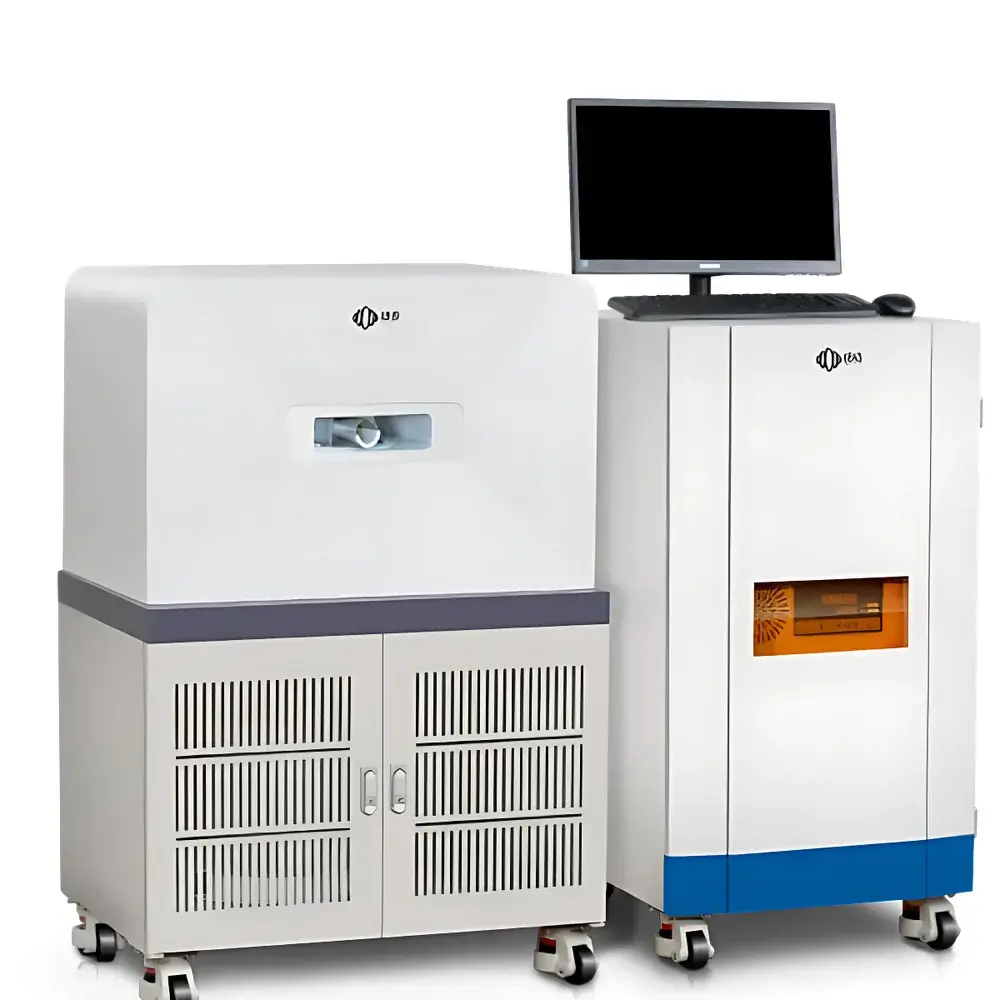
NIUMAG MesoMR Benchtop Low-Field Cryogenic Nuclear Magnetic Resonance Analyzer
| Brand | NIUMAG |
|---|---|
| Origin | Jiangsu, China |
| Manufacturer Type | Authorized Distributor |
| Origin Category | Domestic |
| Model | MesoMR |
| Pricing | Available Upon Request |
| Instrument Type | Low-Field NMR Analyzer |
| Sample Compatibility | Solid-Liquid Dual-Mode |
| Operating Frequencies | 12 MHz or 23 MHz (Selectable) |
| Data Acquisition Mode | Pulsed Fourier Transform |
Overview
The NIUMAG MesoMR is a compact, benchtop low-field nuclear magnetic resonance (NMR) analyzer engineered for quantitative and qualitative characterization of geological samples—particularly drill cuttings, core plugs, and reservoir analogs—under controlled thermal and pressure conditions. Operating on the fundamental principle of pulsed Fourier-transform NMR spectroscopy, the MesoMR detects hydrogen proton (¹H) spin relaxation signals in porous media to derive intrinsic petrophysical properties without destructive sample preparation. Its permanent magnet system delivers stable, homogeneous fields of 0.3 ± 0.03 T (12 MHz) or 0.5 ± 0.03 T (21.3–23 MHz), enabling high reproducibility in T₂, T₁, and diffusion-weighted measurements. Designed for laboratory integration rather than standalone operation, the MesoMR supports modular expansion—including cryogenic cooling stages, high-pressure cells (up to 70 MPa), and programmable temperature control (–40 °C to +150 °C)—to replicate subsurface reservoir conditions during dynamic fluid-rock interaction studies.
Key Features
- Benchtop footprint with integrated magnet, console, and RF probe—no external cryogen or shielding required
- Dual-frequency configuration: 12 MHz for enhanced signal-to-noise in low-permeability shales; 23 MHz for improved spectral resolution in carbonate and sandstone systems
- 60 mm diameter RF coil optimized for heterogeneous cuttings, crushed rock fragments, and intact core plugs up to 50 mm in length
- Modular hardware architecture supporting add-on units: low-temperature stage (–40 °C), high-pressure cell (≤70 MPa), and variable-temperature gas adsorption module
- Pre-calibrated pulse sequences compliant with ASTM D7171 (Standard Test Method for Determining Pore Size Distribution of Rock Core by Low-Field NMR)
- Robust mechanical design with active field stabilization and real-time shimming feedback
Sample Compatibility & Compliance
The MesoMR accommodates solid, semi-solid, and liquid-phase geological samples—including unconsolidated cuttings, pulverized shale, saturated core plugs, and brine-oil mixtures—without requiring vacuum drying or solvent extraction. Its dual-mode detection capability enables simultaneous quantification of bound versus mobile fluid fractions via multi-exponential T₂ decay analysis. All measurement protocols adhere to ISO 17025–accredited laboratory practices when operated within validated SOPs. The instrument supports GLP-compliant data acquisition with full audit trail functionality, including user authentication, parameter versioning, and timestamped raw FID storage—meeting foundational requirements for regulatory submissions under USP and FDA 21 CFR Part 11 when deployed in contract research organizations.
Software & Data Management
Controlled via NIUMAG’s proprietary MesoMR Studio v4.x platform, the system provides intuitive sequence selection, real-time preview of echo trains, and automated inversion of T₂ distributions using non-negative least-squares (NNLS) algorithms. Raw time-domain data (FID) are stored in vendor-neutral HDF5 format, ensuring long-term archival integrity and third-party interoperability. Batch processing workflows support parallel analysis of >100 samples with customizable reporting templates aligned with industry-standard petrophysical deliverables (e.g., porosity vs. depth logs, saturation-height functions). Software validation documentation—including IQ/OQ/PQ test scripts—is available upon request for GxP environments.
Applications
- Reservoir characterization: porosity, permeability estimation (via Timur-Coates or SDR models), pore-size distribution, and clay-bound water quantification
- Fluid saturation dynamics: imbibition/drainage cycles, capillary pressure curve derivation, and wettability index calculation
- Thermal and mechanical stress response: freeze-thaw cycling effects on pore network connectivity, thermal cracking assessment in tight formations
- Enhanced oil recovery simulation: polymer flooding efficiency, surfactant adsorption kinetics, and CO₂–brine–rock interfacial behavior
- Geomechanical property correlation: NMR-derived Biot coefficient, elastic modulus proxies, and micro-fracture density mapping via diffusion-relaxation correlation (D–T₂)
FAQ
What is the minimum sample mass required for reliable T₂ measurement?
For cuttings analysis, ≥2 g of homogenized, moisture-equilibrated material is recommended; for intact core plugs, full cross-sectional filling of the 60 mm coil is optimal.
Can the MesoMR be integrated into an automated core analysis workflow?
Yes—the system supports RS-232, Ethernet, and Modbus TCP interfaces for synchronization with robotic sample handlers and LIMS platforms.
Is calibration traceable to NIST standards?
While low-field NMR does not rely on physical reference standards, NIUMAG provides certified relaxation time phantoms (doped water/glycerol mixtures) with uncertainty budgets traceable to national metrology institutes.
Does the instrument support diffusion editing sequences (e.g., PGSE)?
Yes—standard pulse modules include bipolar gradient spin-echo (BGSE) and stimulated echo (STE) sequences for D–T₂ correlation experiments.
What maintenance intervals are specified for the permanent magnet system?
No routine magnet servicing is required; annual verification of field homogeneity and temperature drift compensation is advised per ISO/IEC 17025 Clause 6.4.6.






