
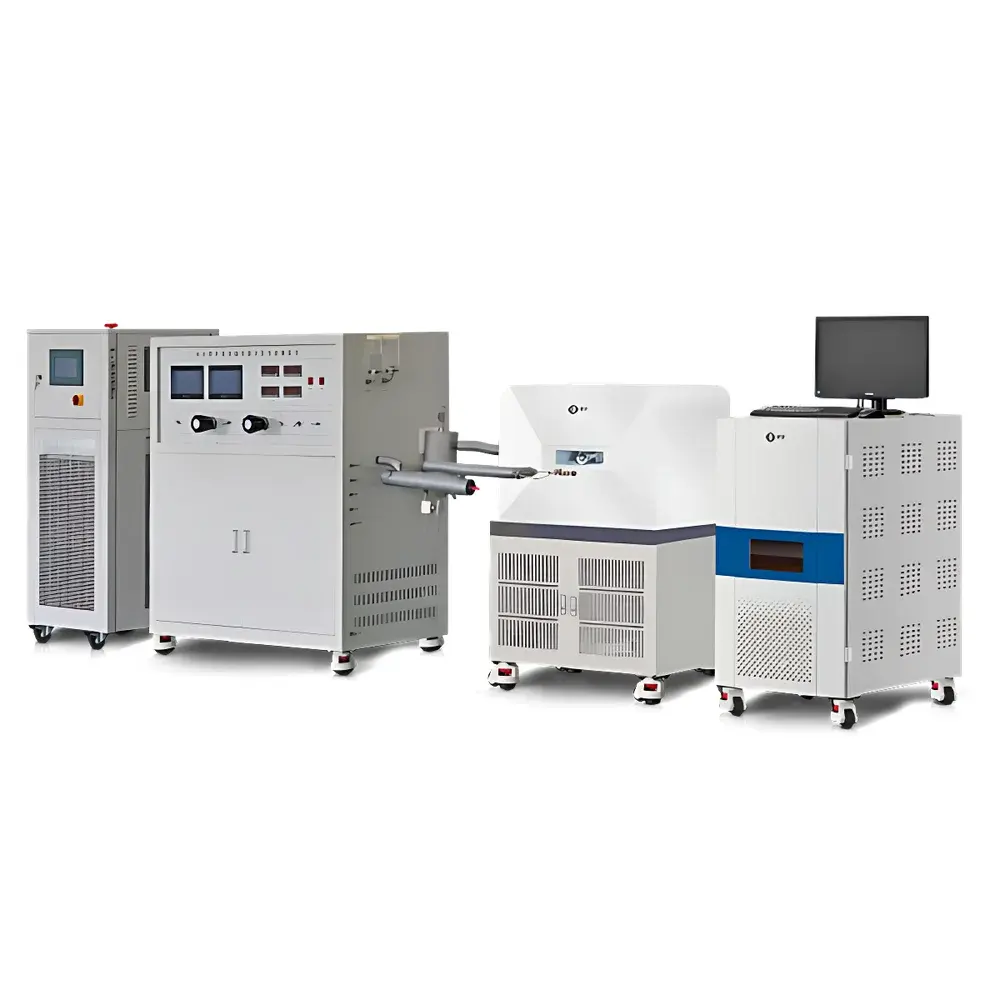
NIUMAG MesoMR Low-Field Nuclear Magnetic Resonance Imaging Analyzer for Natural Gas Hydrate Formation and Dissociation Studies
| Brand | NIUMAG |
|---|---|
| Origin | Jiangsu, China |
| Manufacturer Type | Authorized Distributor |
| Origin Category | Domestic |
| Model | MesoMR |
| Instrument Type | Low-Field NMR Analyzer |
| Sample Type | Solid–Liquid Combined |
| Operating Mode | Fourier Transform |
| Magnetic Field Strength | 0.3 ± 0.03 T or 0.5 ± 0.03 T |
| Sample Orientation | Transverse or Longitudinal |
| Max Sample Dimensions | Ø ≤ 25.4 mm × L ≤ 80 mm (low-temp/high-pressure) |
| Temperature Range | Down to –20 °C with high stability |
| Pressure Compatibility | Integrated high-pressure cell support (up to 30 MPa, configurable) |
| RF Coil Options | Customizable diameters (25 mm, 50 mm standard) |
| Signal-to-Noise Ratio | Optimized for sub-ppm water-phase detection in frozen/hydrated media |
Overview
The NIUMAG MesoMR is a purpose-built low-field nuclear magnetic resonance (NMR) imaging and relaxometry analyzer engineered for quantitative, non-invasive investigation of natural gas hydrate (NGH) formation and dissociation dynamics under controlled thermobaric conditions. Unlike high-field NMR spectrometers optimized for molecular structure elucidation, the MesoMR leverages robust 0.3 T or 0.5 T permanent magnet systems combined with broadband pulsed NMR sequences (e.g., CPMG, IR, SE) to resolve hydrogen-bearing species—primarily H₂O and CH₄—based on their distinct transverse (T₂) and longitudinal (T₁) relaxation times, diffusion coefficients (D), and spatial distribution via single-point imaging (SPI) or spin-echo imaging. Its core architecture integrates a modular sample chamber capable of simultaneous temperature (–20 °C to +80 °C) and pressure (up to 30 MPa) control, enabling realistic simulation of subsurface reservoir conditions. This makes the MesoMR particularly suited for process-level studies where real-time monitoring of phase transitions, pore-scale fluid redistribution, and kinetic parameters (e.g., nucleation rate, growth front propagation, dissociation enthalpy) is required—without destructive sampling or optical opacity limitations.
Key Features
- Modular thermobaric sample environment: Interchangeable high-pressure cells (gas or confining pressure) with Peltier-based cooling (–20 °C ± 0.1 °C stability) and PID-controlled heating, certified for long-term operation under cyclic stress.
- Dual-field magnet options: Selectable 0.3 T or 0.5 T permanent magnet systems, each calibrated to ±0.03 T homogeneity over the active volume, ensuring reproducible T₁/T₂ quantification across heterogeneous porous media.
- Flexible coil configuration: Standard 25 mm and 50 mm diameter RF probes; optional custom geometries (e.g., saddle coils, Helmholtz pairs) for optimal B₁ uniformity in rock cores, sediments, or synthetic hydrate analogs.
- Transverse/longitudinal orientation compatibility: Supports both horizontal (transverse) and vertical (longitudinal) sample loading—critical for gravity-sensitive hydrate migration studies and capillary-driven dissociation experiments.
- Real-time data acquisition: Onboard FPGA-based pulse programmer enables sub-second temporal resolution for time-resolved relaxometry and dynamic imaging, capturing transient water-phase redistribution during rapid depressurization or thermal stimulation.
Sample Compatibility & Compliance
The MesoMR accommodates cylindrical solid–liquid composite samples up to Ø50.8 mm × 100 mm (ambient) or Ø25.4 mm × 80 mm (low-T/high-P), including intact sediment cores, sandstone/ shale plugs, synthetic quartz–clay mixtures, and ice–methane slurry suspensions. All pressure vessels comply with ASME BPVC Section VIII Div. 1 standards, and temperature controllers meet IEC 61000-4-3 EMC requirements. Data acquisition protocols support audit-ready metadata logging (timestamp, setpoint, actual T/P, sequence parameters), aligning with GLP-compliant workflows. While not FDA 21 CFR Part 11–certified out-of-the-box, the system’s raw FID and image datasets are exportable in vendor-neutral formats (e.g., ISMRM RawData, NIfTI-1), facilitating integration into validated laboratory information management systems (LIMS).
Software & Data Management
Control and analysis are performed via NIUMAG’s proprietary MesoMR Studio software suite, built on Qt/C++ with Python API extensions. The interface provides intuitive sequence selection (CPMG, inversion recovery, diffusion-weighted imaging), real-time parameter adjustment, and automated T₂ distribution deconvolution using non-negative least squares (NNLS). Advanced modules include spatially resolved T₂ mapping, diffusion–relaxation (D–T₂) correlation analysis, and hydrate saturation quantification based on bulk water signal suppression models. All experimental metadata—including thermobaric logs, pulse sequence definitions, and calibration files—are embedded in HDF5-formatted data containers. Batch processing pipelines support scripting for repetitive analysis (e.g., time-series T₂ evolution, pore-size distribution modeling via Timur–Coates or SDR correlations).
Applications
- In situ monitoring of NGH nucleation, growth, and dissociation kinetics in sediment analogs under geologically relevant P–T paths.
- Quantifying hydrate saturation heterogeneity and spatial redistribution during depressurization or thermal injection in core-flooding experiments.
- Characterizing unfrozen water content and pore-scale ice morphology in permafrost and frozen soils via multi-exponential T₂ analysis.
- Evaluating freeze–thaw damage mechanisms in reservoir rocks through longitudinal T₁ mapping and porosity loss tracking.
- Determining effective permeability–porosity relationships in tight formations by coupling NMR-derived pore-size distributions with Darcy flow simulations.
- Validating numerical hydrate reservoir simulators (e.g., TOUGH+HYDRATE, CMG STARS) using time-resolved saturation and saturation–pressure hysteresis curves.
FAQ
What magnetic field strength options are available, and how do they affect measurement sensitivity?
The MesoMR offers two calibrated field strengths: 0.3 T and 0.5 T. Higher field improves signal-to-noise ratio (SNR) and spectral dispersion but may reduce T₂ contrast in highly restricted environments. For NGH studies in fine-grained sediments, 0.3 T often yields superior T₂ differentiation between bound water, capillary water, and free methane phases.
Can the system operate under true reservoir pressure conditions (e.g., >20 MPa)?
Yes—custom high-pressure cells rated to 30 MPa are available, with integrated pressure transducers (±0.1% FS accuracy) and leak-tested sealing interfaces compatible with CH₄, CO₂, and C₂H₆ gas systems.
Is it possible to correlate NMR-derived hydrate saturation with independent methods like XRD or Raman?
Absolutely. The MesoMR’s non-destructive nature allows sequential analysis: NMR imaging first, followed by post-run core sectioning for XRD/Raman validation at identical axial positions—enabling direct cross-method calibration.
Does the software support ASTM D7264 or ISO 10427–2 compliant reporting?
While the MesoMR does not auto-generate ASTM/ISO report templates, all underlying relaxometry and imaging data meet the physical measurement requirements of these standards; users can export fully traceable datasets for external compliance reporting.
What maintenance intervals are recommended for long-term reliability?
Annual magnet homogeneity verification and RF coil impedance calibration are advised; Peltier coolers require biannual thermal paste replacement; pressure cell O-rings must be replaced after every 50 high-P cycles or annually—whichever occurs first.





