
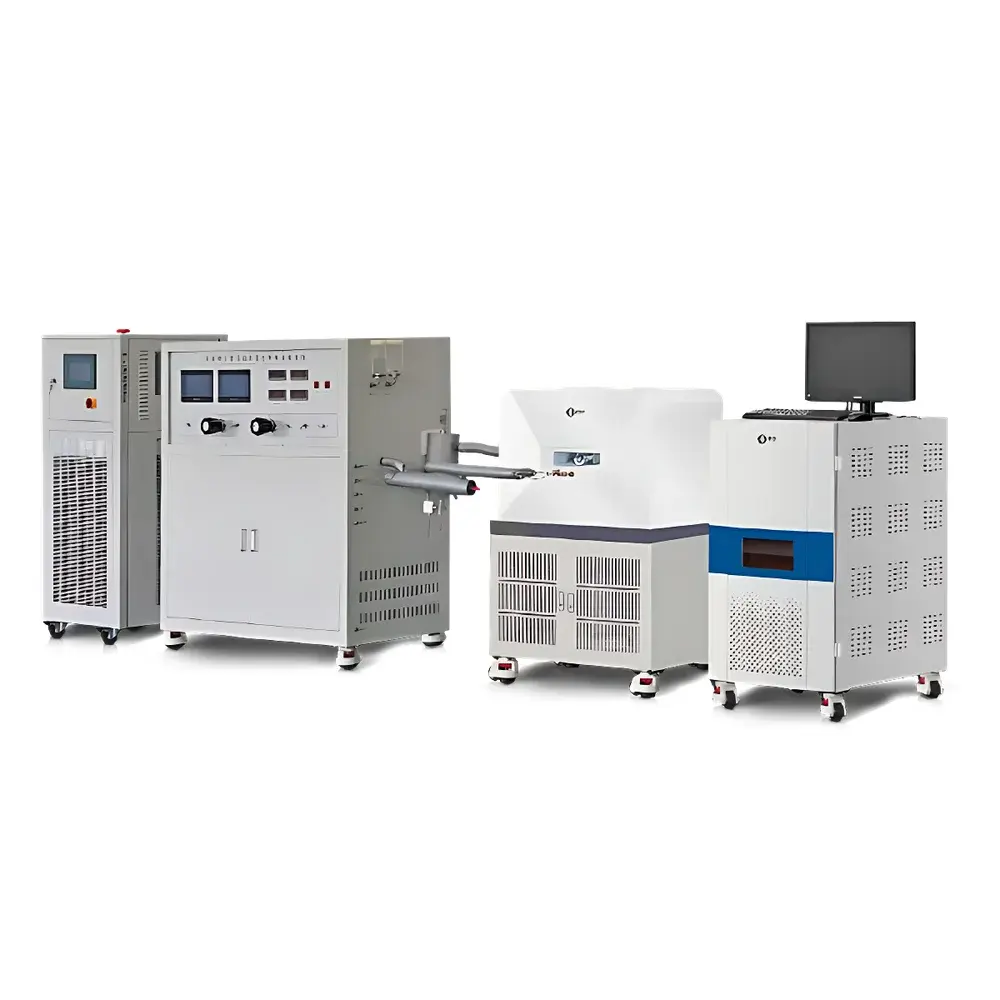
NIUMAG MesoMR Series High-Temperature & High-Pressure NMR Imaging Analyzer for Gas Hydrate Formation and Dissociation
| Brand | NIUMAG |
|---|---|
| Origin | Jiangsu, China |
| Manufacturer Type | Authorized Distributor |
| Regional Classification | Domestic |
| Model | MesoMR Series HT/HP |
| Instrument Type | Low-Field Nuclear Magnetic Resonance (LF-NMR) Analyzer |
| Sample Compatibility | Solid-Liquid Dual-Phase |
| Magnetic Field Strength | 0.3 ± 0.03 T or 0.5 ± 0.03 T |
| Sample Orientation | Transverse or Longitudinal |
| Max Sample Dimensions | Ø ≤ 25.4 mm × L ≤ 80 mm (low-temp/HP mode) |
| Operating Temperature Range | Down to –20 °C |
| Pressure Capability | Compatible with custom high-pressure vessels (up to user-specified围压/气压) |
| RF Coil Options | Interchangeable probes for varied bore sizes and sensitivity profiles |
Overview
The NIUMAG MesoMR Series High-Temperature & High-Pressure NMR Imaging Analyzer is a purpose-built low-field nuclear magnetic resonance (LF-NMR) platform engineered for in situ, non-invasive monitoring of gas hydrate (clathrate) formation and dissociation dynamics under geologically relevant thermobaric conditions. Unlike conventional benchtop NMR spectrometers, the MesoMR integrates a robust permanent magnet system (0.3 T or 0.5 T), precision-engineered RF probe architecture, and a modular sample environment chamber capable of simultaneous temperature control (–20 °C to +80 °C) and pressure regulation (up to user-defined confining or gas-phase pressures). Its operational principle relies on detecting hydrogen-1 (1H) spin relaxation responses—primarily transverse relaxation time (T2) and diffusion-weighted signal decay—to quantitatively resolve phase distribution, pore-scale fluid mobility, and hydrate saturation kinetics in heterogeneous porous media such as sediment cores, rock samples, and synthetic analogs. This enables direct correlation between NMR-derived parameters (e.g., bound vs. mobile water fractions, hydrate nucleation onset, dissociation front propagation) and physical state variables, supporting mechanistic modeling of hydrate stability fields.
Key Features
- Modular high-pressure/low-temperature sample cell design compatible with standard geological core holders and custom-built reaction vessels
- Dual-field magnet options (0.3 T and 0.5 T) optimized for signal-to-noise ratio (SNR) in low-concentration hydrate systems and enhanced spectral resolution in multi-phase environments
- Transverse (horizontal) and longitudinal (vertical) sample insertion configurations to accommodate diverse core geometries and experimental workflows
- Integrated PID-controlled thermal management system enabling stable operation from –20 °C to +80 °C with ±0.1 °C stability over extended acquisition periods
- RF coil families with diameters ranging from 25.4 mm to 50.8 mm, supporting variable spatial resolution and sensitivity trade-offs across sample types
- Real-time data acquisition synchronized with environmental parameter logging (temperature, pressure, time-stamped NMR echoes)
Sample Compatibility & Compliance
The MesoMR supports solid–liquid coexisting systems typical of natural gas hydrate research—including saturated sediments, consolidated sandstone and shale cores, synthetic clay–water–methane mixtures, and frozen soil analogs. Sample containment adheres to ASME B31.4 and ISO 13628-4 guidelines for high-pressure instrumentation interfaces. All firmware and data handling protocols comply with GLP principles; audit trails, user access logs, and electronic signature support are available via optional software modules aligned with FDA 21 CFR Part 11 requirements. The system meets CE marking standards for electromagnetic compatibility (EN 61326-1) and safety (EN 61010-1).
Software & Data Management
Acquisition and analysis are performed using NIUMAG’s proprietary MesoMR Studio software suite, which provides pulse sequence library (CPMG, IR, D-T2, diffusion editing), automated T2 inversion, multi-exponential fitting, and voxel-wise parametric mapping. Raw FID data are stored in vendor-neutral HDF5 format. Batch processing pipelines support time-series analysis of hydrate saturation evolution, pore-size distribution shifts during freeze–thaw cycles, and quantitative tracking of unfrozen water content in permafrost analogs. Export options include CSV, MATLAB .mat, and DICOM-compliant NIfTI for cross-platform integration with reservoir simulation tools (e.g., TOUGH+HYDRATE, CMG-STARS).
Applications
- In situ quantification of methane hydrate saturation and dissociation kinetics in sediment cores under simulated seafloor or permafrost conditions
- Spatially resolved mapping of water phase transitions (liquid ↔ ice ↔ hydrate) during cyclic pressure–temperature perturbations
- Characterization of pore structure evolution and microfracture development in frozen rock under thermal stress
- Measurement of unfrozen water content and its temperature-dependent hysteresis in fine-grained soils
- Evaluation of capillary trapping efficiency and residual gas saturation in hydrate-bearing porous media
- Method development for NMR-based calibration of seismic velocity models used in offshore hydrate resource assessment
FAQ
What is the minimum detectable hydrate saturation level using this system?
Detection limits depend on sample porosity, signal averaging duration, and local field homogeneity—but typical quantification thresholds range from 1–3 vol% hydrate in consolidated sediments with ≥10% total porosity.
Can the system be integrated with external gas delivery or drainage systems?
Yes. Standard NPT and VCR ports allow seamless interfacing with third-party gas manifolds, back-pressure regulators, and effluent collection modules for closed-loop hydrate synthesis experiments.
Is T1–T2 correlation mapping supported?
Yes. The MesoMR Studio software includes preconfigured 2D NMR sequences and joint inversion algorithms for generating T1–T2 correlation spectra, enabling discrimination between hydrate-bound water, capillary water, and bulk pore water.
Does the system support imaging reconstruction (e.g., slice-selective or 3D MRI)?
Standard configurations provide 1D depth profiling and 2D slice-selective imaging; optional gradient amplifier and shim coil upgrades enable full 3D MRI reconstruction with isotropic resolution down to ~200 µm.
Are validation reports and IQ/OQ documentation provided?
Comprehensive installation qualification (IQ) and operational qualification (OQ) packages—including field homogeneity maps, RF power calibration curves, and temperature–pressure traceability certificates—are supplied upon commissioning.
Related Products





