
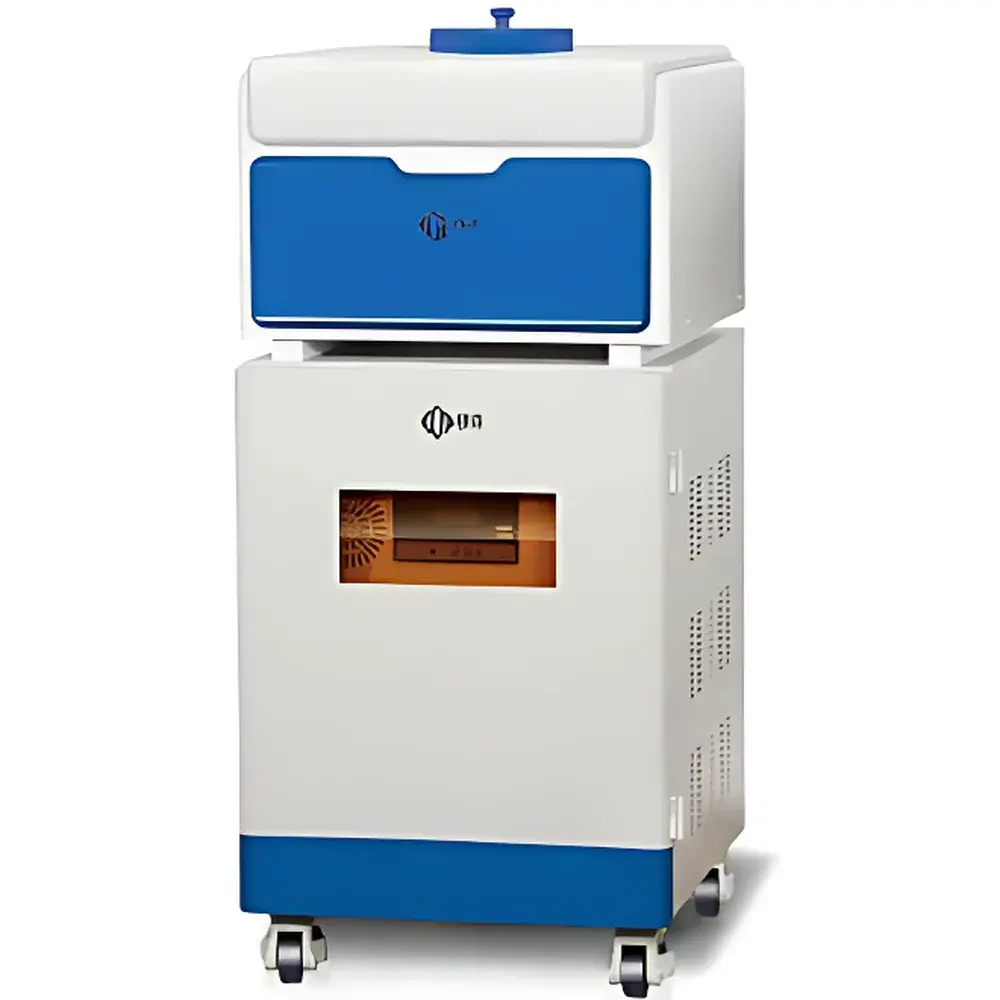
NIUMAG NMI20 Low-Field Nuclear Magnetic Resonance Analyzer and Imager
| Brand | NIUMAG |
|---|---|
| Origin | Jiangsu, China |
| Manufacturer Type | Authorized Distributor |
| Country of Origin | China |
| Model | NMI20 |
| Instrument Type | Low-Field NMR Analyzer & Imager |
| Sample Compatibility | Solid-Liquid Dual-Phase Samples |
| Magnet Type | Rare-Earth Permanent Magnet |
| Probe Inner Diameter | 40 mm |
| Core Functionality | T₁/T₂ Relaxometry + 2D MRI (Arbitrary Slice Orientation, Variable Slice Thickness) |
| Pulse Sequences | FID, Spin Echo (SE), CPMG, SEG-CPMG, Inversion Recovery (IR), Fast Spin Echo (FSE), Multi-Spin Echo (MSE) |
| Software Platform | Proprietary 2nd-Generation NMR Console & Imaging Suite |
Overview
The NIUMAG NMI20 is a benchtop low-field nuclear magnetic resonance (NMR) analyzer and imager engineered for quantitative relaxometry and non-invasive 2D magnetic resonance imaging (MRI) in industrial R&D and quality control laboratories. Operating at a static magnetic field strength of approximately 0.5 Tesla (typical for permanent-magnet-based low-field systems), the NMI20 exploits the intrinsic magnetic properties of hydrogen nuclei (¹H) to probe molecular mobility, phase distribution, and spatial heterogeneity—primarily in water- and oil-containing matrices. Unlike high-field superconducting NMR systems, the NMI20 utilizes a maintenance-free rare-earth permanent magnet, eliminating cryogen consumption and associated operational overhead. Its 40 mm inner-diameter radiofrequency (RF) probe accommodates a broad range of sample geometries—including intact fruits, meat cuts, emulsions, powders, gels, and porous solids—without requiring chemical derivatization, dehydration, or sectioning. The system delivers rapid, reproducible measurements of transverse relaxation time (T₂), longitudinal relaxation time (T₁), and proton density, enabling robust characterization of binding states, compartmentalization, and dynamic processes such as moisture migration during drying or rehydration.
Key Features
- Integrated dual-mode operation: simultaneous NMR relaxometry and 2D MRI on a single platform
- 40 mm RF probe aperture—optimized for heterogeneous and irregularly shaped samples common in food, agriculture, and materials science
- Permanent magnet architecture: zero liquid helium or nitrogen dependency; no quench risk; minimal infrastructure requirements
- Automated hardware optimization: real-time center-frequency search, auto-calibration of 90°/180° RF pulse widths, and gradient-based shimming
- Three-step MRI workflow: intuitive interface guides users from sample placement to reconstructed image—no prior NMR expertise required
- Multi-sequence flexibility: supports FID, SE, CPMG (for T₂ distribution analysis), IR (for T₁ mapping), MSE, FSE, and segmented CPMG for enhanced signal-to-noise in viscous or heterogeneous media
- Open pulse programming: adjustable RF pulse amplitude, duration, and inter-pulse timing—enabling method development beyond preloaded sequences
Sample Compatibility & Compliance
The NMI20 accepts solid, semi-solid, liquid, and multiphase samples without size limitation within the 40 mm bore—making it suitable for whole-food specimens (e.g., apples, sausages, cheese blocks), granular materials (grains, seeds), hydrogels, and oil-in-water emulsions. No sample preparation—such as homogenization, solvent extraction, or staining—is necessary, preserving native microstructure and enabling longitudinal process monitoring. While not certified to ISO/IEC 17025 for accredited testing, the system supports GLP-aligned workflows: all acquisition parameters, raw FIDs, and processed data are timestamped and stored with full audit trail capability. Software-generated reports include metadata (pulse sequence, TE/TR, number of scans, temperature if monitored), satisfying internal QA documentation requirements per FDA 21 CFR Part 11 when deployed with appropriate electronic signature controls.
Software & Data Management
The NMI20 runs two tightly integrated software modules: the NMR Analysis Suite and the MRI Reconstruction Suite—both built on NIUMAG’s second-generation digital spectrometer platform. The Analysis Suite provides automated peak integration, multi-exponential T₂ decay fitting (using NNLS or SVD algorithms), diffusion-weighted analysis (via PGSE variants), and customizable report templates exportable to CSV, PDF, or Excel. The MRI Suite enables slice-selective excitation along arbitrary anatomical planes (axial, sagittal, oblique), variable slice thickness (1–20 mm), and post-acquisition processing including Gaussian filtering, pseudo-color mapping, region-of-interest (ROI) quantification, and co-registered T₁/T₂-weighted overlays. All raw k-space and time-domain data are preserved in vendor-neutral formats (e.g., .dat + metadata JSON), facilitating third-party analysis in MATLAB, Python (with nmrglue), or Bruker TopSpin-compatible environments.
Applications
- Food Science: Quantification of free/bound water fractions in baked goods; oil migration kinetics in chocolate; textural degradation during frozen storage; non-destructive assessment of fruit ripeness or bruising
- Process Optimization: Real-time monitoring of moisture loss in spray-drying, freeze-drying, or hot-air drying; evaluation of marinade penetration depth in muscle tissue
- Material Characterization: Pore-size distribution in hydrophilic polymers; swelling behavior of superabsorbent hydrogels; phase separation dynamics in Pickering emulsions
- Biological Tissue Analysis: Myofibrillar protein denaturation via T₂ shift; lipid oxidation-induced changes in fish fillets; hydration state mapping in plant leaves under drought stress
- Quality Assurance: Batch consistency verification of dairy powders; detection of adulteration in edible oils; shelf-life prediction based on water mobility trends
FAQ
What sample types are compatible with the NMI20?
Solid, liquid, semi-solid, and multiphase samples—including whole foods, powders, gels, emulsions, and porous biomaterials—can be analyzed directly, provided they fit within the 40 mm probe bore.
Does the NMI20 require cryogens or external cooling?
No. It uses a passively stabilized rare-earth permanent magnet, requiring only standard AC power and ambient laboratory conditions.
Can the system distinguish between different water populations (e.g., bound vs. free)?
Yes. Multi-exponential T₂ relaxation analysis resolves distinct water pools based on molecular mobility—correlating with physical binding states in food and biological matrices.
Is MRI data quantitatively comparable across instruments?
Signal intensity is calibrated against reference phantoms; T₁/T₂ maps are intrinsically quantitative. Cross-platform comparison requires standardized protocols (e.g., fixed TR/TE, identical ROI definition) but is feasible for longitudinal studies.
How is data security and regulatory compliance addressed?
The software supports user role management, electronic signatures, and immutable audit logs. When configured with network authentication and encrypted storage, it meets baseline requirements for FDA 21 CFR Part 11 and EU Annex 11 compliance in non-clinical settings.




