
NIUMAG Portable Low-Field Nuclear Magnetic Resonance Logging Analyzer
| Brand | NIUMAG |
|---|---|
| Origin | Jiangsu, China |
| Manufacturer Type | Authorized Distributor |
| Product Category | Domestic |
| Model | Portable NMR Logger |
| Instrument Type | Low-Field NMR Analyzer |
| Sample Type | Solid-Liquid Dual-Mode |
| Magnet Frequency | 6 MHz ± 0.05 MHz |
| Magnet Homogeneity | ≤200 ppm (over Ø40 mm × H80 mm uniform region) |
| Magnet Stability | <80 µs drift over 24 h |
| Probe Compatibility | Customized for core plugs up to 1.5″ length and cuttings |
| Key Applications | Porosity, Permeability, Fluid Saturation (S<sub>o</sub>, S<sub>w</sub>), Bound/Free Fluid Ratio, T<sub>2</sub> & T<sub>1</sub>–T<sub>2</sub> Mapping |
Overview
The NIUMAG Portable Low-Field Nuclear Magnetic Resonance Logging Analyzer is an engineered field-deployable solution designed specifically for real-time petrophysical evaluation in oilfield service operations. Operating at a nominal Larmor frequency of 6 MHz—corresponding to a magnetic field strength of approximately 0.14 T—the instrument leverages pulsed low-field NMR principles to quantify hydrogen-bearing fluid distributions within geological samples. Unlike high-field NMR spectrometers used in structural chemistry, this system applies spin-echo and inversion-recovery pulse sequences to acquire transverse (T2) and longitudinal (T1) relaxation decays, enabling non-invasive, quantitative assessment of pore structure, fluid mobility, and saturation states directly at the rig site or core lab. Its compact permanent-magnet architecture eliminates cryogens and high-power infrastructure, making it suitable for deployment in remote drilling locations, mobile laboratories, and offshore platforms where space, power, and environmental constraints limit conventional analytical instrumentation.
Key Features
- Field-Optimized Permanent Magnet System: A lightweight, ring-shaped neodymium-based magnet with integrated temperature stabilization delivers ≤200 ppm homogeneity across a Ø40 mm × 80 mm cylindrical sensitive volume—validated per ASTM D7171 for NMR porosity calibration.
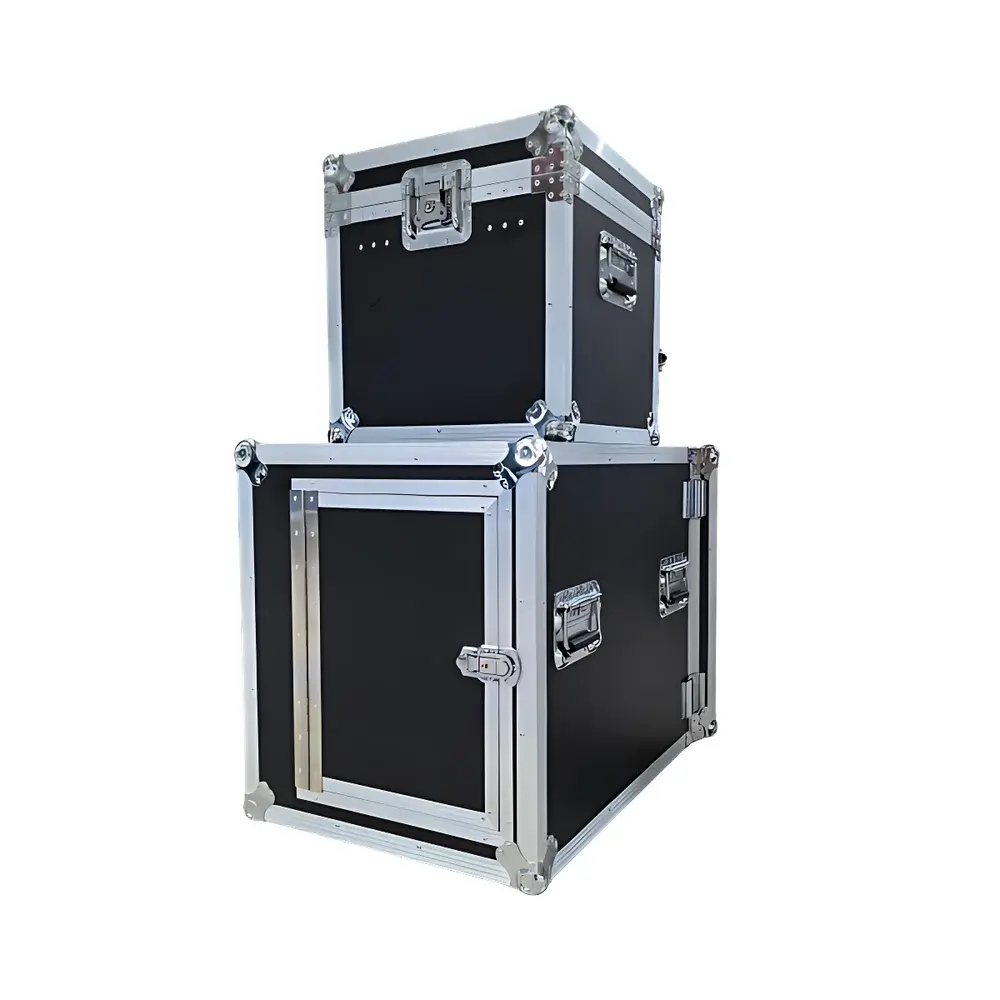
- Modular Transport Design: Fully disassembled into three aviation-grade composite cases (magnet unit, console, probe assembly), each compliant with IATA Section II for air transport of magnetic equipment; total system weight <45 kg.
- Ruggedized Pulse Console: Fourth-generation digital spectrometer with 16-bit ADC, 100 ns timing resolution, and hardware-based real-time echo averaging ensures robust signal acquisition under variable ambient temperatures (−10 °C to +50 °C).
- Dual-Mode Sample Handling: Interchangeable RF probes support both whole-core plugs (up to 38 mm diameter × 38 mm length) and crushed cuttings in standard NMR tubes (10 mm OD); all probe coils are Q-factor matched to 6 MHz for optimal SNR.
- Thermal Management Architecture: Passive conduction cooling combined with intelligent fan modulation maintains magnet temperature stability within ±0.1 °C over 24-hour continuous operation—critical for T2 reproducibility per ISO 17025-accredited workflows.
Sample Compatibility & Compliance
The analyzer accepts unaltered rock core samples, drill cuttings, and synthetic porous media without chemical preparation or vacuum drying. It complies with industry-standard sample handling protocols defined in API RP 40 and ISO 14688-1 for geotechnical classification. Data output formats adhere to SEG-Y v2.0 metadata conventions for seamless integration into petrophysical interpretation platforms (e.g., Petrel, Techlog). The system supports audit-ready operation under GLP and GMP frameworks via optional electronic logbook functionality with user-authenticated access control and FDA 21 CFR Part 11–compliant signature trails.
Software & Data Management
Pre-installed NIUMAG NMRLog™ software provides full spectral processing—including inverse Laplace transformation (ILT) of T2 distributions, T1–T2 correlation mapping, and multi-exponential fitting using non-negative least squares (NNLS) algorithms. Raw FID data is stored in HDF5 format with embedded acquisition parameters (pulse width, receiver gain, number of scans), ensuring traceability. Batch processing scripts enable automated reporting of porosity (Φ), permeability (k), free-fluid index (FFI), bound-fluid volume (BFV), and water/oil saturation (Sw, So)—all exportable to CSV, Excel, or LIS format for well-log correlation.
Applications
- Real-time estimation of effective porosity and clay-bound water volume in shaly sand formations
- Quantification of movable hydrocarbon saturation in tight reservoirs using T2 cutoff differentiation
- Core-to-log calibration for NMR-based saturation height modeling
- Dynamic fluid typing during core flooding experiments via diffusion-relaxation correlation
- Quality assurance of mud-logging cuttings analysis prior to laboratory XRD/XRF submission
FAQ
What is the minimum detectable porosity using this instrument?
Porosity detection limit is determined by signal-to-noise ratio and measurement time; typical lower bound is ~0.5% for carbonate cores with 10-minute acquisition at 32 scans.
Can the system operate continuously during rig-site logging campaigns?
Yes—designed for 24/7 duty cycle with automatic thermal compensation and redundant power input (100–240 VAC, 50/60 Hz or 24 VDC vehicle battery option).
Is T1–T2 correlation available out-of-the-box?
Yes—preconfigured pulse sequences include IR-CPMG and 2D-CPMG modules; full 2D inversion performed on-board with <5-minute processing latency.
Does the system require external shielding or site-specific magnetic surveys?
No—self-shielded magnet design meets IEC 61000-4-8 immunity standards; no ferromagnetic exclusion zone required beyond standard 1 m clearance.
How is calibration traceability maintained across field units?
Each unit ships with NIST-traceable reference standards (doped water phantoms and glass beads) and factory-generated calibration certificates valid for 12 months.





