
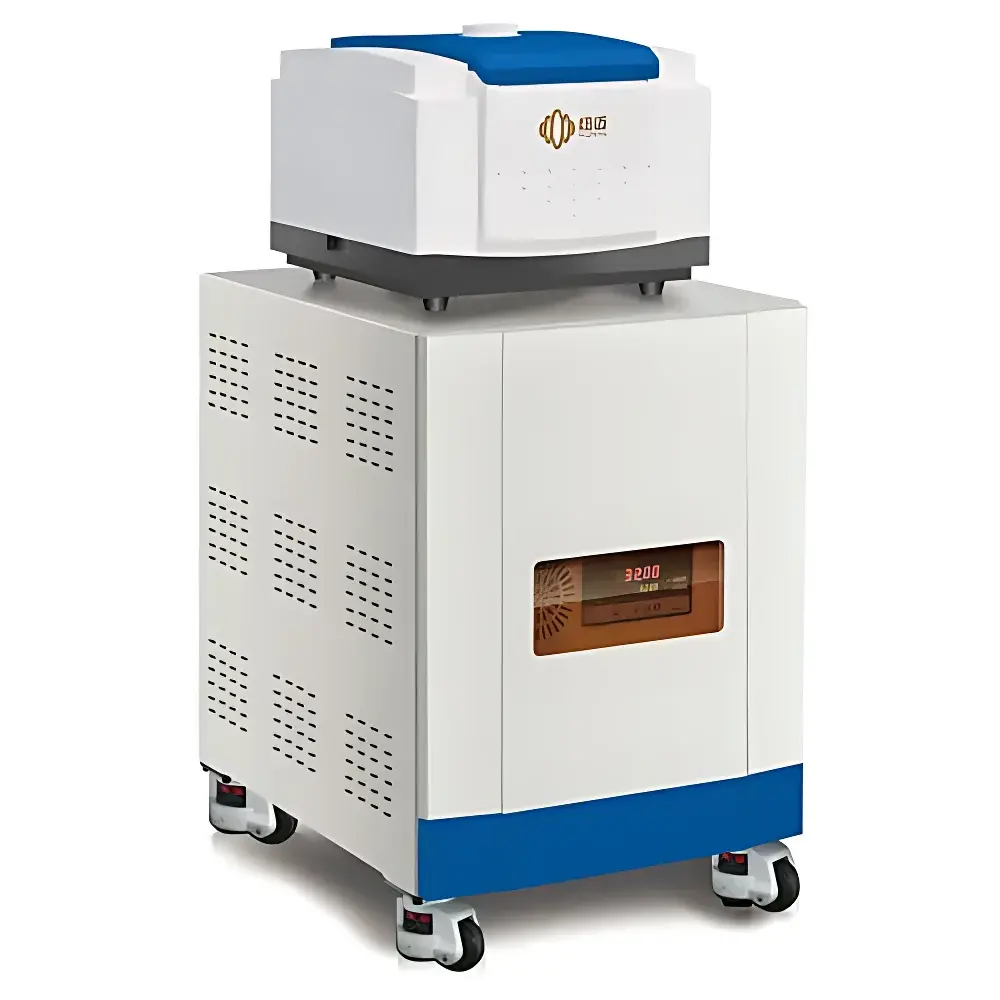
NIUMAG PQ001-Pro Benchtop Low-Field Time-Domain Nuclear Magnetic Resonance Analyzer
| Brand | NIUMAG |
|---|---|
| Origin | Jiangsu, China |
| Model | PQ001-Pro |
| Instrument Type | Low-Field NMR Analyzer |
| Sample Type | Solid-Liquid Dual Mode |
| Operating Mode | Pulsed Fourier Transform |
| Sensitivity | mg-level |
| Resolution | mm-scale |
| Frequency Range | 2–42 MHz (configurable) |
Overview
The NIUMAG PQ001-Pro is a compact, benchtop time-domain nuclear magnetic resonance (TD-NMR) analyzer engineered for quantitative, non-invasive characterization of hydrogen-bearing (¹H) and fluorine-bearing (¹⁹F) materials. Operating at field strengths from 0.046 T (2 MHz) to 1.0 T (42 MHz), the system employs pulsed Fourier transform methodology to acquire transverse (T₂) and longitudinal (T₁) relaxation decay curves—core parameters directly correlated with molecular mobility, phase composition, pore structure, and crosslink density. Unlike high-field NMR spectrometers optimized for spectral resolution, the PQ001-Pro prioritizes robustness, throughput, and industrial deployability. Its permanent magnet architecture eliminates cryogen dependency, enabling stable operation in QC labs, production floors, and field-deployable environments without dedicated infrastructure. The instrument complies with fundamental principles outlined in ASTM D6746 (Solid Fat Content by Low-Field NMR), ISO 15935 (Oil Content in Oilseeds), and USP (Analytical Instrument Qualification), supporting GLP/GMP-aligned workflows where reproducibility and auditability are critical.
Key Features
- Modular magnet platform supporting five standard field configurations: 2 MHz (0.046 T), 6 MHz (0.14 T), 12 MHz (0.3 T), 21 MHz (0.5 T), and 42 MHz (1.0 T)—each optimized for specific sample classes and application depth.
- Integrated pulse programmer with sub-microsecond timing precision, enabling CPMG, IR, and diffusion-weighted sequences for multi-parameter analysis (T₁, T₂, D, T₁–T₂ correlation).
- Non-destructive, solvent-free measurement: no sample preparation, drying, or chemical derivatization required; suitable for raw, packaged, or in-process materials.
- Probe versatility: interchangeable RF coils (diameters from 10 mm to 50 mm) accommodate solids, powders, granules, films, gels, emulsions, and heterogeneous bulk samples—geometry-independent signal acquisition.
- Optional temperature control module (–40 °C to +120 °C) enables dynamic studies of phase transitions, crystallization kinetics, polymer curing, and moisture migration under controlled thermal profiles.
- Embedded calibration routines based on standardized reference oils and water phantoms ensure traceable signal intensity and relaxation time accuracy across instrument lifetime.
- Touchscreen interface with guided workflow templates reduces operator dependency; minimal training required for routine SFC, moisture, oil, or porosity assays.
Sample Compatibility & Compliance
The PQ001-Pro accepts samples in native physical states—liquid, semi-solid, powder, pellet, or irregular solid—without size or optical constraints. It is routinely validated for use in regulated environments per FDA 21 CFR Part 11 requirements when paired with NIUMAG’s compliant software package (NMIQ v4.x), which includes electronic signatures, audit trails, user access controls, and data integrity safeguards. Applications span ISO/IEC 17025-accredited testing labs (e.g., food fat quantification), ASTM-compliant petroleum residue analysis, and CLIA-aligned biomedical research (e.g., rodent adipose/muscle fractionation). All hardware components meet CE, RoHS, and IEC 61010-1 safety standards for laboratory electrical equipment.
Software & Data Management
NIUMAG’s NMIQ software provides a unified environment for pulse sequence design, real-time data visualization, multi-exponential T₂ inversion (using NNLS or SVD algorithms), and model-based quantification (e.g., SFC calibration curves, pore size distribution via T₂–porosity transforms). Raw FID and decay data are stored in vendor-neutral HDF5 format, ensuring long-term archival compatibility. Batch processing, report generation (PDF/CSV), and LIMS integration via OPC UA or REST API support enterprise-scale deployment. Software validation documentation (IQ/OQ/PQ protocols) is available for GxP-regulated users.
Applications
The PQ001-Pro delivers quantitative insight across disciplines: In food science, it measures solid fat content (SFC), oil/water content in seeds and dairy, droplet size in emulsions, and glass transition temperatures. In polymers, it determines crosslink density, crystallinity, plasticizer content, and aging kinetics. In petrochemicals, it assesses hydrocarbon hydrogen index and wax oil content. In pharmaceuticals, it quantifies residual solvents in lyophilized products and monitors tablet hydration. In geoscience, it characterizes porosity, permeability, and fluid saturation in rock cores and soils. In materials science, it evaluates membrane pore structure, gel swelling behavior, and nanocomposite dispersion homogeneity.
FAQ
What sample volume is required for reliable T₂ measurement?
Typical volumes range from 0.2 mL (for 10-mm probe) to 15 mL (for 50-mm probe); minimum mass sensitivity is ~1 mg for high-proton-density samples.
Can the PQ001-Pro distinguish between bound and free water in food matrices?
Yes—multi-component T₂ analysis resolves distinct relaxation populations corresponding to immobilized, intermediate, and bulk water phases.
Is method transfer possible between different field strengths (e.g., 2 MHz to 42 MHz)?
Quantitative models require re-calibration per field strength due to differential T₁/T₂ ratios and diffusion weighting; however, relative trends remain consistent across platforms.
Does the system support diffusion-ordered spectroscopy (DOSY)-like analysis?
While not a spectral technique, pulsed-field gradient (PFG) sequences enable diffusion coefficient (D) mapping and D–T₂ correlation experiments for particle sizing and microstructure probing.
How is instrument performance verified during routine operation?
Daily verification uses pre-loaded reference standards (e.g., doped water, mineral oil); annual calibration follows ISO/IEC 17025 procedures performed by accredited service engineers.




