
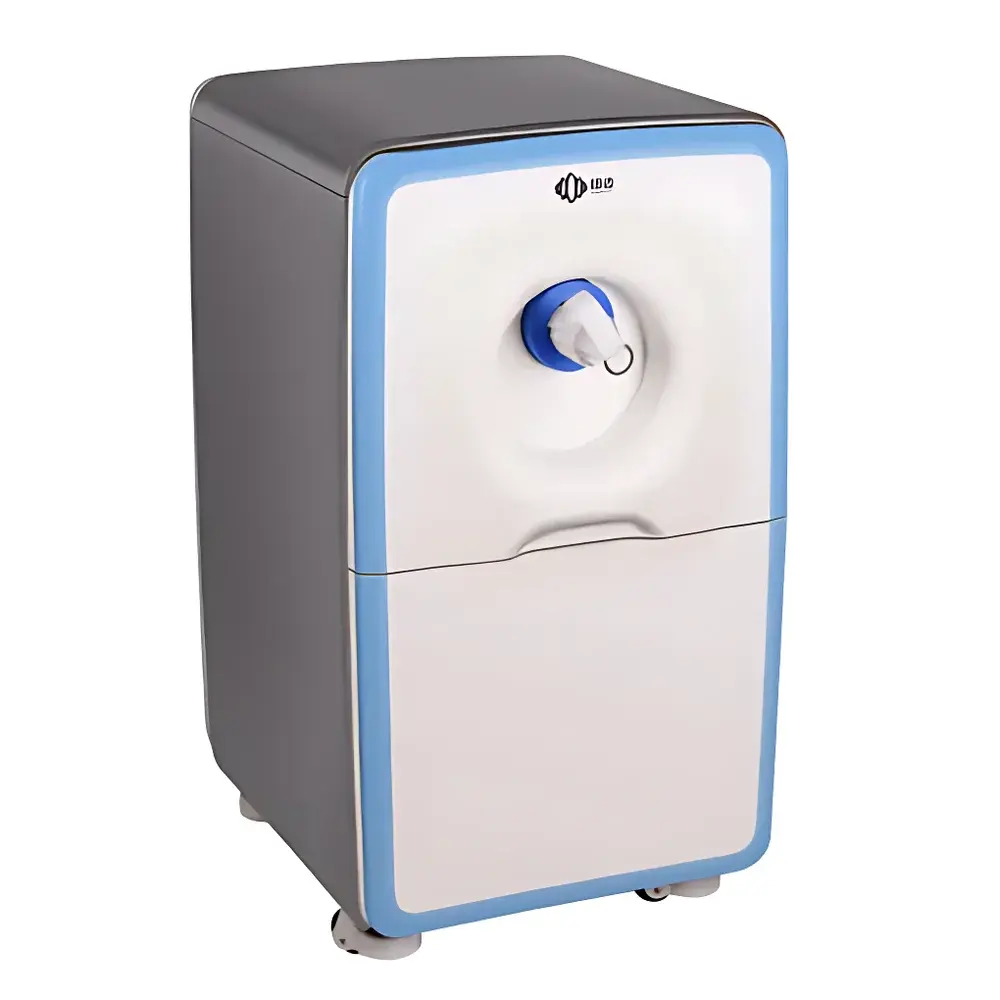
NIUMAG QMR Series Low-Field NMR Body Composition Analyzer for C57BL/6 Mice
| Brand | NIUMAG |
|---|---|
| Origin | Jiangsu, China |
| Manufacturer Type | Authorized Distributor |
| Regional Classification | Domestic (China) |
| Model | QMR Series |
| Pricing | Available Upon Request |
Overview
The NIUMAG QMR Series Low-Field NMR Body Composition Analyzer is a dedicated benchtop instrument engineered for non-invasive, quantitative assessment of body composition in live small laboratory animals—primarily C57BL/6 mice. It operates on the physical principle of low-field nuclear magnetic resonance (LF-NMR), exploiting inherent differences in transverse relaxation times (T2) among adipose tissue, lean muscle mass, and free/bound water compartments. Unlike destructive endpoint assays (e.g., carcass dissection) or ionizing radiation-based modalities (e.g., DEXA), this system delivers absolute quantification of fat mass, lean mass, and total body water in conscious, unrestrained subjects—without anesthesia, sedation, or surgical intervention. The analyzer employs a permanent magnet with homogeneous field geometry optimized for murine-scale samples, coupled with a purpose-built RF coil tuned to the 1H Larmor frequency at ~23.5 MHz (0.55 T). Measurement duration per subject is ≤ 90 seconds, enabling high-throughput longitudinal studies under consistent physiological conditions.
Key Features
- Non-destructive, in vivo quantification of fat mass, lean mass, and total body water in awake C57BL/6 mice
- No requirement for anesthesia, fasting, or physical restraint—minimizing stress-induced metabolic confounders
- Permanent magnet architecture ensuring long-term field stability and zero cryogen consumption
- Dedicated mouse-body-composition RF probe with optimized signal-to-noise ratio and spatial homogeneity
- Integrated hardware-software calibration protocol traceable to reference phantoms with known composition
- Robust mechanical design compliant with ISO 13485-aligned manufacturing practices for laboratory instrumentation
Sample Compatibility & Compliance
The QMR Series supports live, conscious specimens across multiple small-animal models: C57BL/6 mice (standard and diet-induced obese strains), BALB/c, ICR, Sprague-Dawley rats (juvenile/adult), and New Zealand White rabbits (≤ 3 kg). All measurements adhere to principles outlined in OECD Test Guideline 452 (Chronic Toxicity Studies) and support GLP-compliant data acquisition workflows. While the instrument itself does not require regulatory certification as an in vitro diagnostic device, its output parameters—including fat mass percentage (%FM), lean mass index (g/cm), and hydration ratio—are compatible with endpoints defined in FDA Guidance for Industry: “Preclinical Assessment of Investigational Drugs for Obesity” (2021) and EMA CHMP Reflection Paper on Animal Models in Obesity Research (2019). Data integrity is maintained via audit-trail-enabled software compliant with ALCOA+ principles.
Software & Data Management
NIUMAG’s proprietary MouseBodyQMR™ software provides full control over pulse sequence selection (CPMG-based multi-echo acquisition), real-time signal processing, and automated T2 decay fitting using singular value decomposition (SVD) algorithms. Quantitative outputs are exported in CSV and HDF5 formats, supporting direct integration into statistical platforms such as R, Python (SciPy/Pandas), and GraphPad Prism. The software enforces user role-based access control (RBAC), electronic signatures, and 21 CFR Part 11–compliant audit trails—including timestamps for acquisition, analysis, and export events. Raw FID data and processed T2 distributions are archived with SHA-256 checksum validation to ensure data provenance and reproducibility across multi-site collaborations.
Applications
- Longitudinal monitoring of adiposity dynamics during dietary intervention, genetic manipulation, or pharmacological treatment (e.g., GLP-1 receptor agonists, PPARγ modulators)
- Validation of obesity, insulin resistance, and sarcopenia phenotypes in transgenic and knockout mouse models
- Preclinical evaluation of anti-obesity therapeutics—supporting dose-response characterization and mechanism-of-action studies
- Metabolic phenotyping in circadian rhythm, aging, and gut-microbiome interaction research
- Quality control of breeding colonies through routine body composition screening
FAQ
Is anesthesia required during measurement?
No. The QMR Series is explicitly designed for conscious-animal operation; no sedation or anesthesia is needed.
What is the minimum and maximum animal weight supported?
Validated range: 15–45 g for C57BL/6 mice; up to 500 g for juvenile rats and rabbits (with optional coil adapters).
How is system accuracy verified?
Each unit undergoes factory calibration using NIST-traceable reference phantoms containing triglyceride/water/gelatin matrices mimicking biological T2 distributions.
Can data be exported for third-party statistical analysis?
Yes—quantitative results and raw time-domain signals are exportable in open, platform-agnostic formats (CSV, HDF5) with metadata tagging.
Does the instrument comply with electromagnetic compatibility (EMC) standards?
Yes—certified to IEC 61326-1:2013 for laboratory equipment EMC requirements and IEC 61000-4 series immunity testing.




