
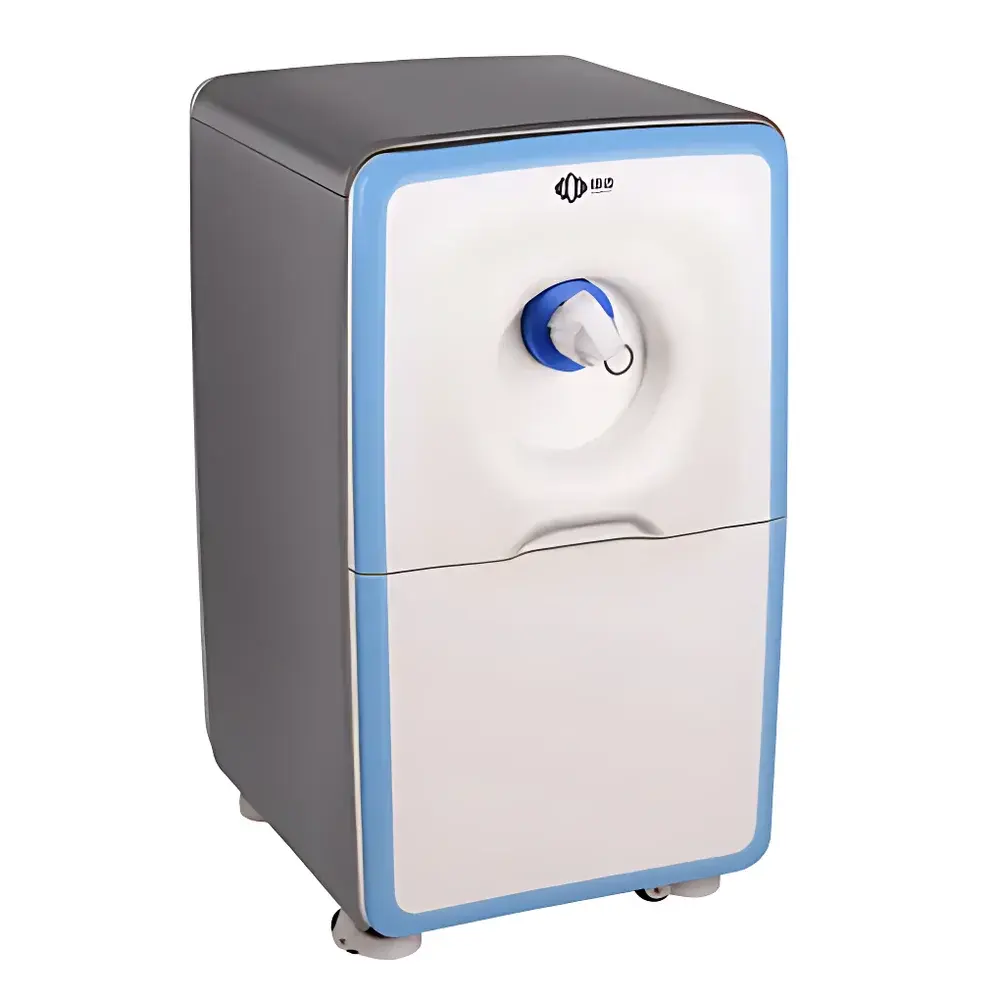
NIUMAG QMR Series Low-Field Nuclear Magnetic Resonance Live Mouse Body Composition Analyzer
| Brand | NIUMAG |
|---|---|
| Origin | Jiangsu, China |
| Manufacturer Type | Authorized Distributor |
| Country of Origin | China |
| Model | QMR Series |
| Pricing | Available Upon Request |
Overview
The NIUMAG QMR Series Low-Field Nuclear Magnetic Resonance (LF-NMR) Live Mouse Body Composition Analyzer is an engineered solution for non-invasive, quantitative assessment of fat mass, lean body mass, and total body water in conscious, unrestrained small laboratory animals. Unlike terminal methods such as carcass dissection or destructive lipid extraction, this system leverages the intrinsic differences in transverse relaxation times (T₂) between adipose tissue (short T₂), skeletal muscle (intermediate T₂), and free water (long T₂) to resolve and quantify tissue compartments in vivo. Operating at a stable, homogeneous static magnetic field generated by permanent magnets (typically 0.3–0.5 T), the instrument employs time-domain pulsed NMR (TD-NMR) with CPMG (Carr–Purcell–Meiboom–Gill) pulse sequences to acquire decay signals. These raw FID (free induction decay) signals are processed via multivariate calibration models—developed and validated against reference standards including dual-energy X-ray absorptiometry (DEXA) and chemical carcass analysis—to deliver absolute mass values (g) and percentage composition (%). Designed for longitudinal studies, the QMR Series enables repeated measurements on the same animal over days or weeks without sedation, anesthesia, radiation exposure, or physiological stress—ensuring high intra-animal reproducibility and compliance with the 3Rs (Replacement, Reduction, Refinement) principles.
Key Features
- Non-destructive, in vivo quantification of fat mass, lean mass, and total body water in awake, unanesthetized mice and other small rodents (e.g., rats, rabbits)
- Permanent magnet architecture ensuring field stability, low power consumption, and minimal maintenance
- Dedicated mouse-body-coil probe optimized for signal-to-noise ratio (SNR) and spatial homogeneity across typical murine anatomical dimensions (up to ~35 g)
- Measurement duration ≤ 60 seconds per animal—enabling high-throughput screening in preclinical metabolic studies
- No ionizing radiation, no contrast agents, no thermal load—fully compliant with IACUC and AAALAC guidelines for humane animal handling
- Integrated temperature-controlled animal holder to minimize motion artifacts and maintain physiological homeostasis during acquisition
Sample Compatibility & Compliance
The QMR Series accommodates live mice (15–35 g), juvenile rats (40–120 g), and dwarf rabbits (< 1 kg) without physical restraint beyond gentle positioning in the ergonomic cradle. No surgical implantation, injection, or fasting is required prior to scanning. The system meets essential regulatory expectations for preclinical instrumentation: data integrity aligns with ALCOA+ principles (Attributable, Legible, Contemporaneous, Original, Accurate, Complete, Consistent, Enduring, Available); audit trails and user access controls are configurable within the proprietary software to support GLP-compliant workflows; while not FDA-cleared as a medical device, its methodology is referenced in peer-reviewed literature adhering to NIH, EMA, and OECD guidance for obesity and diabetes research models (e.g., OECD TG 452, NIH Guide NOT-DK-22-018).
Software & Data Management
NIUMAG’s proprietary QMR Analysis Suite provides intuitive acquisition control, real-time signal visualization, and automated post-processing. Calibration models are stored with version metadata and traceable to reference datasets. All raw FID data, processed parameters (fat %, lean mass g, TBW g), and operator logs are saved in HDF5 format—compatible with MATLAB, Python (h5py), and LabVIEW for secondary analysis. Software supports batch processing, group statistical comparison (ANOVA, t-test), trend plotting over time, and export to CSV, Excel, or PDF reports. Role-based user accounts enforce SOP adherence, and optional electronic signature modules satisfy 21 CFR Part 11 readiness requirements for regulated environments.
Applications
- Evaluation of anti-obesity therapeutics: longitudinal tracking of fat mass reduction kinetics and lean mass preservation during compound dosing
- Mechanistic studies of insulin resistance and type 2 diabetes: correlation of adipose redistribution (subcutaneous vs. visceral proxy) with glycemic phenotypes
- Nutritional intervention trials: quantifying shifts in body composition following high-fat diet, caloric restriction, or microbiome modulation
- Aging research: monitoring sarcopenia progression and fluid balance changes in aged murine cohorts
- Toxicology endpoints: detecting early-onset lipodystrophy or edema as adverse effect biomarkers
- Genetic model phenotyping: rapid validation of body composition phenotypes in transgenic/knockout lines (e.g., ob/ob, db/db, UCP1-KO)
FAQ
Is anesthesia required for measurement?
No. Animals remain fully conscious and unrestrained during scanning; only mild manual positioning is needed.
Can the system distinguish between subcutaneous and visceral fat?
No. As a whole-body TD-NMR platform, it reports total fat mass. Spatial fat distribution requires MRI or micro-CT.
What is the minimum detectable fat mass change?
Based on repeated-measures CV data from published validation studies, the system reliably detects ≥ 0.15 g absolute fat mass changes in mice ≥ 25 g (p < 0.05, n = 8).
Is the magnetic field hazardous to operators?
No. The permanent magnet design produces a confined fringe field (< 0.5 mT at 30 cm), well below ICNIRP occupational exposure limits.
Does the system require liquid cryogens or external cooling?
No. The permanent magnet operates at ambient temperature; no helium, nitrogen, or chiller units are needed.




