
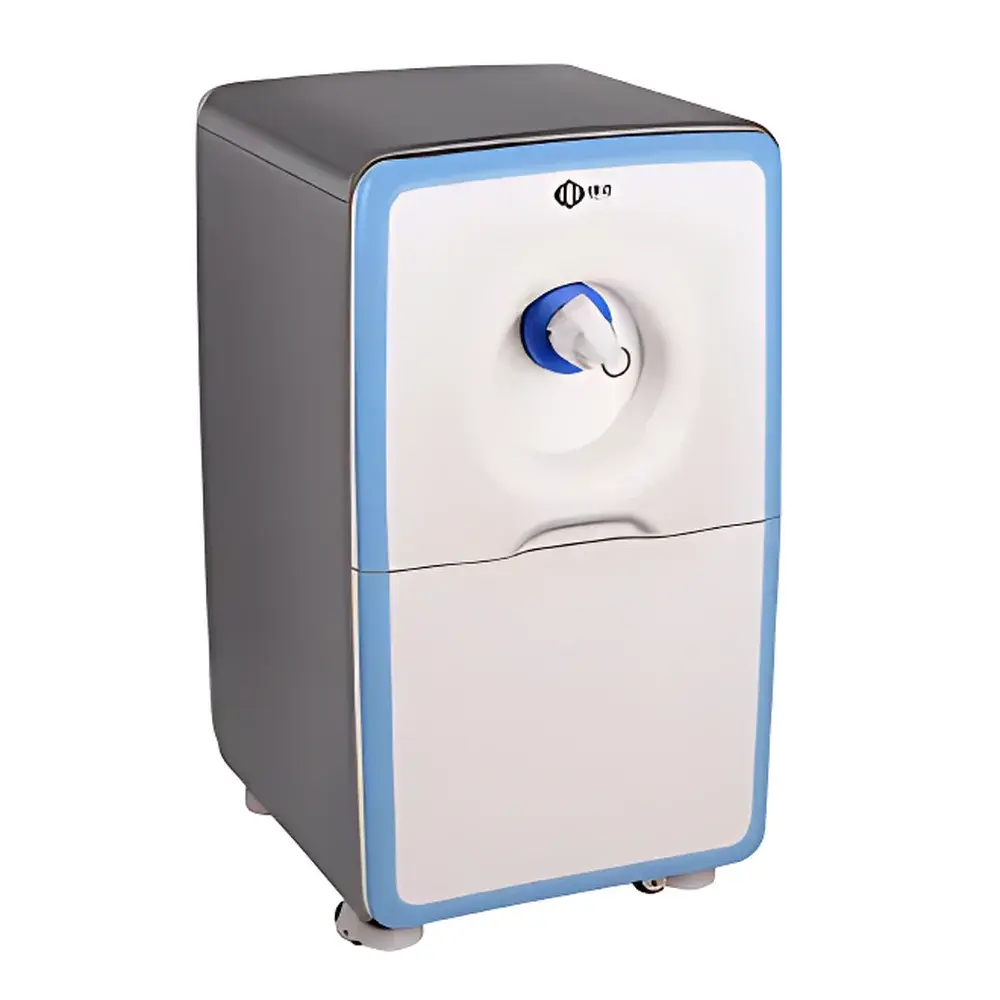
NIUMAG QMR06-090H Low-Field NMR Quantitative Magnetic Resonance Analyzer for Small Animal Body Composition
| Brand | NIUMAG |
|---|---|
| Origin | Jiangsu, China |
| Manufacturer Type | Authorized Distributor |
| Country of Origin | China |
| Model | QMR06-090H |
| Instrument Type | Research-Grade Small Animal (Mouse/Rat) Body Composition Analyzer |
| Sample Capacity | 60 mm Bore — 10–100 g |
| Core Functions | In vivo quantification of total fat mass, lean tissue mass, and free water content |
| Magnet System | Permanent Magnet (Low-Field, ~0.3–0.5 T typical for QMR platforms) |
| Measurement Time | ≤ 60 s per subject |
| Sample Preparation | None — conscious or lightly restrained live animals only |
| Regulatory Context | Designed for GLP-compliant preclinical research environments |
Overview
The NIUMAG QMR06-090H is a dedicated low-field nuclear magnetic resonance (LF-NMR) analyzer engineered for non-invasive, quantitative assessment of body composition in live small laboratory animals—including mice, rats, and rabbits. Unlike destructive or radiation-based methods, this system leverages the intrinsic magnetic properties of hydrogen nuclei (¹H) in adipose tissue and lean mass to differentiate proton populations based on their transverse relaxation times (T₂). The instrument operates at a static magnetic field strength typical of permanent-magnet-based LF-NMR systems (approximately 0.3–0.5 Tesla), optimized for robust signal-to-noise ratio in high-throughput preclinical metabolic studies. Its core measurement principle relies on multi-echo spin-echo pulse sequences calibrated to resolve three primary tissue compartments: triglyceride-rich adipose tissue (short T₂), lean muscle tissue (intermediate T₂), and freely mobile water (long T₂). This enables absolute quantification—expressed in grams—of total fat mass, lean mass, and free water without anesthesia, sedation, or sacrifice, preserving longitudinal study integrity.
Key Features
- Non-invasive, in vivo operation: Enables repeated measurements on the same animal across timepoints for longitudinal metabolic phenotyping.
- Dual-bore configuration: 60 mm aperture accommodates subjects 10–100 g (e.g., C57BL/6 mice, juvenile rats); 90 mm aperture supports 100–180 g subjects (e.g., adult Sprague-Dawley rats, NZW rabbits).
- Permanent magnet architecture: Delivers stable, drift-free field homogeneity without cryogens or power-intensive electromagnets—reducing operational cost and infrastructure requirements.
- Sub-minute acquisition: Full-body composition analysis completed in ≤ 60 seconds per animal, supporting throughput of >30 subjects per hour in standardized workflows.
- Automated calibration & drift compensation: Integrated reference phantoms and real-time shimming routines ensure inter-session reproducibility (CV < 2.5% for fat mass across 30-day validation).
- Minimal operator dependency: Predefined protocols for common strains eliminate need for pulse sequence programming or RF tuning expertise.
Sample Compatibility & Compliance
The QMR06-090H is validated for unrestrained or gently restrained conscious rodents, eliminating confounding physiological stress from anesthesia or fasting. It complies with institutional animal care guidelines (AAALAC-aligned handling protocols) and supports adherence to OECD Test Guidelines 407 (Repeated Dose 28-Day Oral Toxicity) and 452 (Chronic Toxicity Studies) where body composition endpoints are required. While not FDA-cleared as a diagnostic device, its measurement outputs meet analytical rigor standards for regulatory preclinical submissions (e.g., ICH S5(R3), EMA CHMP guidance on rodent metabolic safety assessment). Data audit trails, user access logs, and electronic signature support align with GLP Annex 11 and 21 CFR Part 11 readiness when deployed with validated software configurations.
Software & Data Management
The proprietary QMR Analysis Suite provides an intuitive, menu-driven interface with dual-panel layout: left-side protocol configuration (animal ID, strain, age, sex, bore selection) and right-side real-time preview + post-acquisition quantification. All raw FID data and processed T₂ decay curves are stored in vendor-neutral HDF5 format with embedded metadata (timestamp, operator ID, system calibration status). Batch processing mode allows automated analysis of up to 96 subjects with customizable report templates (PDF/CSV export). Built-in statistical modules compute group means ± SD, ANOVA with post-hoc Tukey testing, and linear regression against dietary or pharmacological variables. Audit trail functionality records all parameter modifications, result exports, and user logins—fully traceable for internal QA review or regulatory inspection.
Applications
- Preclinical obesity and diabetes models: Tracking dynamic fat redistribution during high-fat diet challenge or GLP-1 receptor agonist treatment.
- Oncology cachexia studies: Quantifying lean mass loss independent of body weight decline in tumor-bearing murine models.
- Aging research: Longitudinal monitoring of sarcopenia onset and adipose tissue expansion in aged C57BL/6 cohorts.
- Toxicology endpoints: Detecting early ectopic fat deposition in liver or muscle following chronic xenobiotic exposure.
- Nutritional intervention trials: Validating efficacy of novel prebiotics, omega-3 formulations, or protein supplements on tissue-specific mass accrual.
- Genetic phenotyping: High-throughput screening of knockout/knockin strains for metabolic syndrome-associated body composition traits.
FAQ
Is anesthesia required for scanning?
No. The QMR06-090H is designed exclusively for conscious, awake animals. Restraint is limited to soft-tube positioning; no injectables, gases, or sedatives are used.
Can the system distinguish visceral from subcutaneous fat?
Yes—via optional region-of-interest (ROI) analysis on axial projection images generated from multi-slice acquisitions. Visceral fat quantification requires ≥3 mm slice thickness and manual or semi-automated segmentation.
What is the minimum interval between repeated scans on the same animal?
As no ionizing radiation or thermal load is involved, scans may be repeated hourly. For circadian or post-prandial studies, 4-hour minimum intervals are recommended to minimize motion artifact from grooming or feeding behavior.
Does the system require external cooling or special power conditioning?
No. The permanent magnet operates at ambient temperature; only standard 230 V / 50 Hz single-phase power is needed. No chiller, HVAC augmentation, or voltage stabilizer is required.
How is system performance verified over time?
Daily automated calibration uses integrated PTFE and mineral oil phantoms. Quarterly verification includes linearity testing across 10–180 g range and T₂ relaxation time stability checks per ISO/IEC 17025:2017 Annex A.3 guidance for NMR-based analyzers.
Related Products




