
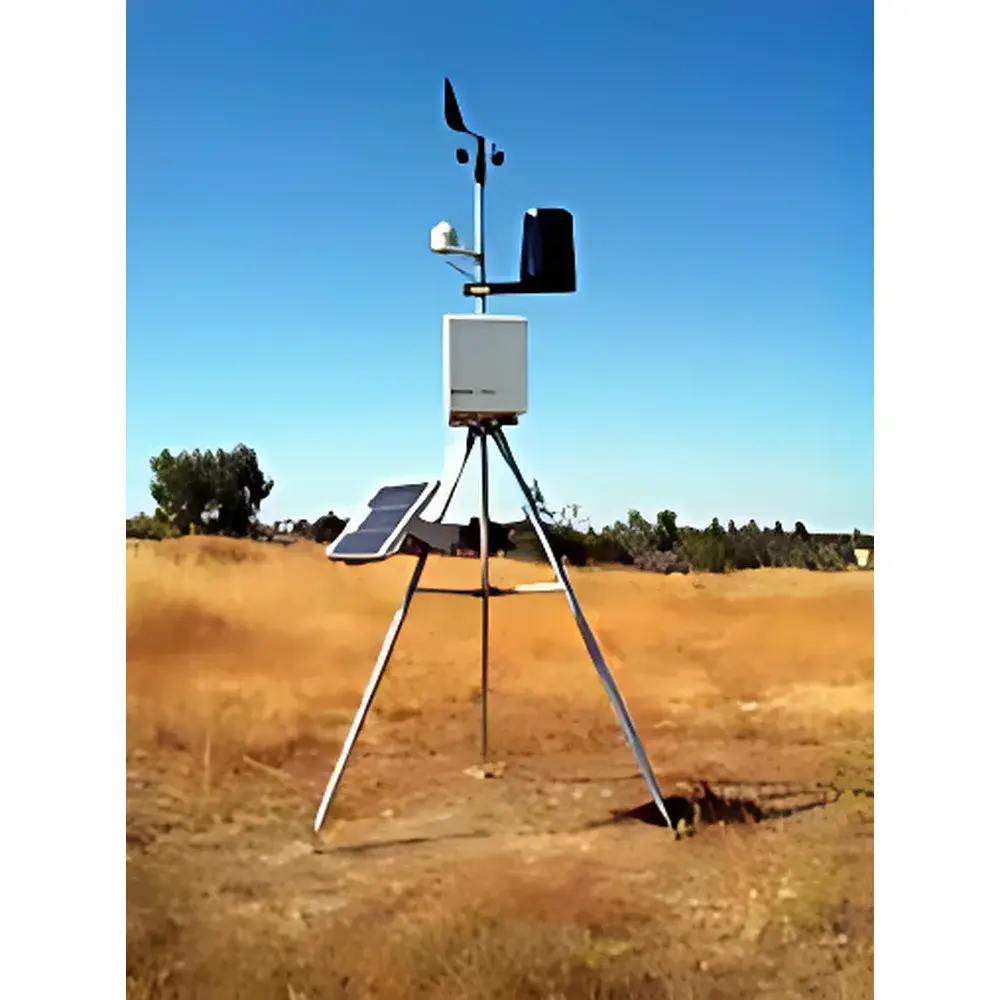
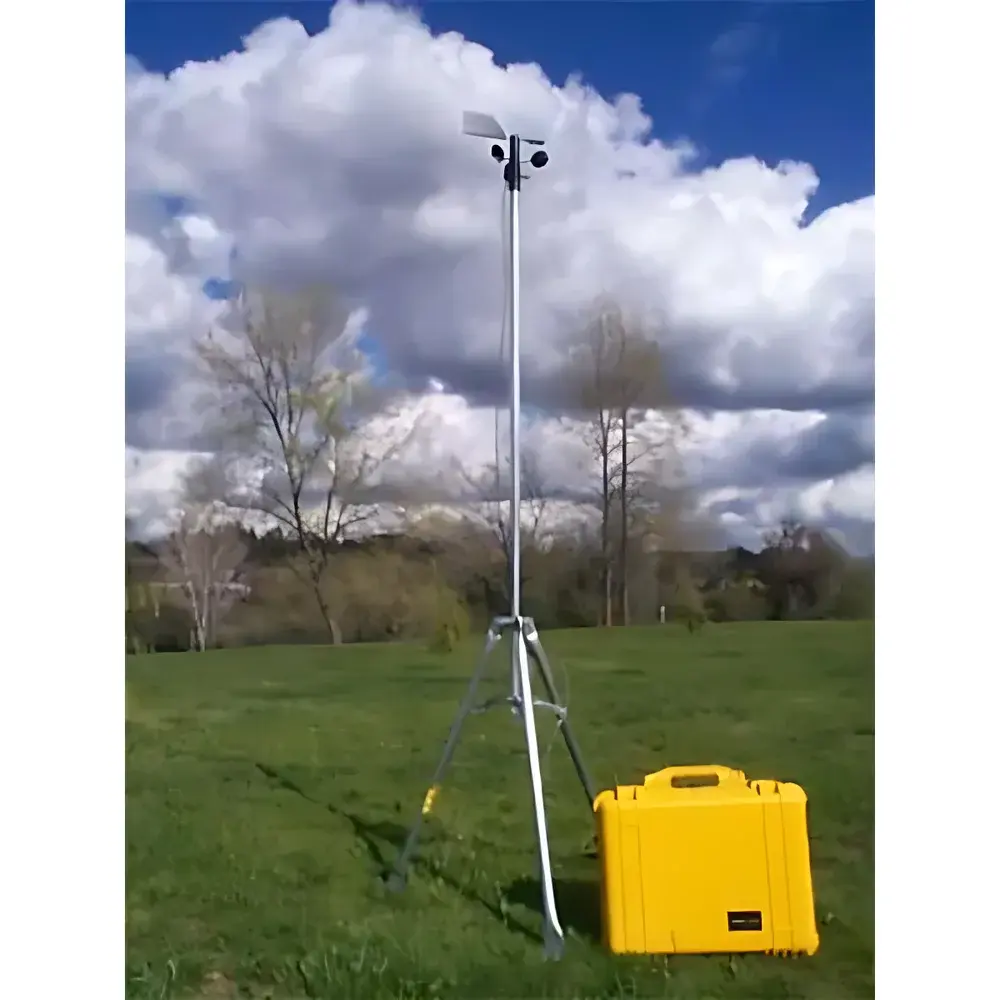
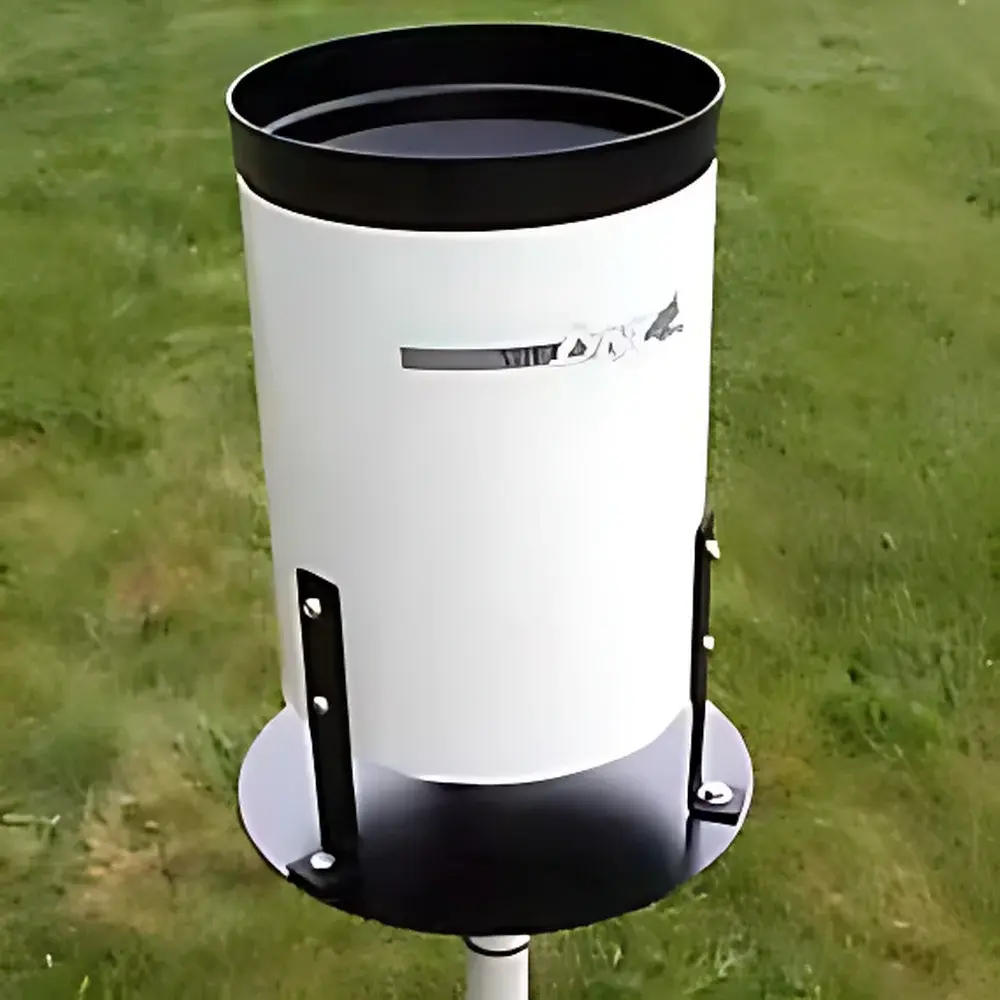
Novalynx WS-16 Modular Weather Station
| Brand | Novalynx |
|---|---|
| Origin | USA |
| Manufacturer Type | Authorized Distributor |
| Product Category | Imported Instrument |
| Model | WS-16 |
| Instrument Type | Modular Environmental Monitoring System |
| Power Supply | 10–16 VDC |
| Max Current Draw | 60 mA |
| Serial Interface | 9-pin D-Sub (RS-232) |
| Onboard Memory | 128 KB RAM (expandable to 256 KB or 512 KB) |
| Operating Temperature (Data Logger) | –40 °C to +60 °C |
| Clock Accuracy | ±30 seconds/month |
| Wind Speed Range | 0–57 m/s |
| Wind Speed Resolution | >0.1 mph |
| Wind Speed Accuracy | ±1 mph |
| Wind Start Threshold | 0.8 mph |
| Wind Direction Range | 0–360° |
| Wind Direction Accuracy | ±3% |
| Temp. Range (Air) | –40 °F to +140 °F |
| Temp. Accuracy | ±1 °F |
| RH Range | 0–100% RH |
| RH Accuracy | ±3% (10–90% RH) |
| Barometric Pressure Range | 28.25–30.75 inHg (85 hPa span) |
| Pressure Resolution | ±0.01 inHg (±0.3 hPa) |
| Pressure Absolute Accuracy | ±0.05 inHg |
| Rainfall Resolution | 0.01 in/tip |
| Rainfall Accuracy | ±4% up to 3 in/hr |
| Solar Radiation Sensor | Silicon Pyranometer |
| Spectral Range | 0.4–1.1 µm |
| Sensitivity | ~80 mV per 1000 W/m² |
| Radiation Accuracy | ±5% |
| Enclosure Rating | NEMA-4X |
| Default Logging Interval | Configurable (e.g., 15 min) |
| Storage Capacity (6 sensors @ 15-min interval) | 45 days |
| Analog Input Resolution | 12-bit |
| Analog Accuracy | ±0.1% of full scale |
| Alarm Outputs | 2 relay outputs |
| Communication Options | RS-232 standard |
Overview
The Novalynx WS-16 Modular Weather Station is a field-deployable, open-architecture environmental monitoring system engineered for long-term, unattended operation across diverse climatic and geographic conditions. Built upon a robust, NEMA-4X-rated enclosure and powered by dual-source capability (AC adapter or solar-charged battery), the WS-16 employs a distributed sensing paradigm—where each sensor connects directly to the 110-WS-16D data acquisition unit via standardized analog or digital interfaces—eliminating proprietary bus dependencies and enabling true plug-and-play interoperability. Its core measurement principle relies on calibrated transduction of physical atmospheric variables (wind vector, thermal energy, moisture content, barometric force, precipitation mass, and broadband solar irradiance) into stable analog voltage or frequency signals, digitized at 12-bit resolution with ±0.1% full-scale linearity. Designed for compliance with international observational standards—including WMO Guide to Instruments and Observing Methods (WMO-No. 8)—the system supports traceable calibration protocols and facilitates integration into national meteorological networks, agricultural decision support systems, and hydrological modeling frameworks.
Key Features
- Modular architecture with hot-swappable sensor support—no firmware reprogramming required for sensor addition or replacement
- 110-WS-16D data logger featuring 128 KB non-volatile RAM (upgradeable to 256 KB or 512 KB), supporting up to 45 days of continuous logging for six concurrent sensors at 15-minute intervals
- Dual alarm relay outputs configurable for threshold-based event triggering (e.g., wind gust exceedance, rainfall accumulation alerts)
- Field-configurable sampling intervals (1 second to 24 hours) and programmable start/stop schedules via serial menu interface
- Wide operating temperature range (–40 °C to +60 °C) for both sensor suite and data logger—validated for polar, desert, and tropical deployments
- RS-232 as standard communication interface; optional expansion to RS-485, SDI-12, or LTE-M/NB-IoT telemetry modules for remote data retrieval
- NEMA-4X aluminum enclosure with integrated desiccant chamber and UV-stabilized mounting hardware for permanent outdoor installation
Sample Compatibility & Compliance
The WS-16 accommodates a broad spectrum of ISO/IEC 17025-aligned environmental sensors beyond the base configuration (anemometer, wind vane, thermistor, capacitive hygrometer, piezoresistive barometer, tipping-bucket rain gauge, and silicon pyranometer). Optional certified probes include thermocouple-based soil temperature arrays (ASTM D5308), time-domain reflectometry (TDR) soil moisture sensors (ISO 11274), ultrasonic water level transducers (IEC 61000-6-2 EMC compliant), and electrochemical gas detection modules (UL 2075 listed). All onboard timing functions adhere to NIST-traceable real-time clock specifications (±30 s/month), while pressure and temperature calibrations are referenced to NIST SRM 1968 and SRM 1965, respectively. The system meets FCC Part 15 Class B and CE EN 61326-1 electromagnetic compatibility requirements, and its data structure conforms to CF Standard Format (Climate Forecast Metadata Conventions) for seamless ingestion into NOAA’s NCDC, EEA’s Eionet, or FAO’s WaPOR databases.
Software & Data Management
Data retrieval is supported via terminal emulation (e.g., PuTTY or Tera Term) using ASCII-formatted serial output, enabling direct parsing into Python, MATLAB, or R workflows. A Windows-native graphical configuration and visualization tool—WS-View—is available as an optional licensed application, providing real-time telemetry dashboards, automated CSV/NetCDF export, spectral analysis of wind turbulence, and audit-trail logging compliant with FDA 21 CFR Part 11 requirements (user authentication, electronic signatures, immutable change history). Raw binary logs can be post-processed using open-source utilities such as metpy or climt, and all timestamped records embed ISO 8601-compliant UTC metadata. Firmware updates are delivered via signed HEX packages verified through SHA-256 checksums, ensuring integrity during over-the-air (OTA) or local USB-based deployment.
Applications
- Agricultural microclimate monitoring for irrigation scheduling, frost prediction, and pest phenology modeling (aligned with USDA NRCS CropScape and CIMIS protocols)
- Renewable energy site assessment—long-term wind resource characterization (IEC 61400-12-1), solar insolation mapping (IEC 61724-1), and turbine wake analysis
- Urban heat island (UHI) studies requiring spatially dense, low-cost sensor node deployment (compatible with LoRaWAN gateways via optional radio module)
- Hydrological basin monitoring for flood forecasting, evapotranspiration estimation (ASCE Penman-Monteith implementation), and snowmelt runoff correlation
- Educational and citizen science programs leveraging its open interface architecture for student-led instrumentation design and calibration exercises
FAQ
Is the WS-16 compatible with third-party sensors using 0–5 V analog or 4–20 mA outputs?
Yes—the 110-WS-16D supports configurable analog input ranges (±5 V, 0–5 V, 0–10 V, 4–20 mA) with software-selectable excitation voltage (2.5 V or 5 V) and programmable scaling factors per channel.
Can the data logger operate independently without a PC connection after initial configuration?
Yes—once configured via serial interface, the unit runs autonomously with internal clock, scheduled logging, and non-volatile memory retention—even during power interruption.
What is the recommended recalibration interval for factory-calibrated sensors?
Novalynx recommends annual verification against NIST-traceable references for pressure and temperature sensors; biennial calibration for wind and radiation sensors under moderate exposure conditions.
Does the system support time-synchronized multi-node deployments?
Yes—optional GPS-synced time modules (1PPS input) enable sub-second temporal alignment across distributed WS-16 installations for eddy covariance or acoustic anemometry applications.
Are firmware updates provided free of charge for the lifetime of the product?
Yes—Novalynx provides perpetual firmware maintenance for all WS-16 units registered under valid distributor warranty, including security patches and protocol enhancements.
Related Products







