
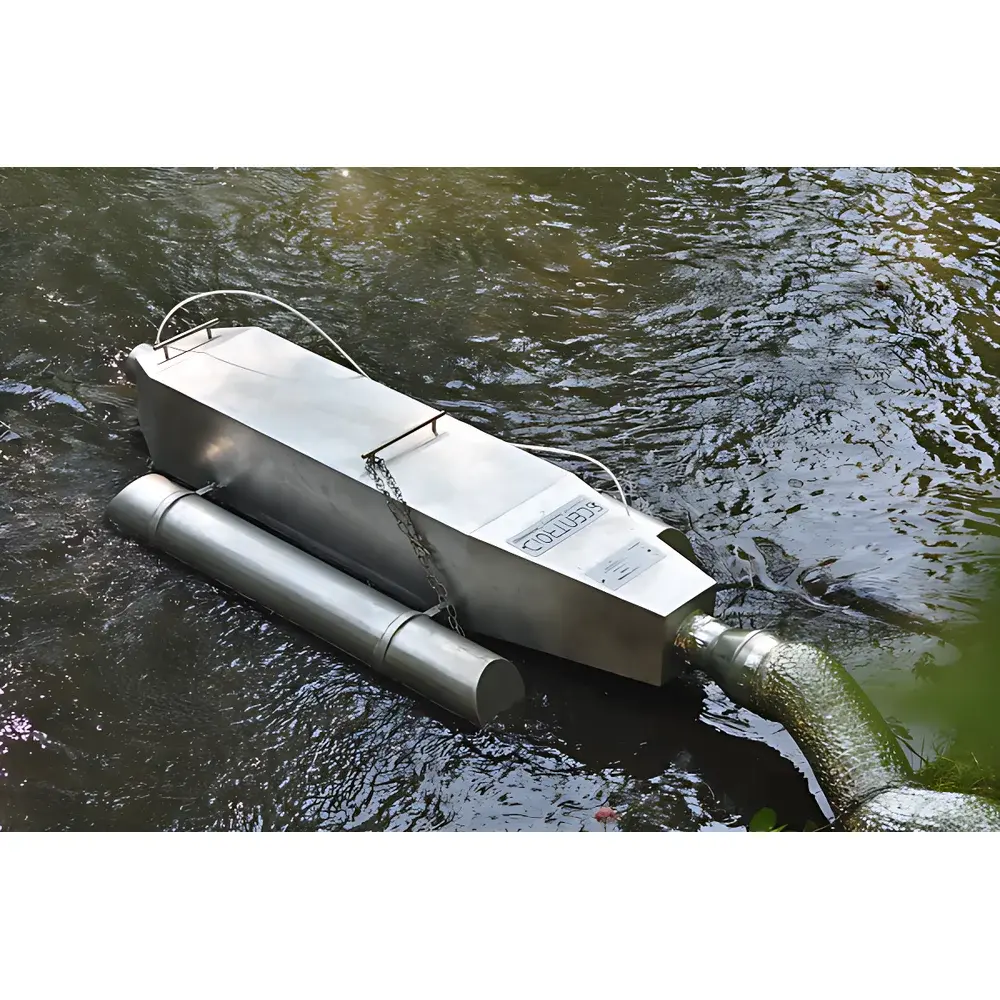
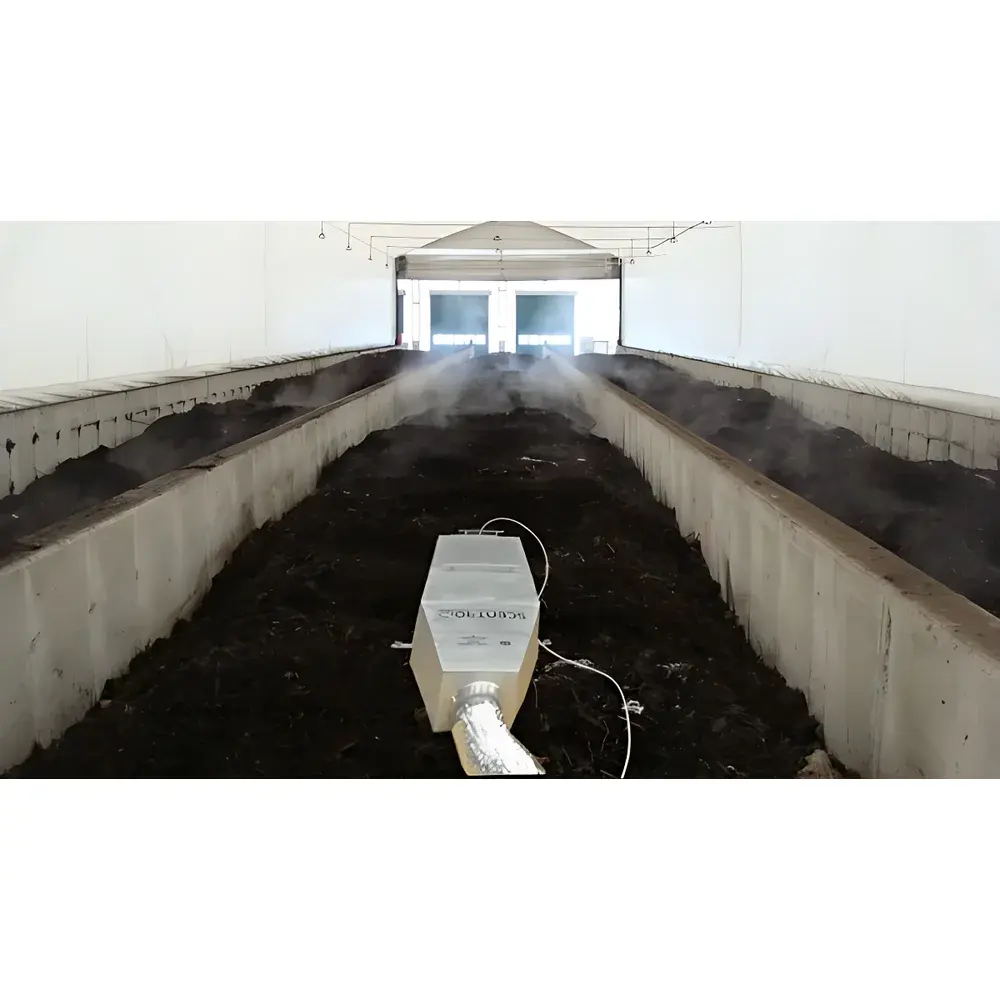
Odor Wind Tunnel Sampler IDES Model 1010
| Brand | IDES |
|---|---|
| Origin | Canada |
| Manufacturer Type | Authorized Distributor |
| Origin Category | Imported |
| Model | 1010 |
| Pricing | Available Upon Request |
Overview
The IDES Model 1010 Odor Wind Tunnel Sampler is a specialized environmental sampling instrument engineered for controlled, reproducible collection of odorant compounds from aqueous and surface water sources under simulated atmospheric boundary layer conditions. Unlike passive grab sampling or static headspace methods, this system employs a calibrated wind tunnel configuration to replicate natural air–water interface mass transfer dynamics—enabling quantitative assessment of volatile organic compounds (VOCs), reduced sulfur species (e.g., H₂S, methanethiol), and nitrogenous odorants (e.g., ammonia, trimethylamine) emitted from water surfaces. The device operates on the principle of dynamic flux sampling: a regulated airflow passes over a defined water surface area within a sealed, temperature- and humidity-controlled tunnel chamber, while odor-laden air is drawn through inert, high-efficiency sorbent traps (e.g., Tenax TA, Carbopack B, or custom-coated tubes) for subsequent thermal desorption–gas chromatography–mass spectrometry (TD-GC-MS) analysis. Designed for field-deployable and laboratory-based odor emission studies, the Model 1010 supports standardized odor impact assessments required by municipal wastewater treatment facilities, landfill leachate ponds, and agricultural runoff monitoring programs.
Key Features
- Modular wind tunnel chamber with adjustable cross-sectional geometry (standard 0.3 m × 0.3 m × 1.2 m L) to accommodate variable water sample volumes (5–20 L) and simulate realistic fetch lengths.
- Integrated laminar flow control system with precision mass flow controllers (MFCs) ensuring stable, traceable airflow rates from 0.1 to 2.0 m/s across the water surface—calibrated per ISO 16000-3 and ASTM D5197 protocols.
- Temperature- and relative humidity-stabilized environment (±0.5 °C, ±3% RH) maintained via Peltier-based conditioning unit to minimize evaporative artifacts and preserve odorant partitioning equilibrium.
- Inert wetted-path construction using electropolished 316L stainless steel and fluoropolymer-sealed joints to prevent adsorption, catalytic degradation, or memory effects during sequential sampling.
- Onboard data logging of real-time operational parameters—including tunnel velocity, water temperature, ambient RH, and cumulative sampling volume—with timestamped CSV export via USB-C interface.
- Compliance-ready design supporting audit trails and user-access controls aligned with GLP documentation requirements for regulatory odor reporting.
Sample Compatibility & Compliance
The IDES Model 1010 accepts liquid samples ranging from raw surface water and wastewater effluents to treated discharge streams and sediment pore water extracts. It accommodates both unfiltered and pre-filtered (0.45 µm) matrices without clogging or turbulence disruption. Sample containers are compatible with standard 10–20 L polypropylene or glass-lined carboys. The system conforms to key international frameworks governing odor measurement: it facilitates method development compliant with EN 13725 (odor concentration determination by dynamic olfactometry), supports flux calculation methodologies referenced in US EPA Method TO-15 and EPA Draft Method IP-1A, and provides traceable airflow calibration data suitable for inclusion in state-level odor nuisance investigations (e.g., California AB 2588, Texas TCEQ Odor Investigation Protocol). All materials contacting sampled air or water meet USP Class VI and FDA 21 CFR 177.2410 specifications for inertness and extractables.
Software & Data Management
The Model 1010 operates via embedded firmware with local touchscreen interface (7-inch resistive LCD) and optional remote operation via Ethernet or Wi-Fi using the IDES Environmental Control Suite (v3.2+). This Windows-based application enables protocol-driven sampling sequence programming, real-time sensor visualization, automated calibration verification logs, and direct integration with LIMS platforms via HL7 or ASTM E1394-compliant data export. Audit trail functionality records all user actions—including method edits, parameter changes, and start/stop events—with SHA-256 hashing and time-stamping synchronized to NIST-traceable network time servers. Data files include embedded metadata fields compliant with ISO/IEC 17025 clause 7.5.2 for result traceability and chain-of-custody integrity.
Applications
- Quantification of odor emission fluxes from wastewater stabilization ponds and aerated lagoons.
- Baseline odor characterization prior to installation of biofilter or chemical scrubber systems.
- Performance validation of odor mitigation technologies under controlled hydraulic and meteorological analogs.
- Research into Henry’s law constant variability for priority odorants across pH and temperature gradients.
- Supporting odor management plans (OMPs) required by permitting authorities under Clean Water Act Section 402 and EU Industrial Emissions Directive (2010/75/EU).
- Academic and regulatory interlaboratory comparison studies targeting method harmonization for aquatic odor source terms.
FAQ
What types of odorants can be reliably collected using the Model 1010?
The system is validated for polar and semi-volatile compounds with vapor pressures ≥0.1 Pa at 25 °C, including hydrogen sulfide, dimethyl sulfide, geosmin, 2-methylisoborneol (MIB), indole, skatole, and low-molecular-weight aldehydes and ketones.
Is the wind tunnel chamber portable for field deployment?
Yes—the core tunnel module weighs <22 kg and folds into a ruggedized transit case; ancillary components (air supply, power conditioner, and data logger) are housed in IP54-rated field racks compatible with standard 12 V DC vehicle power or lithium battery packs.
Can the Model 1010 be integrated with online GC or PID sensors?
Direct analog output (4–20 mA, 0–10 V) and Modbus RTU support enable real-time interfacing with third-party continuous analyzers; however, sorbent tube collection remains the recommended primary mode for regulatory-grade speciation and quantitation.
Does IDES provide method validation documentation?
Each unit ships with a Factory Calibration Certificate (traceable to NRC Canada), a System Suitability Test Report per ISO/IEC 17025, and a comprehensive User Validation Guide outlining IQ/OQ/PQ protocols for laboratory accreditation.







