
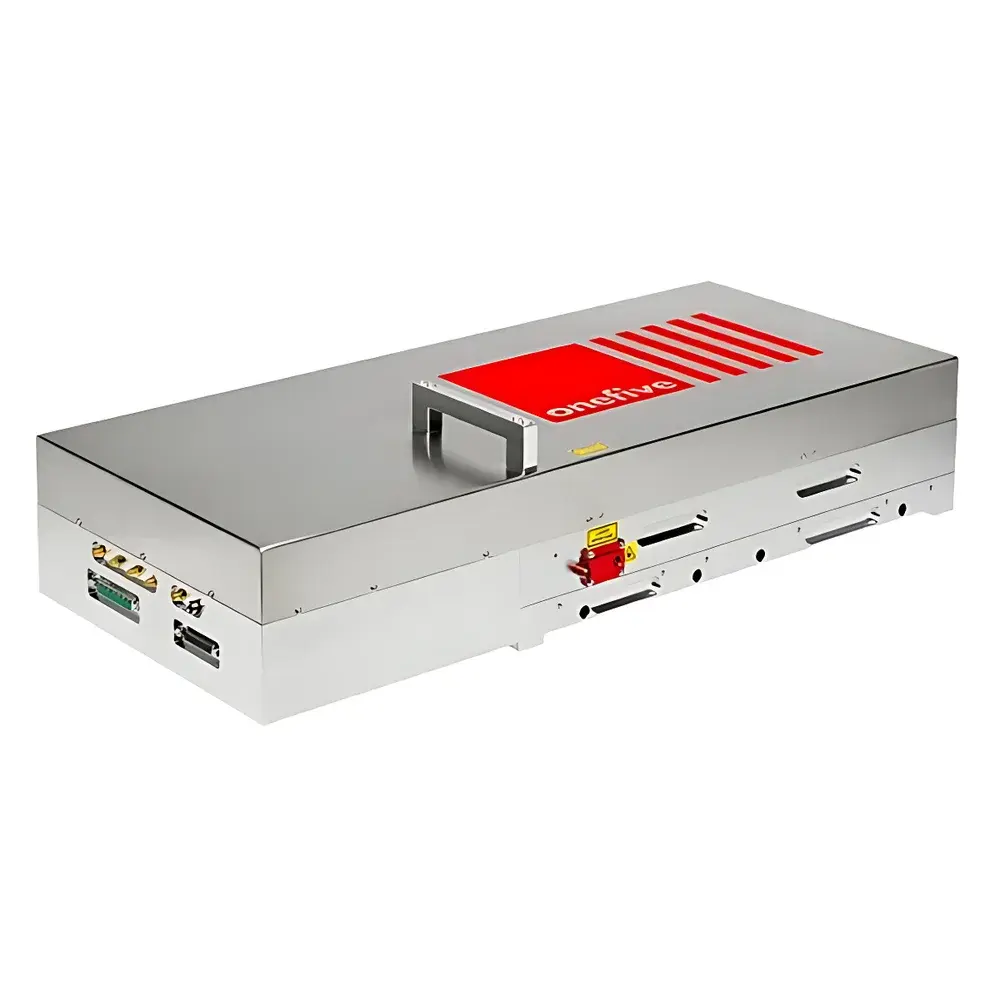
Onefive Katana-XP High-Energy Picosecond Laser System
| Brand | Onefive |
|---|---|
| Origin | Switzerland |
| Model | Katana-XP |
| Wavelength Options | 266 nm, 355 nm, 532 nm, 1064 nm |
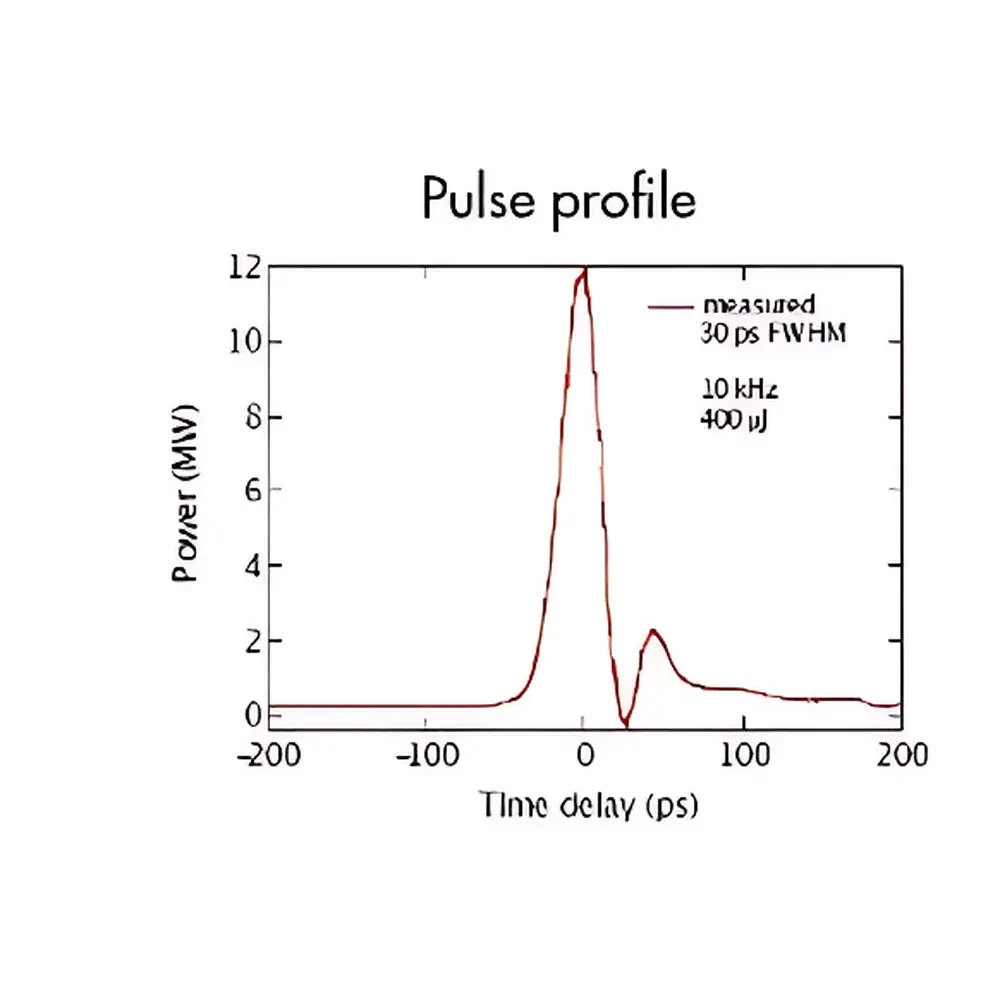
| Pulse Width | 30 ps – 1 ns |
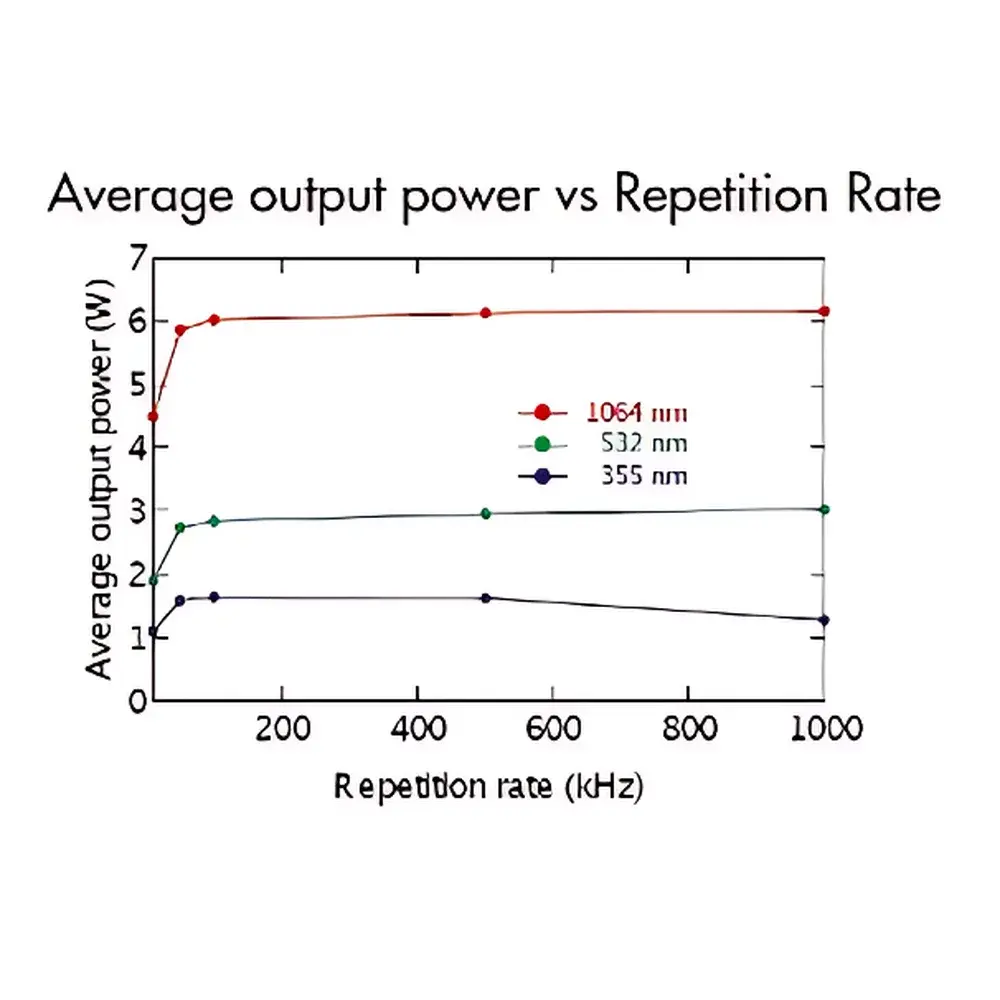
| Max. Avg. Power | 0.5–6 W |
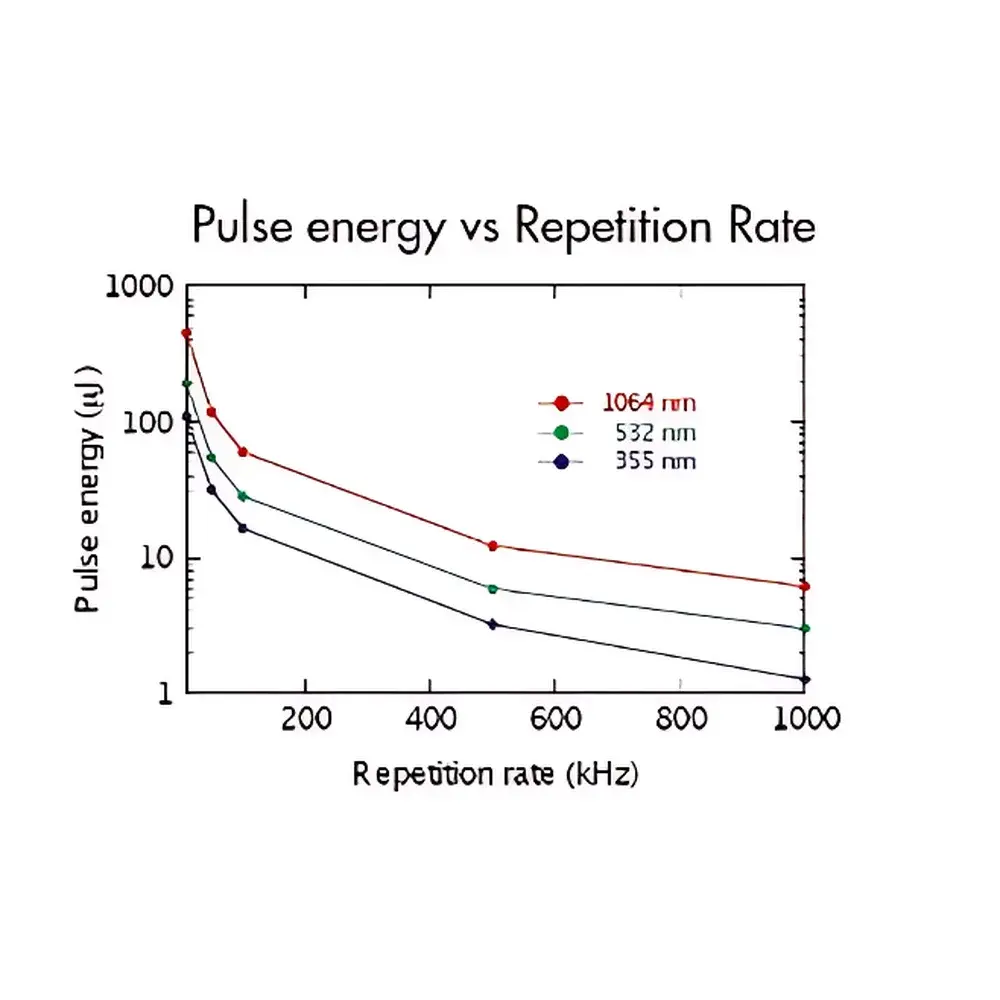
| Max. Pulse Energy | 40–400 µJ |
| Max. Peak Power | 1.2–12 MW |
| Repetition Rate | User-Configurable up to 1 MHz |
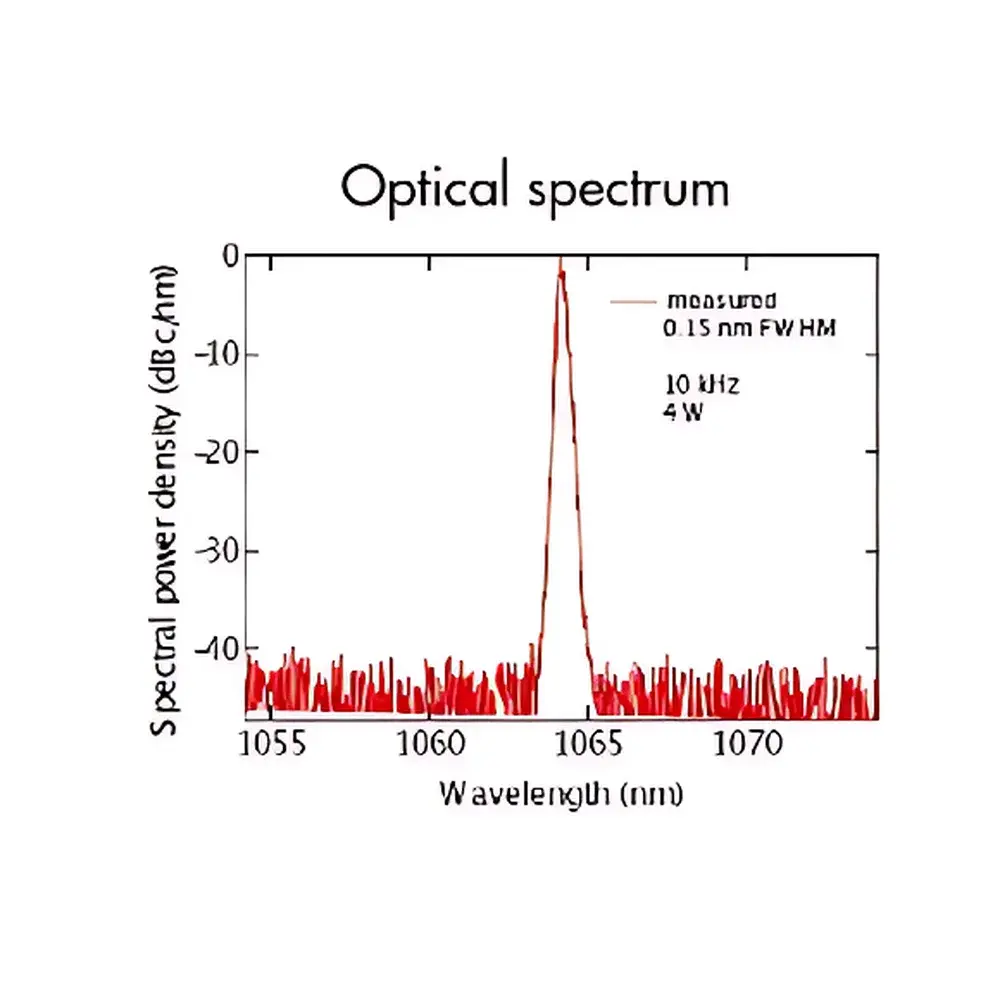
| Spectral Bandwidth | < 1 nm |
| Beam Quality | M² < 1.2 (TEM₀₀) |
| Polarization Extinction Ratio | > 23 dB |
| Amplitude Noise (10 h) | < 4.0% RMS |
| Timing Jitter | < 3 ps |
| Warm-up Time | < 15 min |
| Operating Temperature | 18–32 °C |
| Storage Temperature | −15–65 °C |
| Laser Head Dimensions | 135 × 715 × 306 mm³ |
| Laser Head Weight | 45 kg |
| Controller Dimensions | 133 × 483 × 400 mm³ |
| Controller Weight | 7 kg |
| Power Supply | 24 VDC/25 A or 90–264 VAC, 47–63 Hz |
| Total Power Consumption | < 600 W |
| Cooling | Water-cooled laser head, air-cooled controller |
| Compliance | IEC 60068-2-6, IEC 60068-2-27, IEC 60068-2-29 |
Overview
The Onefive Katana-XP is a high-energy, industrial-grade picosecond laser system engineered for precision material processing, nonlinear optics, and scientific research applications requiring robust temporal stability, exceptional beam quality, and operational flexibility. Based on a hybrid architecture integrating solid-state gain media with advanced fiber-integrated pumping and thermal management, the Katana-XP delivers pulse durations tunable between 30 ps and 1 ns—enabling optimal balance between peak intensity and thermal load mitigation across diverse ablation, excitation, and metrology tasks. Its all-solid-state design eliminates ASE (amplified spontaneous emission) background, ensuring high signal-to-noise ratio in time-resolved measurements and clean harmonic generation. The laser operates in both actively synchronized and passively mode-locked regimes, supporting seamless integration into multi-instrument timing ecosystems such as pump-probe setups, LIBS systems, or ultrafast metrology platforms compliant with ISO/IEC 17025 laboratory requirements.
Key Features
- Externally triggerable with sub-3-ps timing jitter for synchronization with detectors, scanners, or RF sources
- Continuously adjustable repetition rate from single-shot to 1 MHz—programmable via analog voltage or digital interface
- Dual-operation modes: active synchronization (for deterministic timing) and passive mode-locking (for autonomous stability)
- Burst-mode capability enabling user-defined pulse trains with arbitrary amplitude modulation and inter-pulse spacing
- Adjustable pulse energy via internal attenuation—preserving beam profile and M² < 1.2 (TEM₀₀) across full dynamic range
- Hermetically sealed, dust-resistant OEM enclosure rated for 24/7 operation under ambient temperatures from 18 °C to 32 °C
- No routine alignment or maintenance required; factory-optimized cavity ensures long-term power and pointing stability
- Integrated thermal control validated per IEC 60068-2-6 (vibration), IEC 60068-2-27 (shock), and IEC 60068-2-29 (repetitive shock) standards
Sample Compatibility & Compliance
The Katana-XP supports direct coupling into scanning galvanometers, vacuum-compatible optical parametric amplifiers (OPAs), and harmonic generation modules—including optional motorized wavelength selection for 266 nm (UVC), 355 nm (UVA), and 532 nm (green) outputs. Its narrow spectral bandwidth (23 dB) ensure efficient conversion efficiency in SHG, THG, and FHG crystals without spectral filtering. The system complies with CE marking directives for electromagnetic compatibility (EMC) and low-voltage equipment (LVD). For regulated environments—including GLP-compliant materials testing labs or ISO 13485-certified medical device R&D—the controller firmware supports audit-trail logging and user-access-level configuration locking, aligning with FDA 21 CFR Part 11 data integrity principles when integrated with validated third-party acquisition software.
Software & Data Management
Control is implemented via RS232, USB-C, and Ethernet interfaces using a vendor-provided SDK (C/C++, Python, LabVIEW drivers included). Real-time monitoring includes pulse energy feedback (via integrated photodiode), temperature telemetry from critical thermal zones, and interlock status reporting. All operational parameters—including repetition rate, burst pattern, and output attenuation—are programmable and recallable through non-volatile memory profiles. Data logs are timestamped with microsecond resolution and exportable in CSV or HDF5 format for traceability in QA/QC workflows. Remote diagnostics support enables predictive maintenance alerts based on cumulative operating hours and thermal drift trends—critical for uptime-sensitive production lines or long-duration experiments.
Applications
- Micro-machining: High-aspect-ratio drilling of ceramics, polymers, and thin-film solar cells with minimal heat-affected zone (HAZ)
- Solar cell manufacturing: Selective emitter formation, edge isolation, and TCO scribing on PERC and TOPCon architectures
- Plasma generation: Standoff laser-induced breakdown spectroscopy (LIBS) for elemental analysis in hazardous or remote environments
- Nonlinear optics: Efficient optical parametric generation, terahertz pulse generation, and multiphoton excitation in microscopy
- Materials science: Ultrafast pump-probe studies of carrier dynamics in 2D materials, perovskites, and wide-bandgap semiconductors
- Laser ranging & LIDAR: High-precision time-of-flight measurements enabled by sub-3-ps jitter and stable pulse-to-pulse energy
FAQ
Is the Katana-XP compatible with third-party pulse pickers or optical parametric amplifiers?
Yes—the laser’s low timing jitter (<3 ps RMS), clean TEM₀₀ spatial profile, and external trigger input make it fully interoperable with commercial pulse selectors and OPAs requiring precise synchronization.
Can output wavelength be switched during operation?
Motorized harmonic generator options allow automated switching between 1064 nm, 532 nm, 355 nm, and 266 nm—configurable via software command without manual realignment.
What cooling infrastructure is required?
The laser head requires closed-loop water cooling (18–25 °C, flow rate ≥2 L/min, pressure drop <1.5 bar); the controller uses forced-air convection and does not require chilled air or additional chillers.
Does the system meet regulatory requirements for use in certified laboratories?
It satisfies IEC 61000-6-2/6-4 EMC immunity/emission standards and supports electronic record integrity features required for FDA 21 CFR Part 11 and EU Annex 11 compliance when deployed with validated software layers.
How is long-term power stability verified?
Amplitude noise is measured over 10-hour continuous operation at rated power and confirmed <4.0% RMS—certified per ISO 13697 for laser power stability testing protocols.





