
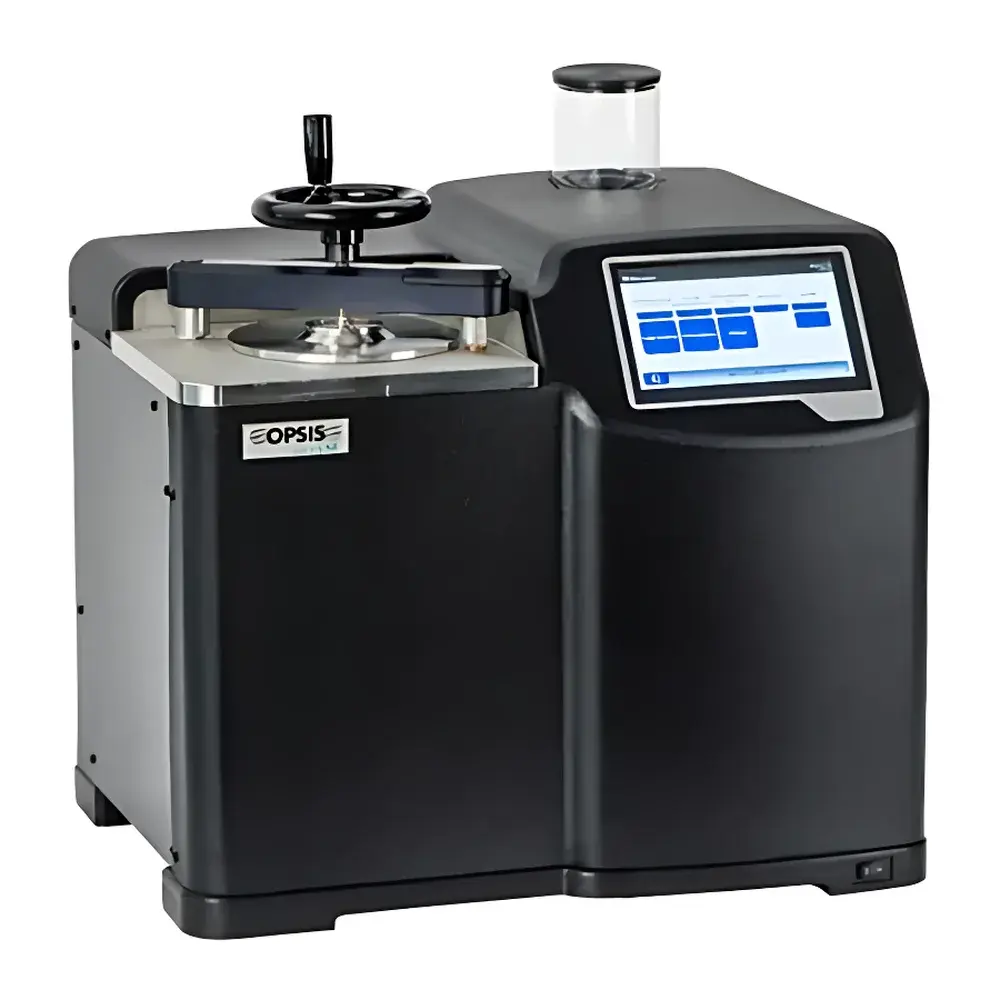
Opsis FB-300 Automated Fiber Analyzer
| Brand | Opsis |
|---|---|
| Origin | Sweden |
| Model | FB-300 |
| Sample Capacity | 27 per batch |
| Throughput | 108 CF / 135 NDF / 162 ADF samples per day |
| Sample Mass Range | 0.1–2.0 g |
| Measurement Range | 0–100% |
| Repeatability | ≤ 0.5% |
| Temperature Control Range | Ambient to 100 °C |
| Temperature Accuracy | ±0.1 °C |
| Display | Color LCD touchscreen with bilingual (EN/CN) interface |
| Programmable Methods | Up to 50 user-defined protocols |
| Compliance | AOAC 978.10, AOAC 2002.04, AOAC 962.09, AACC 32–25, USP <281>, GB/T 6434–2006, GB/T 20806–2006, AAFCO Official Methods |
| Safety Systems | Dual liquid-level sensors, real-time temperature & pressure monitoring, mechanical pressure relief valve, lid interlock sensor |
| Software Integration | LabConnect LIMS-ready, optional balance & barcode scanner interface |
| Power Supply | 230 V AC, 50/60 Hz |
| Dimensions (W×D×H) | 720 × 650 × 780 mm |
| Weight | 85 kg |
Overview
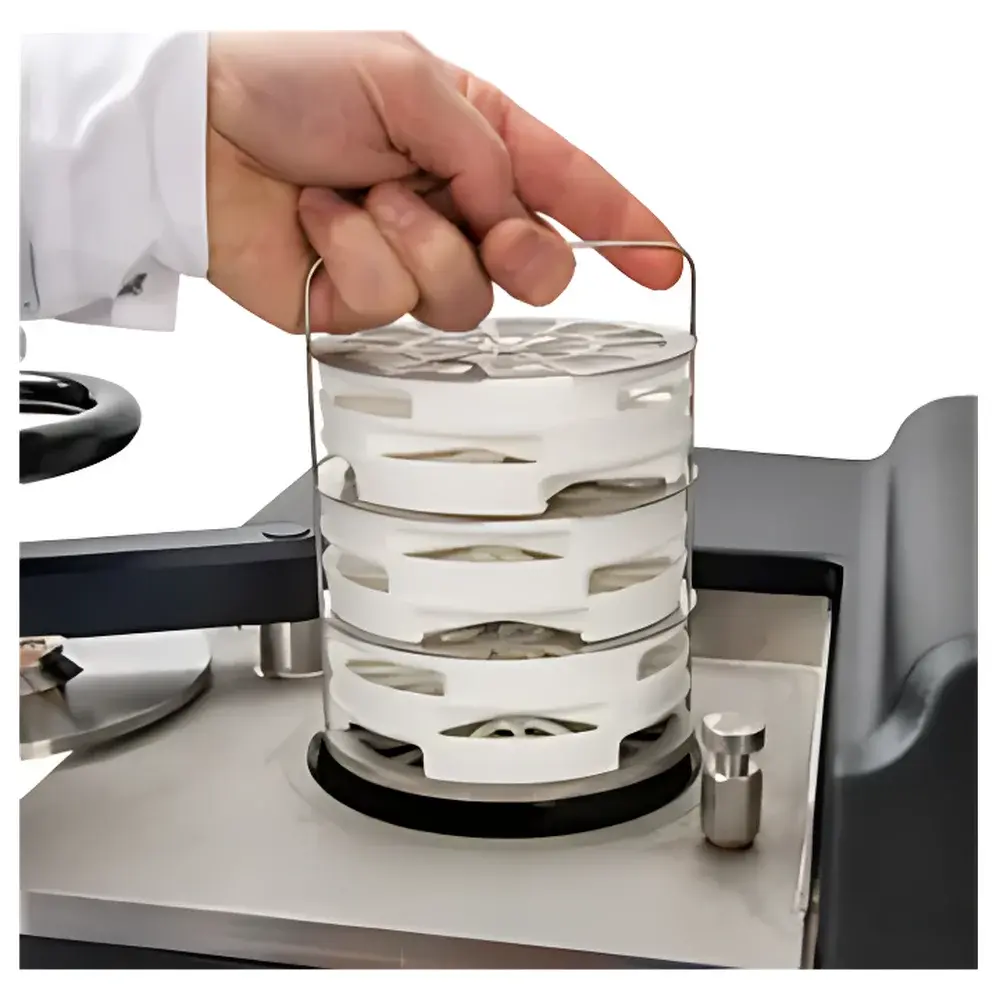
The Opsis FB-300 Automated Fiber Analyzer is a fully integrated, benchtop instrument engineered for precise, standardized determination of dietary fiber fractions in feed, food, and botanical matrices. It implements the gravimetric filter-bag methodology—recognized as the reference technique by AOAC International, AACC, USP, and national standards (e.g., GB/T 6434–2006)—to quantify crude fiber (CF), neutral detergent fiber (NDF), acid detergent fiber (ADF), acid detergent lignin (ADL), cellulose, and hemicellulose. Unlike traditional crucible-based systems, the FB-300 eliminates vacuum filtration, manual rinsing, and operator-dependent handling steps. Instead, pre-weighed samples are sealed in porous polyester filter bags and subjected to controlled, sequential chemical digestion under precisely regulated temperature, agitation, and reagent dosing conditions. The system’s closed-loop thermal architecture enables reflux-free heating up to 100 °C, reducing water consumption and improving energy efficiency. All process stages—including acid/alkali reagent delivery, enzymatic hydrolysis (with automated amylase dispensing for NDF), boiling, agitation via vertical bag oscillation, multi-cycle washing, acetone defatting, drying, and ash correction (when required)—are executed without human intervention.
Key Features
- Fully automated operation: Unattended execution of digestion, agitation, washing, waste discharge, and solvent treatment across 27-sample batches.
- Modular reagent architecture: Four dedicated external ports for acidic reagents, alkaline reagents, neutral detergent solution, and acid detergent solution; supports simultaneous connection to 1–4 reagent reservoirs.
- Intelligent enzymatic dosing: Integrated amylase cup with programmable dispensing logic synchronized to NDF method parameters.
- High-fidelity thermal control: PID-regulated heating with ±0.1 °C accuracy and dual redundant temperature sensors for process validation.
- Multi-layer safety system: Real-time monitoring of liquid level (dual ultrasonic sensors), internal pressure (digital transducer), and lid position (mechanical interlock); automatic shutdown and audible/visual alerts upon deviation.
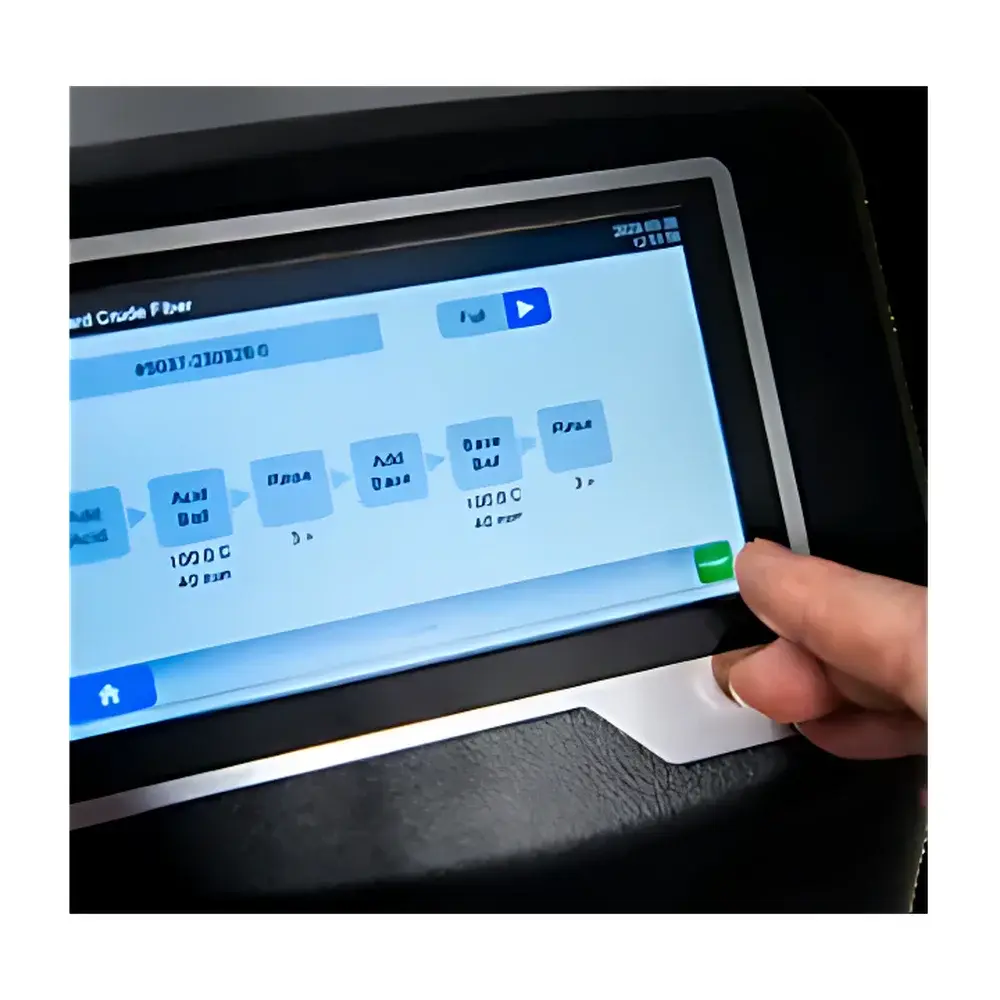
- Bilingual touchscreen interface: Intuitive color LCD with context-sensitive prompts, rapid method selection, and editable parameters including digestion time, temperature ramp profiles, wash cycles, and reagent volumes.
- Optimized sample geometry: 120° cross-aligned sample placement within racks and 60° angular offset between racks ensures uniform exposure to reagents and mechanical agitation.
Sample Compatibility & Compliance
The FB-300 accommodates heterogeneous solid matrices including pelleted and mash livestock feeds, cereal grains, forage grasses, leguminous hay, silage, pet food formulations, plant biomass, and processed food products. Its filter-bag design minimizes matrix interference from starch, pectin, and soluble proteins—especially critical when applying AOAC 2002.04 (NDF with heat-stable α-amylase) or AOAC 962.09 (ADF). Method validation data confirm equivalence with official reference results per GB/T 20806–2006 and AAFCO nutrient profiles. Instrument performance meets GLP documentation requirements: audit trails, electronic signatures, user role-based access control (administrator/operator/technician), and full traceability of calibration events, reagent lots, and run logs. All firmware and method files comply with FDA 21 CFR Part 11 readiness when deployed with LabConnect software.
Software & Data Management
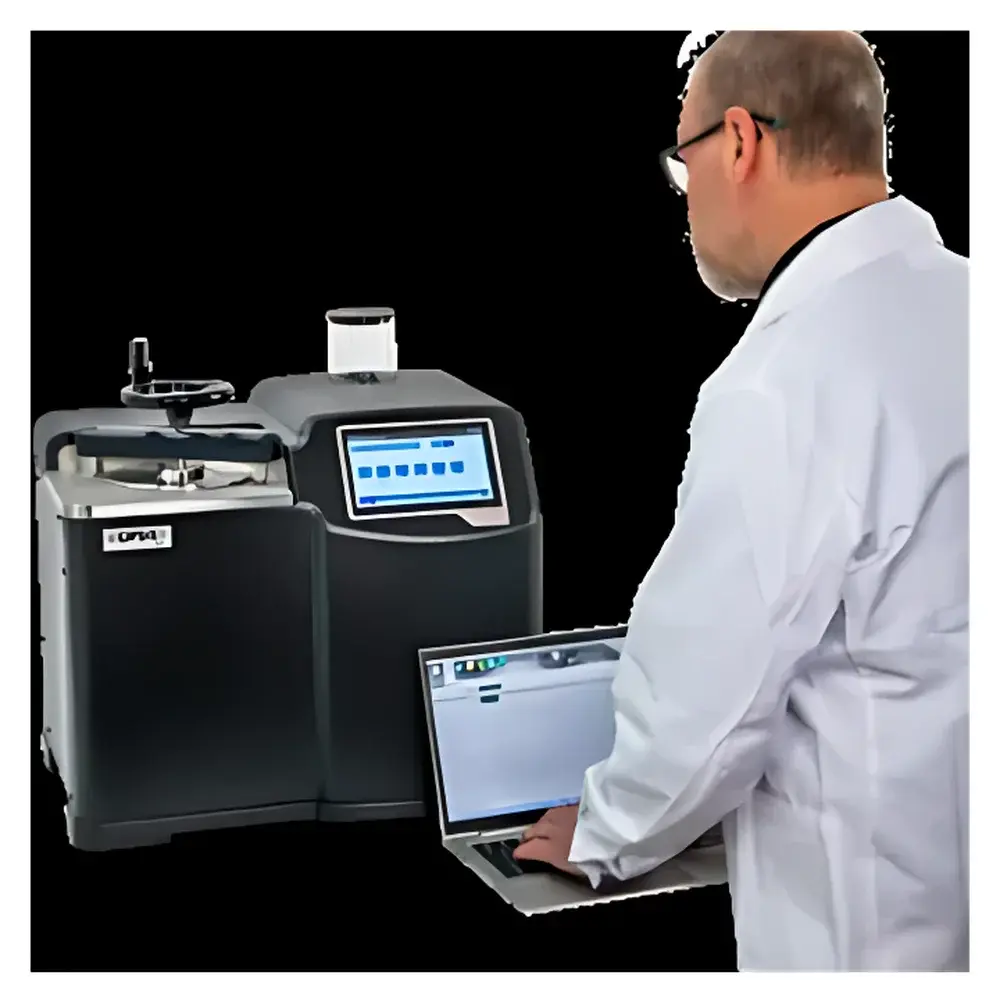
LabConnect is a laboratory information management system (LIMS) module designed specifically for Opsis analytical platforms. When connected via Ethernet or Wi-Fi, the FB-300 transmits real-time status updates—including method progress, alarm triggers, temperature/pressure deviations, and completion notifications—to desktop clients and mobile devices. LabConnect enables direct integration with analytical balances (via RS-232 or USB HID) and barcode scanners, auto-populating sample IDs and initial masses into run records. All raw weight data, intermediate mass readings (pre- and post-digestion, pre- and post-acetone), and final fiber percentages are stored in encrypted SQLite databases with immutable timestamps. Reports export in PDF, CSV, or Excel formats, supporting customizable templates aligned with ISO/IEC 17025 reporting clauses. Audit trail functionality logs every user action, parameter change, and system event with non-erasable metadata.
Applications
The FB-300 serves quality control laboratories in animal nutrition, compound feed manufacturing, agricultural research stations, grain inspection agencies, and regulatory testing facilities. Typical use cases include nutritional labeling compliance for pet food (AAFCO), formulation optimization of ruminant rations based on NDF digestibility indices, verification of fiber claims in functional foods, screening of bioenergy feedstocks for cellulose:lignin ratios, and routine surveillance of forage quality in pasture-based dairy operations. Its throughput capacity—up to 162 ADF determinations per 24-hour period—supports high-volume contract testing labs operating under ISO/IEC 17025 accreditation. The system also supports method development workflows requiring variable digestion times or custom reagent concentrations, with full parameter logging for SOP revision control.
FAQ
Does the FB-300 require a fume hood or external condenser?
No. Its sealed digestion chamber and low-boil-point reagent management eliminate the need for water-cooled condensers or ventilation infrastructure.
Can the instrument be validated for GMP/GLP environments?
Yes. With LabConnect enabled, it provides electronic records, user authentication, change control, and audit trails compliant with FDA 21 CFR Part 11 and ISO/IEC 17025 Annex A.2.
What is the minimum and maximum sample mass supported?
The system accepts 0.1 g to 2.0 g of homogenized, dry matter-corrected material per filter bag, optimized for precision across low-fiber (e.g., cereals) and high-fiber (e.g., straw) matrices.
How does the FB-300 handle foam generation during NDF digestion?
The vertical oscillation of filter bags combined with controlled reagent addition rates and optional antifoam dosing (via external port) significantly reduces surface foam adhesion compared to static crucible methods.
Is method transfer from traditional AOAC crucible protocols straightforward?
Yes. Validation studies demonstrate ≤0.5% repeatability and bias <±0.8% relative to AOAC 978.10 reference values; method conversion kits and application notes are provided with instrument commissioning.






