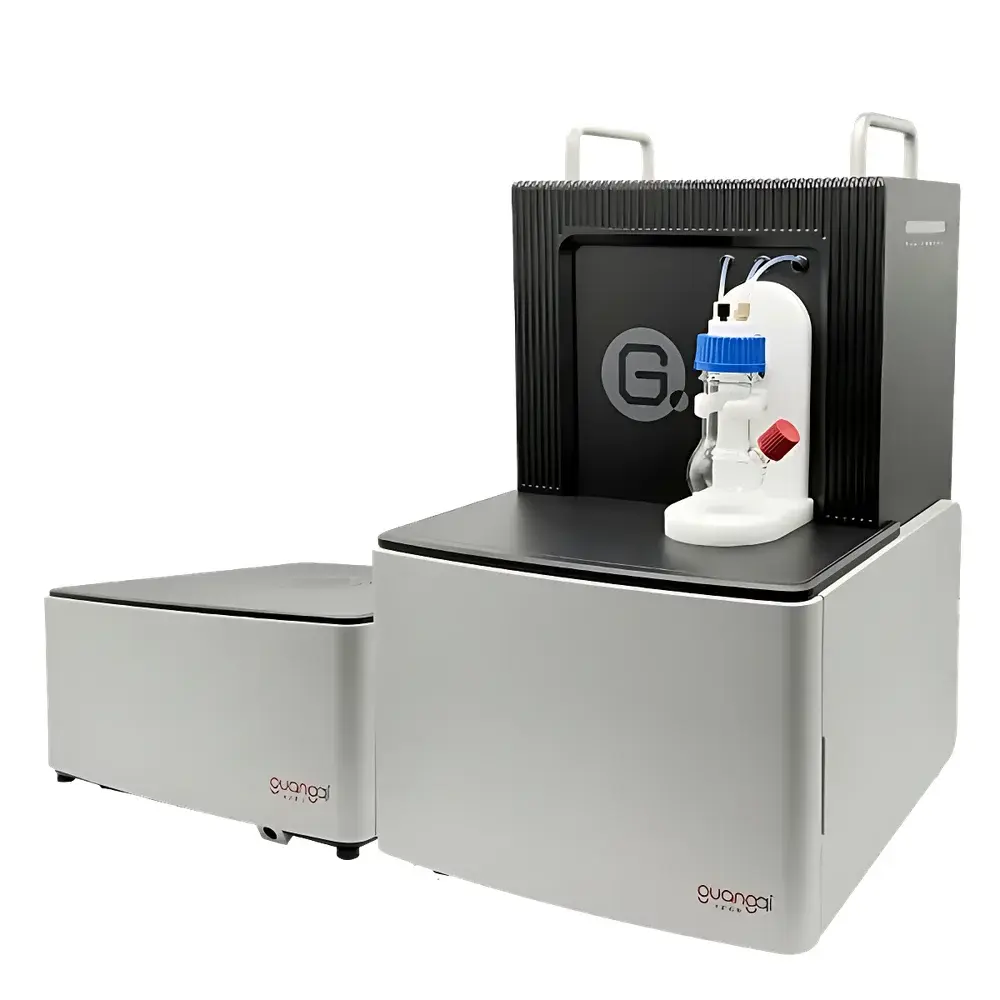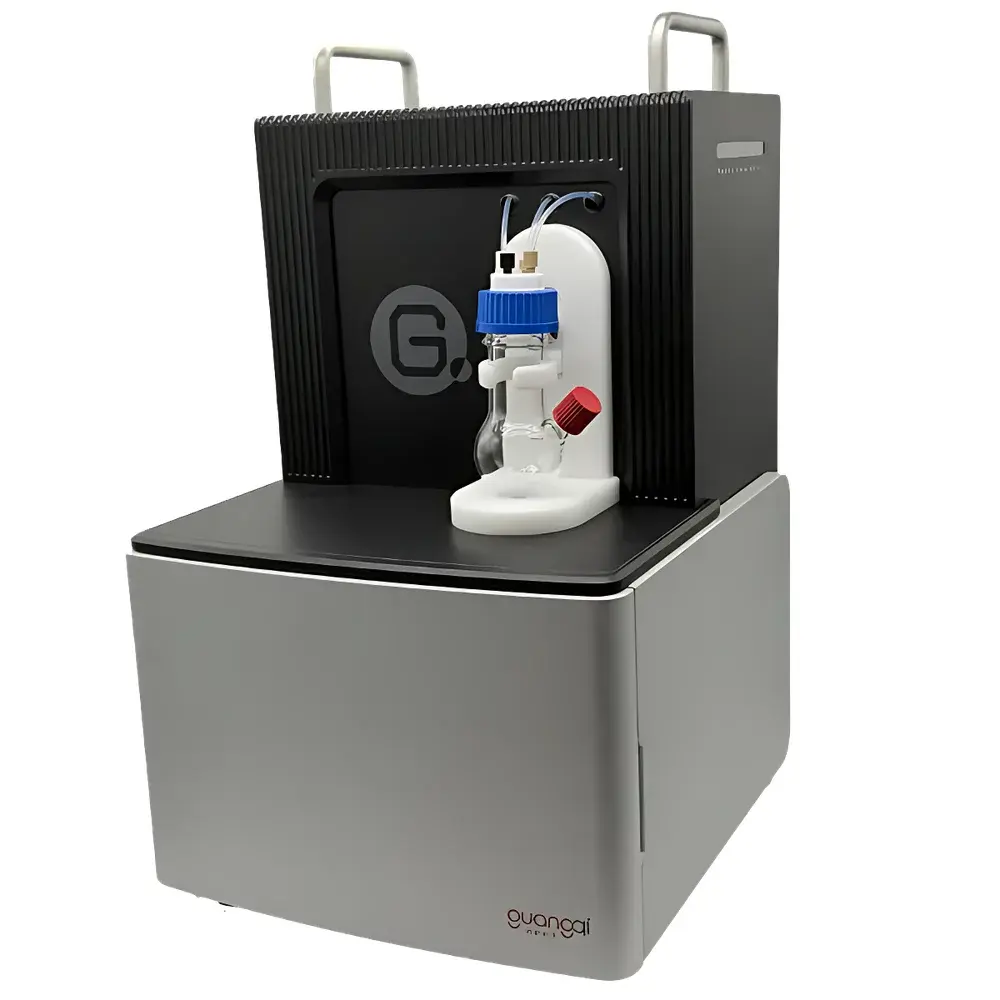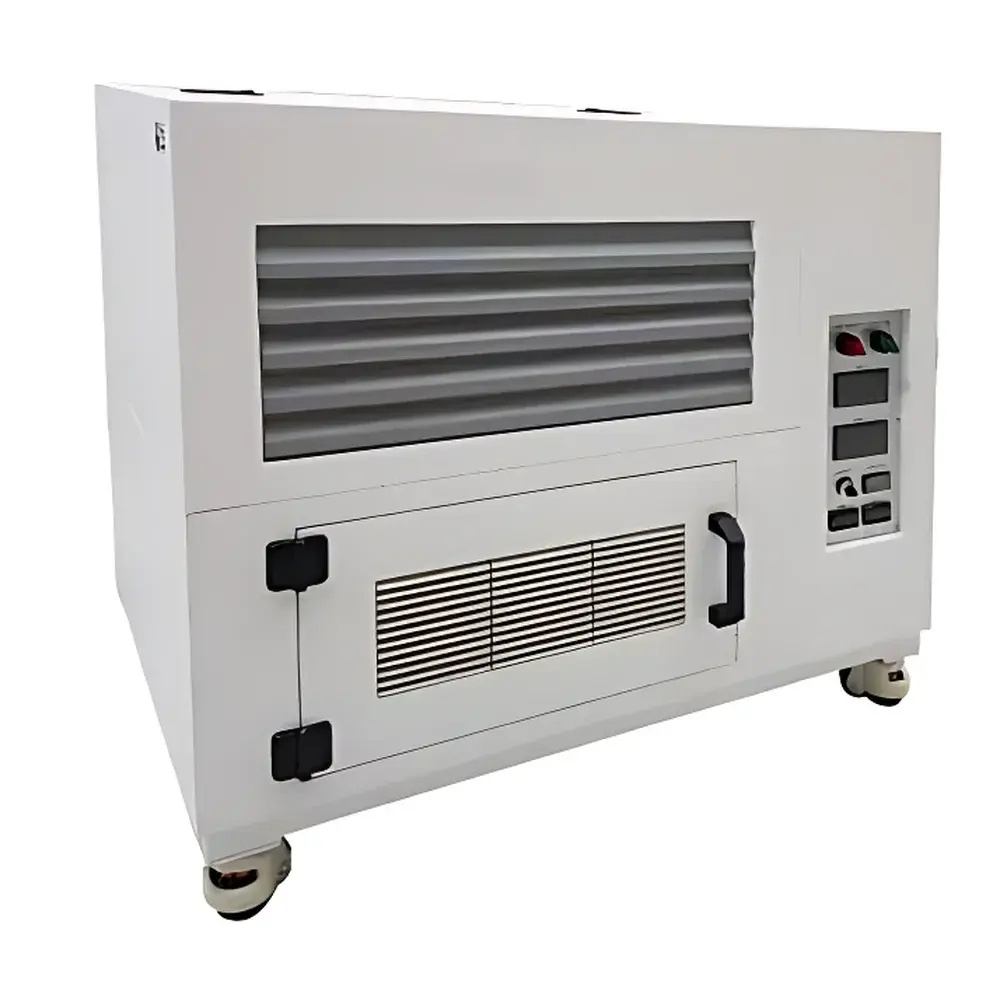
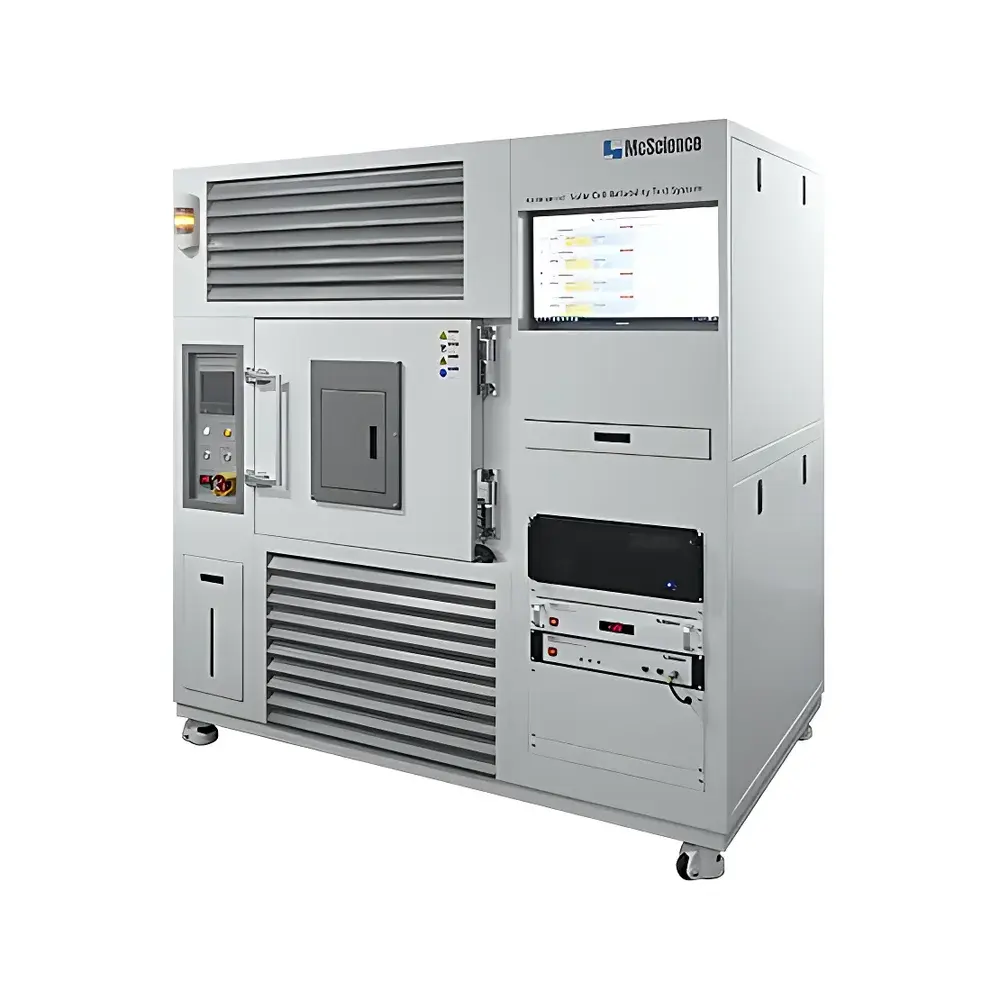
Organic Photovoltaic (OPV) Lifetime Testing System McScience K3600
| Brand | McScience |
|---|---|
| Origin | South Korea |
| Model | K3600 |
| Light Source Options | Metal Halide, Plasma-based AAA, LED-based AAA Simulators |
| Environmental Control | Ambient-Temperature or Temperature/Humidity-Controlled Chamber Configurations |
| Test Capabilities | Continuous Illumination, High-Speed I-V Characterization, Multi-Channel Parallel Testing, Maximum Power Point Tracking (MPPT), Light-Induced Degradation (LID) Monitoring, Light Soaking Protocols |
| Compliance Support | ASTM E927, IEC 60904-9, IEC 61215 (for stability protocols), ISO 17025-aligned test reporting frameworks |
| Software | McScience Lifetest Suite with GLP/GMP-compliant audit trail, data versioning, and 21 CFR Part 11-ready user access controls |
Overview
The McScience K3600 Organic Photovoltaic (OPV) Lifetime Testing System is an engineered platform for accelerated aging and operational stability assessment of next-generation photovoltaic devices under controlled environmental and illumination conditions. It integrates a precision solar simulator—certified to AAA class per IEC 60904-9—with a programmable temperature/humidity chamber (optional) to replicate real-world stressors including thermal cycling, moisture ingress, and spectral irradiance exposure. The system operates on the principle of continuous in-situ electrical characterization during illumination, enabling quantitative tracking of key photovoltaic parameters—including open-circuit voltage (VOC), short-circuit current density (JSC), fill factor (FF), and power conversion efficiency (PCE)—over extended durations (weeks to months). Designed specifically for research-grade degradation kinetics studies, it supports standardized lifetime metrics such as T80 (time to 80% initial PCE retention) and T90, aligning with international consensus frameworks for OPV, perovskite, DSSC, CIGS, and thin-film silicon device qualification.
Key Features
- AAA-class solar simulation with spectral match ≤ ±12% (IEC 60904-9 Class A), available via metal halide, plasma, or high-stability LED light sources
- High-speed, synchronized I-V curve acquisition at user-defined intervals (down to 100 ms per sweep) with <1% measurement repeatability
- Multi-channel architecture supporting up to 16 independent device channels with isolated bias control and real-time MPPT execution per channel
- Integrated light soaking module enabling controlled pre-illumination protocols prior to or during aging cycles
- Optional climatic chamber with ±0.5 °C temperature stability and ±2% RH control across −10 °C to +85 °C / 10–90% RH ranges
- Dedicated hardware triggers for synchronized environmental logging (T/RH), irradiance monitoring, and electrical readout timestamps
Sample Compatibility & Compliance
The K3600 accommodates standard photovoltaic sample formats including glass/ITO/PEDOT:PSS/active-layer/metal stacks (e.g., ITO/PEDOT:PSS/PTB7:PC71BM/Al), perovskite devices (e.g., FTO/c-TiO2/meso-TiO2/MAPbI3/spiro-OMeTAD/Au), and flexible substrates up to 10 cm × 10 cm. All test sequences are structured to support compliance with ASTM E2848 (standard test method for reporting photovoltaic nonconcentrator energy conversion efficiency), IEC 61215-2 (damp heat and thermal cycling endurance testing), and ISO 17025 requirements for calibration traceability and uncertainty quantification. Environmental stress profiles can be programmed to emulate automotive sunroof exposure per SAE J2527, including UV-enhanced irradiance spectra and cyclic humidity ramps.
Software & Data Management
The McScience Lifetest Suite provides a secure, audit-ready software environment compliant with FDA 21 CFR Part 11 requirements. It features role-based user authentication, electronic signatures, immutable audit trails for all parameter changes and measurement events, and automated report generation in PDF and CSV formats. Raw I-V datasets are stored with metadata embedding (timestamp, chamber setpoints, irradiance value, channel ID), enabling traceable correlation between electrical performance drift and environmental history. Version-controlled experiment templates facilitate inter-laboratory reproducibility and support GLP/GMP-aligned quality management systems.
Applications
- Quantitative degradation pathway analysis of organic and hybrid perovskite absorbers under combined thermal, hygric, and photochemical stress
- Comparative lifetime benchmarking of encapsulation strategies (e.g., atomic layer deposited Al2O3, multilayer barrier films)
- Light-induced trap formation kinetics studies via time-resolved J-V hysteresis mapping
- Accelerated testing for automotive-integrated PV modules (e.g., sunroof applications per ISO 11452-2 and SAE J1113-11)
- Validation of stability claims for novel hole transport materials (HTMs) and electron transport layers (ETLs)
- Support for ISOS-L-1, ISOS-L-2, and ISOS-D-1 protocol execution in academic and industrial R&D settings
FAQ
Does the K3600 support real-time MPPT during long-term aging tests?
Yes. Each channel executes independent maximum power point tracking using incremental conductance algorithms, updating MPP coordinates every 5 seconds during illumination without interrupting aging continuity.
Can I integrate third-party environmental sensors or data loggers?
The system provides analog/digital I/O ports and Modbus TCP support for synchronization with external hygrometers, UV radiometers, or chamber controllers.
Is the solar simulator calibrated traceable to NIST or KRISS standards?
All factory-calibrated simulators include certificates traceable to KRISS (Korea Research Institute of Standards and Science); optional NIST-traceable recalibration services are available upon request.
How is data integrity ensured during multi-week unattended operation?
Local SSD storage with RAID-1 redundancy ensures zero data loss during power interruptions; automatic cloud backup (via customer-configured SFTP or AWS S3 endpoints) is supported.
What sample mounting configurations are supported for flexible or curved substrates?
Customizable vacuum chuck fixtures and low-profile spring-loaded probe arrays accommodate substrates with curvature radii down to 50 mm and thicknesses from 0.1 mm to 3 mm.