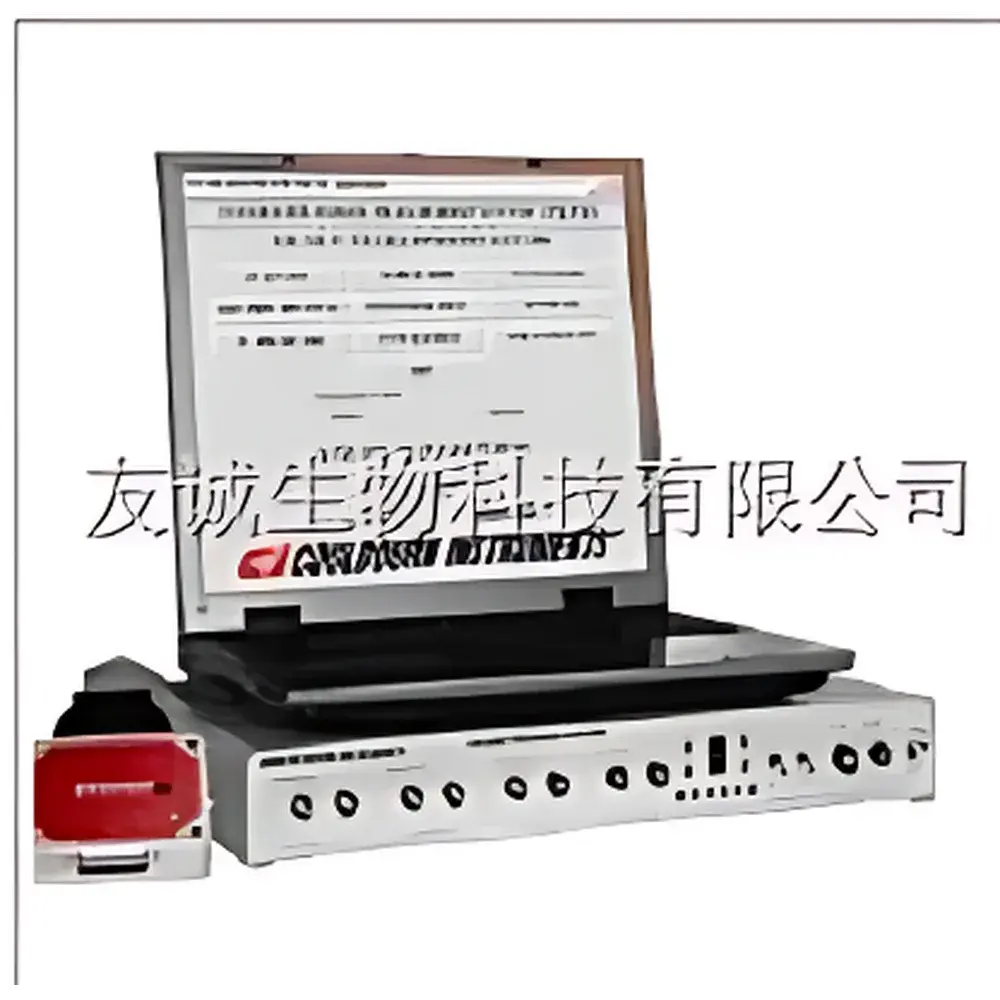
P3 Portable Physiological Signal Acquisition System
| Origin | USA |
|---|---|
| Distribution Model | Authorized Distributor |
| Import Status | Imported |
| Model | P3 |
| Pricing | Upon Request |
Overview
The P3 Portable Physiological Signal Acquisition System is a modular, research-grade instrumentation platform engineered for high-fidelity recording and stimulation of biological signals in preclinical and translational physiology studies. Designed around galvanic isolation architecture and low-noise analog signal conditioning, the system supports simultaneous acquisition of electromyographic (EMG), electrodermal activity (EDA), and other low-amplitude bioelectric signals—commonly used in behavioral neuroscience, autonomic function assessment, and pharmacological challenge paradigms. Its core measurement principle relies on precision differential amplification with programmable AC/DC coupling, configurable bandpass filtering, and real-time signal conditioning—including full-wave rectification and exponential integration—to extract physiologically relevant features from raw biopotentials. The P3’s portability, compact footprint, and battery-compatible operation enable deployment in constrained environments such as animal testing suites, mobile field labs, or multi-site clinical trials where infrastructure flexibility is critical.
Key Features
- Galvanically isolated bioamplifier with input impedance ≥10⁹ Ω and input bias current ≤50 nA (typ. 10 nA), ensuring minimal loading effect on high-impedance biological sources.
- Programmable gain settings: 500×, 1×, 5×, 10×, and 50× (10³–10⁵ V/V), with gain accuracy ±4% across selected ranges.
- Dual-stage, fully programmable Butterworth filter: High-pass cutoffs at 0.1 Hz, 1 Hz, 10 Hz (front-panel switch) and 8 Hz, 13 Hz, 90 Hz, 150 Hz (digital control); low-pass cutoffs at 40 Hz, 150 Hz, 1 kHz, 3 kHz.
- Dedicated galvanic skin response (GSR) interface with DC-coupled baseline conductance measurement and AC-coupled SCR detection (5 s time constant), plus built-in 0.5 V excitation source (AC/DC selectable).
- Contour-following integrator (CFI) per channel: Adjustable time constants (10, 50, 100, 200, 300 ms) and rectification mode (full-wave, positive-only, negative-only) via jumper configuration.
- Integrated audio stimulus generator: Frequency range 20 Hz–99.9 kHz, amplitude 0–100% (linear ramp), rise/fall times programmable from 1 ms to 100 ms; drives standard stereo headphones via ¼″ TRS output.
- Four optically isolated remote trigger inputs (5–30 VDC), supporting external synchronization with TTL-compatible devices, event markers, or stimulus delivery systems.
Sample Compatibility & Compliance
The P3 system is validated for use with rodent, rabbit, non-human primate, and human subjects under controlled laboratory conditions. Its isolation design meets IEC 60601-1 requirements for patient-connected medical electrical equipment (Class I, Type BF applied part), and its electromagnetic compatibility (EMC) conforms to EN 61326-1 for laboratory-use test and measurement instruments. While not intended for diagnostic use per FDA 21 CFR Part 820, the system supports GLP-compliant data acquisition workflows when integrated with timestamped, audit-trail-enabled software environments. All analog modules comply with ISO 14155:2020 Annex C for physiological monitoring in clinical investigation settings.
Software & Data Management
The P3 operates as a hardware front-end compatible with industry-standard acquisition platforms including Spike2 (CED), AcqKnowledge (BIOPAC), and LabChart (ADInstruments). Raw analog outputs are routed via BNC connectors to external digitizers with ≥16-bit resolution and ≥10 kS/s sampling rates. Digital control signals (filter settings, gain, CFI parameters) are managed through TTL-level logic lines or optional RS-232/USB interface modules. For traceable data handling, users are advised to pair the P3 with software supporting FDA 21 CFR Part 11-compliant electronic signatures, audit trails, and secure data export (e.g., .mat, .tdms, or .edf formats). Calibration logs and module-specific verification records must be retained per institutional GLP/GCP protocols.
Applications
- Prepulse inhibition (PPI) and startle reflex quantification using concurrent EMG and acoustic stimulation.
- Autonomic nervous system profiling via tonic/phasic electrodermal activity (SCL/SCR) during stress or cognitive load paradigms.
- Motor unit recruitment analysis and fatigue assessment in chronic muscle electrophysiology studies.
- Multi-modal behavioral phenotyping in genetically modified animal models, integrating biofeedback with environmental stimuli.
- Validation of wearable sensor outputs against gold-standard wired recordings in ambulatory physiology validation studies.
FAQ
Is the P3 certified for human subject research under IRB protocols?
Yes—the P3’s isolation rating and compliance with IEC 60601-1 (Type BF) support IRB-approved use in non-invasive human physiological monitoring, provided local ethics review confirms appropriate risk mitigation for electrode contact and stimulus parameters.
Can the CFI time constant be synchronized across multiple channels?
No—each CFI is independently adjustable via front-panel controls or jumper settings; inter-channel synchronization requires external digital triggering or post-hoc alignment in analysis software.
Does the system include built-in analog-to-digital conversion?
No—the P3 is an analog signal conditioning platform only; digitization requires connection to a separate data acquisition system meeting required sampling rate, resolution, and anti-aliasing specifications.
What is the maximum common-mode voltage tolerance of the bioamplifier?
±10 V DC, with common-mode rejection ratio (CMRR) >100 dB at 60 Hz when used with matched electrode impedances and proper grounding practices.
Is firmware update capability available?
Firmware is fixed at time of manufacture; parameter configuration is performed via hardware switches and external control logic—no embedded microcontroller or field-upgradable firmware is present.