
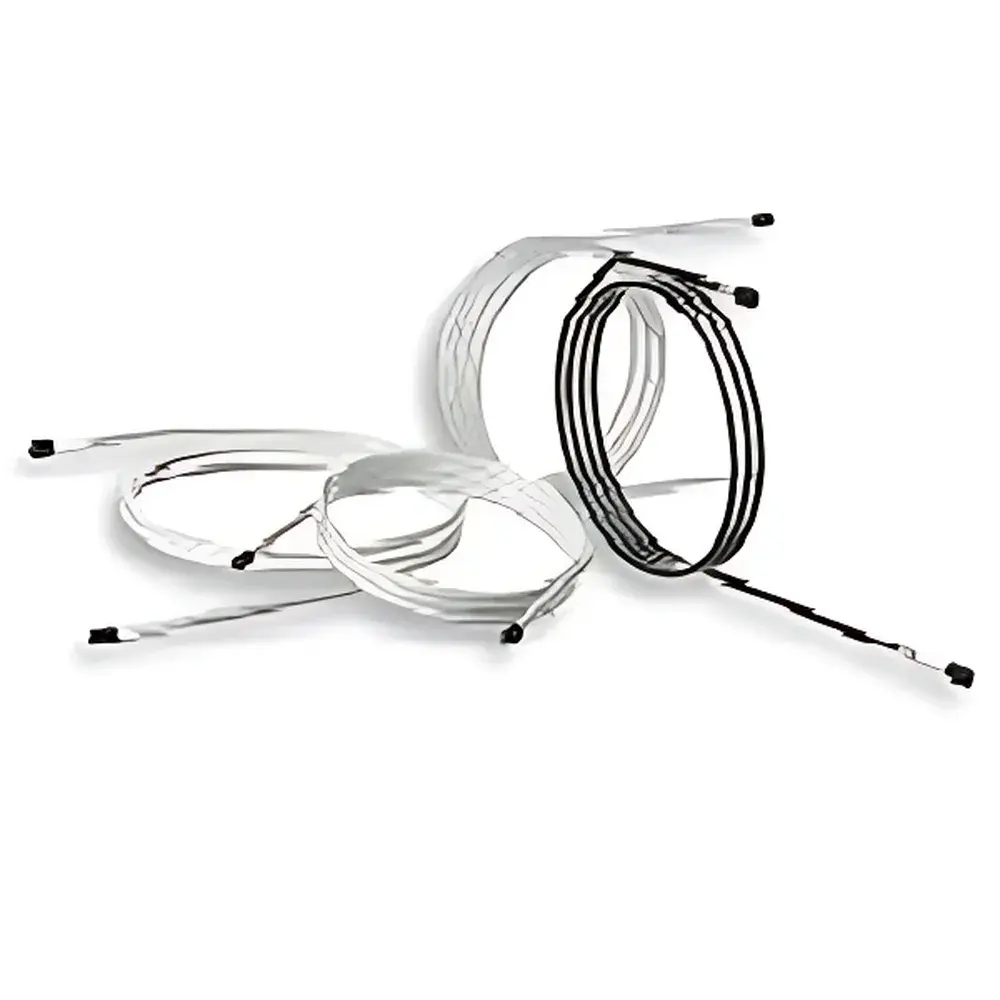
Packed Column for Gas Chromatography
| Brand | HUIFEN Instrument |
|---|---|
| Origin | Shandong, China |
| Manufacturer Type | Authorized Distributor |
| Model | Packed Column |
| Pricing | Available Upon Request |
Overview
A packed column is a fundamental component in gas chromatography (GC) systems, designed to separate volatile and semi-volatile compounds based on differential partitioning between a stationary phase coated or impregnated onto solid support particles and a mobile carrier gas phase. Unlike capillary columns, packed columns consist of a stainless steel or glass tube (typically 1–6 m in length and 2–4 mm internal diameter) uniformly filled with chemically inert, porous support material—such as diatomaceous earth or polymer-based beads—coated with a liquid or polymeric stationary phase (e.g., squalane, OV-1, Carbowax, or Porapak). Separation occurs via adsorption and/or partition mechanisms under controlled temperature and carrier gas flow conditions. This configuration delivers high sample capacity, robustness for dirty or complex matrices, and compatibility with older GC instrumentation requiring higher flow rates (typically 20–100 mL/min He or N₂).
Key Features
- Stainless steel or borosilicate glass tubing with precise dimensional tolerance (ID: 2.0–4.0 mm; length: 1–6 m) ensuring consistent backpressure and flow dynamics
- Uniformly distributed packing material with controlled particle size distribution (typically 60–80 mesh or 80–100 mesh) to minimize channeling and maximize plate count
- Chemically stable stationary phases applied via solvent impregnation or bonded coating techniques, offering reproducible retention times and thermal stability up to 250 °C (phase-dependent)
- Pre-conditioned and tested for low bleed and baseline stability prior to shipment
- Compatible with standard GC inlet configurations including packed-column injectors, on-column inlets, and split/splitless adapters with appropriate liners
- Available in customizable configurations: stationary phase type, support material (e.g., Chromosorb, Porapak, Tenax), film thickness, and column termination (e.g., ferrule-sealed or compression-fitted ends)
Sample Compatibility & Compliance
Packed columns are routinely employed for the analysis of permanent gases (H₂, O₂, N₂, CO, CH₄), light hydrocarbons (C₁–C₅), alcohols, organic acids, amines, and environmental volatiles in air, water, and soil extracts. Their high loading capacity makes them particularly suitable for undiluted or concentrated samples where overloading would compromise capillary column performance. Columns comply with widely referenced ASTM methods including ASTM D1945 (analysis of natural gas), ASTM D1946 (analysis of fuel gases), and ASTM D3588 (heating value calculation). All columns are manufactured under documented quality control procedures aligned with ISO 9001 principles. Documentation includes batch-specific test chromatograms, pressure-drop verification, and phase identity confirmation reports upon request.
Software & Data Management
While packed columns themselves are passive hardware components, their performance is fully integrated into modern GC data systems. Retention time databases, calibration curves, and system suitability parameters (e.g., resolution between critical pairs, tailing factor, theoretical plates per meter) are managed within chromatography data systems (CDS) compliant with FDA 21 CFR Part 11 requirements—including electronic signatures, audit trails, and user access controls. Method validation protocols for packed-column applications follow ICH Q2(R2) guidelines, supporting GLP and GMP environments where traceability and reproducibility are mandated. HUIFEN provides method transfer documentation and column qualification templates compatible with Agilent OpenLab, Thermo Chromeleon, and Shimadzu GCsolution platforms.
Applications
- Quality control of industrial gases and refinery streams
- Residual solvent analysis in pharmaceutical excipients (per USP <467>)
- VOC monitoring in ambient air and workplace safety assessments (OSHA/NIOSH methods)
- Fermentation off-gas profiling in bioprocess development
- Food flavor compound screening and alcohol content determination
- Educational laboratory instruction in fundamental chromatographic theory and method development
FAQ
What carrier gases are recommended for packed column operation?
Helium and nitrogen are most commonly used; hydrogen offers superior efficiency but requires strict safety protocols due to flammability.
How do I condition a new packed column before first use?
Condition at 20–30 °C above the maximum operating temperature for 2–4 hours under carrier gas flow, monitoring baseline stability and bleed profile.
Can packed columns be used with modern capillary-GC instruments?
Yes—with appropriate inlet adapters, flow restrictors, and pressure programming capabilities; however, optimal performance requires recalibration of flow and detector response.
What is the typical lifetime of a packed column under routine use?
With proper sample cleanup and regular maintenance, service life ranges from 6 months to 2 years depending on matrix complexity and thermal stress.
Do you provide custom stationary phase formulations?
Yes—HUIFEN supports OEM and application-specific phase development, including polar, non-polar, and mixed-bed configurations, subject to minimum order quantities and technical review.



