
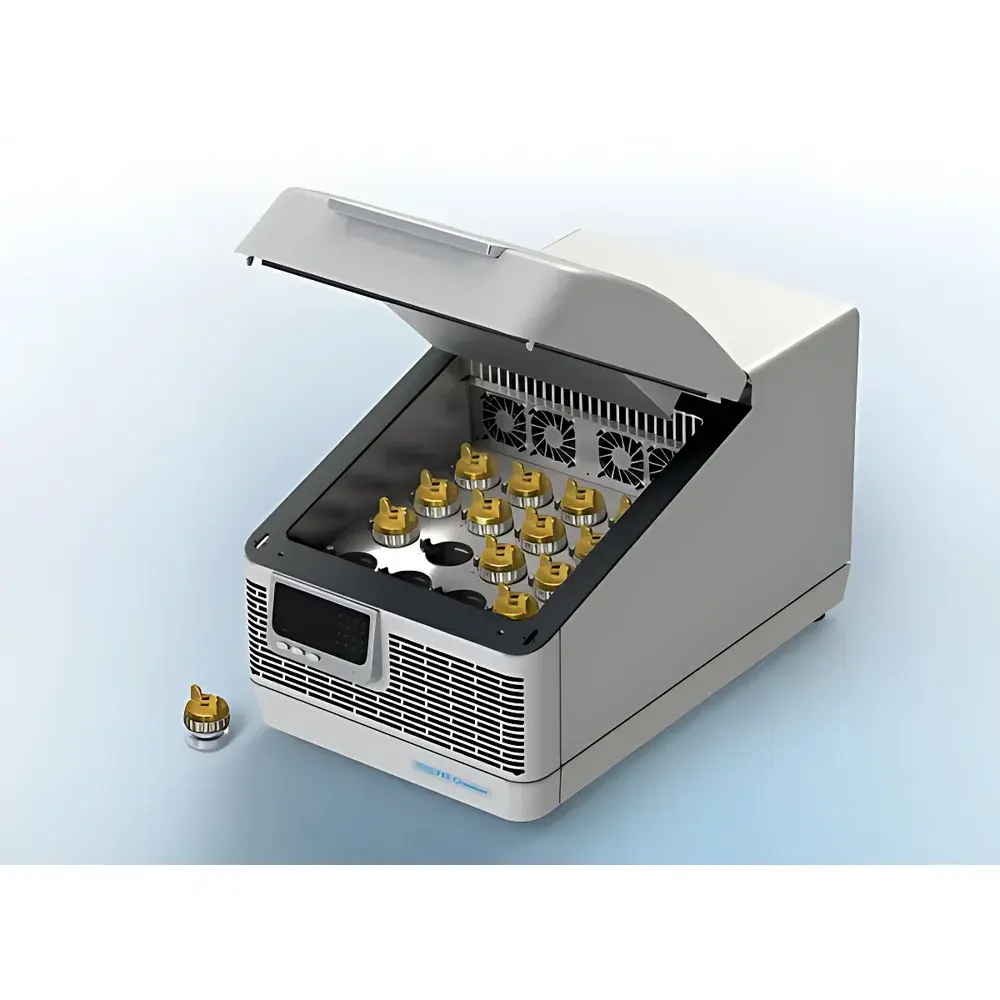
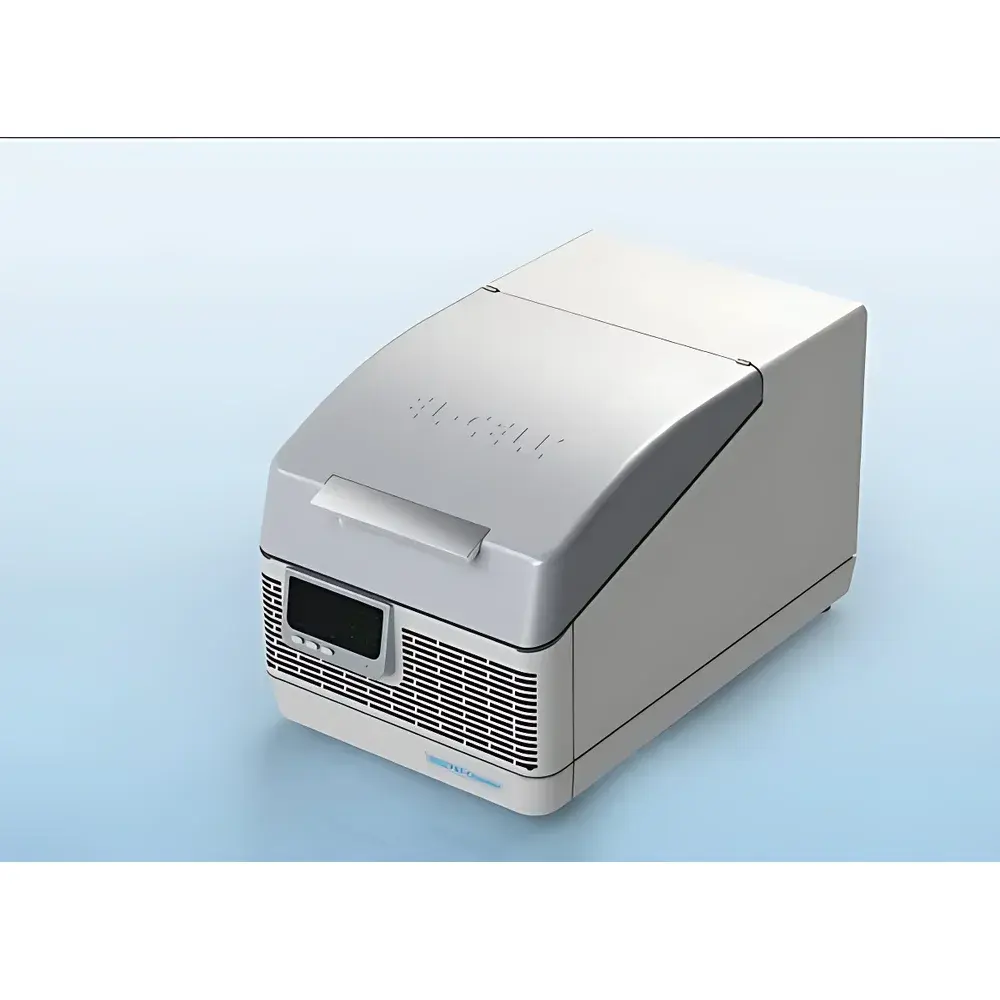
PAT-Chamber by EL-Cell
| Brand | EL-Cell |
|---|---|
| Origin | Germany |
| Model | PAT-Chamber |
| Dimensions (W × D) | 380 mm × 640 mm |
| Height (open/closed lid) | 600 mm / 375 mm |
| Weight (empty) | 32 kg |
| Compatibility | PAT-Core test cells, ECC-PAT-Core cells, PAT-16, PAT-Pressure |
| Data Channels | Battery current, battery voltage, half-cell voltage, temperature, single-cell pressure |
| Interface | Compatible with standard potentiostats/galvanostats and battery cyclers |
Overview
The PAT-Chamber by EL-Cell is a precision-engineered environmental test chamber designed specifically for in situ and operando electrochemical characterization of lithium-ion and next-generation battery cells under controlled thermal conditions. It functions as an integrated mechanical and electrical interface platform—not a standalone analytical instrument—but rather a modular, standardized housing system that bridges high-fidelity electrochemical testing equipment (e.g., Biologic VMP-3, Gamry Interface 5000E, or Arbin BT-LBT) with mechanically constrained, thermally regulated battery test cells. Its operational principle centers on maintaining dimensional stability and electrical integrity during galvanostatic/potentiostatic cycling while enabling simultaneous acquisition of multi-parameter physical feedback: stack pressure, interfacial temperature gradients, full-cell and half-cell potentials, and real-time current response. The chamber is engineered to support the EL-Cell PAT-Core architecture—a reusable, modular cell core composed of aluminum (lower plunger), copper (upper plunger), and polypropylene (insulation sleeve)—which facilitates rapid cell assembly, eliminates manual wiring per test, and ensures reproducible electrode compression and current collection geometry across experiments.
Key Features
- Modular integration with EL-Cell’s PAT-Core family: supports both standard 3-electrode configurations (with optional ring-shaped reference electrode embedded in the insulation sleeve) and 2-electrode setups.
- Thermally stabilized base plate with precise temperature control (external chiller or Peltier interface compatible), enabling isothermal or gradient-based thermal profiling during cycling.
- Integrated signal routing architecture: consolidates up to five independent analog inputs (cell voltage, current, two half-cell voltages, temperature, stack pressure) into a single low-noise connector block—eliminating cable clutter and minimizing electromagnetic interference.
- Structural rigidity optimized for mechanical stability: stainless steel (AISI 316L) current collectors available upon request; all internal wetted components fabricated from battery-grade materials (Al 1060, OFHC Cu, PP).
- Quick-release lid mechanism with optical alignment markers and pneumatic/hydraulic pre-load options for repeatable stack pressure application (up to 10 MPa, depending on configuration).
- Compact footprint (380 × 640 mm) and dual-height design (375 mm closed / 600 mm open) facilitate benchtop deployment in ISO-classified labs and glovebox-integrated workflows.
Sample Compatibility & Compliance
The PAT-Chamber accommodates all standard EL-Cell PAT-series test cells—including the PAT-16 (16-channel monitoring variant), PAT-Pressure (integrated load cell), and ECC-PAT-Core pouch or coin-cell adapters—without hardware modification. Its mechanical interface conforms to DIN 912 and ISO 2768-mK tolerancing standards for mating surfaces and fastener alignment. Electrical isolation meets IEC 61010-1:2019 requirements for measurement category CAT II 300 V. When used in conjunction with validated electrochemical workstations and compliant data acquisition software, the system supports audit-ready operation under GLP and GMP frameworks. Full traceability of calibration certificates for integrated temperature sensors (PT100 Class A) and pressure transducers (0.25% FS accuracy) is maintained per ISO/IEC 17025 guidelines.
Software & Data Management
The PAT-Chamber itself contains no embedded firmware or proprietary software. Instead, it operates as a transparent signal conduit—delivering analog outputs directly to third-party instrumentation. Users retain full control over experimental protocols via their existing electrochemical software platforms (e.g., EC-Lab, Framework, or custom LabVIEW/Python DAQ scripts). All acquired parameters are time-synchronized at hardware level using shared trigger lines and common ground referencing. For regulatory environments requiring electronic records integrity, the system integrates seamlessly with 21 CFR Part 11–compliant data management systems when paired with audit-trail-enabled potentiostats and timestamped acquisition modules.
Applications
- Operando investigation of solid-electrolyte interphase (SEI) evolution under controlled pressure and temperature.
- Quantification of mechanical degradation mechanisms in silicon-anode or lithium-metal cells during long-term cycling.
- Calorimetric coupling studies using differential temperature sensing across electrode layers.
- Validation of multi-physics battery models requiring concurrent electrochemical, thermal, and mechanical boundary conditions.
- Standardized testing per ASTM D1876 (peel strength), ISO 12133 (electrochemical impedance spectroscopy for batteries), and UN 38.3 thermal abuse protocols.
FAQ
Is the PAT-Chamber suitable for use inside an argon-filled glovebox?
Yes—the chamber is fully compatible with inert-atmosphere gloveboxes; all seals are Viton-rated, and feedthroughs support standard KF-25 or CF-35 vacuum flanges.
Can I perform three-electrode measurements without modifying the PAT-Core?
Yes—PAT-Core includes a dedicated slot for a ring-shaped reference electrode within the PP insulation sleeve; no disassembly is required for installation.
Does EL-Cell provide calibration services for the integrated sensors?
Yes—traceable calibration reports for PT100 sensors and pressure transducers are available upon request, aligned with DAkkS-accredited laboratories in Germany.
What is the maximum recommended stack pressure for coin-cell configurations?
For standard 2032-format cells using Al/Cu plungers, the recommended upper limit is 0.8 MPa; higher loads require stainless steel (316L) current collectors and reinforced insulation sleeves.
Is remote monitoring supported?
Remote analog signal access is supported via shielded BNC or LEMO connectors; digital telemetry requires external DAQ hardware and user-defined SCADA integration.
Related Products





