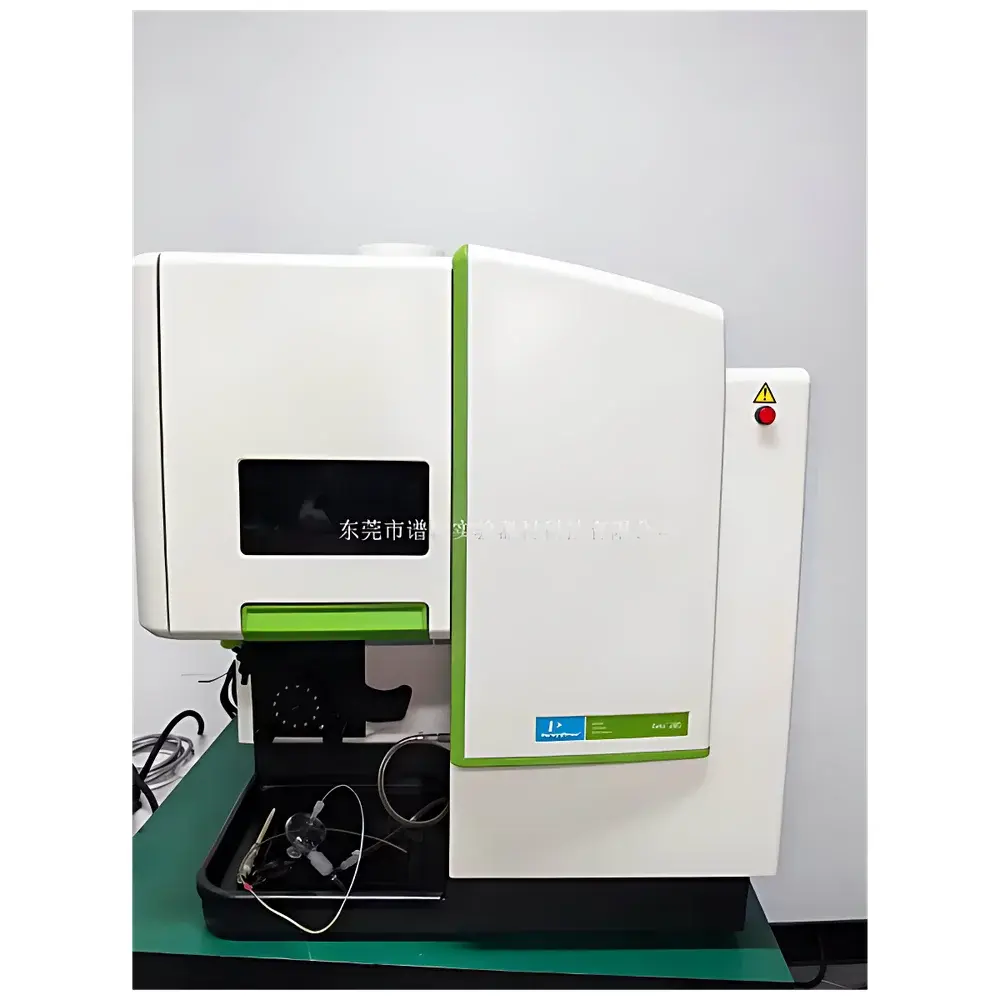
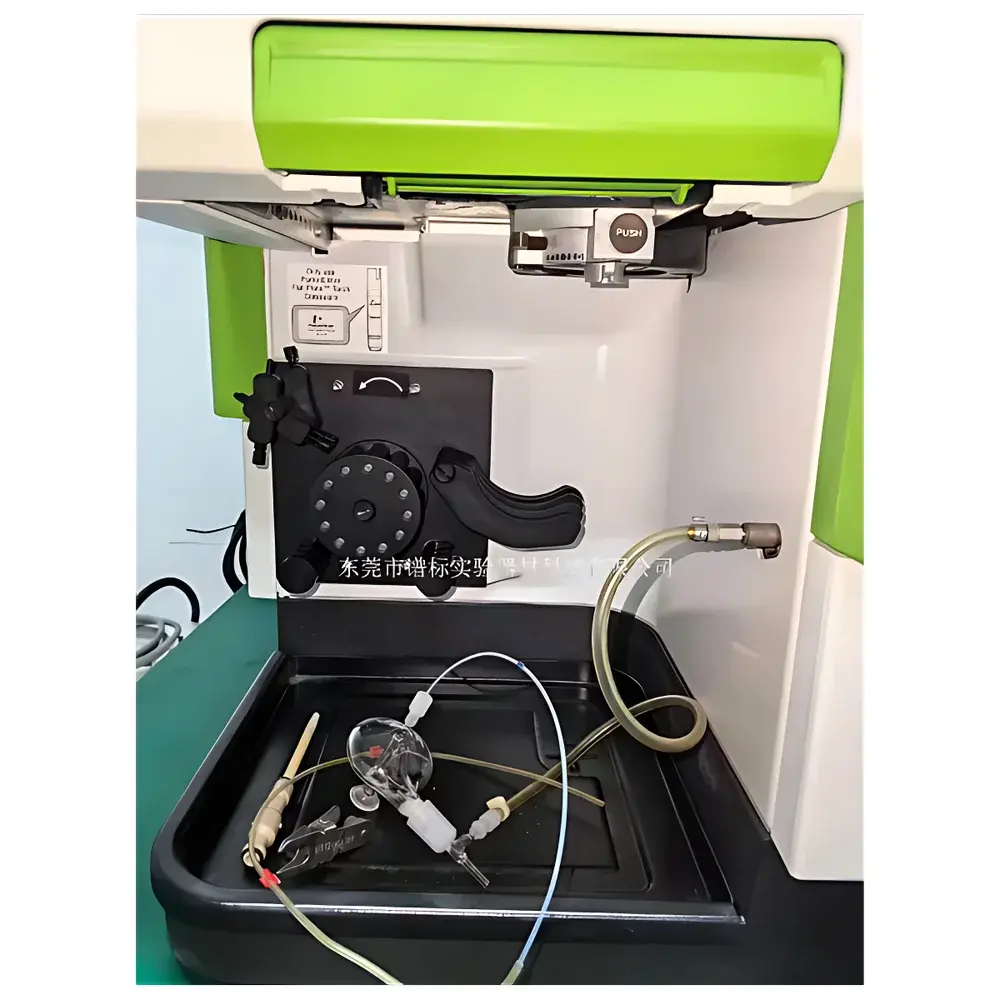
PerkinElmer Avio 200 ICP-OES Spectrometer
| Brand | PerkinElmer |
|---|---|
| Origin | USA |
| Model | Avio 200 ICP-OES |
| Instrument Type | Inductively Coupled Plasma Optical Emission Spectrometer |
| Warranty | 1 Year |
| Operational Age | 10 Years |
| Gas Consumption | Lowest among ICP-OES systems (patented FlatPlate™ plasma) |
| Startup Time | <10 min from cold start |
| Plasma Orientation | Vertical |
| Observation Modes | Simultaneous Axial and Radial (Dual-View) |
| Detection Technology | CCD-based full-spectrum acquisition |
| Software Platform | Syngistix™ for ICP |
| Compliance Ready | Supports 21 CFR Part 11 audit trails, GLP/GMP workflow logging, ISO/IEC 17025 traceability frameworks |
Overview
The PerkinElmer Avio 200 ICP-OES Spectrometer is a compact, dual-view inductively coupled plasma optical emission spectrometer engineered for laboratories requiring robust multi-element analysis with low-to-moderate sample throughput. It employs high-frequency RF energy to generate a stable, vertically oriented argon plasma—operating at ~27 MHz—and excites elemental atoms and ions to emit characteristic wavelengths across the UV–visible spectrum (167–900 nm). Unlike conventional sequential or hybrid axial/radial systems, the Avio 200 utilizes true simultaneous axial and radial viewing of the plasma, enabled by its patented dual-monochromator optical architecture and position-sensitive CCD detector. This design delivers full spectral coverage with real-time background correction, eliminating wavelength-dependent sensitivity loss and enabling quantitative analysis across an extended linear dynamic range—up to 8 orders of magnitude—without manual dilution or mode switching. Its vertical plasma geometry provides inherent tolerance to high-matrix samples (e.g., brines, digested soils, biological fluids, and industrial process streams), minimizing matrix-induced signal suppression and drift.
Key Features
- Vertical Plasma Configuration: Enables direct analysis of undiluted, high-dissolved-solid (TDS > 25%) samples while maintaining plasma stability and minimizing carbon deposition on optics.
- Dual-View Simultaneous Acquisition: Measures axial and radial emissions concurrently for every element, preserving detection limits for trace analytes (sub-pptr LODs for many elements) while retaining linearity for major constituents (up to % w/w).
- FlatPlate™ Plasma Technology: A patented planar RF load coil replaces traditional helical designs, reducing argon consumption by up to 50% versus conventional ICP-OES systems—typical operating flow: ≤10 L/min total gas—and eliminates water-cooling requirements and associated maintenance.
- PlasmaShear™ Interference Removal: An air-driven, maintenance-free system that physically shears the plasma tail plume during axial observation—eliminating polyatomic interferences (e.g., ArO⁺ on 56Fe, ArCl⁺ on 35Cl) without auxiliary argon gas or mechanical extraction components.
- Color PlasmaCam™ Integration: A built-in, high-resolution color CMOS camera enables real-time visual monitoring of plasma shape, torch alignment, nebulizer spray pattern, and injector condition—supporting remote method development and preventive diagnostics.
- Tool-Free Torch Adjustment: The vertically mounted torch features a quick-release base with self-aligning center tube, allowing rapid interchange of nebulizers, spray chambers, and sample introduction accessories without recalibration.
Sample Compatibility & Compliance
The Avio 200 accommodates liquid samples across diverse matrices—including aqueous standards, acid-digested environmental solids, saline solutions, organic solvents (with oxygen ashing), and high-salt biological extracts—without dilution or internal standard compensation in most cases. Its robust plasma stability and dual-view capability ensure compliance with ASTM D1976 (metals in water), EPA Method 200.7/200.8 (drinking water and wastewater), ISO 11885 (water quality), and USP / (elemental impurities in pharmaceuticals). Data integrity is reinforced via Syngistix™ software, which supports electronic signatures, audit trails per FDA 21 CFR Part 11, and automated report generation aligned with ISO/IEC 17025 documentation requirements.
Software & Data Management
Syngistix™ for ICP is a workflow-driven, icon-based platform designed for intuitive operation and regulatory compliance. It guides users through method setup, calibration, QC checks (including drift correction, internal standard recovery, and blank monitoring), and reporting—all within a single interface. Real-time diagnostic overlays display plasma status, nebulization efficiency, and spectral background behavior during acquisition. All raw spectral data are stored in vendor-neutral formats (e.g., .csv, .txt) alongside metadata tags (operator ID, timestamp, instrument parameters, calibration history), ensuring long-term archival and third-party data reprocessing. Optional modules support LIMS integration via ASTM E1384-compliant drivers and automated QC flagging against user-defined control charts.
Applications
The Avio 200 serves as a primary elemental analyzer in environmental testing labs (soil leachates, groundwater, effluent), food safety screening (As, Cd, Pb, Hg in crops and beverages), clinical research (trace metals in serum and urine), geological exploration (multi-element rock digests), and materials science (alloy composition, catalyst residue analysis). Its speed, matrix tolerance, and low operational cost make it especially suitable for contract testing facilities and academic core labs where budget constraints coexist with demand for regulatory-grade data.
FAQ
What is the typical detection limit for common elements like Cu, Zn, and Pb?
Detection limits vary by matrix and sample introduction; representative values in 2% HNO₃ are: Cu ≈ 0.003 µg/L, Zn ≈ 0.005 µg/L, Pb ≈ 0.008 µg/L (axial view, 10 s integration).
Does the system support hydride generation or laser ablation interfaces?
Yes—the Avio 200 is compatible with PerkinElmer’s HG-300 hydride generator and NEXUS LA-ICP-OES laser ablation module via standardized sample introduction ports.
Is the instrument validated for GMP environments?
While the hardware itself is not pre-validated, Syngistix™ software includes IQ/OQ templates and 21 CFR Part 11 configuration tools to support laboratory-specific validation protocols under GMP/GLP frameworks.
Can the CCD detector be recalibrated in-house?
Wavelength calibration is performed automatically using internal Hg/Ar spectral lines before each run; no user-accessible physical recalibration is required.
What maintenance is required for the FlatPlate™ RF generator?
No scheduled maintenance is specified; the solid-state RF generator has no consumable components and operates without cooling fluid or replaceable tubes.