
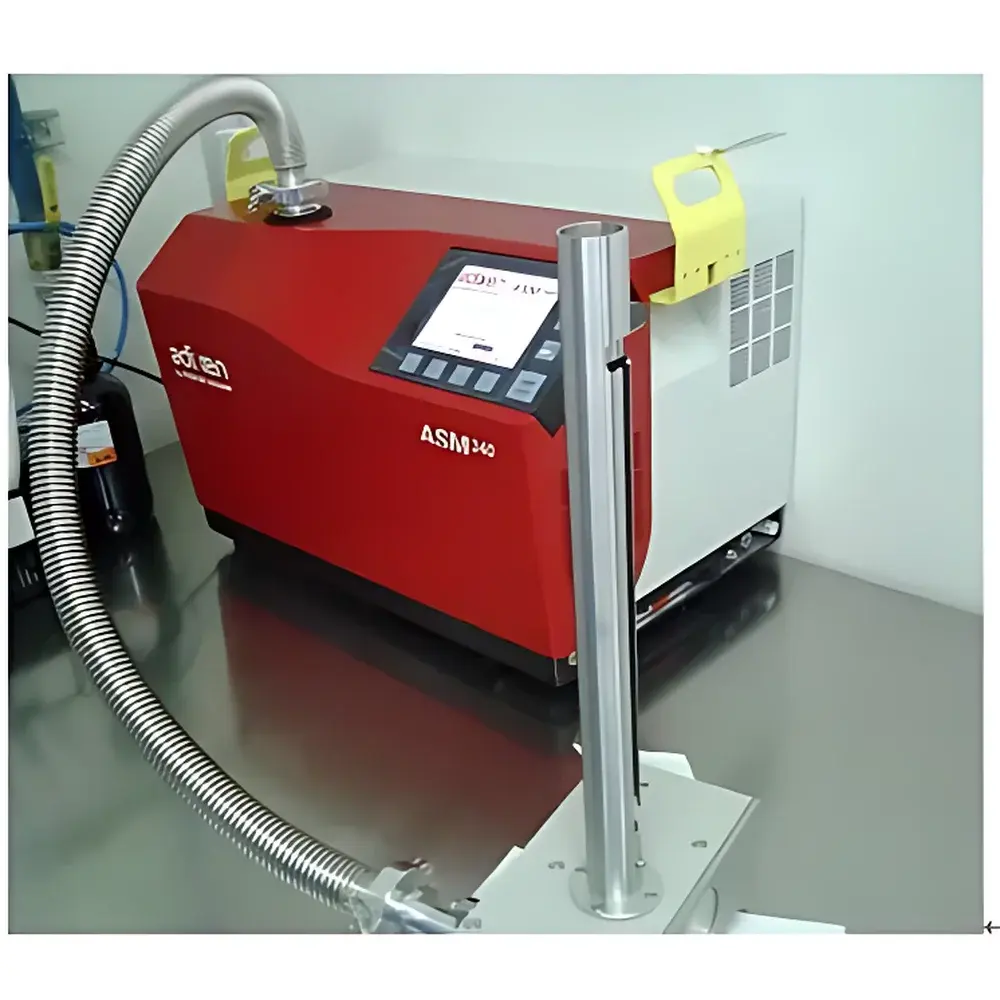
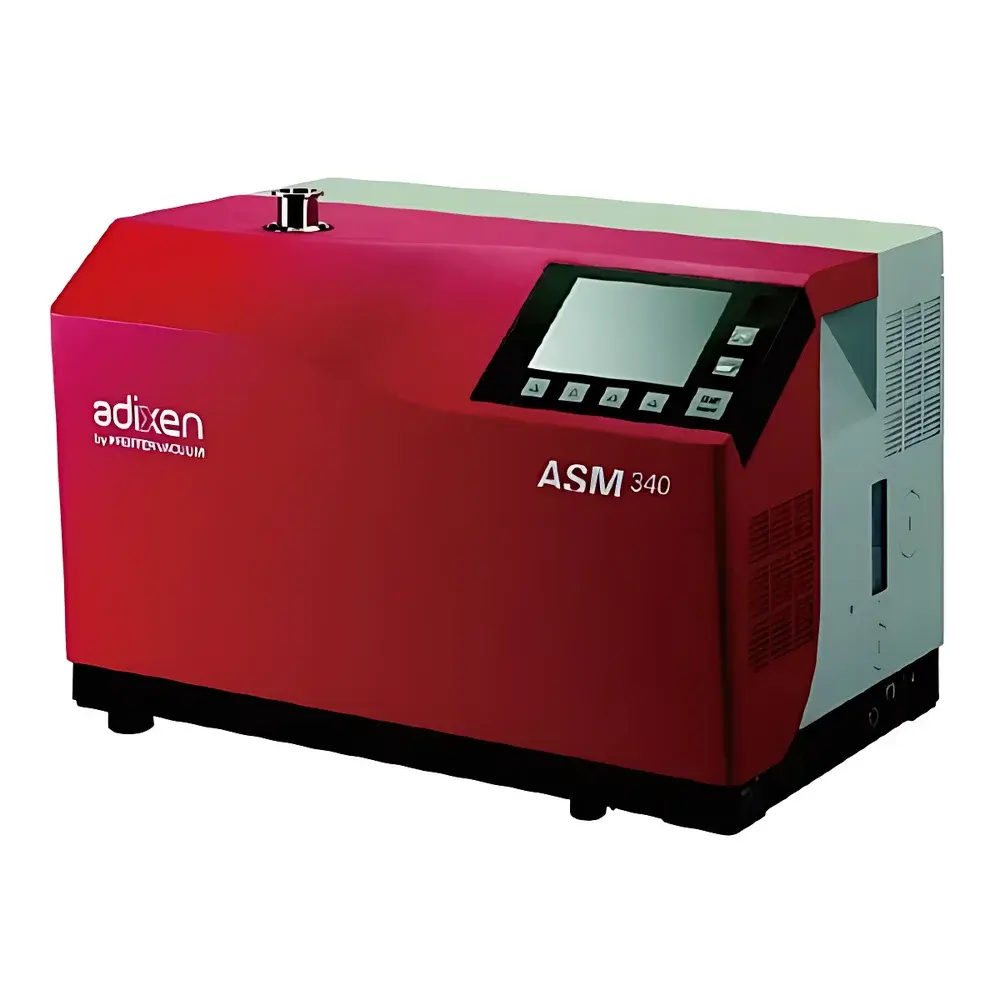
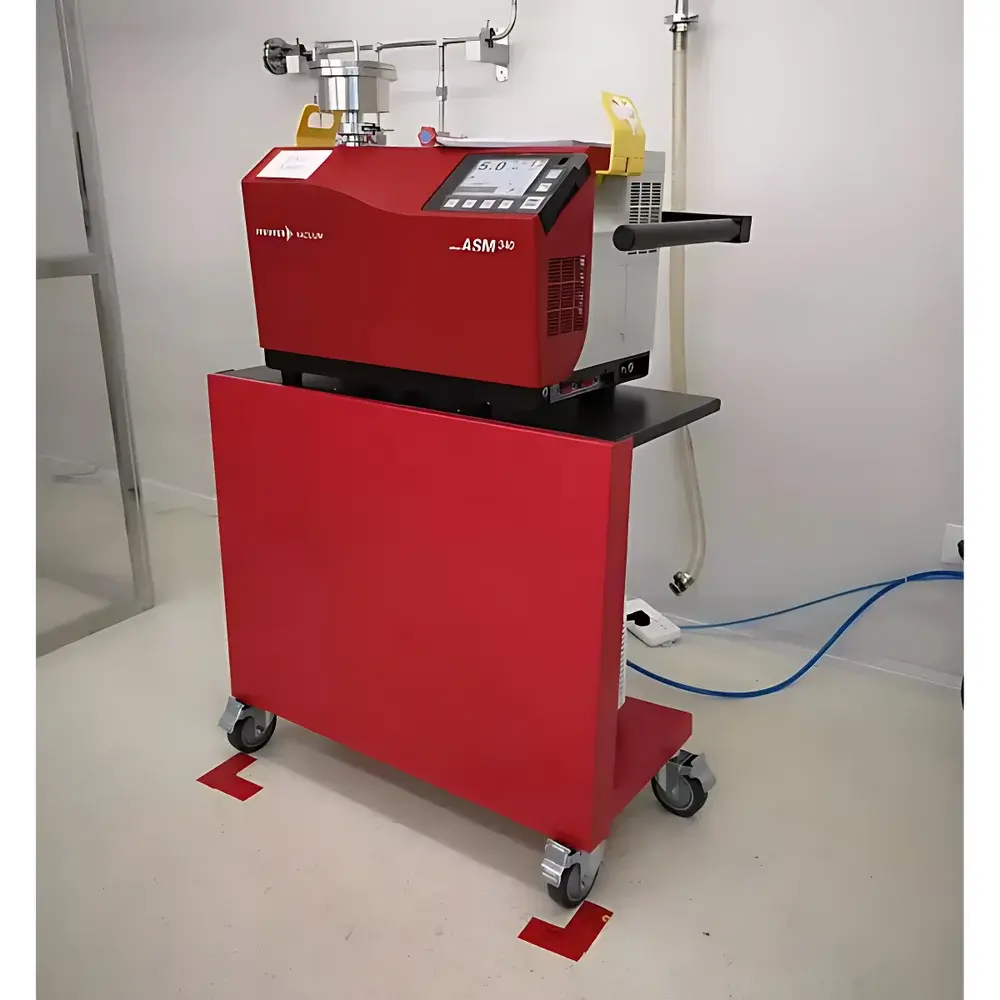
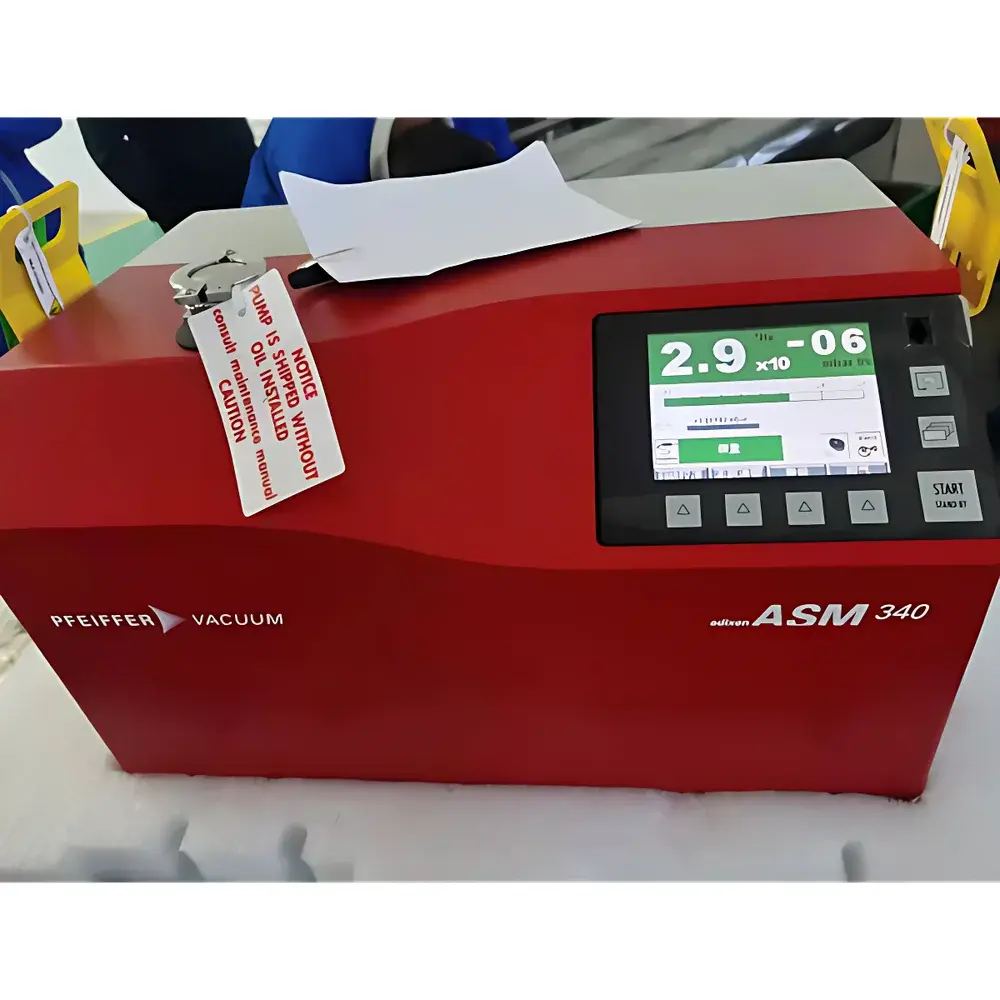
Pfeiffer ASM 340D Helium Mass Spectrometer Leak Detector
| Brand | Pfeiffer Vacuum |
|---|---|
| Origin | Germany |
| Model | ASM 340D |
| Ultimate Helium Detection Sensitivity (Vacuum Mode) | 5 × 10⁻¹³ Pa·m³/s |
| Ultimate Helium Detection Sensitivity (Sniffer Mode) | 5 × 10⁻¹⁰ Pa·m³/s |
| Forepump Type | Dual Dry Scroll Pumps |
| Forepump Speed | 3.4 m³/h |
| Helium Pumping Speed | 2.5 L/s |
| Interface | Removable & Customizable Touch Panel |
| Data Storage | Integrated SD Card Slot |
| Optional Accessories | Wired/Wireless Remote Control, Helium Sniffer Probe |
Overview
The Pfeiffer ASM 340D Helium Mass Spectrometer Leak Detector is an engineered solution for high-sensitivity, high-reliability leak detection in ultra-high vacuum (UHV) and clean manufacturing environments. Based on quadrupole mass spectrometry operating at unit mass resolution (m/z = 4), the ASM 340D selectively ionizes and detects helium atoms introduced into a test system—leveraging helium’s inertness, low background concentration in ambient air (~5 ppm), and favorable ionization cross-section. Its core architecture integrates a compact, high-transmission ion source, a thermally stabilized quadrupole mass filter, and a secondary electron multiplier (SEM) detector optimized for low-noise signal acquisition. Designed for integration into automated production lines or standalone QC laboratories, the ASM 340D meets the stringent demands of industries requiring trace-level hermeticity verification—including semiconductor sensor fabrication, analytical instrument component assembly (e.g., CCD/CMOS sealed detectors), medical device packaging, and vacuum-integrated research systems.
Key Features
- Dual independent dry scroll forepumps (3.4 m³/h total displacement) provide oil-free, particle-free roughing—eliminating hydrocarbon contamination risks and enabling compliance with ISO 14644-1 Class 5 cleanroom requirements.
- Redundant pump architecture ensures continuous operation: if one scroll pump fails, the second maintains sufficient base pressure (<1 × 10⁻² mbar) to sustain leak testing without process interruption.
- Optimized helium transmission path achieves 2.5 L/s effective pumping speed for He⁺ ions, maximizing signal-to-noise ratio and measurement reproducibility across repeated cycles.
- Modular front-panel interface with customizable layout supports ergonomic workflow design; touchscreen module is fully removable for panel-mount integration or service access.
- Onboard SD card logging enables timestamped, audit-ready storage of leak rate data, system status logs, calibration history, and operator inputs—fully compatible with GLP/GMP documentation protocols.
Sample Compatibility & Compliance
The ASM 340D accommodates diverse test configurations: vacuum-mode (vacuum chamber connection), pressure-rise mode (pressurized part submerged or enclosed), and sniffer-mode (localized helium probing). It is routinely deployed for evaluating hermetic seals in optoelectronic components (e.g., sealed CCD/CMOS image sensors), MEMS packages, vacuum feedthroughs, and UHV chamber subsystems. The instrument complies with IEC 61000-6-3 (EMC emissions), IEC 61000-6-2 (immunity), and EN 61326-1 (electrical safety for laboratory equipment). Its helium-specific detection protocol aligns with ASTM E493 (Standard Test Methods for Leaks Using the Mass Spectrometer Leak Detector in the Inside-Out Testing Mode) and ISO 9712 (Non-destructive testing — Qualification and certification of NDT personnel — Leak testing).
Software & Data Management
Firmware-controlled operation supports configurable alarm thresholds (down to 1 × 10⁻¹² Pa·m³/s), multi-step test sequences, and pass/fail logic with digital output signaling. All measurement data—including real-time leak rate curves, pump status, and environmental parameters (chamber temperature, inlet pressure)—are recorded in CSV format on the internal SD card. Exported datasets are directly importable into LIMS platforms or statistical process control (SPC) software. Audit trail functionality records user login events, parameter changes, and calibration actions—meeting FDA 21 CFR Part 11 requirements when paired with validated user access controls and electronic signature workflows.
Applications
- Final quality assurance of vacuum-sealed optical and imaging components (CCD/CMOS sensors, photomultiplier tubes, laser diode housings).
- In-process leak validation during semiconductor packaging and MEMS encapsulation.
- Verification of weld integrity and seal performance in medical implant devices and diagnostic instrument enclosures.
- Routine maintenance checks on UHV systems, including beamline components, cryostats, and surface science chambers.
- Research-grade leak quantification in physics laboratories requiring sub-10⁻¹² Pa·m³/s sensitivity under controlled thermal and pressure conditions.
FAQ
What vacuum level is required before initiating a helium leak test?
A stable base pressure ≤1 × 10⁻² mbar must be achieved using the dual dry scroll pumps prior to helium introduction. This ensures optimal signal stability and minimizes background interference from residual gases.
Can the ASM 340D detect leaks in pressurized components?
Yes—via pressure-rise mode: the test part is pressurized with helium (typically 1–3 bar), then connected to the detector’s inlet port while maintaining atmospheric pressure outside. The instrument measures helium ingress rate through any breach.
Is calibration traceable to national standards?
Factory calibration uses NIST-traceable helium permeation standards (e.g., Vici AG or Restek certified sources); users may perform field verification with calibrated leak standards per ISO 10855.
Does the system support remote monitoring via Ethernet or USB?
The ASM 340D includes RS-232 and optional Ethernet interfaces for external PLC integration, SCADA communication, and remote diagnostics—enabling centralized fleet management in multi-station production facilities.
What maintenance intervals are recommended for the dry scroll pumps?
Under typical industrial use (8 hrs/day, 5 days/week), scroll pump service—including bearing inspection and seal replacement—is recommended every 12,000 operating hours or 24 months, whichever occurs first. No oil changes or filtration are required.



