
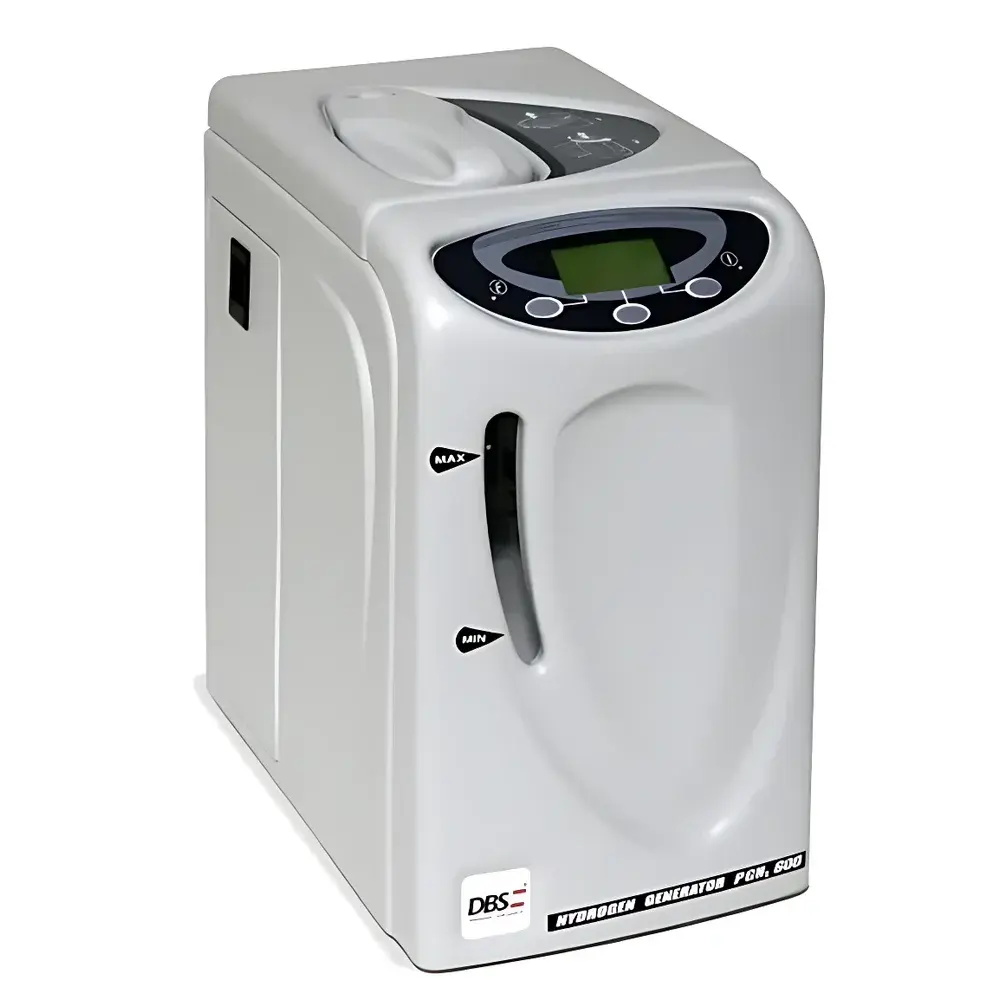
PGH2 Series High-Purity Hydrogen Generator by Italian Manufacturer
| Origin | Italy |
|---|---|
| Manufacturer Type | Authorized Distributor |
| Origin Category | Imported |
| Model | PGH2 Series |
| Pricing | Available Upon Request |
Overview
The PGH2 Series High-Purity Hydrogen Generator is an engineered solution for laboratories requiring continuous, on-demand hydrogen gas with exceptional purity and operational reliability. Designed and manufactured in Italy, this generator employs proton exchange membrane (PEM) electrolysis — a solid-state electrochemical process that splits deionized or distilled water into high-purity hydrogen (H₂) and oxygen (O₂) without the use of corrosive liquid electrolytes. Unlike traditional alkaline or acidic electrolytic systems, the PGH2 utilizes a proprietary solid polymer electrolyte membrane housed within a sealed electrochemical cell. This architecture eliminates chemical handling, minimizes maintenance, and ensures long-term stability under continuous operation. The system is optimized for integration with gas chromatography (GC) instruments as carrier or fuel gas, flame ionization detectors (FIDs), hydrogenation reactors, and other applications demanding ultra-high-purity H₂ (>99.9999%) in controlled environments. Its compact footprint (200 × 400 × 410 mm), low weight (~16 kg), and quiet operation make it suitable for benchtop deployment in analytical labs, QC facilities, and research environments adhering to GLP/GMP practices.
Key Features
- Proton Exchange Membrane (PEM) electrolysis technology — zero liquid electrolytes, no KOH or H₂SO₄ handling required
- Hydrogen purity ≥99.9999% (6N), verified per ISO 8573-1 Class 1 compressed air/gas purity standards
- Adjustable output pressure range: 0.1–7.0 barg (1–100 psig), digitally regulated via integrated pressure transducer and LCD interface
- Multiple flow configurations available: 100, 160, 250, 300, 500, and 600 mL/min — scalable for single-instrument or multi-GC supply
- Intelligent safety architecture including automatic shutdown on low water level, over-pressure, over-temperature, and membrane fault detection
- 4-line backlit LCD display (34 characters) showing setpoints, real-time flow/pressure, system status, and diagnostic alerts
- Dual-stage drying system: integrated moisture separator followed by desiccant-filled drying column for dew point ≤ −40°C
- Front-panel LED indicators for power, normal operation, and error states — enabling rapid visual system assessment
Sample Compatibility & Compliance
The PGH2 Series is compatible with all major GC platforms requiring high-purity hydrogen, including Agilent, Thermo Fisher, Shimadzu, and PerkinElmer systems. It meets critical requirements for ASTM D3612 (hydrocarbon analysis), USP (chromatographic system suitability), and ISO/IEC 17025-accredited laboratory workflows. As a non-cylinder-based gas source, it supports compliance with OSHA 1910.101 (compressed gas safety) and reduces reliance on high-pressure cylinder logistics. The unit operates exclusively on ultrapure water (≥18.2 MΩ·cm resistivity), eliminating hazardous chemical storage and disposal concerns associated with conventional electrolytic generators. All electrical components conform to CE, RoHS, and EMC Directive 2014/30/EU. Optional RS485 interface enables remote monitoring and integration into centralized lab gas management systems compliant with FDA 21 CFR Part 11 audit trail requirements.
Software & Data Management
An optional PC-based control software package is available for advanced configuration, real-time parameter logging, and historical trend analysis. When paired with the RS485 interface, the software supports up to 10 parallel PGH2 units in a daisy-chain topology — ideal for core analytical facilities serving multiple GC bays. Data export formats include CSV and XML for seamless import into LIMS or ELN platforms. System diagnostics, including membrane health estimation, water consumption rate, and cumulative runtime, are logged with timestamps and accessible via secure local network access. Firmware updates are performed via USB port, ensuring continued alignment with evolving regulatory expectations for instrument qualification (IQ/OQ/PQ documentation support available upon request).
Applications
- Carrier gas for capillary GC and GC-MS systems requiring consistent, low-moisture H₂
- Fuel gas for FID, NPD, and other flame-based detectors where baseline stability and sensitivity depend on gas purity
- Hydrogen supply for catalytic hydrogenation studies in synthetic chemistry labs
- Blank gas for residual solvent testing (e.g., ICH Q3C) and pharmaceutical impurity profiling
- Calibration gas generation in environmental air monitoring stations using GC-FID or GC-TCD
- On-site hydrogen source for portable GC units deployed in field laboratories or mobile analytical units
FAQ
What type of water is required for optimal operation?
Ultrapure water (resistivity ≥18.2 MΩ·cm, TOC <5 ppb) is strongly recommended. Distilled or deionized water may be used if ultrapure water is unavailable, but may reduce membrane service life and increase maintenance frequency.
Is the oxygen byproduct vented or captured?
Oxygen is safely vented through a dedicated exhaust port — no external collection or scrubbing is required. Ventilation must comply with local laboratory fume hood or room air exchange regulations.
Can the PGH2 be used in explosion-hazardous areas?
No. The PGH2 is not ATEX- or IECEx-certified for Zone 1/2 environments. It is intended for general laboratory use under standard ventilation conditions.
How often does the desiccant need replacement?
Under typical GC usage (e.g., one instrument at 50 mL/min), the drying column requires replacement every 6–12 months, depending on ambient humidity and water quality.
Does the system support automated start/stop triggered by GC demand?
Yes — optional dry-contact relay output allows synchronization with GC power state or external pressure switches, enabling unattended overnight operation.



