
Pipeline Fitting – Stainless Steel Tubing Connector for Laboratory Reactor Systems
| Brand | Zhengxin Instrument Factory (ZXYIQI) |
|---|---|
| Origin | Jiangsu, China |
| Manufacturer Type | General Distributor |
| Country of Origin | China |
| Model | Pipeline |
| Usable Volume | Small-Scale |
| Material | Stainless Steel (SS316/SS304) |
| Operating Pressure | Medium-Pressure (up to 10 MPa typical for SS tubing fittings) |
| Vacuum Capability | Up to –0.1 MPa (absolute) |
| Available Inner Diameters | 3 mm and 6 mm |
| Compliance | Designed for compatibility with standard laboratory reactor manifolds and modular synthesis systems |
Overview
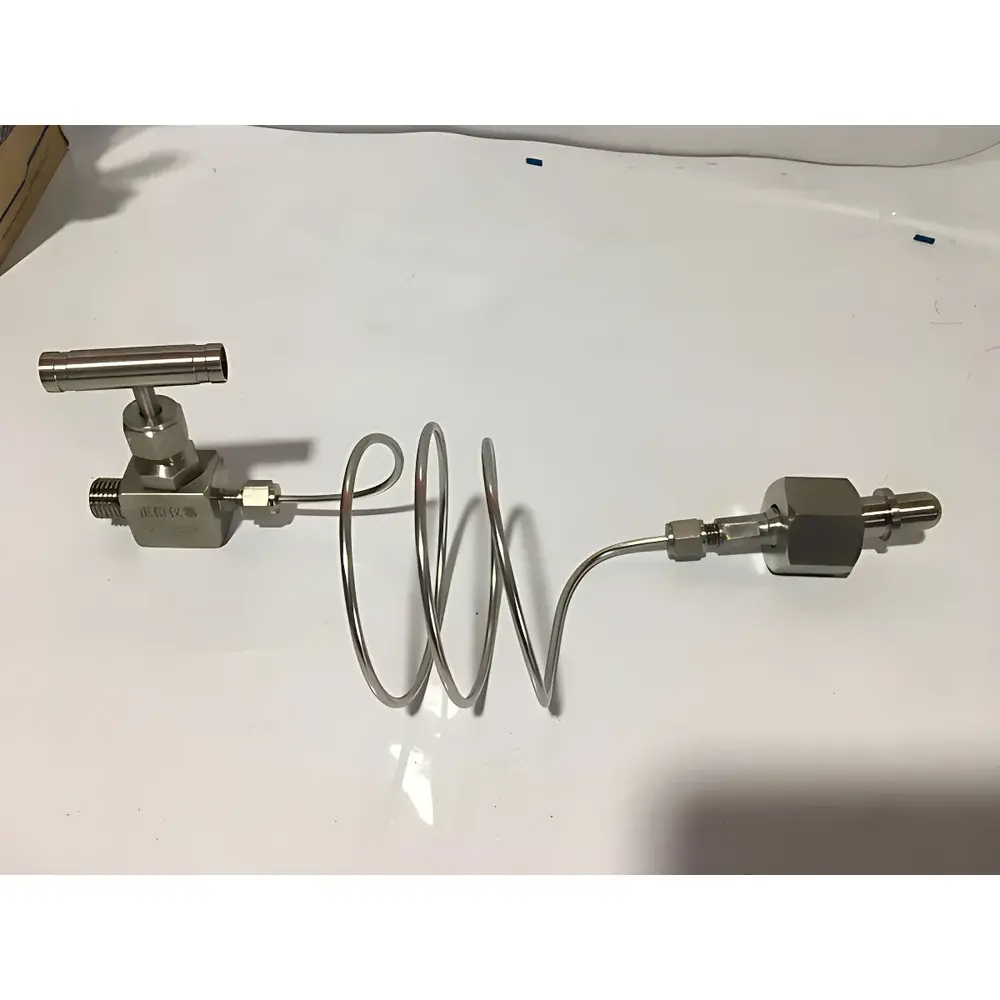
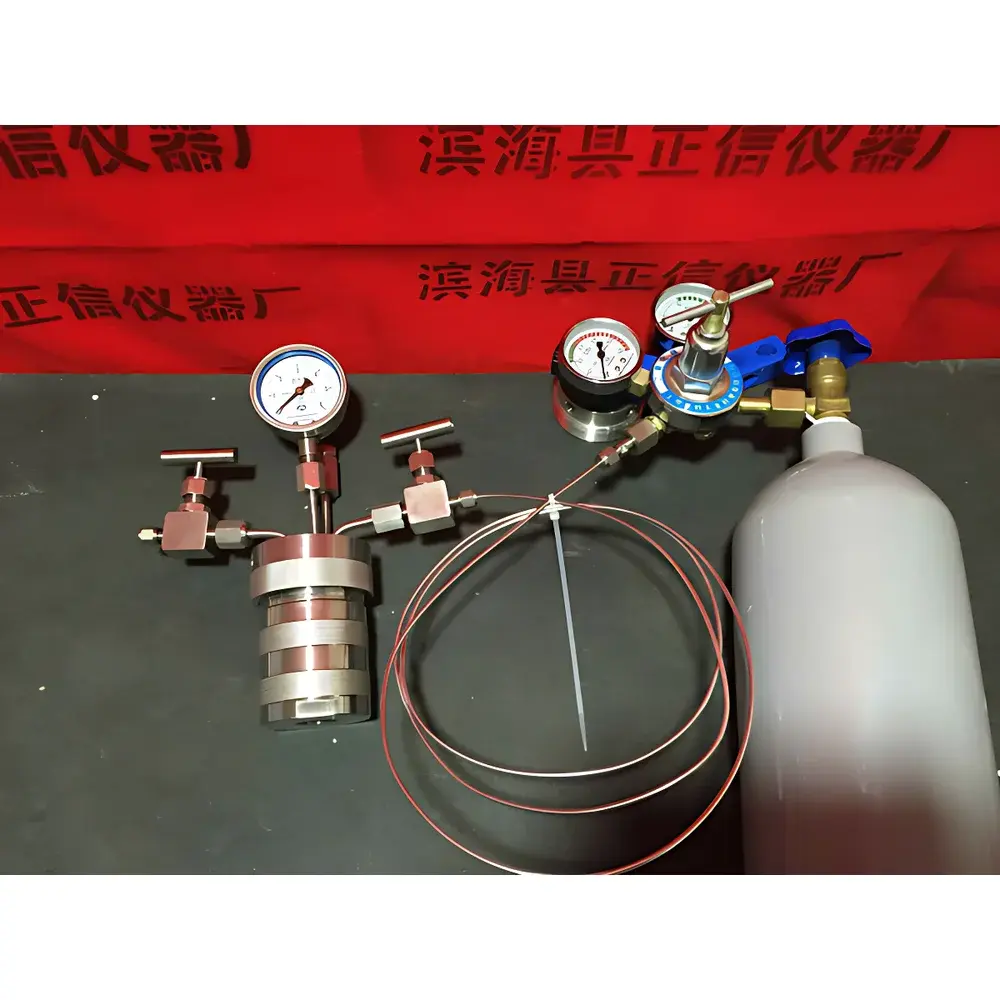
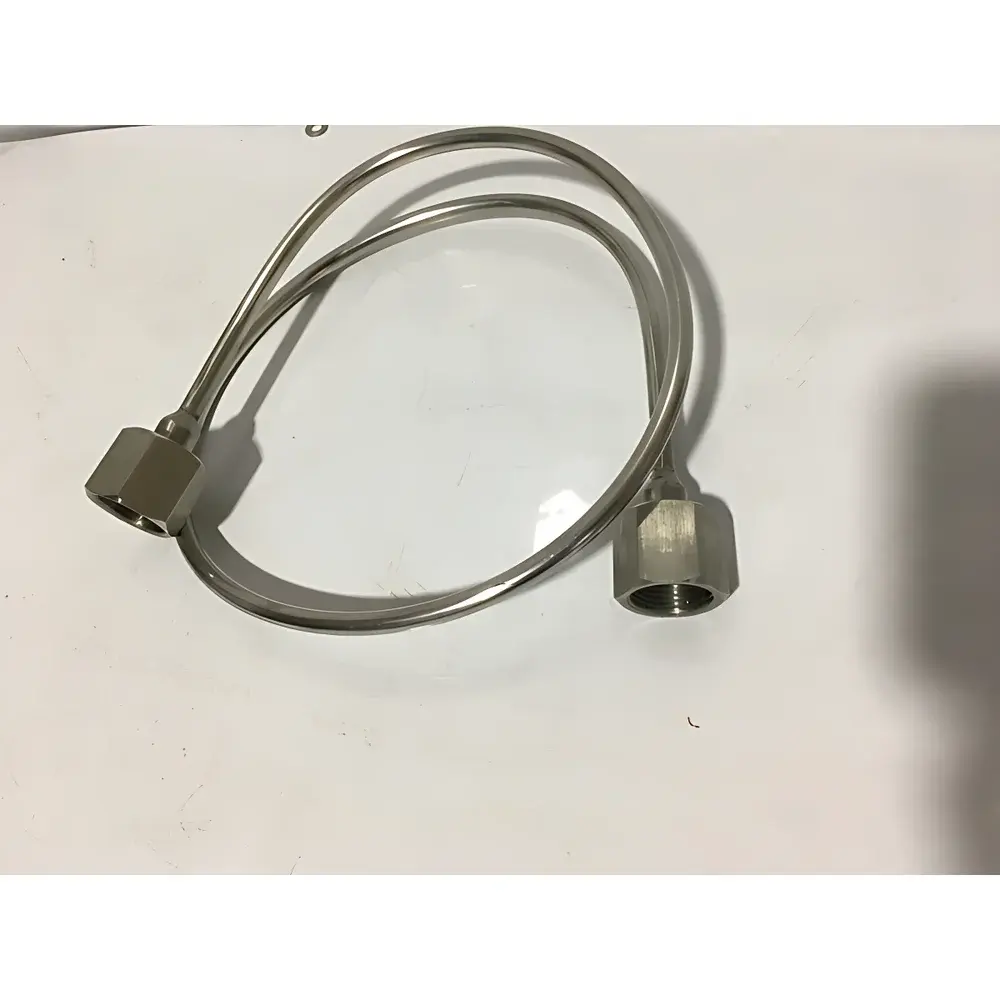
The Pipeline Fitting is a precision-engineered stainless steel tubing connector designed specifically for integration into modular laboratory reactor systems and continuous flow synthesis setups. It functions as a critical interface component—ensuring leak-tight, chemically inert, and thermally stable connections between reactor vessels, pumps, heat exchangers, back-pressure regulators, and analytical in-line sensors. Constructed from high-purity austenitic stainless steel (typically SS316 or SS304), the fitting adheres to standard dimensional tolerances per ISO 8434-1 and ASTM A269 for seamless tubing components. Its mechanical integrity supports both pressurized operation (up to 10 MPa at ambient temperature) and high-vacuum service (down to 0.1 mbar absolute), making it suitable for reactions under inert atmosphere, hydrogenation, catalytic screening, and solvent-free transformations.
Key Features
- Two standardized inner diameter options: 3 mm ID and 6 mm ID—optimized for low-flow screening (<5 mL/min) and medium-throughput synthesis (10–50 mL/min), respectively.
- Swagelok®-compatible end configurations (e.g., VCR, NPT, or compression-style) ensure interchangeability with common lab-scale fluidic hardware without custom adapters.
- Electropolished internal surface finish (Ra ≤ 0.4 µm) minimizes dead volume, particle retention, and catalytic residue buildup—critical for reproducible kinetic studies and GMP-aligned process development.
- Pressure-rated sealing via metal-to-metal contact or high-temperature PTFE ferrules; validated per ASME B31.3 process piping guidelines for laboratory-scale applications.
- Autoclavable and compatible with common cleaning protocols including nitric acid passivation (per ASTM A967) and ultrasonic degreasing.
Sample Compatibility & Compliance
The Pipeline Fitting is chemically resistant to a broad spectrum of reagents encountered in synthetic organic chemistry, organometallic catalysis, and electrochemical flow cells—including halogenated solvents (DCM, chlorobenzene), strong acids (HCl, H₂SO₄), bases (NaOH, KOtBu), and hydride sources (NaBH₄, LiAlH₄). It is not recommended for prolonged exposure to hydrofluoric acid or hot concentrated alkalis above 80 °C. All units are supplied with material certification (EN 10204 3.1) and traceable batch documentation. While not individually CE-marked, the fitting conforms to essential requirements of the EU Pressure Equipment Directive (PED 2014/68/EU) for Category I components when installed within validated system boundaries.
Software & Data Management
As a passive mechanical component, the Pipeline Fitting does not incorporate embedded electronics, firmware, or software interfaces. However, it is fully compatible with digital lab infrastructure: its standardized dimensions and pressure ratings enable accurate modeling in process simulation tools (e.g., Aspen Custom Modeler, COMSOL Multiphysics) and integration into electronic lab notebooks (ELNs) such as LabArchives or Benchling via structured metadata tagging (e.g., “ID_3mm_SS316”, “Max_Pressure_10MPa”). For audit-ready workflows, users may assign unique asset IDs and link maintenance logs—including leak-test records and passivation certificates—to each fitting instance within LIMS platforms supporting ISO/IEC 17025 traceability frameworks.
Applications
- Modular flow reactor assembly for API intermediate synthesis and photochemical cyclization.
- Vacuum manifold construction in Schlenk-line systems for air-sensitive organolithium chemistry.
- Integration into automated reaction stations (e.g., ChemSpeed, Uniqsis) requiring repeatable tube routing and pressure integrity across multi-step sequences.
- In-line coupling with FTIR or UV-Vis flow cells for real-time reaction monitoring under controlled residence time.
- High-pressure hydrogenation loops using Pd/C or Ru-based catalysts operating at 5–8 MPa H₂ partial pressure.
FAQ
What tubing standards are compatible with this fitting?
It accepts seamless stainless steel tubing per ASTM A269 (grades TP316/TP304) and ISO 8434-1, with outer diameters matching standard Swagelok® or Parker Hannifin compression tube fittings.
Is vacuum compatibility verified experimentally?
Yes—each production batch undergoes helium mass spectrometry leak testing to ≤1×10⁻⁹ mbar·L/s at full vacuum (0.1 mbar absolute) prior to shipment.
Can these fittings be used in GMP environments?
They meet material and surface finish prerequisites for GMP-compliant equipment qualification (IQ/OQ); final validation must be performed in situ as part of the integrated reactor system.
Do you supply calibration or certification documents?
Material test reports (MTRs), dimensional inspection reports, and passivation certificates are provided upon request for each order batch.
Are custom thread types or surface treatments available?
OEM customization—including NPT, BSPP, metric threads, or electropolishing to Ra ≤ 0.2 µm—is available under minimum order quantities (MOQ ≥ 50 units).



