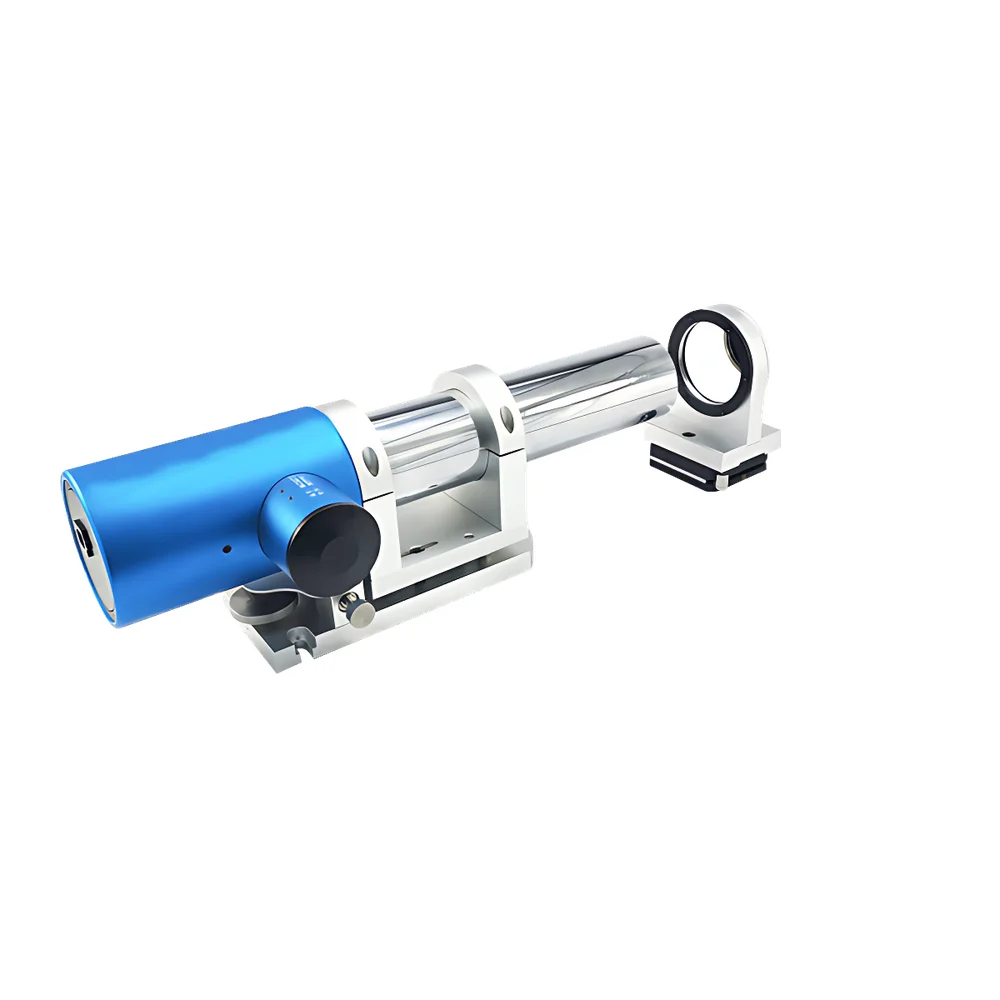
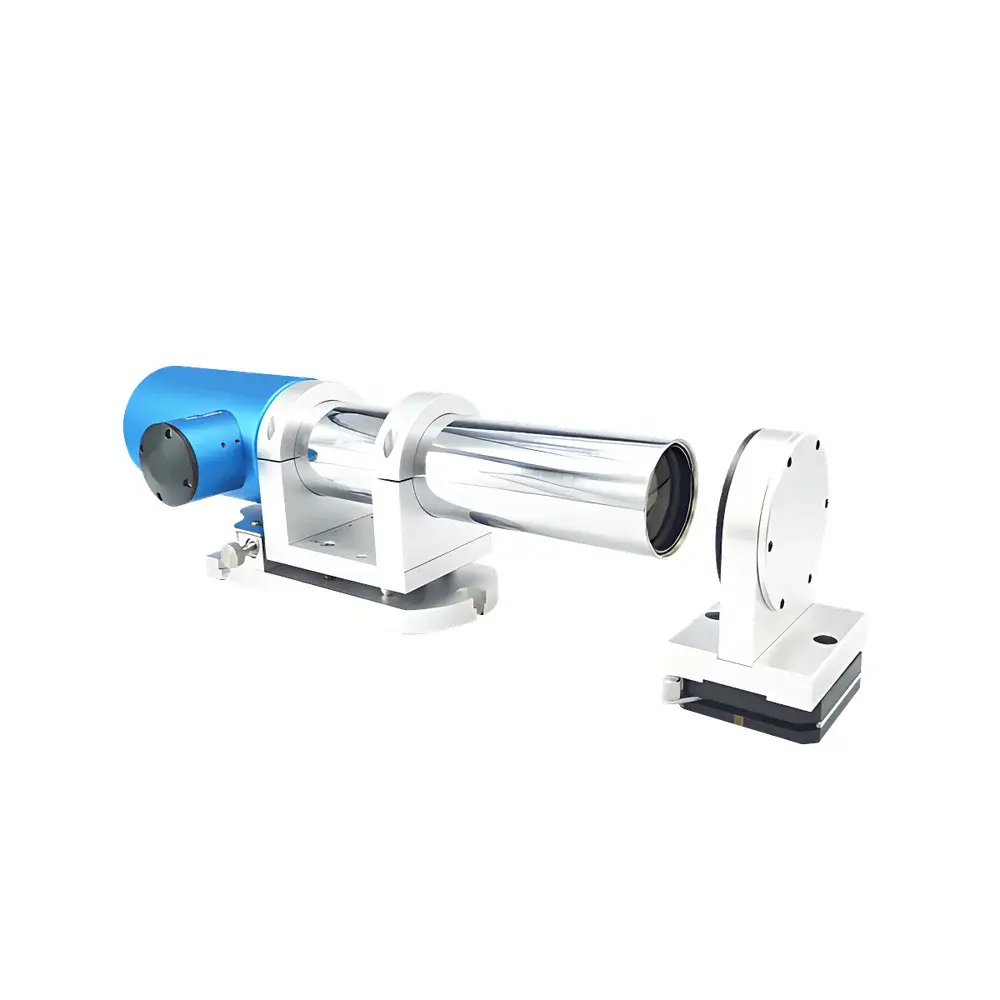
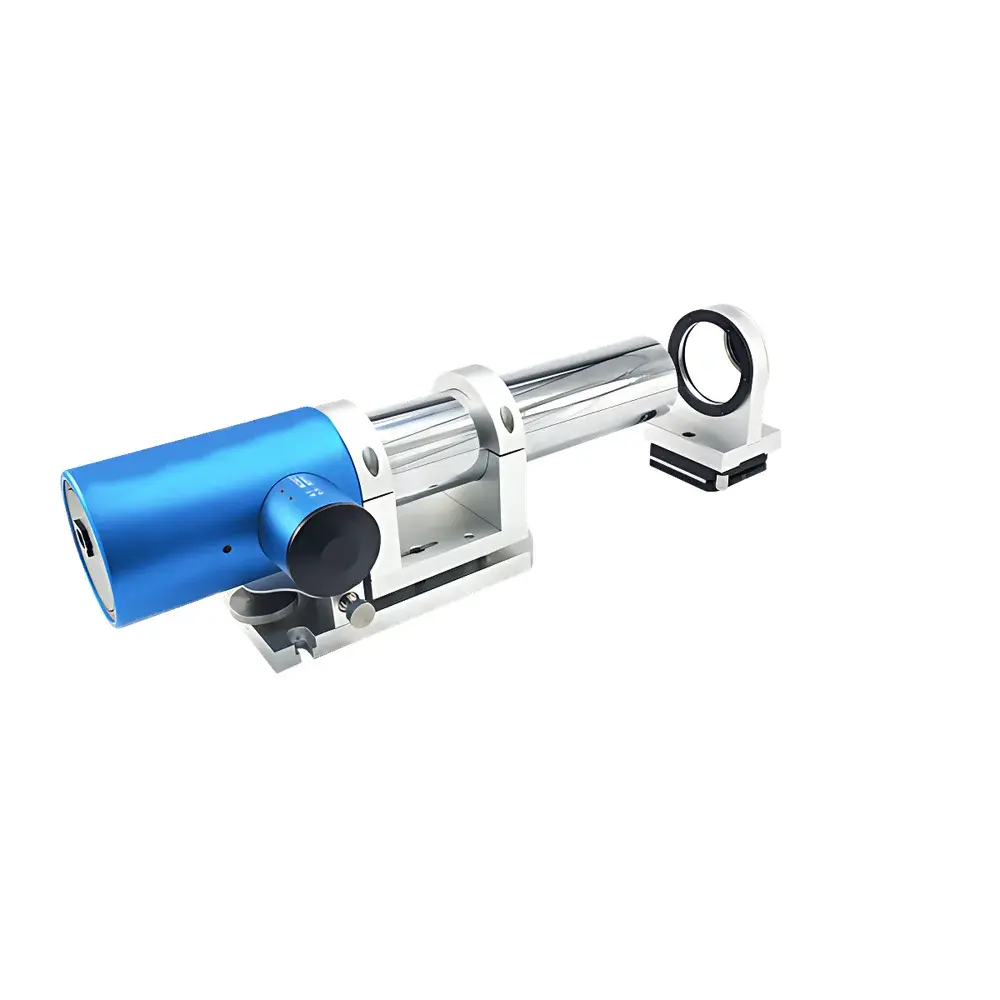
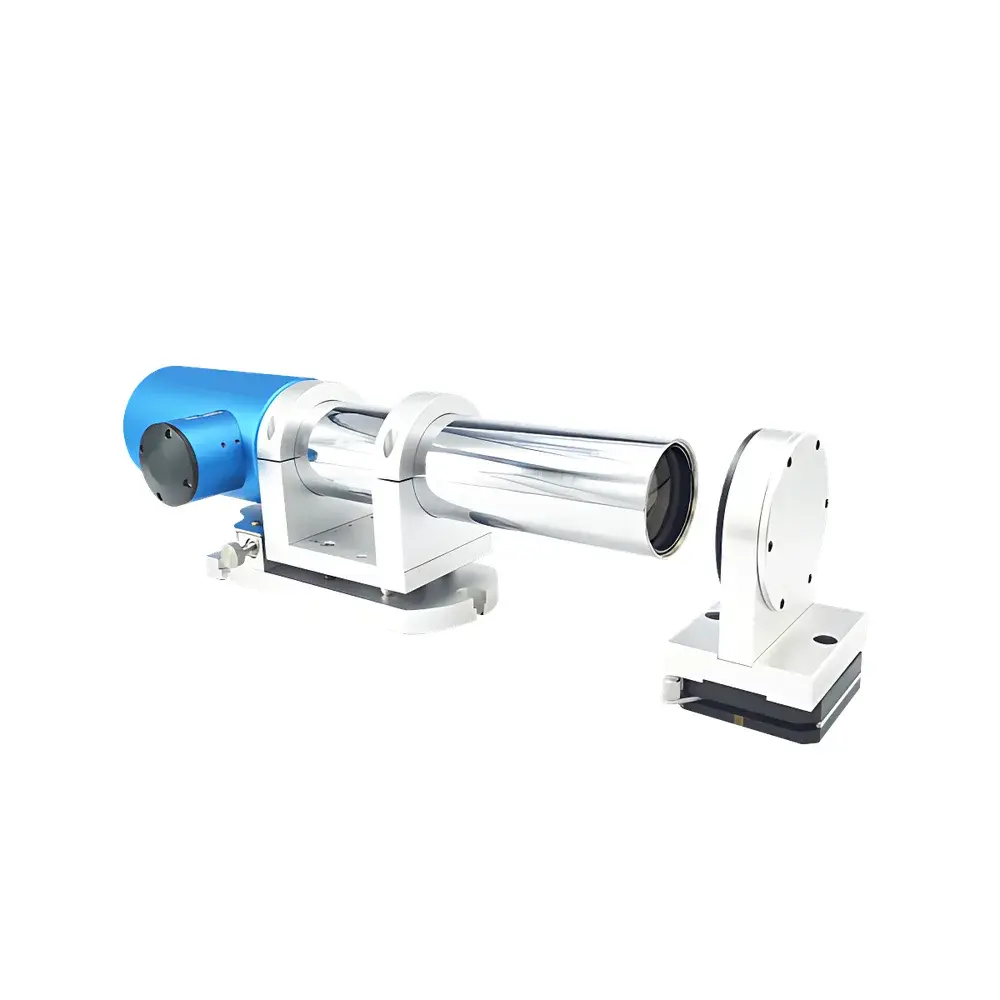
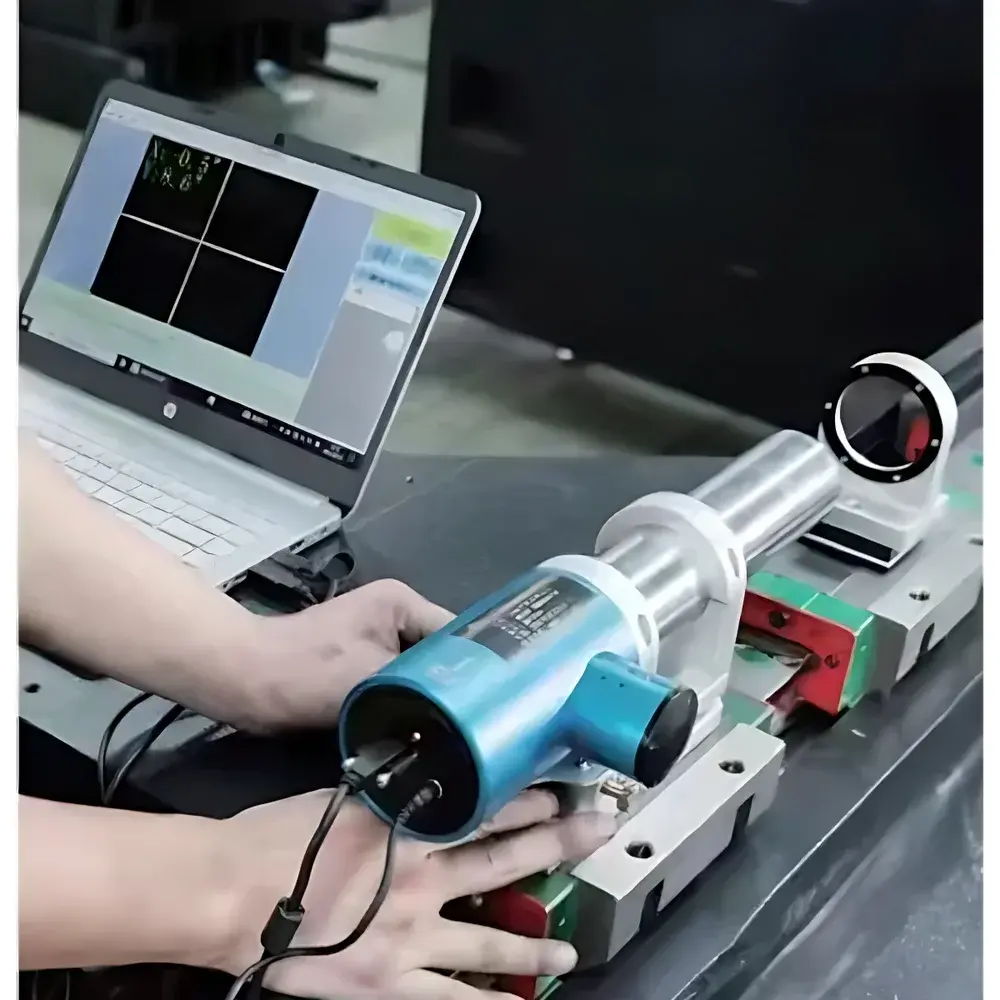
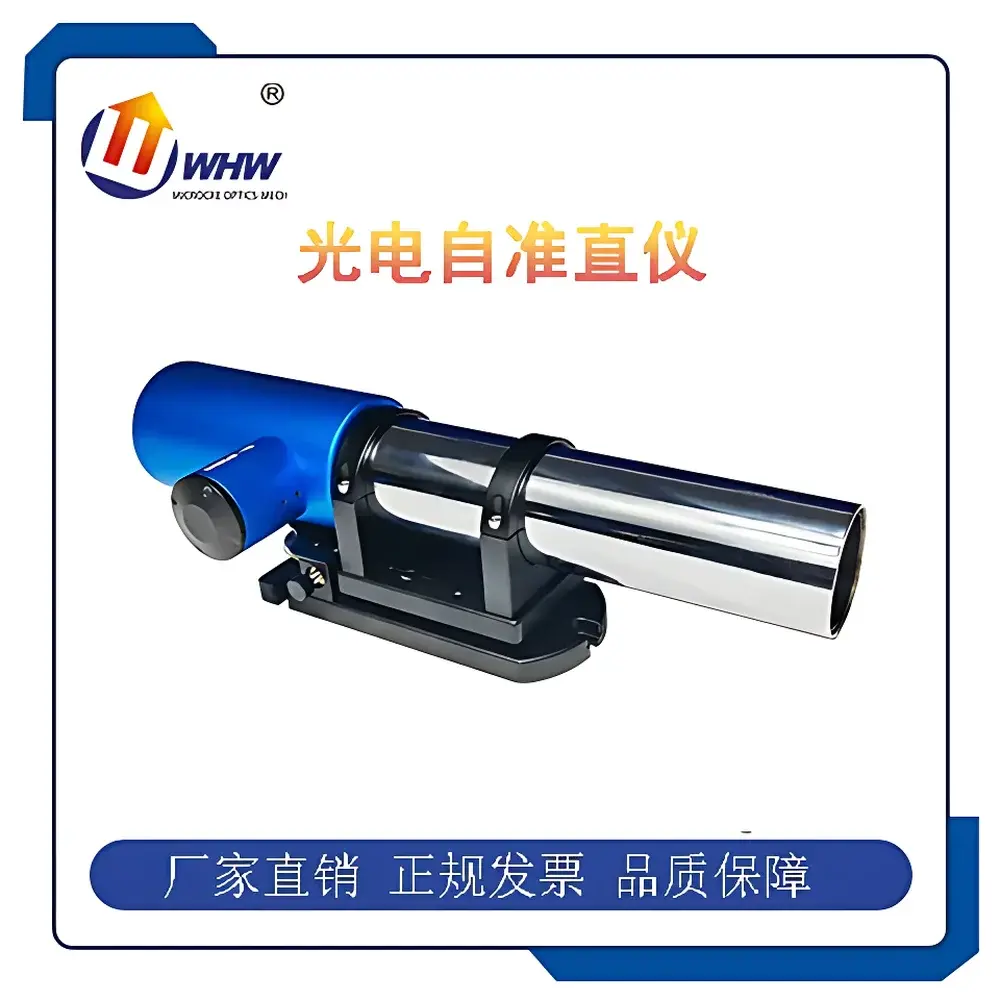
YANRUN MC030-MAT300/48/0.3 Dual-Axis Photoelectric Autocollimator
| Focal Length | 300 mm |
|---|---|
| Aperture | 48 mm |
| Angular Resolution | Adjustable down to 0.0001″ (arc sec) |
| Measurement Range | ±60″ (±0.3″ accuracy), ±600″ (±0.5″ accuracy) |
| Field of View | 2200″ × 1800″ (X/Y, arc sec) |
| Measurement Frequency | ≤30 Hz |
| Interface | USB 2.0 |
| Power Source | Integrated long-life semiconductor LED |
| Dimensions | 388 × 135 × 125 mm |
| Weight | 5.0 kg |
| Operating System | Windows 7 or later (64-bit), Intel Core i3-4th Gen or higher |
Overview
The YANRUN MC030-MAT300/48/0.3 Dual-Axis Photoelectric Autocollimator is a precision angular metrology instrument engineered for high-reproducibility measurement of minute angular deviations in two orthogonal axes (X and Y). It operates on the fundamental optical principle of autocollimation: collimated light emitted from a reticle located at the focal plane of a high-aperture objective lens reflects off a planar mirror and returns through the same optical path, forming a real image of the reticle on a calibrated photodetector array. When the mirror rotates by angle α, the returned image shifts by ΔS ≈ 2f·α (where f = 300 mm is the effective focal length), enabling sub-arcsecond angular quantification via pixel-level displacement analysis. This non-contact, drift-compensated method eliminates parallax and observer-dependent error inherent in traditional visual autocollimators. Designed for integration into metrology workflows compliant with ISO 10360, ISO 230-1, and ASME B89.3.7 standards, the instrument delivers traceable angular measurements across industrial calibration labs, aerospace component assembly lines, ultra-precision machine tool verification, and optical alignment facilities.
Key Features
- Dual-axis simultaneous acquisition: Real-time synchronous measurement of X- and Y-axis angular displacements without mechanical reorientation.
- High-resolution CMOS photodetector array: Enables adjustable angular resolution down to 0.0001 arc seconds, supporting both coarse alignment and nanoradian-level verification.
- Stable semiconductor LED illumination: Factory-aligned, thermally stabilized light source with >50,000-hour operational lifetime and minimal spectral drift over time.
- Real-time electronic eyepiece interface: Eliminates subjective human aiming error; displays live centroid-tracked crosshair image with dynamic offset vectors.
- Modular hardware architecture: Standardized M42 and SM1 threading enables rapid attachment of beam splitters, retroreflectors, and multi-mirror arrays for extended measurement configurations.
- USB 2.0 plug-and-play connectivity: No external power supply required; draws power directly from host PC while maintaining galvanic isolation for EMI resilience.
- Multi-language software environment: Supports English, Chinese, Russian, and Korean UIs—fully compliant with multilingual technical documentation requirements in global manufacturing sites.
Sample Compatibility & Compliance
The MC030-MAT300/48/0.3 is compatible with standard optical flat mirrors (λ/20 or better surface figure), kinematic mirror mounts, and motorized rotation stages used in coordinate measuring machine (CMM) verification and laser tracker alignment validation. Its 48 mm clear aperture accommodates typical industrial mirror sizes up to Ø100 mm at working distances from 0.5 m to 30 m. The system conforms to electromagnetic compatibility requirements per EN 61326-1:2013 and meets essential safety criteria under IEC 61010-1:2010. Calibration reports are issued with NIST-traceable uncertainty budgets aligned to ISO/IEC 17025:2017. For regulated environments—including FDA-regulated medical device manufacturing and aerospace MRO facilities—the optional audit-trail-enabled software module supports 21 CFR Part 11 compliance with electronic signature, user access control, and immutable measurement log archiving.
Software & Data Management
The bundled YANRUN AutoAlign Suite v4.2 runs natively on Windows 7+ (64-bit) and provides deterministic real-time data acquisition at up to 30 Hz sampling rate. It implements automatic curve fitting using Levenberg–Marquardt nonlinear regression for straightness, flatness, and perpendicularity evaluation per ISO 1101 geometric tolerancing definitions. All raw pixel displacement data, timestamped metadata, environmental logs (ambient temperature/humidity if external sensors are connected), and operator annotations are stored in encrypted SQLite databases. Export functionality includes ANSI-standard CSV, ISO-compliant XML-DA (Data Acquisition), and Microsoft Excel (.xlsx) formats with embedded formula-driven tolerance pass/fail flags. Batch processing mode allows automated analysis of multi-point datasets across serially measured components, generating summary statistics (mean, σ, Cp/Cpk) and Shewhart control charts for SPC integration.
Applications
- Precision machine tool calibration: Linear axis straightness assessment via sequential mirror translation along guideways (per ISO 230-2).
- Aerospace actuator alignment: Verification of gimbal bearing orthogonality and servo-loop feedback stability during ground testing.
- Optical bench setup: Collimation validation of laser cavities, interferometer arms, and telescope secondary mirror tilt.
- Coordinate metrology: Reference axis establishment for laser tracker volumetric compensation and CMM artifact calibration.
- Research-grade instrumentation: In-situ monitoring of thermal drift in cryogenic optical mounts and gravitational wave detector suspension systems.
- Education & training: Hands-on demonstration of first-order optical aberrations, diffraction-limited imaging, and closed-loop angular control theory.
FAQ
What is the recommended warm-up time before high-accuracy measurements?
For measurements requiring ≤0.3″ repeatability, power-on stabilization for ≥15 minutes is mandatory. Full metrological readiness—defined as thermal equilibrium across all optical and electronic subsystems—requires ≥24 hours of uninterrupted operation in a temperature-controlled environment (±0.5°C).
Can this instrument measure absolute angle or only relative deviation?
It measures relative angular change with respect to an initial reference position. Absolute angular calibration requires traceable artifact alignment (e.g., certified right-angle prism or autocollimating pentaprism) verified against national metrology institute standards.
Is third-party software integration supported?
Yes—DLL-based API and TCP/IP socket interface enable bidirectional communication with LabVIEW, MATLAB, Python (via PyUSB), and custom SCADA platforms. All command protocols are documented in the Engineering Integration Manual (Rev. 4.2.1).
Does the system support environmental compensation?
Ambient temperature input is accepted via software interface to apply refractive index correction per Ciddor equation (ISO 10360-8 Annex B), though air turbulence mitigation remains the responsibility of local enclosure design.
What maintenance is required beyond routine cleaning?
No scheduled internal maintenance is required. Annual verification against a calibrated reference mirror (certified by an ISO/IEC 17025 lab) is recommended to maintain stated accuracy specifications.