
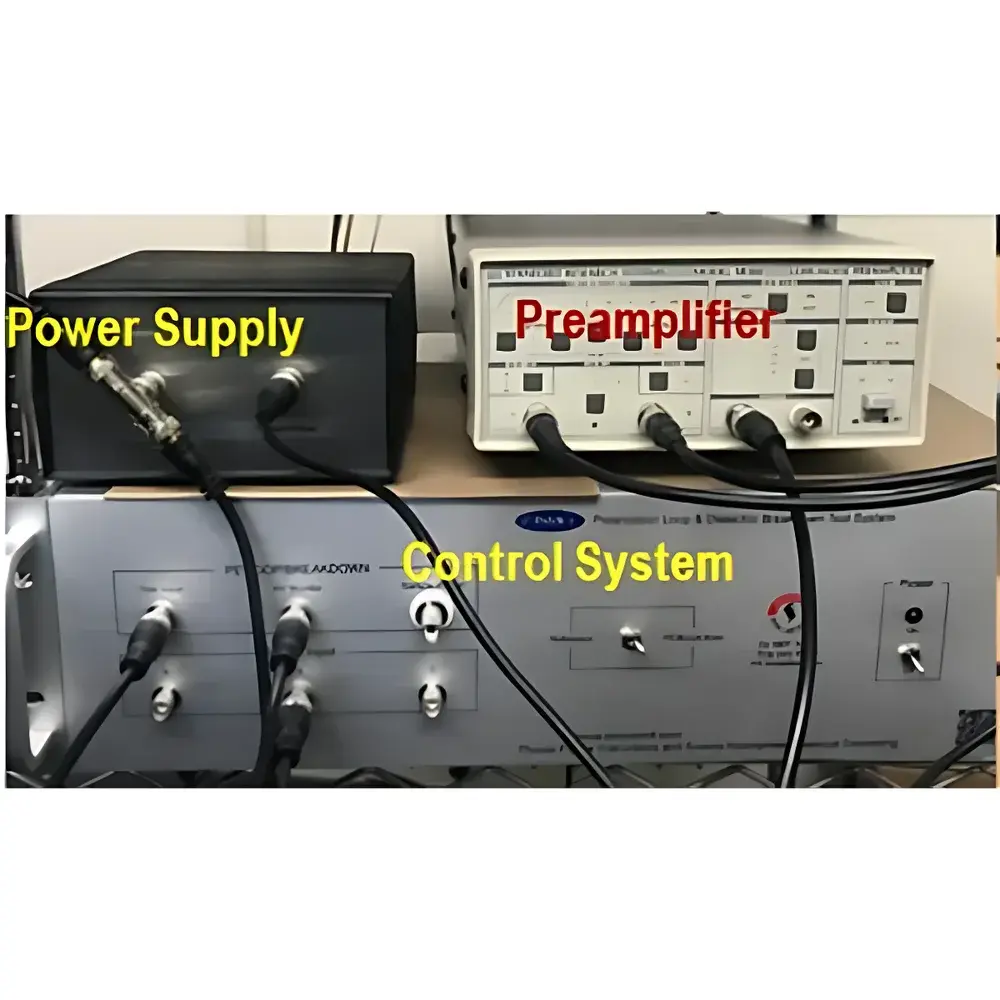
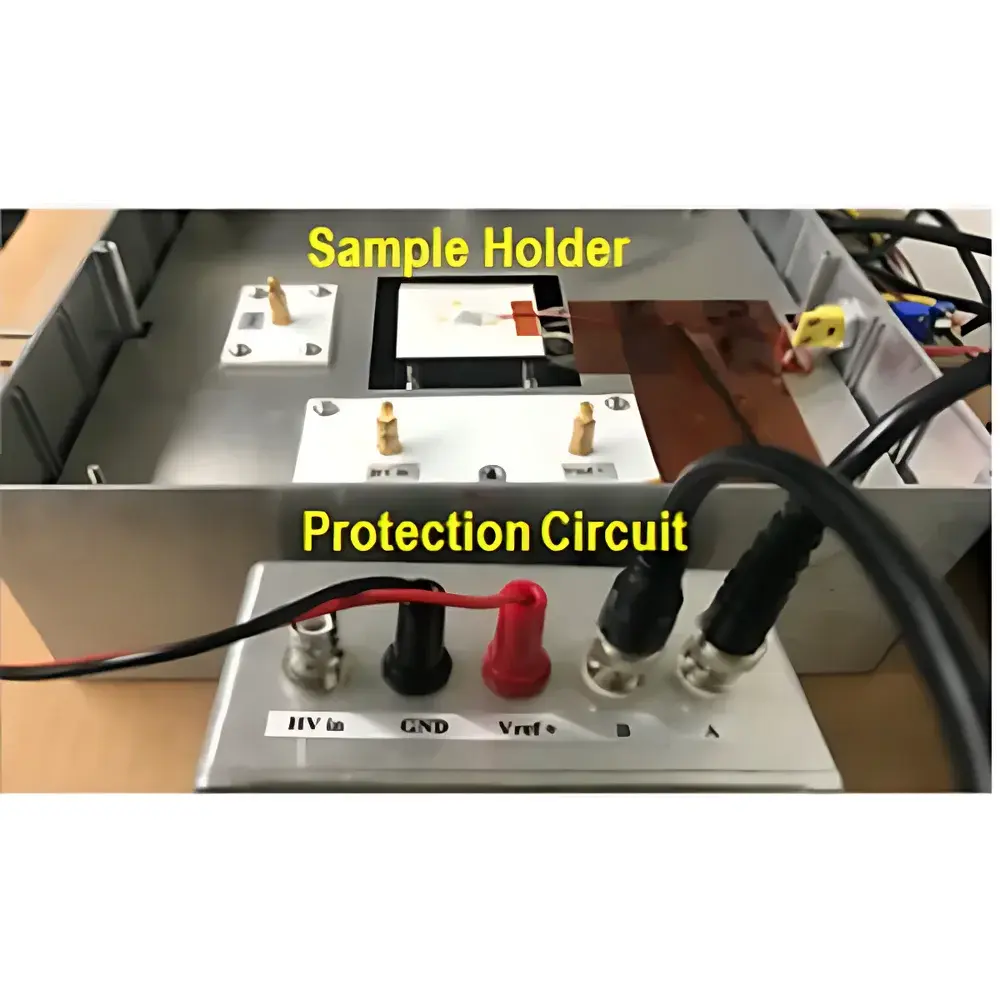
PolyK Technologies ECE-22A Electrocaloric Effect Measurement System
| Brand | PolyK Technologies |
|---|---|
| Origin | USA |
| Model | ECE-22A |
| Temperature Range | −50 °C to 200 °C |
| Response Time | ≤100 ms |
| Sample Size | up to 20 mm × 20 mm |
| Heat Flux Sensor Sensitivity | >3 µV/(BTU·ft⁻²·hr⁻¹) |
| Thermal Resistance | 0.01 °F·ft²·hr/BTU |
| Thermal Capacitance | 0.02 BTU/(ft²·°F) |
| Data Acquisition | 16-bit ADC |
| Amplifier | Stanford Research Systems SR560 |
| Gain Range | 1–50,000 |
| Bandwidth | DC to 1 MHz |
| Input Noise | 4 nV/√Hz |
Overview
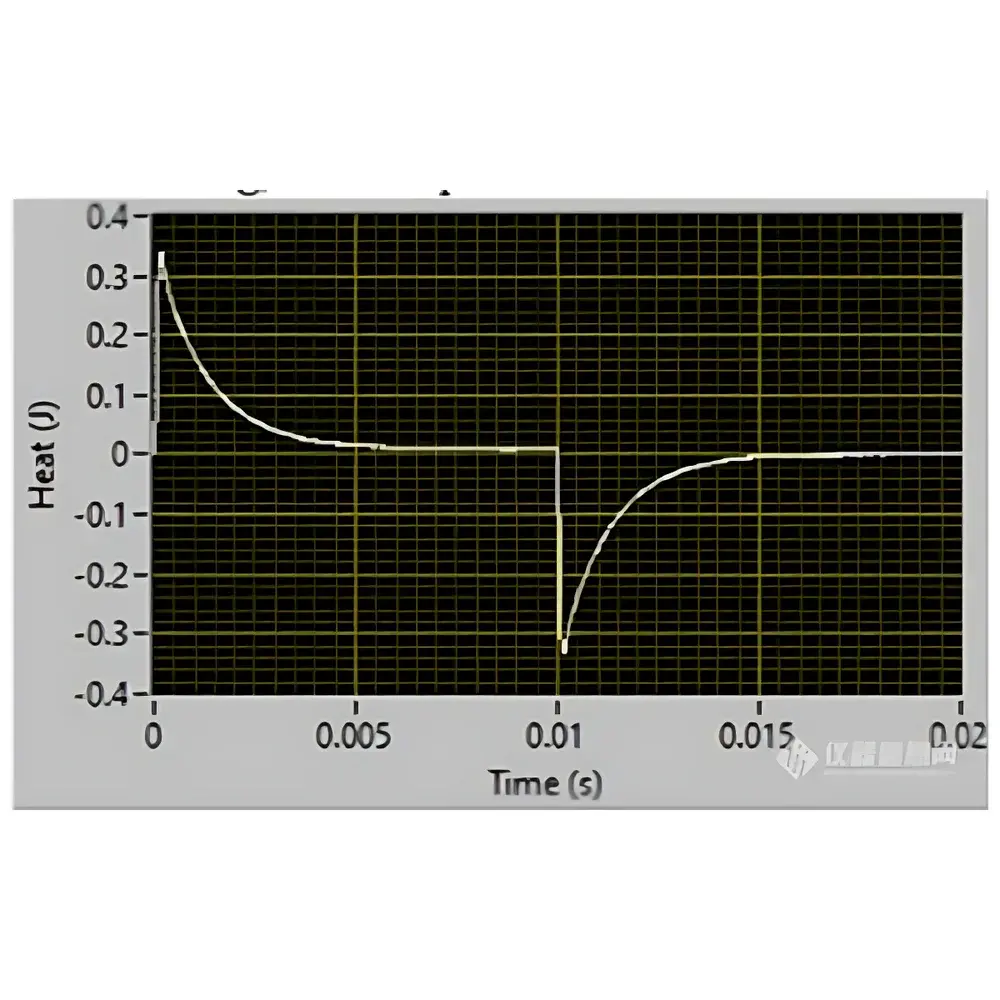
The PolyK Technologies ECE-22A Electrocaloric Effect Measurement System is a purpose-built instrument engineered for the direct, quantitative characterization of electrocaloric (EC) response in dielectric and ferroelectric materials under controlled electric field and thermal boundary conditions. It operates on the principle of transient heat flux detection via high-sensitivity thermopile-based sensors, enabling real-time measurement of adiabatic temperature change (ΔTad) and isothermal entropy change (ΔSiso) induced by rapid electric field application or removal. Unlike indirect calorimetric estimation methods, the ECE-22A captures the intrinsic EC effect through synchronized voltage pulsing, thermal transduction, and high-fidelity signal acquisition—providing traceable, reproducible data essential for fundamental materials research and solid-state refrigeration development. The system supports operation across an extended thermal range (−50 °C to 200 °C), accommodating phase transitions in relaxor ferroelectrics, polymer blends, and high-entropy ceramics critical to next-generation cooling technologies.
Key Features
- Direct electrocaloric effect quantification using calibrated heat flux transduction, eliminating reliance on derivative thermodynamic modeling
- Integrated dual-mode sample holder enabling seamless switching between calibration mode (zero-field baseline) and high-voltage testing mode (up to ±10 kV, compatible with external HV amplifiers)
- Dedicated overvoltage protection circuitry safeguarding the Stanford Research Systems SR560 low-noise preamplifier against transient spikes during field switching
- High-speed thermopile sensor with <100 ms thermal response time, optimized thermal resistance (0.01 °F·ft²·hr/BTU) and low thermal mass (0.02 BTU/ft²/°F) for minimal thermal lag
- 16-bit analog-to-digital acquisition synchronized with programmable voltage pulse generators for precise temporal alignment of field stimulus and thermal response
- Wide-bandwidth signal conditioning (DC–1 MHz) and adjustable gain (1–50,000×) to resolve sub-microvolt-level heat flux signals amid low-frequency drift and broadband noise
Sample Compatibility & Compliance
The ECE-22A accommodates freestanding thin films, sintered pellets, and flexible polymer sheets with lateral dimensions up to 20 mm × 20 mm and thicknesses ranging from 10 µm to 1 mm. Electrode integration is facilitated via spring-loaded gold-plated contacts or optional vacuum-clamped configurations to ensure uniform pressure and interfacial thermal contact. All thermal interfaces comply with ASTM E1530 (Standard Test Method for Measuring Thermal Resistance of Materials) guidelines for guarded hot plate and heat flow meter methodologies. The system’s electrical architecture conforms to IEC 61000-4-5 surge immunity standards, and its operational protocols support GLP-compliant audit trails when paired with validated third-party control software. While not FDA-certified as a medical device, its measurement traceability aligns with ISO/IEC 17025 requirements for calibration laboratories performing EC property certification.
Software & Data Management
Control and analysis are executed via a Windows-based native application supporting automated test sequencing—including multi-cycle field ramping, frequency sweeps (0.1 Hz–100 Hz), and stepped voltage protocols (±0.1–±10 kV). Raw heat flux, temperature, and applied field waveforms are timestamped and stored in HDF5 format with embedded metadata (sample ID, ambient conditions, amplifier settings, calibration coefficients). Export options include CSV, MATLAB (.mat), and NIST-compatible .tdms formats. The software implements real-time digital filtering (Butterworth, FIR), baseline correction algorithms, and integrated ΔTad/ΔSiso post-processing per ISO 11357-4 Annex B conventions. Audit logs record user actions, parameter modifications, and system health diagnostics—enabling full 21 CFR Part 11 compliance when deployed with electronic signature modules and network-accessible server storage.
Applications
- Quantitative evaluation of giant electrocaloric effects in PVDF-based terpolymers and P(VDF-TrFE-CTFE) systems, as reported in Science (2008, Vol. 321, p. 821)
- Low-field EC response mapping in high-entropy polymers exhibiting field-induced entropy collapse, consistent with findings in Nature (2021, Vol. 600, No. 7890)
- Thermal hysteresis analysis across ferroelectric phase transitions in BaTiO3-based ceramics and layered perovskites
- Interfacial thermal resistance studies at electrode–dielectric junctions under pulsed poling conditions
- Accelerated aging tests of EC materials under cyclic high-field stress (10⁴–10⁶ cycles) with concurrent thermal degradation monitoring
FAQ
What types of materials can be tested with the ECE-22A?
The system is optimized for dielectric solids including ferroelectric ceramics, relaxor polymers, organic-inorganic hybrids, and thin-film heterostructures. Liquid crystals and gels require custom thermal interface fixtures.
Is the ECE-22A compatible with external high-voltage amplifiers?
Yes—it features isolated BNC-triggered input/output ports and TTL-synchronized gating for seamless integration with commercial HV amplifiers (e.g., Trek 609E, AR 100A250B).
Does the system provide absolute calibration traceability?
Calibration is performed using NIST-traceable reference heat flux standards (e.g., NIST SRM 1450c) and certified Pt100 RTDs; certificate of calibration is provided with each instrument shipment.
Can the ECE-22A operate under vacuum or inert gas environments?
The sample chamber is compatible with standard vacuum flanges (KF-25) and optional glovebox-integrated enclosures for O2/moisture-sensitive materials.
What level of technical support is available for method development?
PolyK Technologies offers application engineering support—including protocol optimization, uncertainty budgeting per GUM (JCGM 100:2008), and co-authored publication assistance—for academic and industrial users.



