
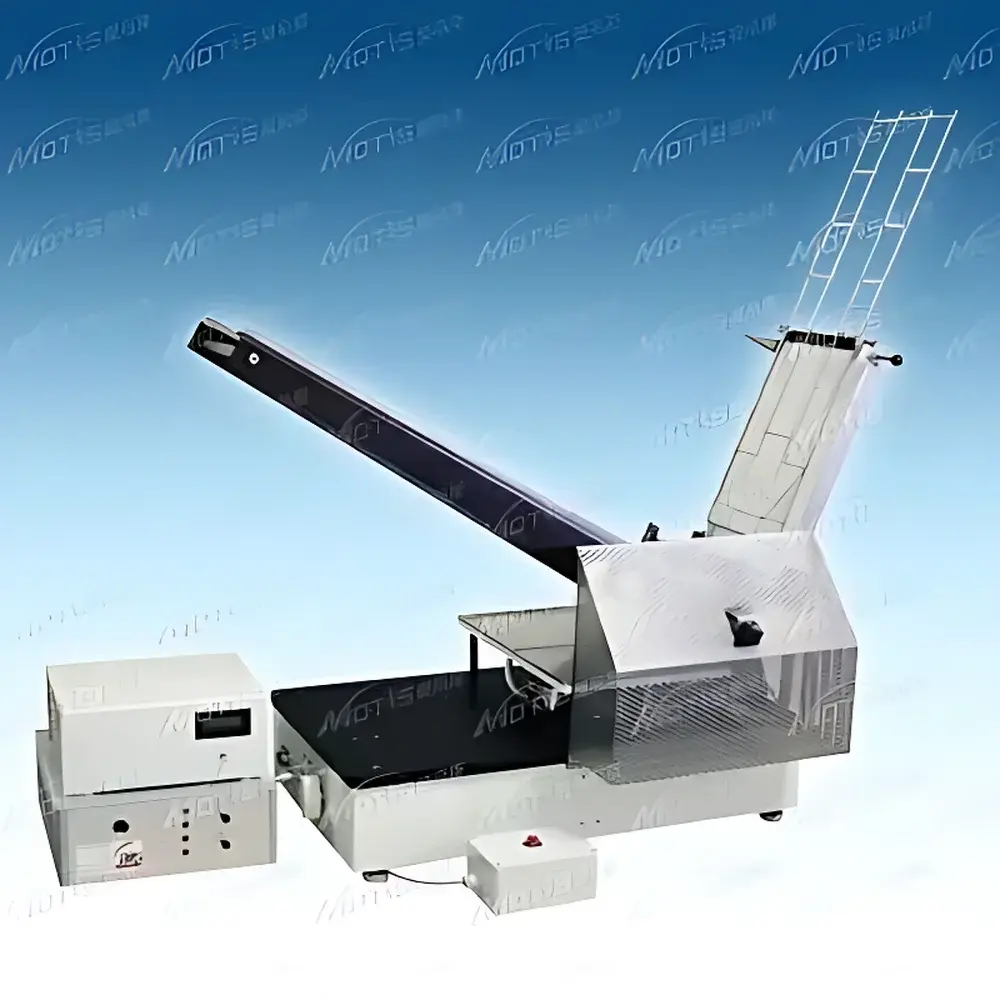
Polynorme 503 Combustion Test Chamber by MOTIS
| Brand | MOTIS |
|---|---|
| Origin | Shanghai, China |
| Model | Polynorme 503 |
| Applicable Standard | NFP 92-503 |
| Test Principle | Radiant Heat + Pilot Flame Ignition |
| Application Scope | Building Materials & Railway Components Combustibility Assessment |
| Compliance | French National Fire Safety Regulations for Construction and High-Speed Rail Infrastructure |
Overview
The Polynorme 503 Combustion Test Chamber is a precision-engineered apparatus designed to evaluate the surface flame spread behavior of solid materials under controlled thermal radiation and pilot flame ignition conditions. Developed in accordance with the French national standard NFP 92-503, this system implements a defined radiant heat flux—typically 50 kW/m²—applied uniformly across the specimen surface via a calibrated ceramic radiant panel, while simultaneously introducing a standardized pilot flame (butane or propane) at the lower edge to initiate combustion. The instrument quantifies critical fire performance parameters including time-to-ignition (TTI), flame spread rate, lateral flame propagation distance, afterflame and afterglow duration, and char depth progression. Its operational architecture adheres to the fundamental principles of bench-scale fire testing: reproducible heat flux delivery, geometrically constrained sample orientation (vertical or inclined), and real-time optical observation of flame dynamics using high-resolution digital imaging synchronized with thermocouple arrays and mass loss monitoring.
Key Features
- Integrated radiant heat source meeting NFP 92-503 spectral and flux uniformity requirements, with closed-loop temperature control ensuring ±1.5% stability over test duration.
- Dual-mode ignition capability: programmable pilot flame application (duration, position, gas flow rate) compliant with Clause 6.3 of NFP 92-503.
- Modular specimen holder accommodating standard test specimens (250 mm × 90 mm × thickness ≤ 50 mm), fabricated from refractory stainless steel with integrated thermocouple ports (Type K, Class 1 accuracy).
- Real-time data acquisition system logging TTI, flame front position (via linear encoder or image analysis), surface temperature profiles, and mass loss rate at 1 Hz sampling frequency.
- Exhaust ventilation system with variable-speed fan and back-pressure compensation to maintain consistent draft conditions during flaming combustion phases.
- Self-contained safety interlocks including flame failure detection, overtemperature cutoff, and emergency purge sequence activated upon door opening or pressure anomaly.
Sample Compatibility & Compliance
The Polynorme 503 is validated for use with non-metallic construction materials—including rigid and flexible insulation boards, sandwich panel facings, floor coverings, wall linings, and interior railway components such as ceiling panels, seat upholstery substrates, and ducting materials. All test configurations comply strictly with NFP 92-503:2017 “Réaction au feu – Méthode d’essai à l’opposé de la face exposée – Essai au radiateur” and are referenced in complementary specifications for high-speed rail infrastructure (e.g., SNCF specification E 41 0002 and RATP C 2000). While not directly aligned with ASTM E84 or ISO 5657, its radiant-based methodology provides comparable surface flame spread metrics suitable for regulatory submission within French and Francophone jurisdictions. The chamber supports GLP-compliant operation when paired with audit-trail-enabled software and calibrated instrumentation traceable to COFRAC-accredited laboratories.
Software & Data Management
The embedded control interface runs on a real-time Linux OS with deterministic I/O scheduling, enabling sub-millisecond synchronization between flame initiation, radiant heater ramping, and sensor sampling. Data export is supported in CSV and XML formats compatible with laboratory information management systems (LIMS). Optional software modules include automated flame front tracking via OpenCV-based image processing, statistical reporting per NFP 92-503 Annex B, and electronic signature functionality compliant with FDA 21 CFR Part 11 when deployed in regulated environments. Audit trails record operator ID, method version, calibration status, environmental conditions (ambient T/RH), and all parameter modifications—retained for minimum 15 years per internal QA policy.
Applications
- Classification of building products into French fire reaction classes M0–M4 per Decree No. 2012-1137.
- Pre-certification testing for rolling stock components under EN 45545-2, particularly HL3 hazard level scenarios where radiant exposure dominates ignition risk.
- Comparative evaluation of intumescent coatings, mineral wool composites, and bio-based insulations under identical thermal stress profiles.
- Root cause analysis of unexpected flame propagation in composite laminates during fire safety audits.
- Supporting technical documentation for CE marking submissions requiring NFP 92-503 evidence.
FAQ
Does the Polynorme 503 meet requirements for certification under French building codes?
Yes—it is fully aligned with NFP 92-503 and referenced in the Technical Instruction Note (ITN) issued by the French Ministry of Housing for fire classification of construction products.
Can the system be configured for inclined specimen orientation?
Yes, the adjustable mounting frame supports angles from 0° (horizontal) to 90° (vertical), with default configuration set at 45° per NFP 92-503 Clause 5.2.
Is third-party calibration support available?
MOTIS provides annual calibration services traceable to LNE (Laboratoire National de Métrologie et d’Essais) standards, including radiant flux mapping, thermocouple verification, and gas flow meter certification.
What maintenance intervals are recommended for long-term reliability?
Radiant panel inspection every 200 test cycles; pilot flame nozzle cleaning after each 10 tests; full exhaust duct inspection quarterly; firmware updates released biannually via secure MOTIS portal.
Are test reports generated by this system accepted by French notified bodies?
Yes—when operated under documented SOPs, with valid calibration certificates and raw data archives, test reports are routinely accepted by FCBA, CSTB, and Bureau Veritas for conformity assessment.



