
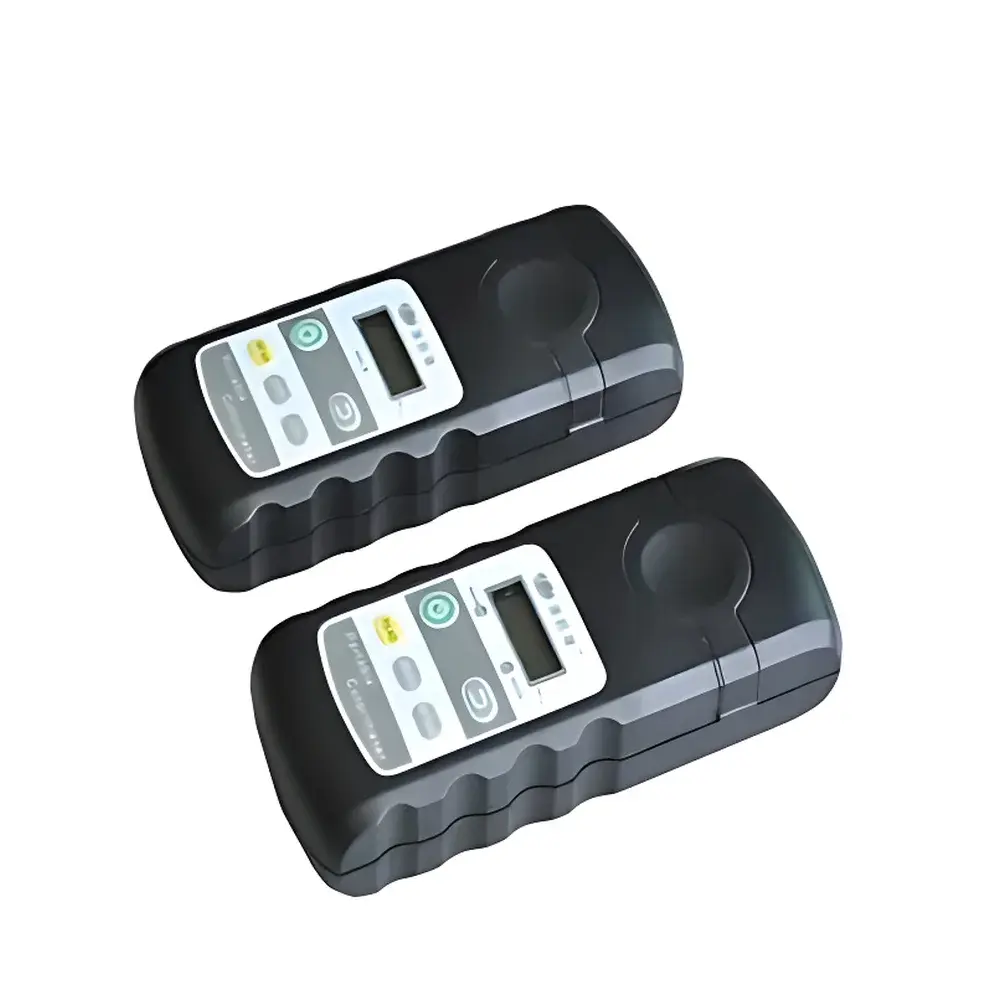
Q-AM Portable Multi-Parameter Aquaculture Water Quality Analyzer for Seawater
| Origin | Beijing, China |
|---|---|
| Manufacturer Type | Authorized Distributor |
| Origin Category | Domestic (PRC) |
| Model | Q-AM |
| Price Range | USD 280–1,400 |
| Instrument Type | Handheld/Portable Water Quality Analyzer |
| Parameters Measured | Ammonia-N, Dissolved Oxygen (DO), Nitrite-N, Sulfide, pH, Salinity |
| Ammonia-N Range | 0.02–6.00 mg/L, Resolution: 0.01 mg/L |
| DO Range | 0.0–15.0 mg/L, Resolution: 0.1 mg/L |
| Nitrite-N Range | 0.00–0.50 mg/L, Resolution: 0.01 mg/L |
| Sulfide Range | 0.00–1.00 mg/L, Resolution: 0.01 mg/L |
| pH Range | 0.0–14.0, Resolution: 0.1 |
| Salinity Range | 0–100 ‰, Resolution: 0.01 ‰ |
| Accuracy | ±3% of full scale ±0.01 unit (typical) |
| Dimensions (Analyzer Unit) | 160 × 62 × 30 mm |
| Weight (Analyzer Unit) | 150 g |
| Power | 2 × AA alkaline batteries |
| pH Probe Dimensions | 142 × 29 × 15 mm |
| pH Probe Weight | 51 g |
| Salinity Sensor Dimensions | 30 × 40 × 205 mm |
| Salinity Sensor Weight | 275 g |
| Operating Temperature | 0–50 °C |
| Analysis Time | ≤10 minutes per parameter set |
Overview
The Q-AM Portable Multi-Parameter Aquaculture Water Quality Analyzer for Seawater is an integrated, field-deployable instrumentation system engineered for rapid, on-site assessment of six critical water quality parameters in marine and brackish aquaculture environments. Unlike conventional benchtop analyzers requiring laboratory infrastructure or complex sample pretreatment, the Q-AM employs colorimetric and electrochemical measurement principles—specifically Nesslerization for ammonia-nitrogen, Winkler-based iodometric titration (adapted for solid-phase reagent kits) for dissolved oxygen, diazotization-coupling for nitrite-nitrogen, methylene blue spectrophotometry for sulfide, potentiometric glass electrode sensing for pH, and conductometric determination for salinity. Its design explicitly addresses the analytical challenges posed by high ionic strength seawater matrices—including elevated Ca²⁺, Mg²⁺, and Cl⁻ concentrations—by incorporating proprietary interference-compensated reagent formulations and sensor coatings that eliminate the need for distillation, dilution, or desalting pretreatment. The system delivers quantitative results traceable to standard reference materials (SRMs) and conforms to foundational methodological frameworks described in ASTM D1688 (Copper in Water), ISO 5813 (Dissolved Oxygen – Electrochemical Probe Method), and APHA Standard Methods 4500-NH₃ F (Ammonia by Nessler Method), ensuring data integrity across operational contexts from hatcheries to offshore net-pen farms.
Key Features
- True multi-parameter capability: Simultaneous quantification of ammonia-N, dissolved oxygen, nitrite-N, sulfide, pH, and salinity without cross-parameter recalibration.
- Seawater-optimized chemistry: Reagent kits formulated to suppress chloride interference and maintain stoichiometric accuracy in salinities up to 100 ‰.
- Zero-pretreatment operation: Eliminates requirement for sample filtration, acidification, or distillation—critical for time-sensitive farm management decisions.
- Two-step assay protocol: Pre-measured, lyophilized reagents ensure consistent dosing; visual or digital endpoint detection enables operator independence.
- Modular sensor architecture: Detachable pH probe and salinity sensor allow targeted replacement and calibration verification per ISO/IEC 17025-recommended intervals.
- Field-rugged construction: IP67-rated housing, shock-absorbing silicone overmold, and low-power electronics support continuous operation for >200 tests per battery set.
Sample Compatibility & Compliance
The Q-AM is validated for direct analysis of unfiltered, undiluted seawater, estuarine water, recirculating aquaculture system (RAS) effluent, and pond surface samples. It meets functional equivalency requirements outlined in FAO Technical Paper No. 588 (“Water Quality Guidelines for Sustainable Aquaculture”) and aligns with monitoring protocols mandated under EU Directive 2006/88/EC (Animal Health Requirements for Aquaculture Animals). All reagent kits are manufactured under ISO 9001-certified processes and include lot-specific Certificate of Analysis (CoA) with stability data (shelf life ≥24 months at 4–30 °C). Device firmware supports audit-ready logging compliant with GLP principles, including user ID tagging, timestamped measurements, and immutable result storage—facilitating traceability during regulatory inspections or third-party certification audits (e.g., ASC, GAP, BAP).
Software & Data Management
While the base Q-AM operates as a standalone visual/digital readout instrument, optional Bluetooth-enabled data logger (Q-AM-Link v2.1) provides wireless transmission to iOS/Android devices running the Q-AM Field Manager app. This application supports configurable alert thresholds (e.g., DO 0.2 mg/L), automated trend visualization across sampling events, export of CSV/Excel-compatible reports, and integration with cloud-based farm management platforms via RESTful API. All stored data retain full metadata (GPS coordinates, operator ID, ambient temperature, salinity-corrected DO values) and comply with FDA 21 CFR Part 11 requirements when used with electronic signature modules.
Applications
- Daily health monitoring of shrimp (Litopenaeus vannamei) and seabass (Dicentrarchus labrax) nursery tanks to preempt hypoxia-induced stress.
- Routine screening of ammonia spikes following feed pulses or algal blooms in intensive marine cages.
- Validation of biofilter performance in RAS by tracking nitrite accumulation kinetics over 24-hour cycles.
- Pre-stocking assessment of earthen ponds to verify compliance with national aquaculture water quality standards (e.g., GB 11607-89, China; NZS 8502:2021, New Zealand).
- Extension service delivery for smallholder farmers lacking access to centralized lab testing—enabling real-time intervention guidance.
FAQ
Does the Q-AM require daily calibration?
No. The instrument uses factory-calibrated, stable reagent lots and pre-characterized sensor response curves. A single 3-point verification (low/mid/high) is recommended before first use and after every 30 days of field deployment.
Can it measure unionized ammonia (NH₃), not just total ammonia nitrogen (TAN)?
Yes. The embedded algorithm automatically calculates NH₃ concentration using real-time pH and temperature inputs per the equilibrium equation described in Emerson et al. (1975), enabling accurate toxicity assessment.
Is the device suitable for freshwater aquaculture applications?
Yes. While optimized for seawater, its dynamic range and interference compensation also cover common freshwater species (e.g., tilapia, carp) and reservoir conditions.
What maintenance is required for the pH probe?
The gel-filled, double-junction electrode requires only periodic cleaning with deionized water and storage in 3 M KCl solution; no refilling or membrane replacement is needed within its 12-month service life.
How does the Q-AM handle turbid or colored seawater samples?
The optical detection module incorporates dual-wavelength photometry (610 nm + 700 nm reference) to correct for suspended solids and humic interference—validated against ISO 7027 turbidity standards up to 400 NTU.
Related Products







