
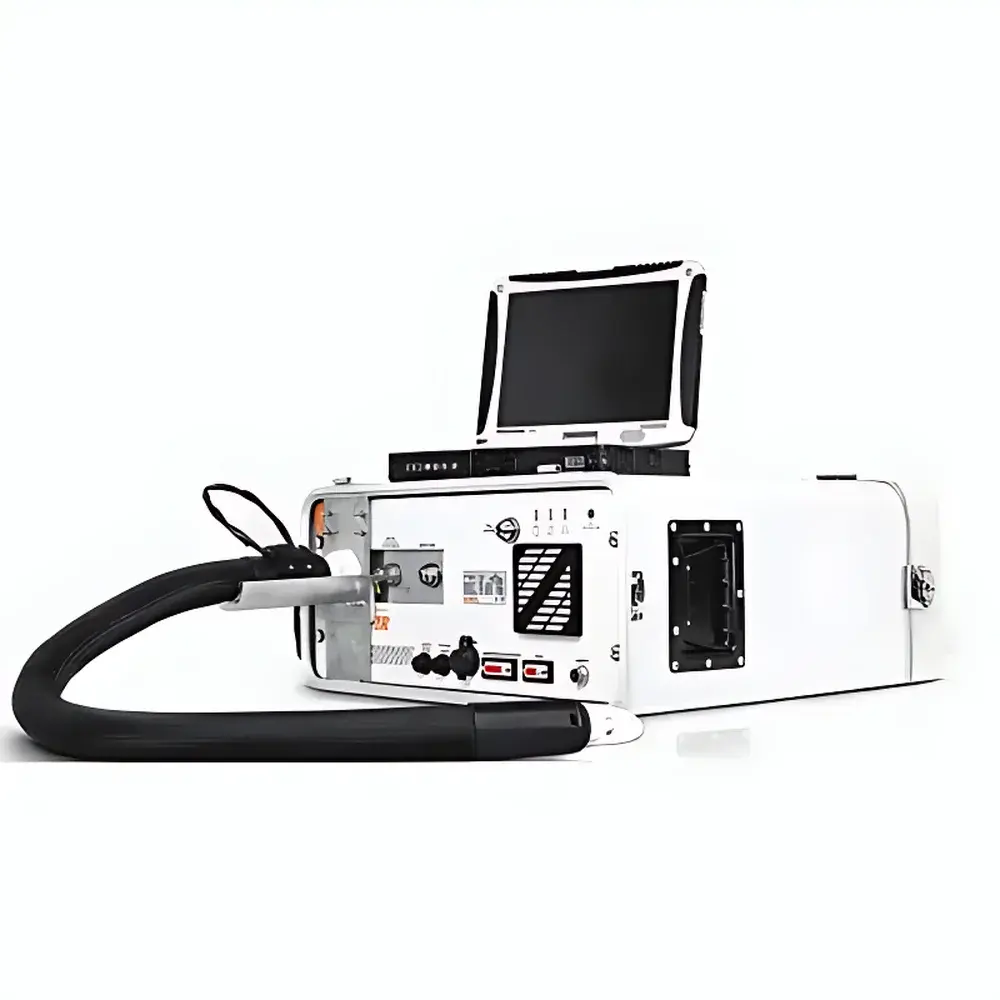
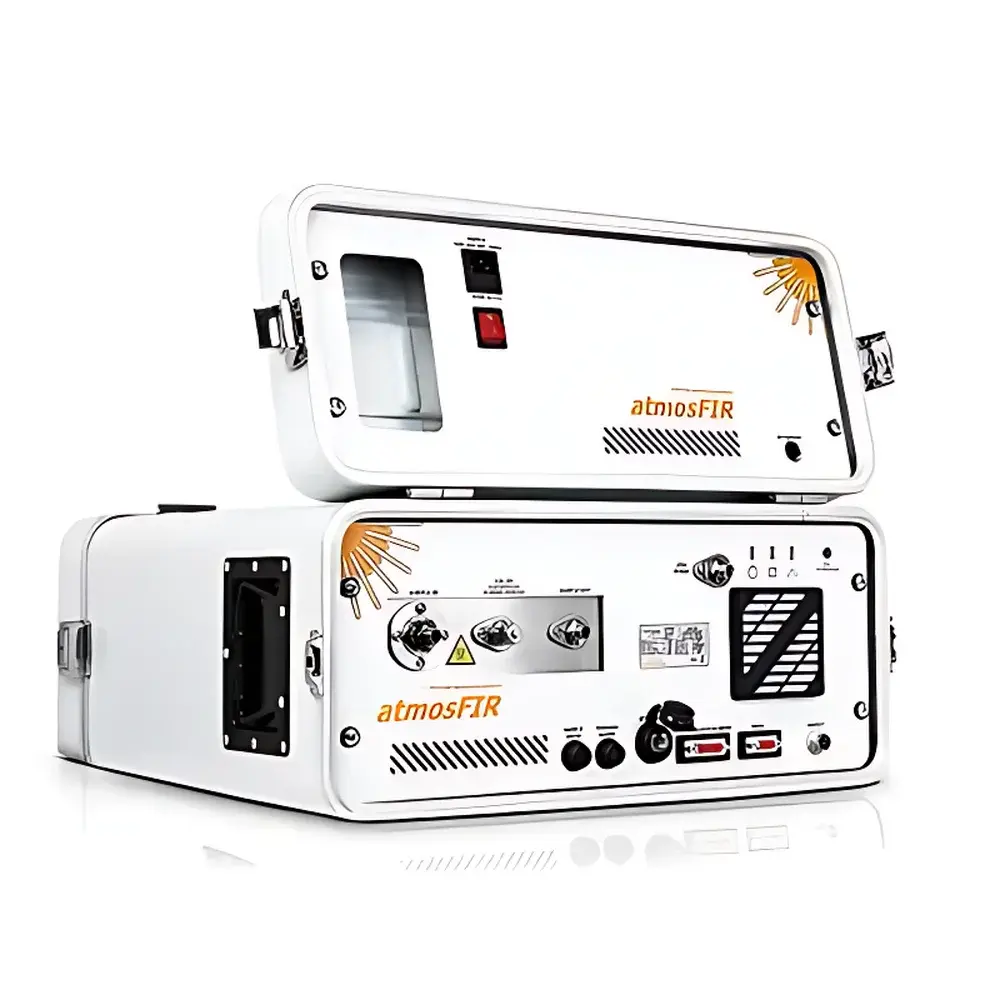
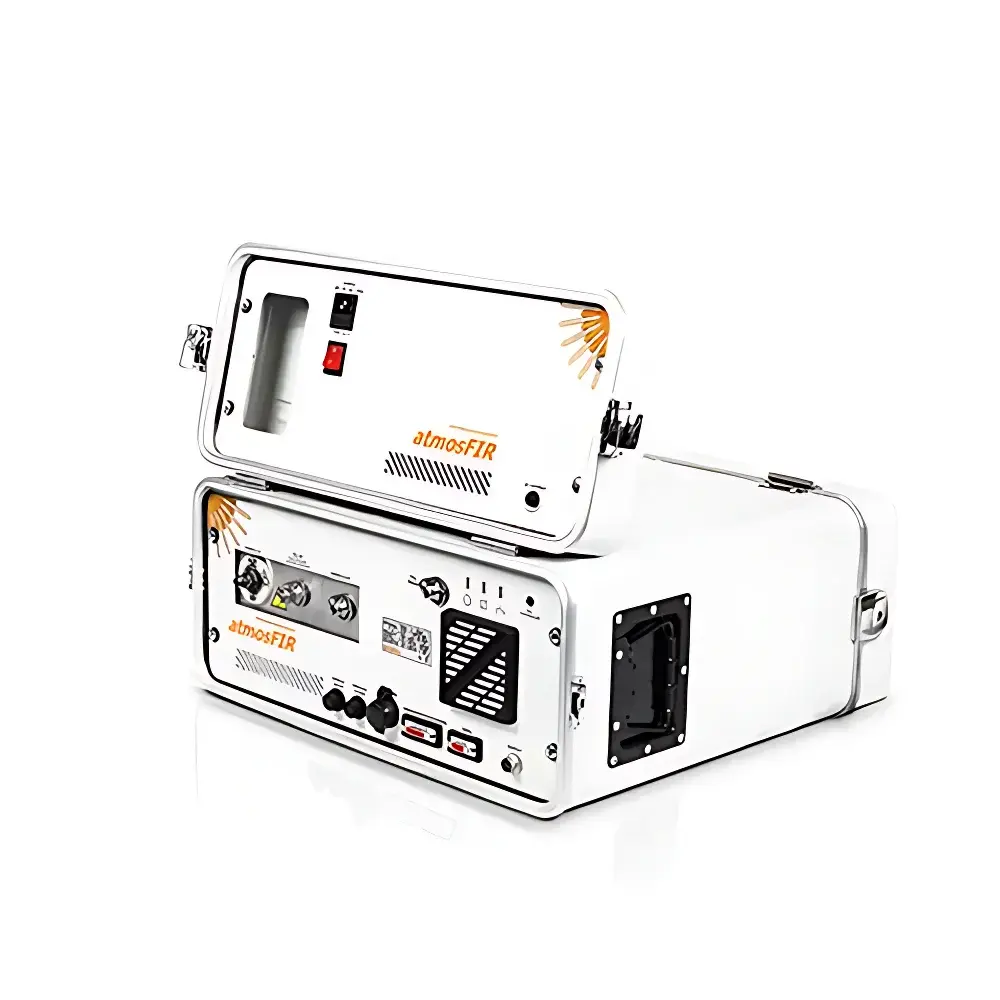
Protea AtmosFIR Fourier Transform Infrared (FTIR) Multi-Gas Analyzer
| Brand | Protea |
|---|---|
| Origin | United Kingdom |
| Manufacturer Type | Authorized Distributor |
| Origin Category | Imported |
| Model | AtmosFIR |
| Detection Principle | Fourier Transform Infrared Spectroscopy (FTIR) |
| Instrument Type | Portable |
| Typical Configuration | Multi-Component VOC Analyzer |
| Measurement Range | 0–50–100 mg/m³ (gas-dependent) |
| Spectral Resolution | 1 cm⁻¹, 2 cm⁻¹, 4 cm⁻¹, 8 cm⁻¹ |
| Accuracy | ±5% of reading |
| Response Time | 120 s |
| Certification | UK MCERTS, M22 for Stack Emission Monitoring |
| Detector | DTGS (Deuterated Triglycine Sulfate), ambient-temperature operation |
| Enclosure | IP65-rated ruggedized transport case |
| Mounting Options | Portable field unit or 19-inch rack-mountable configuration |
Overview
The Protea AtmosFIR is a portable, high-performance Fourier Transform Infrared (FTIR) multi-gas analyzer engineered for real-time, quantitative measurement of gaseous compounds in complex emission streams—including flue gases, combustion exhaust, industrial process vents, and ambient air. Leveraging Michelson interferometry and broadband mid-infrared absorption spectroscopy (typically 600–4000 cm⁻¹), the AtmosFIR identifies and quantifies trace and major constituents simultaneously by matching measured absorbance spectra against reference libraries of over 1,000 certified gas-phase IR cross-sections. Unlike dispersive or single-band NDIR systems, FTIR enables true multi-component analysis without physical reconfiguration—making it ideal for regulatory compliance monitoring, method development, and dynamic process characterization where composition variability is high. Its ambient-temperature DTGS detector eliminates cryogenic dependencies, ensuring operational continuity in field-deployed environments without liquid nitrogen logistics.
Key Features
- Portable, lightweight design with carbon-fiber-reinforced housing and integrated shock-absorbing transport case (IP65 rated)
- Onboard heated sampling system: includes programmable heated probe, heated sample line controller, and temperature-stabilized optical path—optimized for hot, wet, and particulate-laden stack gases
- No external sample conditioning required: integrated heated filtration, flow regulation, and pressure stabilization enable direct-stack connection per EN 15267 and EPA Method 320
- Simultaneous detection and quantification of up to 1,000 gases—including VOCs (e.g., benzene, toluene, formaldehyde), inorganics (CO, CO₂, NO, NO₂, SO₂, NH₃, HCl, HF), and greenhouse gases (CH₄, N₂O)
- Configurable spectral resolution: user-selectable 1, 2, 4, or 8 cm⁻¹—balancing detection sensitivity, spectral fidelity, and acquisition speed
- Dual-sensor architecture: co-located paramagnetic O₂ sensor enables stoichiometric correction and dilution compensation in real time
- Optional mass flow controller (MFC) for precision span calibration, high-concentration injection, and linear range extension
- Rugged 19-inch rack-mount capability for permanent CEMS integration or laboratory benchtop deployment
Sample Compatibility & Compliance
The AtmosFIR is validated for use across heterogeneous gas matrices encountered in environmental and industrial settings: saturated humid flue gas (up to 200 °C), catalytic converter exhaust, landfill/biogas streams, solvent recovery off-gas, and fugitive emission plumes. It meets UK MCERTS Performance Standards for Continuous Emission Monitoring Systems (CEMS) and holds M22 certification for stack gas analysis under the Environment Agency’s Quality Assurance Framework. The system complies with ISO 12039 (determination of SO₂, NOₓ, CO in stationary source emissions), ASTM D6348 (gaseous emissions by FTIR), and supports audit-ready data reporting aligned with EU IED (Industrial Emissions Directive) and US EPA 40 CFR Part 60 Subpart IIII/IIIIA requirements. All measurements adhere to GLP principles, with full traceability of calibration gas certificates, spectral baselines, and instrument metadata.
Software & Data Management
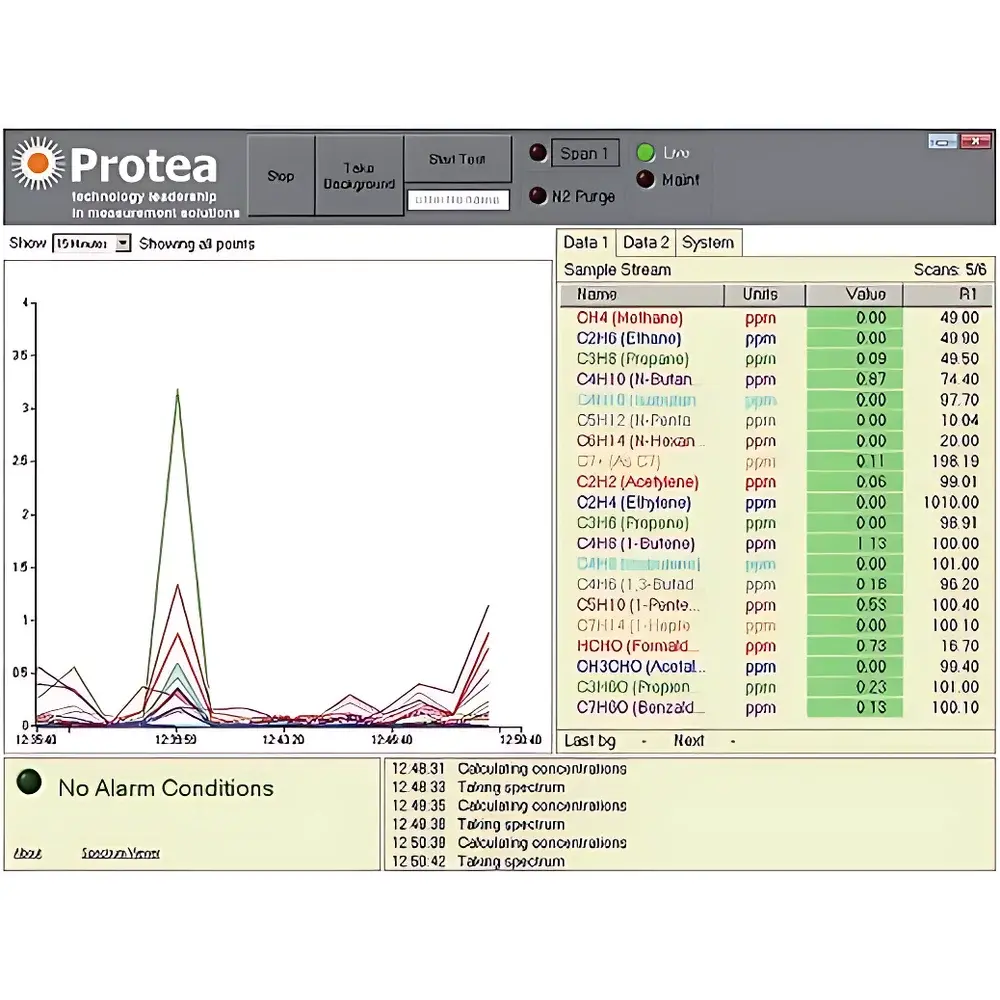
The AtmosFIR is operated via Protea’s PAS (Protea Analysis Software) suite—a Windows-based platform compliant with FDA 21 CFR Part 11 for electronic records and signatures. PAS implements Partial Least Squares (PLS) multivariate regression for robust quantification in overlapping spectral regions, with built-in drift correction, limit-of-detection (LOD) and limit-of-quantitation (LOQ) calculation, residual spectrum inspection, and interference flagging. Raw interferograms are stored in industry-standard JCAMP-DX format; users may reprocess archived spectra offline with updated libraries or custom calibrations. Audit trails log all operator actions, method changes, calibration events, and system diagnostics. Data export supports CSV, XML, and MODBUS TCP protocols for SCADA and central EMS integration.
Applications
- Regulatory stack testing and CEMS verification per EN 14181 and EPA PS-15
- VOC speciation and mass balance studies in chemical manufacturing and coating operations
- Combustion efficiency optimization and NOₓ/SO₂ abatement control in thermal power plants
- Landfill gas quality monitoring (CH₄/C₂H₆ ratio, siloxanes, H₂S)
- Research-grade emission profiling for engine dynamometers and pilot-scale reactors
- Fugitive emission surveys using mobile monitoring platforms (e.g., van-mounted or drone-carried configurations)
- Method validation and reference analysis for PID/FID/GC-MS cross-comparison studies
FAQ
Does the AtmosFIR require liquid nitrogen or other cryogens for detector operation?
No—the DTGS detector operates reliably at ambient temperature, eliminating infrastructure dependencies and enabling uninterrupted field deployment.
Can the AtmosFIR be used for unheated ambient air monitoring?
Yes; while optimized for hot/wet stacks, its heated optics and configurable sampling path allow stable operation down to −10 °C ambient with optional cold-trap bypass.
How is calibration maintained during extended field campaigns?
PAS supports automated zero/span checks using internal permeation tubes or external gas standards; drift correction algorithms compensate for minor baseline shifts between calibrations.
Is raw spectral data accessible for third-party processing?
Yes—interferograms and absorbance spectra are stored in open JCAMP-DX format, supporting import into MATLAB, Python (SciPy), or commercial chemometrics tools.
What level of technical support and training does Protea provide?
Protea offers on-site installation, application-specific method development workshops, remote diagnostics, and annual performance verification services—all documented under ISO/IEC 17025-accredited procedures.
Related Products







