
PSI FluorCam Open-Field Multispectral Fluorescence Imaging System
| Brand | PSI (Czech Republic) |
|---|---|
| Origin | Czech Republic |
| Model | FluorCam Open-Field Multispectral Fluorescence Imaging System |
| Imaging Area | 13 × 13 cm (Standard), 20 × 20 cm (Large Format) |
| CCD Resolution | 1392 × 1040 pixels, Pixel Size: 6.45 µm |
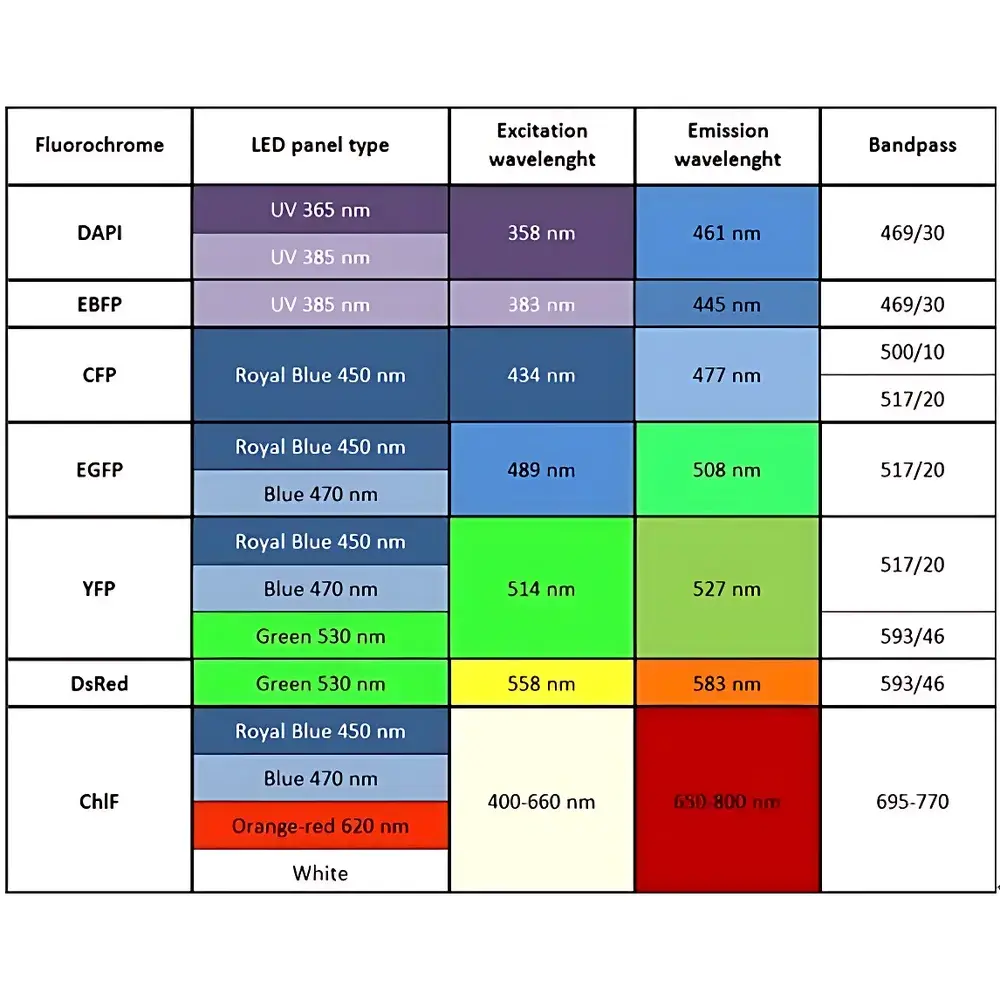
| Excitation Wavelengths | UV (320–400 nm), Blue (450 nm), Red (618 nm), Far-Red (735 nm), Green (530 nm), Cyan (490 nm) |
| Emission Detection Bands | F440, F520, F690, F740, GFP (509 nm), YFP (527 nm), Chl-F, BGF, PARabs, NDVI |
| Actinic Light Intensity | Up to 3000 µmol·m⁻²·s⁻¹ (configurable) |
| Saturation Flash | Up to 6000 µmol·m⁻²·s⁻¹ |
| Measurement Pulse Duration | 10–100 µs |
| Filter Wheel | 7-position motorized |
| Software | FluorCam v8.x with GLP-compliant audit trail, protocol editor, ROI-based quantification, dual averaging modes (signal-then-average / average-then-signal), time-stamped automated acquisition |
| Compliance | Designed for ISO/IEC 17025-aligned labs |
Overview
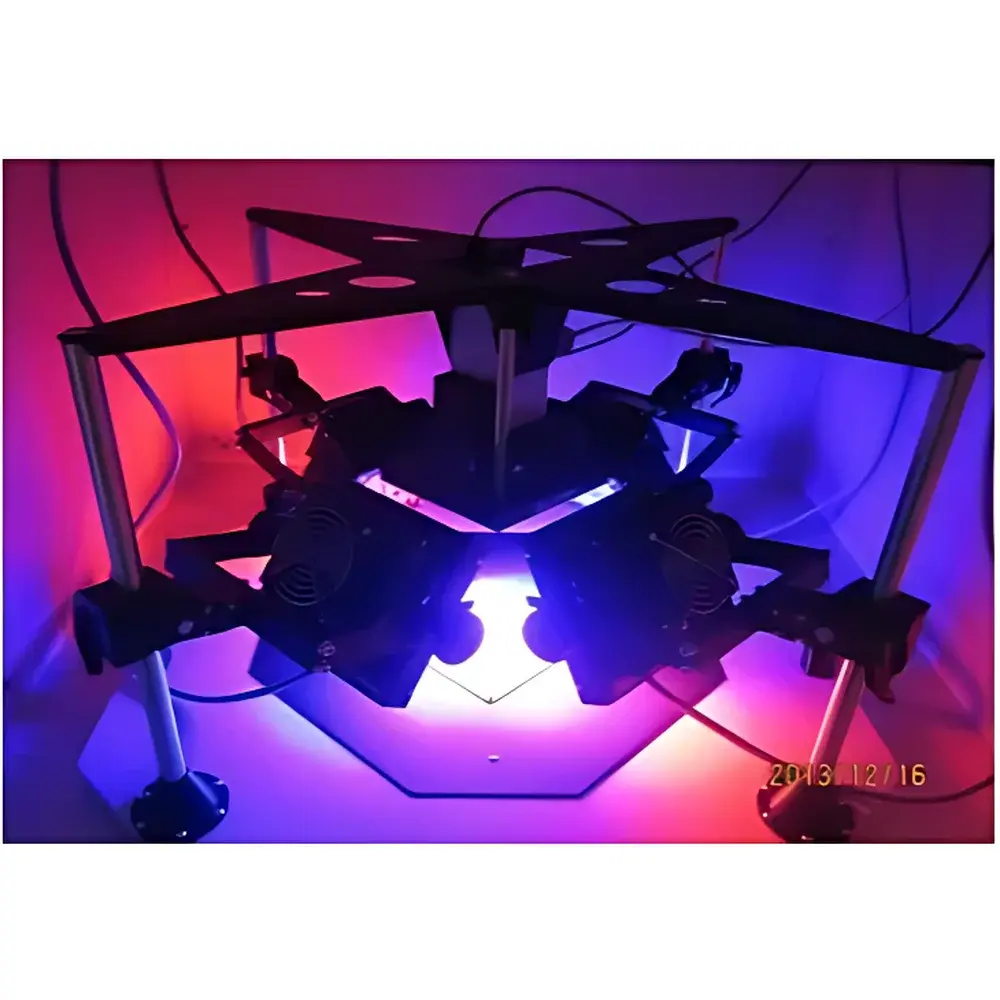
The PSI FluorCam Open-Field Multispectral Fluorescence Imaging System is a high-precision, modular platform engineered for quantitative, spatially resolved fluorescence phenotyping in plant science and environmental physiology. Based on pulse-amplitude modulated (PAM) fluorometry principles and extended multispectral excitation-detection architecture, the system captures dynamic and steady-state fluorescence emissions across multiple spectral domains—including UV-induced autofluorescence (320–400 nm excitation), chlorophyll a fluorescence (Chl-F), blue-green fluorescence (BGF), green fluorescent protein (GFP), yellow fluorescent protein (YFP), and far-red photosynthetic activity indicators. Unlike conventional single-wavelength fluorescence imagers, the FluorCam integrates synchronized multi-excitation LED arrays, a 7-position motorized filter wheel, and a scientific-grade CCD sensor (1392 × 1040, 6.45 µm pixels) to enable simultaneous or sequential acquisition of up to six spectrally distinct fluorescence signals per sample—each with calibrated intensity, kinetics, and spatial distribution. The open-field design accommodates intact plants, detached organs (leaves, roots, fruits), algae suspensions, and small model organisms—without requiring vacuum chambers or rigid mounting constraints—making it suitable for longitudinal stress-response studies under near-physiological conditions.
Key Features
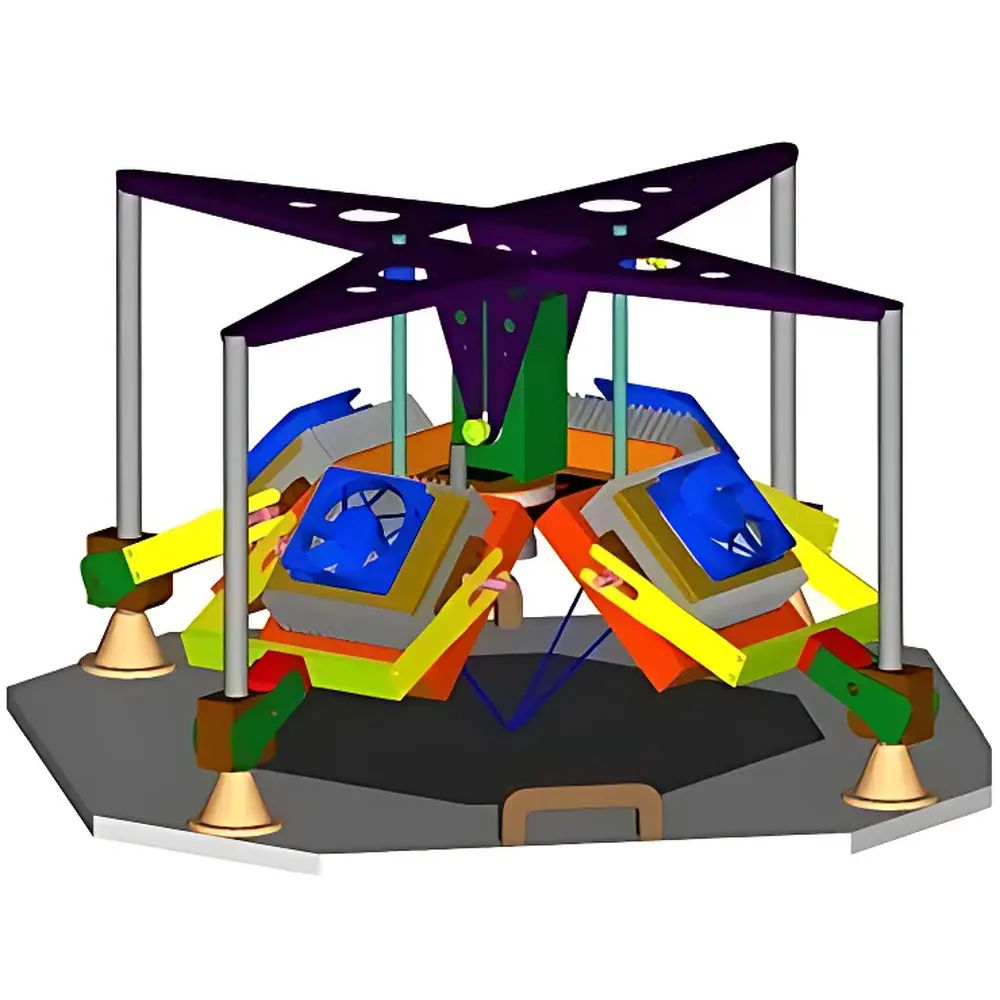
- Modular multispectral excitation: Configurable LED arrays including UV (320–400 nm), blue (450 nm), red (618 nm), far-red (735 nm), cyan (490 nm), and green (530 nm), each independently controllable for precise spectral targeting.
- High-fidelity detection optics: Motorized 7-position filter wheel with bandpass filters optimized for F440, F520, F690, F740, GFP (509 nm), YFP (527 nm), and Chl-F emission windows; all filters certified for OD6+ blocking outside passbands.
- Scalable imaging geometry: Standard configuration supports 13 × 13 cm field-of-view; large-format variant extends to 20 × 20 cm—enabling whole-plant imaging of Arabidopsis, tobacco, or cereals without tiling.
- Automated, time-resolved protocols: Predefined and user-editable experimental routines—including Kautsky induction kinetics, light-adapted quenching analysis (NPQ, qP, ΦPSII), PAR absorption mapping, NDVI calculation, and UV-stress fingerprinting—with dual-program scheduling for unattended diurnal cycles.
- Quantitative signal processing: Dual averaging methodology—“signal-then-average” for high-SNR applications (e.g., Fv/Fm), and “average-then-signal” for low-light or transient measurements—to minimize photonic noise propagation in derived parameters.
- Firmware-upgradable architecture: Field-updatable BIOS and sensor calibration tables ensure long-term metrological traceability; USB 2.0 interface (480 Mbps) enables real-time frame streaming and timestamped metadata embedding (ISO 8601 format).
Sample Compatibility & Compliance
The FluorCam system accepts diverse biological specimens without destructive preparation: intact potted plants, hydroponic root systems, leaf discs, floral tissues, fruit sections, algal biofilms, and small invertebrates. Its non-contact, low-intensity measurement regime avoids photodamage during repeated acquisitions—critical for longitudinal phenotyping. All optical components comply with IEC 62471 (Photobiological Safety) Class 1 requirements. The system’s software architecture supports audit-trail-enabled operation per GLP and GMP guidelines; when deployed with optional electronic signature and role-based access control modules, it meets baseline criteria for 21 CFR Part 11 compliance in regulated research environments. Data export formats include TIFF (16-bit), CSV (ROI-averaged kinetics), and HDF5 (full spatiotemporal datasets)—ensuring interoperability with FAIR-aligned data management pipelines.
Software & Data Management
FluorCam v8.x software provides an integrated environment for acquisition, preprocessing, and quantitative analysis. Core modules include Live View (real-time preview with auto-gain adjustment), Protocol Editor (drag-and-drop workflow builder with conditional branching), Pre-processing (automated or manual ROI definition—freehand, polygon, ellipse, grid-based—and background subtraction), and Result Explorer (parameter heatmaps, kinetic overlays, histogram distributions, and cross-parameter scatter plots). Each acquired image sequence is embedded with EXIF-like metadata: excitation wavelength, irradiance, integration time, filter position, ambient temperature (via optional probe), and operator ID. All analysis operations are logged in a tamper-evident audit trail, recording timestamps, parameter values, and user actions—essential for method validation and regulatory submissions. Batch processing supports parallel analysis of multi-condition experiments, with output structured for direct ingestion into R, Python (via SciPy/NumPy), or MATLAB workflows.
Applications
This system serves as a primary tool in academic and industrial plant science laboratories for: (1) Photosynthetic efficiency mapping under abiotic stresses (drought, salinity, heavy metal exposure); (2) Early detection of biotic stress responses—including viral infection (e.g., PMMoV), fungal colonization, and herbivory—via UV-excited BGF/Chl-F ratio shifts; (3) Stomatal conductance inference through cyan-light–induced fluorescence transients; (4) Transgenic line screening via GFP/YFP expression quantification across tissue domains; (5) High-throughput phenotyping in controlled-environment growth chambers or greenhouse mesocosms; (6) Nutrient status assessment (e.g., nitrogen deficiency signatures in F690/F740 ratios); and (7) Validation of remote-sensing indices (e.g., PRI, SFR_R) at laboratory scale. Published studies using this platform appear in New Phytologist, Plant Physiology, and Journal of Experimental Botany, demonstrating reproducible detection of physiological perturbations at sub-visual symptom stages.
FAQ
What is the minimum detectable fluorescence intensity change?
The system achieves a signal-to-noise ratio >120:1 (RMS) under standard measurement conditions (Fo acquisition, 10 µs pulse, 2×2 binning), corresponding to ~0.5% relative change in basal fluorescence yield.
Can the system be integrated with environmental control chambers?
Yes—via TTL-triggered synchronization and external temperature/humidity sensor inputs (optional analog I/O module); full protocol automation is maintained across chamber door cycles.
Is spectral calibration traceable to NIST standards?
Factory calibration uses NIST-traceable radiometric sources; users receive a certificate of calibration with each system, and annual recalibration services are available through PSI-certified labs in Europe and North America.
How is data integrity ensured during long-term无人值守 monitoring?
All acquisitions include CRC32 checksums, write-verification logging, and automatic folder-level versioning; corrupted files are quarantined and flagged in the audit log without interrupting scheduled runs.
Does the software support custom algorithm scripting?
Yes—Python API access is provided for advanced users to embed proprietary models (e.g., machine learning classifiers for stress classification) directly into the analysis pipeline, with full access to raw pixel matrices and metadata dictionaries.



