
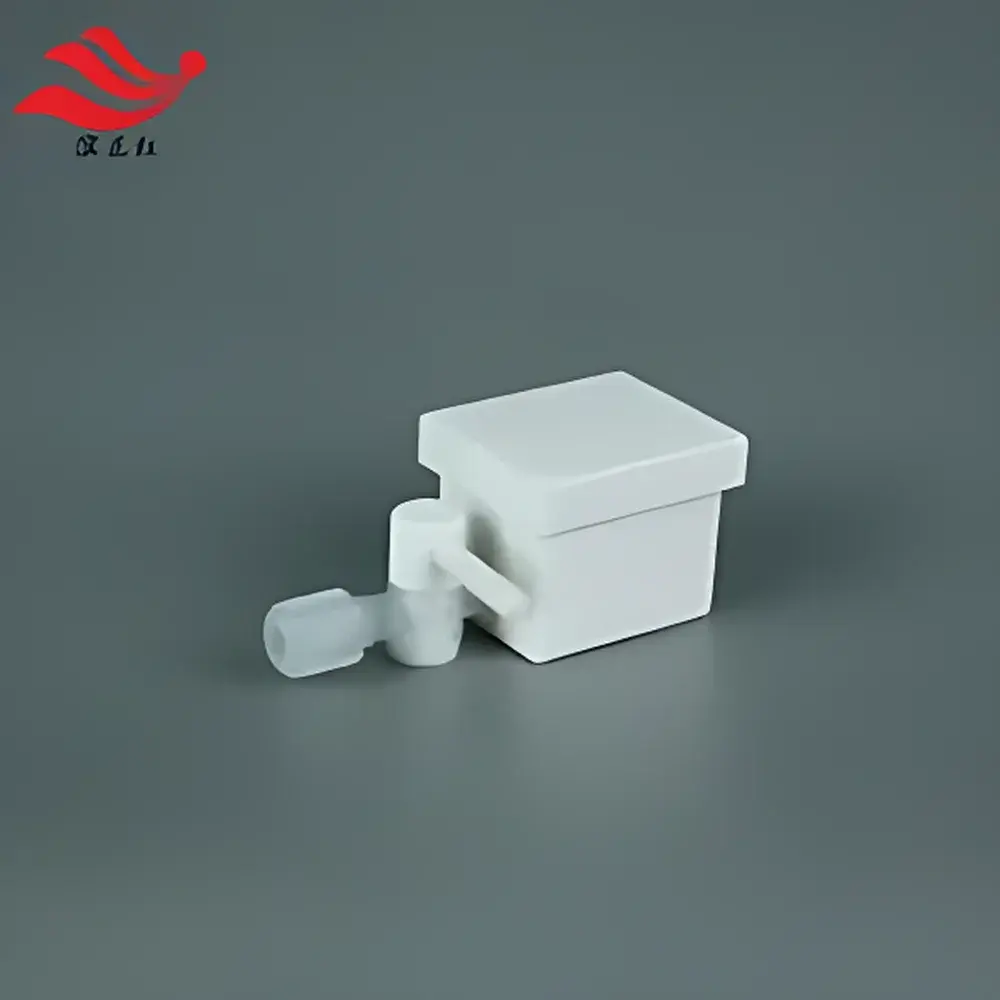
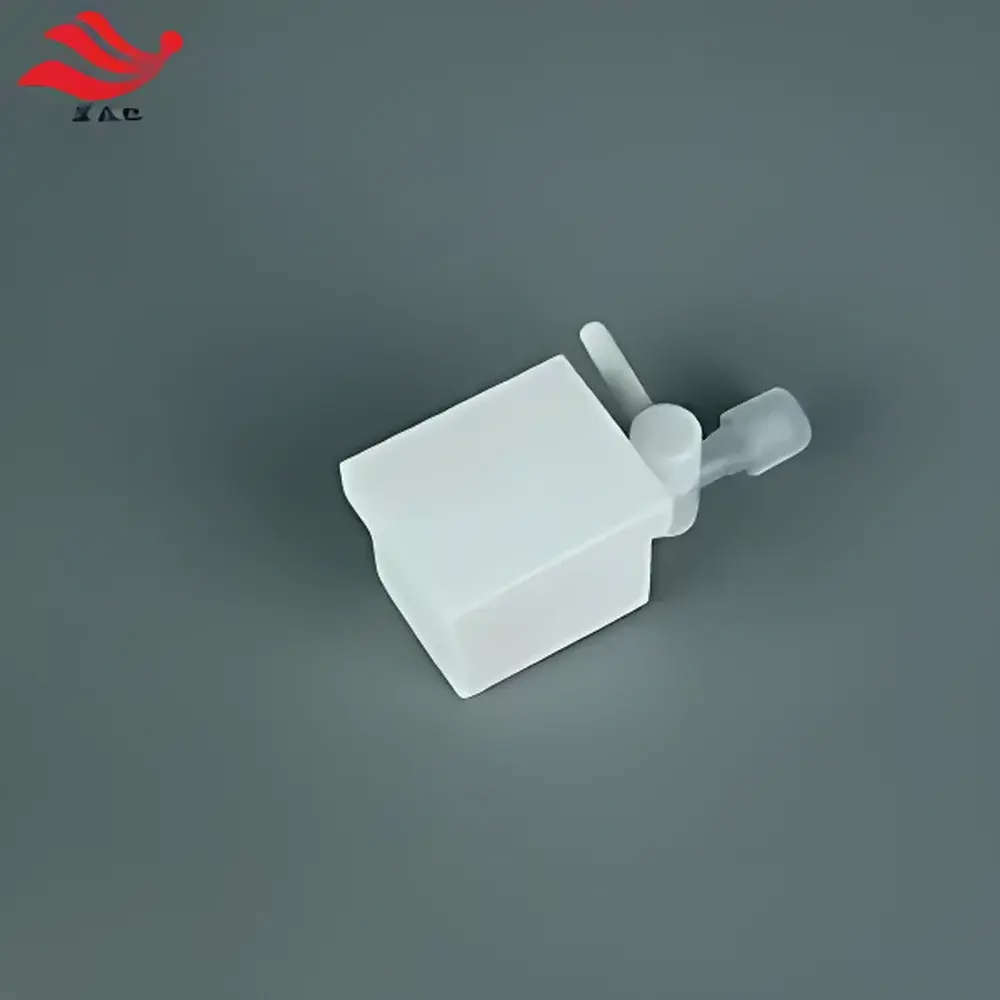
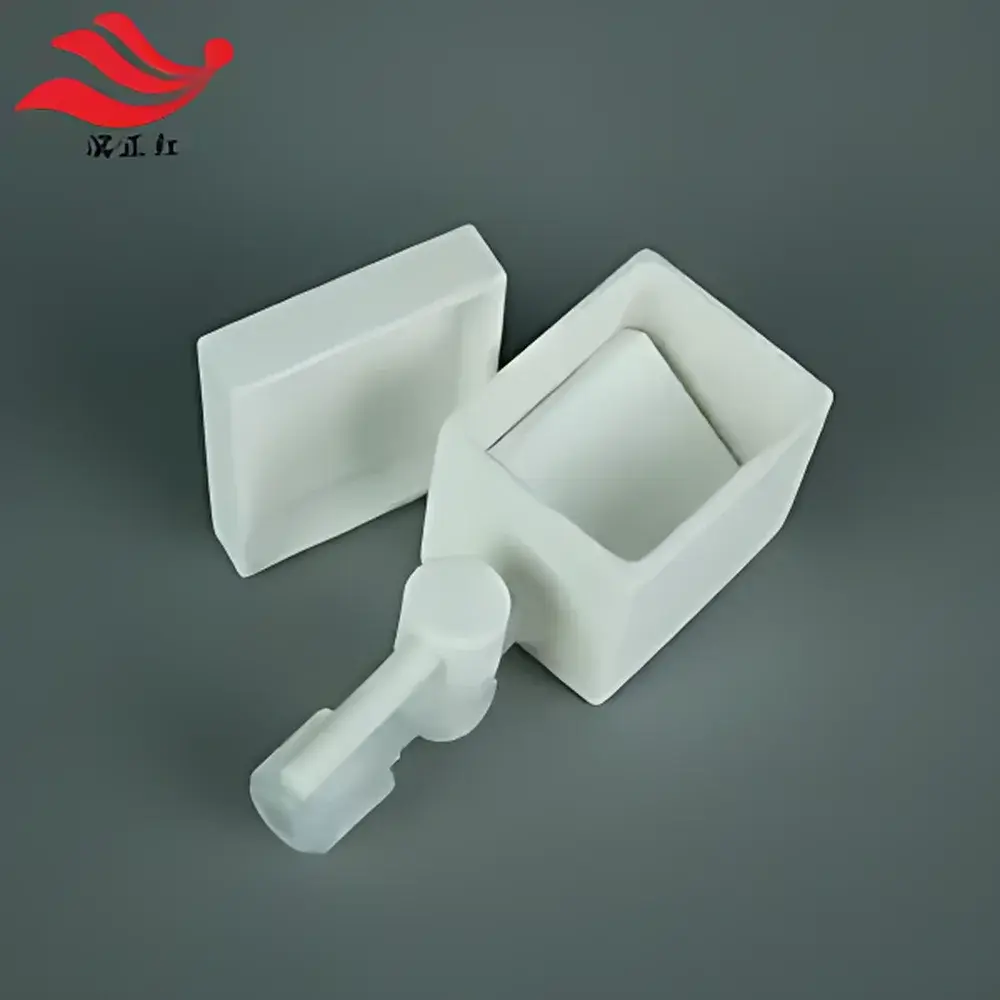
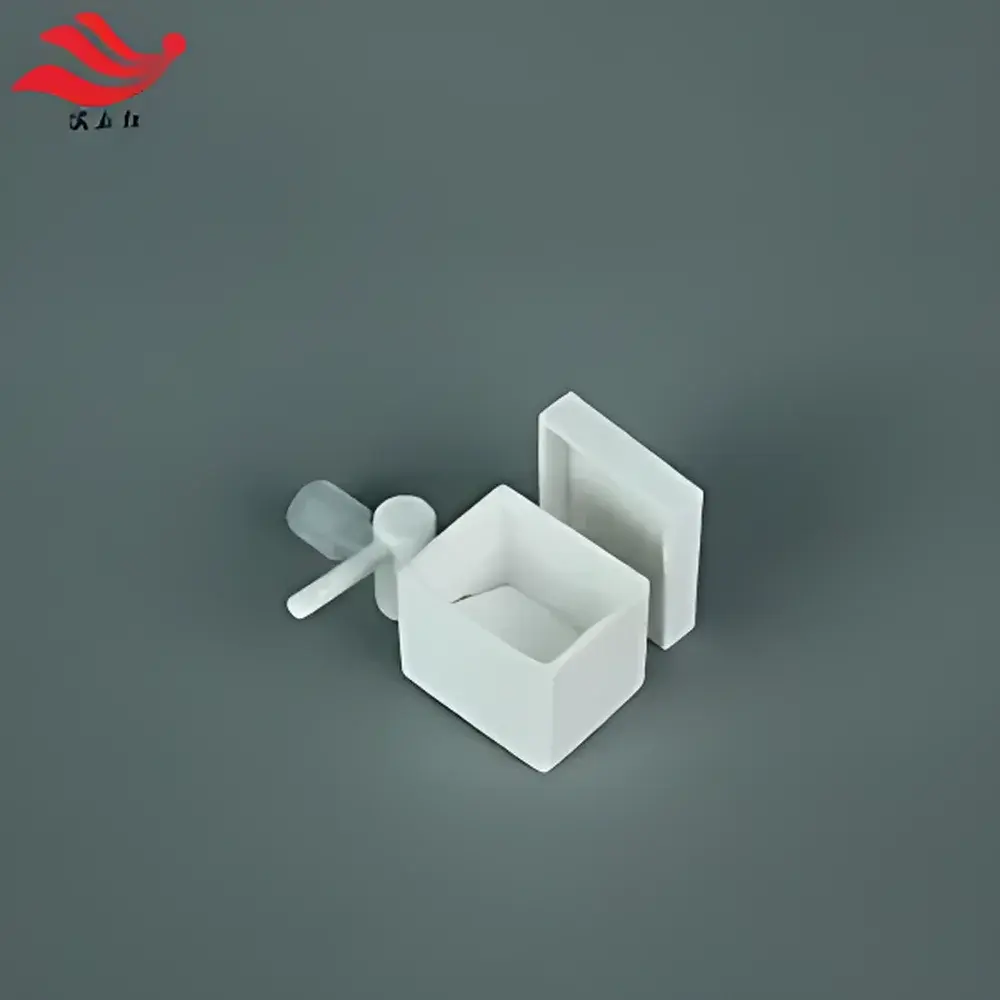
PTFE Custom Reaction Vessel with Syringe Port – Binzhenghong
| Brand | Binzhenghong |
|---|---|
| Origin | Jiangsu, China |
| Manufacturer Type | Direct Producer |
| Origin Category | Domestic |
| Model | Custom-Engineered |
| Pricing | Available Upon Request |
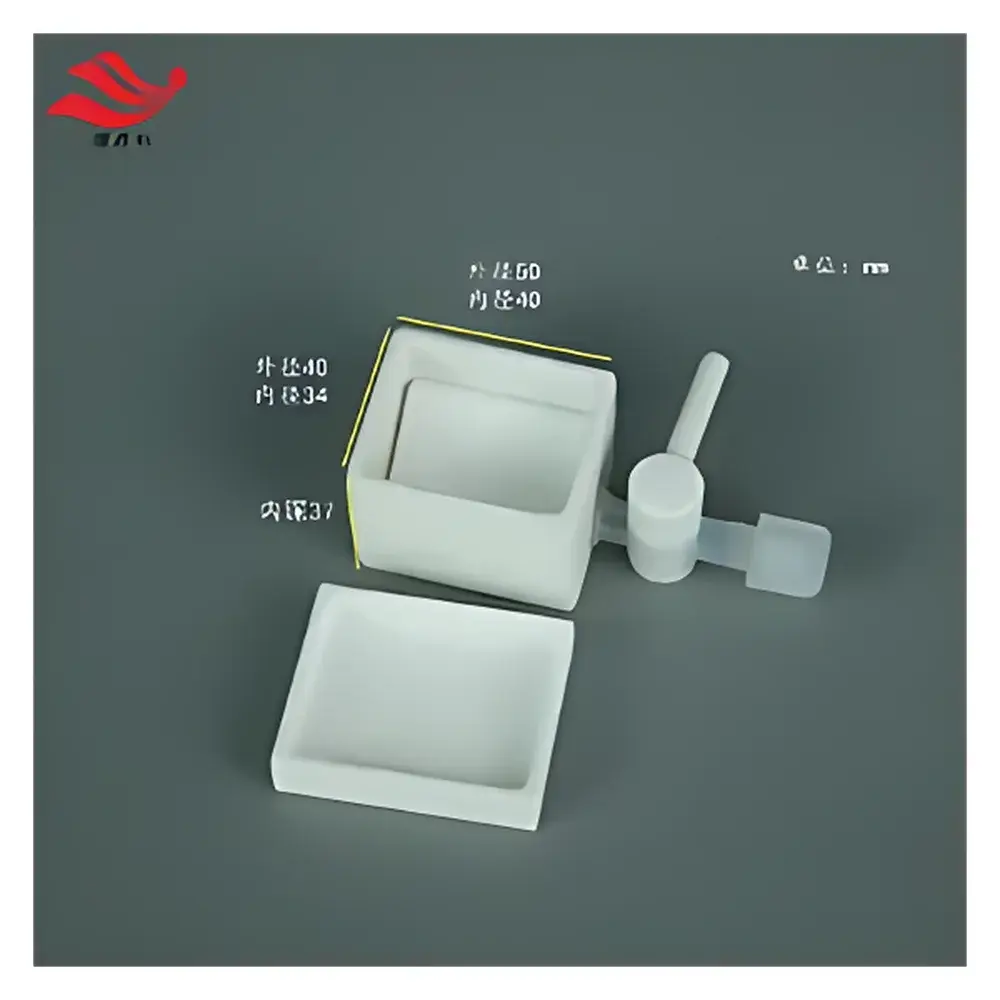
| Dimensions (ID × OD × Depth) | 34 mm × 40 mm × 37 mm |
| Alternate Configuration | 37 mm × 50 mm × 37 mm |
| Wall Thickness | ~3 mm (standard tolerance) |
| Material | Virgin PTFE (ASTM D4894 compliant) |
| Max Operating Temperature | 260 °C (continuous), 300 °C (short-term) |
| Chemical Resistance | Full resistance to HF, HNO₃, aqua regia, NaOH (up to 50 %), organic solvents, and halogenated media |
Overview
The Binzhenghong PTFE Custom Reaction Vessel with Integrated Syringe Port is an engineered solution for controlled, inert chemical processing under ambient to elevated temperature conditions. Constructed entirely from virgin polytetrafluoroethylene (PTFE), this vessel operates on the principle of passive containment—leveraging PTFE’s intrinsic non-reactivity, low surface energy, and exceptional dielectric stability to eliminate catalytic interference, metal leaching, or adsorption artifacts during sensitive syntheses, catalyst testing, or analytical sample preparation. Unlike glass or stainless-steel reactors, it eliminates risks associated with thermal shock, hydrogen embrittlement, or fluoride-induced corrosion—making it indispensable for hydrofluoric acid chemistry, high-purity inorganic synthesis (e.g., rare-earth fluorides), and trace-metal-free environmental sample digestion. Its modular geometry supports both batch-mode reactions and semi-continuous reagent addition via precision syringe injection through a chemically sealed port, enabling kinetic studies without system venting or pressure compromise.
Key Features
- Fully seamless, machined-from-solid virgin PTFE construction—no fillers, binders, or recycled content; certified per ASTM D4894 for purity and thermal stability
- Integrated Luer-lock syringe port with PTFE-sealed O-ring interface (FKM optional for elevated temp), rated for pressures up to 0.3 MPa at 200 °C
- Customizable internal geometry: standard configurations include cylindrical vessels with flat or conical bottoms; optional features include threaded necks, dual-port layouts, and integrated thermowell sleeves
- Dimensional precision maintained within ±0.1 mm for ID/OD and ±0.15 mm for depth—ensuring reproducible volume calibration (e.g., 34 mm ID × 37 mm depth ≈ 33.5 mL nominal working volume)
- Thermal performance validated per IEC 60695-10-2: stable dimensional retention after 100 h at 260 °C; no creep deformation observed under static load
- Surface roughness Ra < 0.8 µm (as-machined), minimizing analyte retention and facilitating quantitative recovery in trace analysis workflows
Sample Compatibility & Compliance
This reactor accommodates liquid, slurry, and solid-phase samples—including aggressive reagents such as anhydrous HF, fuming nitric acid, molten alkali carbonates, and chlorosulfonic acid. It is routinely deployed in EPA Method 3052 microwave-assisted digestion protocols and ISO 11885 water-quality metal extraction procedures where contamination control is critical. The material complies with USP Class VI biological safety requirements and meets EU Regulation (EC) No. 1935/2004 for food-contact suitability. For GLP/GMP environments, documentation packages include raw-material certificates of conformance, machining traceability logs, and dimensional inspection reports—all available upon order specification.
Software & Data Management
While inherently hardware-based, the vessel integrates seamlessly into instrument-controlled workflows: compatible with programmable heating mantles (e.g., Huber ChemoMatrix), automated syringe pumps (e.g., Harvard Apparatus PHD Ultra), and real-time monitoring systems using Pt100 or Type K thermocouples inserted via accessory ports. When used in conjunction with validated laboratory information management systems (LIMS), digital batch records capture vessel ID, lot number, sterilization cycle (if autoclaved at ≤250 °C), and usage history—supporting 21 CFR Part 11 audit trails when paired with electronic signature-enabled controllers.
Applications
- Low-temperature fluorination reactions requiring absolute exclusion of moisture and metal ions
- Preparation of high-purity reference standards for ICP-MS calibration
- In situ Raman or FTIR spectroscopy of corrosive intermediates (optical-grade PTFE variants available)
- Accelerated solvent extraction (ASE) of persistent organic pollutants from soil matrices
- Electrochemical cell components for lithium–sulfur battery electrolyte stability testing
- Microscale hydrothermal synthesis of metal–organic frameworks (MOFs) under autogenous pressure
FAQ
Can this vessel be autoclaved?
Yes—validated for repeated autoclaving at 121 °C / 15 psi (20 min cycles); extended exposure above 250 °C may induce irreversible sintering and reduced tensile strength.
Is custom threading (e.g., NPT or ISO-KF) supported?
Yes—threaded interfaces, flange mounts, and vacuum-compatible sealing geometries are available under custom engineering agreements.
What is the maximum safe operating pressure at 200 °C?
0.3 MPa (43.5 psi) with standard syringe port configuration; higher-pressure variants require reinforced wall design and third-party burst testing.
Do you provide volume calibration certificates?
Traceable volumetric calibration (±0.5 % accuracy) is offered as an add-on service using gravimetric NIST-traceable methodology.
Is PFA or FEP alternative material available?
Yes—PFA offers superior melt-processability for complex shapes; FEP provides enhanced UV transparency; material substitution requires revised thermal and mechanical validation.
Related Products



