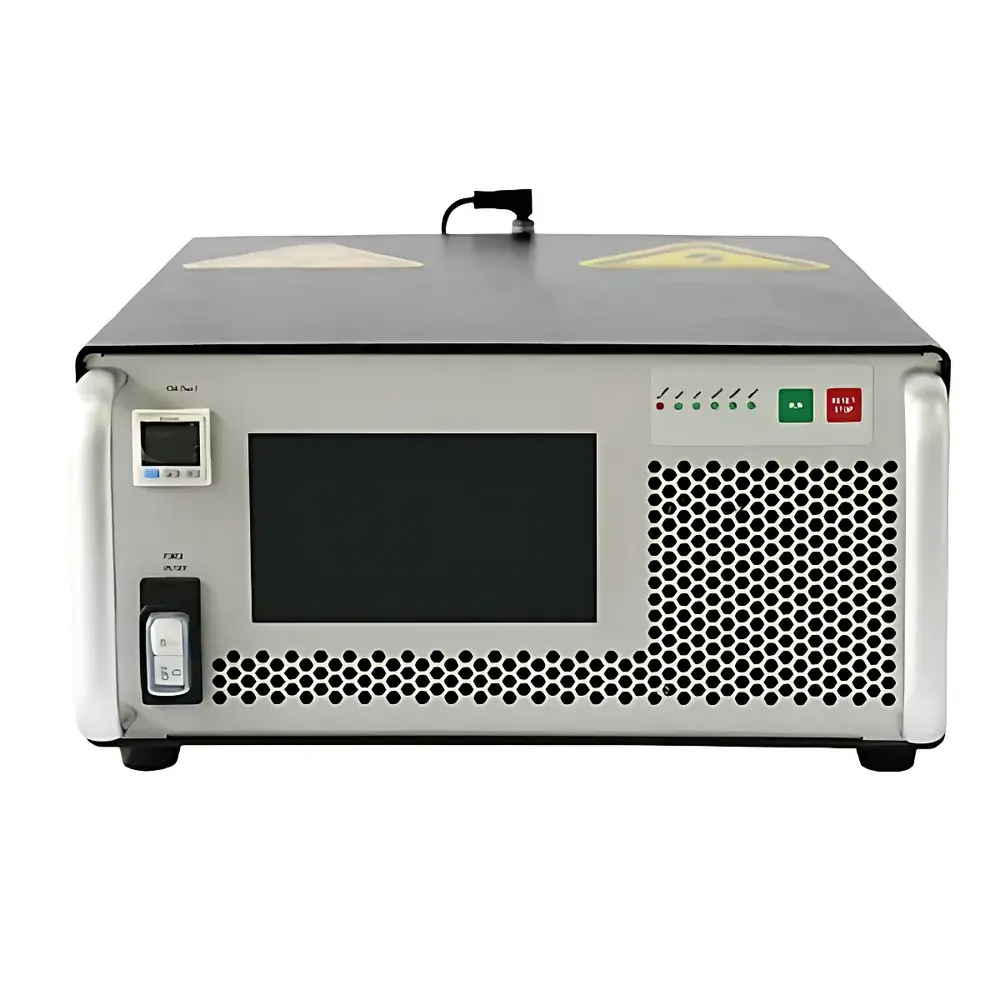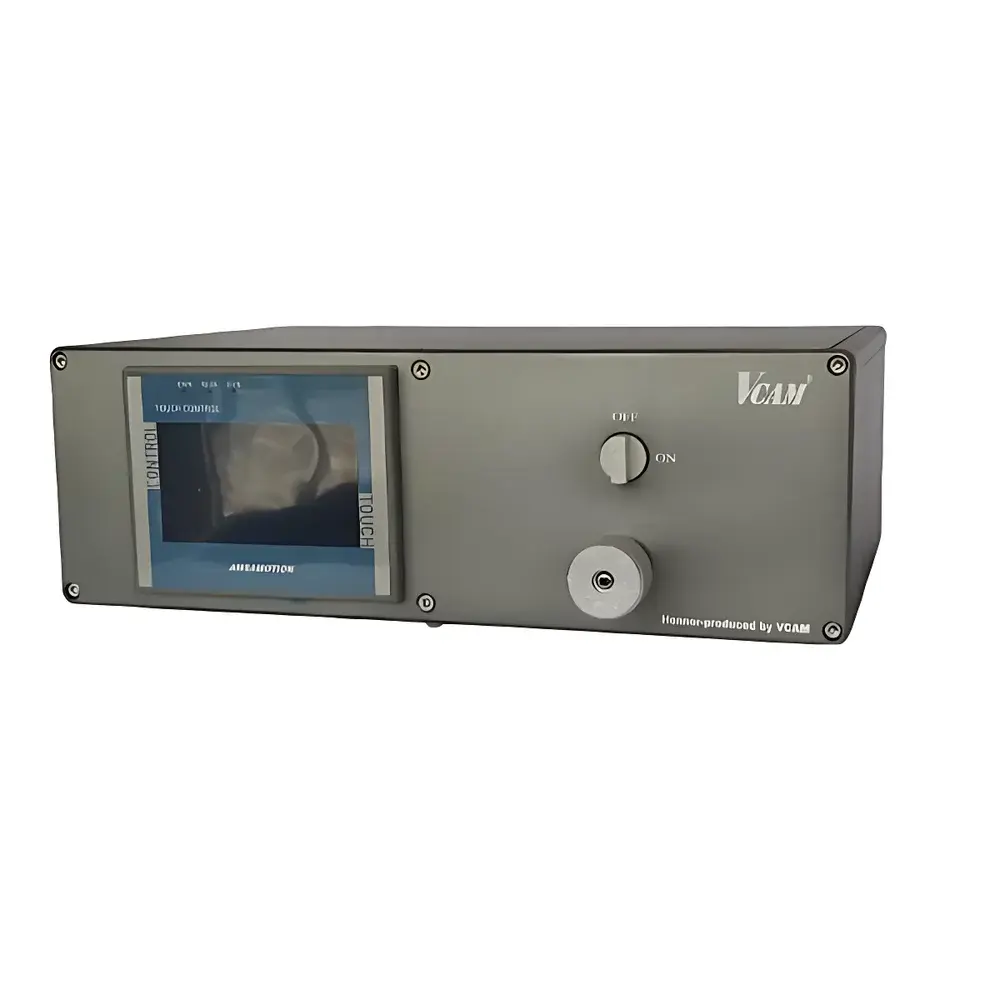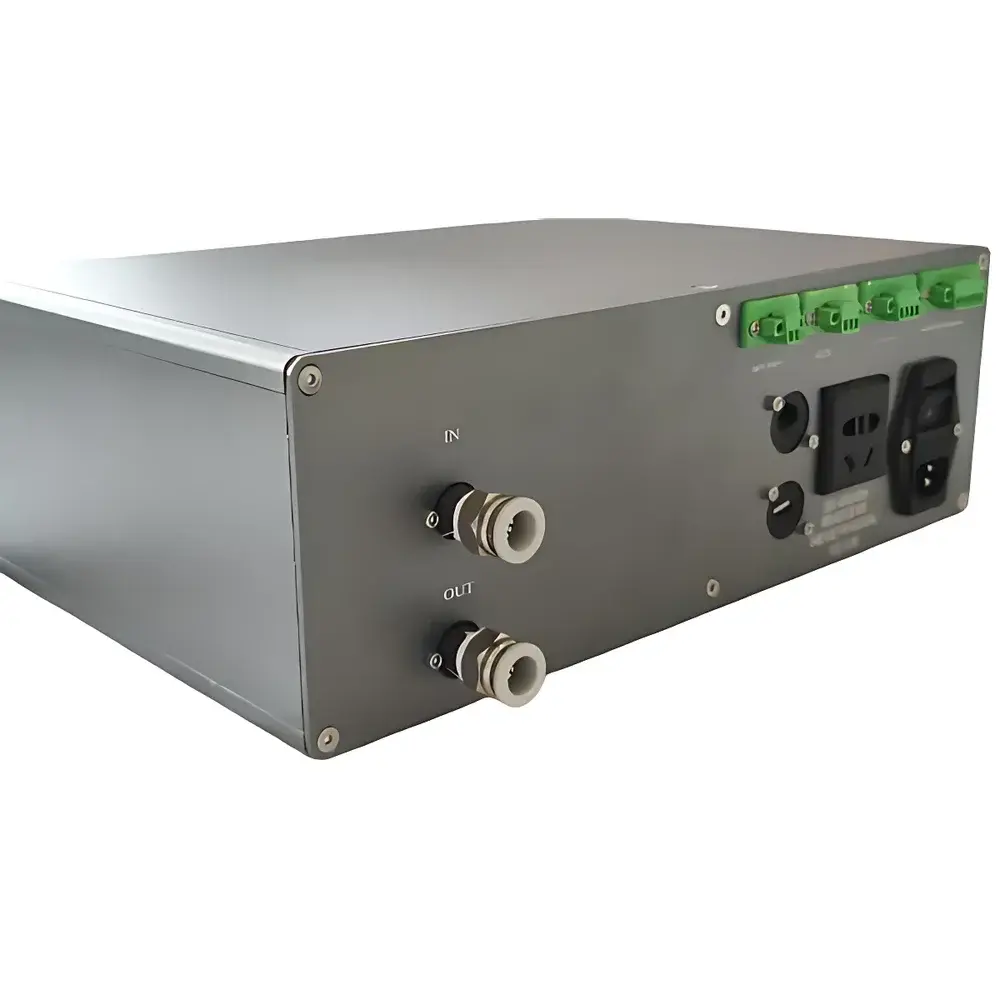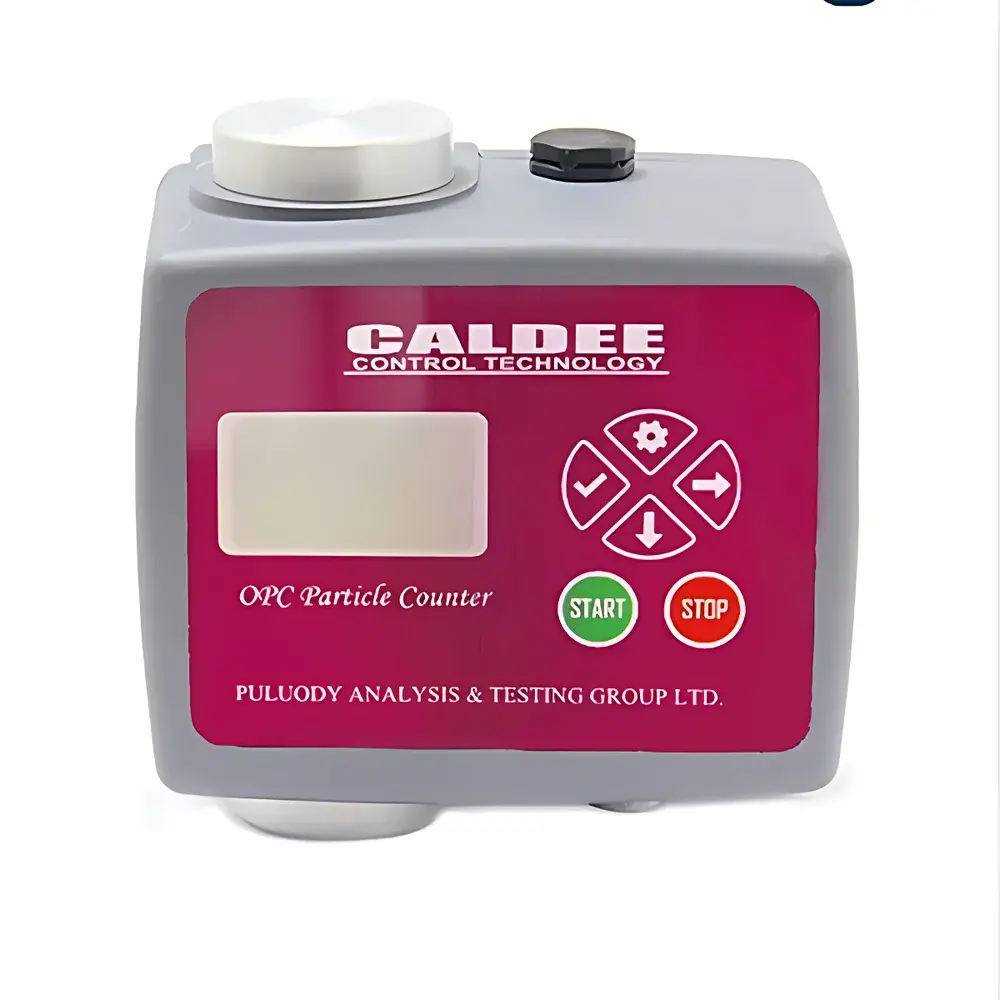
PULUODY OPC-5 Online Oil Particle Contamination Monitor
| Brand | PULUODY |
|---|---|
| Origin | Shaanxi, China |
| Manufacturer Type | Authorized Distributor |
| Country of Origin | China |
| Model | OPC-5 |
| Price | USD 8,100 (FOB) |
| Detection Principle | Dual-Laser Narrow-Beam Light Scattering |
| Measurement Range | 1–150 µm |
| Channels | 8 |
| Standards Compliance | ISO 4406, NAS 1638, SAE AS4059, ISO 11171, MIL-STD-1246D, GJB 420B, GB/T 14039, DL/T 432, GOST 17216 |
| Pressure Rating | 0–1.0 MPa (direct), 0–31.5 MPa (with integrated pressure reducer) |
| Flow Rate | 15–500 mL/min |
| Fluid Temperature | −10 to +80 °C |
| Viscosity Range | 0–500 cSt |
| Output Interfaces | RS232, RS485, 4–20 mA, 0–5 V |
| Power Supply | 9–30 VDC |
| Enclosure Rating | IP65 |
| Calibration Support | NIST-traceable reference calibration available annually |
Overview
The PULUODY OPC-5 Online Oil Particle Contamination Monitor is an industrial-grade, real-time particulate monitoring system engineered for continuous in-line assessment of hydraulic and lubricating oil cleanliness. Based on the seventh-generation dual-laser narrow-beam light scattering detection principle, the OPC-5 delivers high-reproducibility particle counting and sizing in flowing fluid streams without sample extraction or dilution. It operates under dynamic flow conditions—supporting pressure ranges up to 31.5 MPa (with integrated pressure reduction), temperatures from −10 °C to +80 °C, and viscosities up to 500 cSt—making it suitable for demanding applications including offshore hydraulic systems, military mobile platforms, and high-pressure test benches. Unlike offline laboratory particle counters, the OPC-5 enables continuous trending of contamination levels, early wear debris detection, and predictive maintenance triggers through configurable alarm thresholds.
Key Features
- Seventh-generation dual-laser optical sensor with narrow-beam geometry for enhanced signal-to-noise ratio and reduced coincidence error at high particle concentrations
- Eight user-configurable size channels spanning 1–150 µm, aligned with ISO 11171:2010 calibration protocols
- Real-time analog and digital outputs: RS232, RS485 (Modbus RTU), 4–20 mA, and 0–5 V—with optional alarm relay for DCS/SCADA integration
- Robust stainless-steel wetted parts and IP65-rated enclosure rated for operation in harsh industrial environments—including marine, mining, and aerospace ground support facilities
- Onboard firmware supporting 15 international cleanliness standards—including ISO 4406:2021, NAS 1638 Class 00–12, SAE AS4059F Level 00–28, GJB 420B Class 00–12, and GB/T 14039:2002
- Integrated pressure regulation module enabling direct installation into high-pressure hydraulic circuits (up to 31.5 MPa) without external reducers
- Flow rate adaptability from 15 mL/min to 500 mL/min, optimized for both low-flow servo systems and high-capacity filtration test rigs
Sample Compatibility & Compliance
The OPC-5 is validated for use with mineral oils, synthetic esters, phosphate esters, polyalkylene glycols, and water-glycol fluids commonly found in aviation hydraulics, turbine lube systems, and heavy-duty mobile hydraulics. Its optical design minimizes refractive index dependency across fluid types, ensuring consistent performance per ISO 4406 Annex B and ASTM D7647 guidance. The instrument meets electromagnetic compatibility requirements per IEC 61326-1:2022 (industrial environment), and its pressure housing conforms to ASME B31.1 design criteria for fluid power systems. Calibration traceability follows ISO/IEC 17025:2017 via certified reference materials traceable to NIST SRM 2806b and ISO MTD (Medium Test Dust). Documentation supports GLP-compliant audit trails and FDA 21 CFR Part 11 readiness when paired with validated data acquisition software.
Software & Data Management
The OPC-5 operates with embedded firmware supporting local display of real-time particle counts per milliliter and corresponding ISO/NAS/GJB cleanliness codes. For enterprise-level deployment, optional PULUODY ParticleView™ PC software provides time-series trending, statistical process control (SPC) charting, automated report generation (PDF/CSV), and multi-instrument fleet management. All data logs include timestamped metadata—flow rate, temperature, pressure, and operator ID—enabling full traceability. Audit logs record configuration changes, calibration events, and alarm activations in accordance with ISO 13485 and GMP Annex 11 expectations. Remote firmware updates are supported via secure HTTPS protocol with SHA-256 signature verification.
Applications
- Continuous contamination monitoring of critical hydraulic circuits in naval vessels, drilling rigs, and armored vehicle transmission systems
- Filter performance validation per ISO 16889 and ISO 11171 using differential particle counting across filter media
- Wear debris trending during component endurance testing (e.g., servo valves, pumps, actuators) per SAE ARP4205 and ISO 4406
- Condition-based maintenance of wind turbine gearboxes and hydroelectric turbine governors
- Verification of cleaning efficacy during post-maintenance flushing procedures per ISO 4406 Class targets
- Quality assurance of new oil batches prior to system commissioning or replenishment
FAQ
Does the OPC-5 require periodic recalibration?
Yes. Annual calibration using ISO 11171-compliant reference particles is recommended. PULUODY-certified service centers provide NIST-traceable recalibration with full uncertainty reporting.
Can the OPC-5 be installed directly into a 25 MPa hydraulic manifold?
Yes—when equipped with the integrated pressure reduction module, the OPC-5 maintains optical stability and sensor integrity at operating pressures up to 31.5 MPa.
Is the instrument compatible with Modbus TCP networks?
The standard RS485 interface supports Modbus RTU. Optional gateway modules enable Modbus TCP bridging for integration into Ethernet-based SCADA systems.
What is the minimum detectable particle size under high-viscosity conditions?
At 500 cSt, the lower detection limit remains 1 µm due to optimized laser beam collimation and signal processing algorithms compensating for Brownian motion attenuation.
Does the OPC-5 support automatic pass/fail evaluation against user-defined cleanliness limits?
Yes. Threshold-based alarms can be configured per channel or cumulative count, triggering visual, audible, and relay outputs—and optionally initiating data logging snapshots.