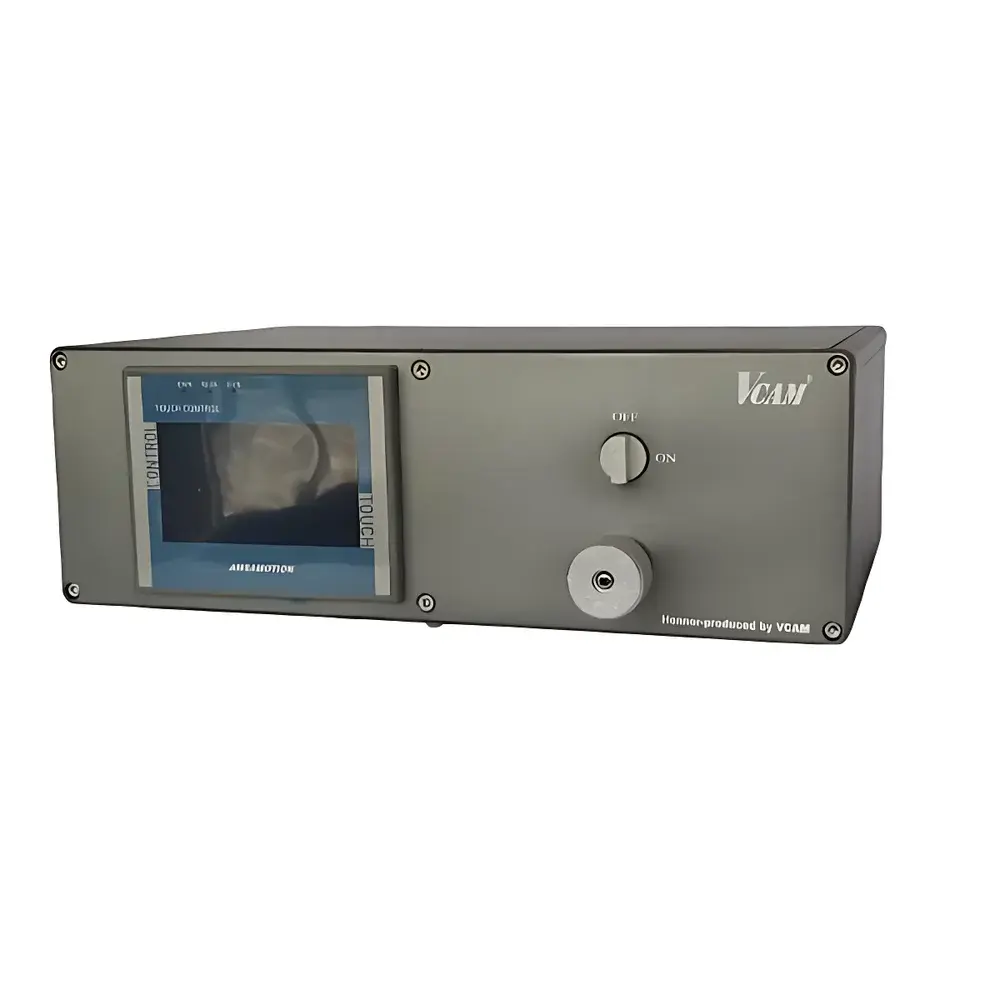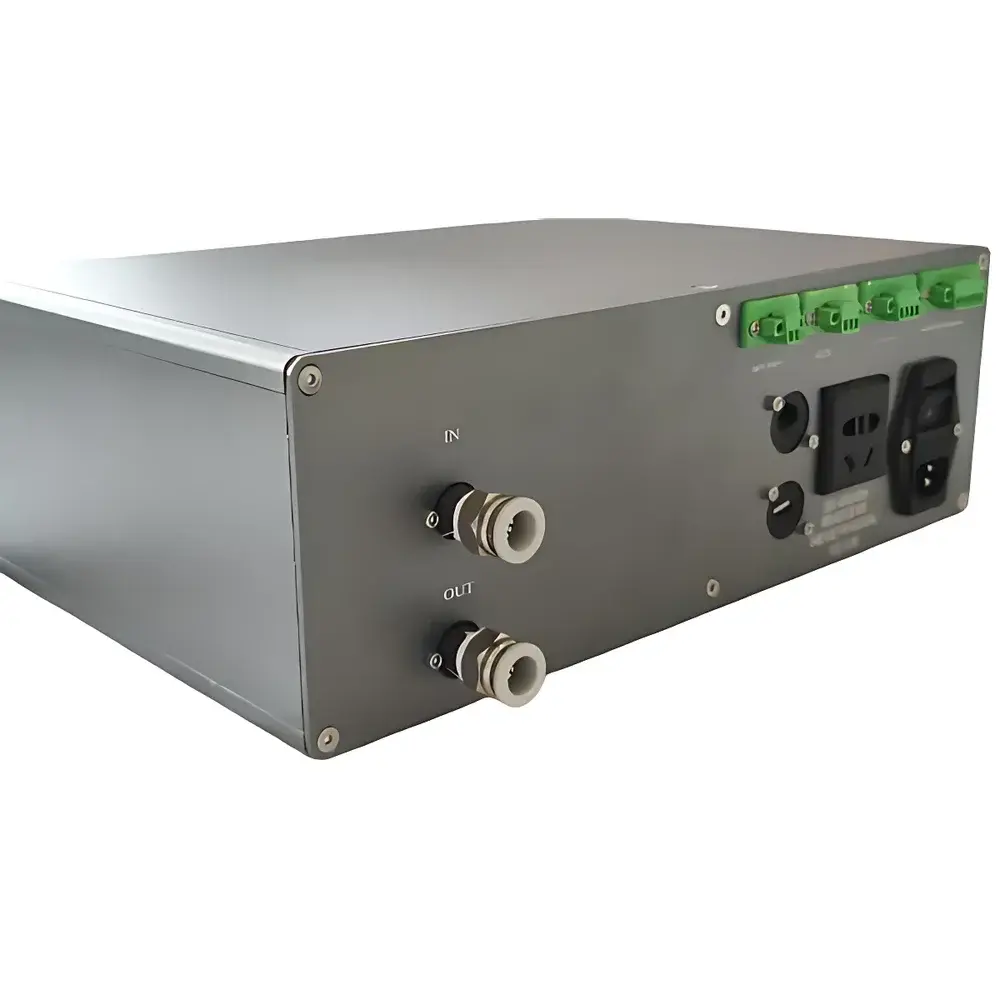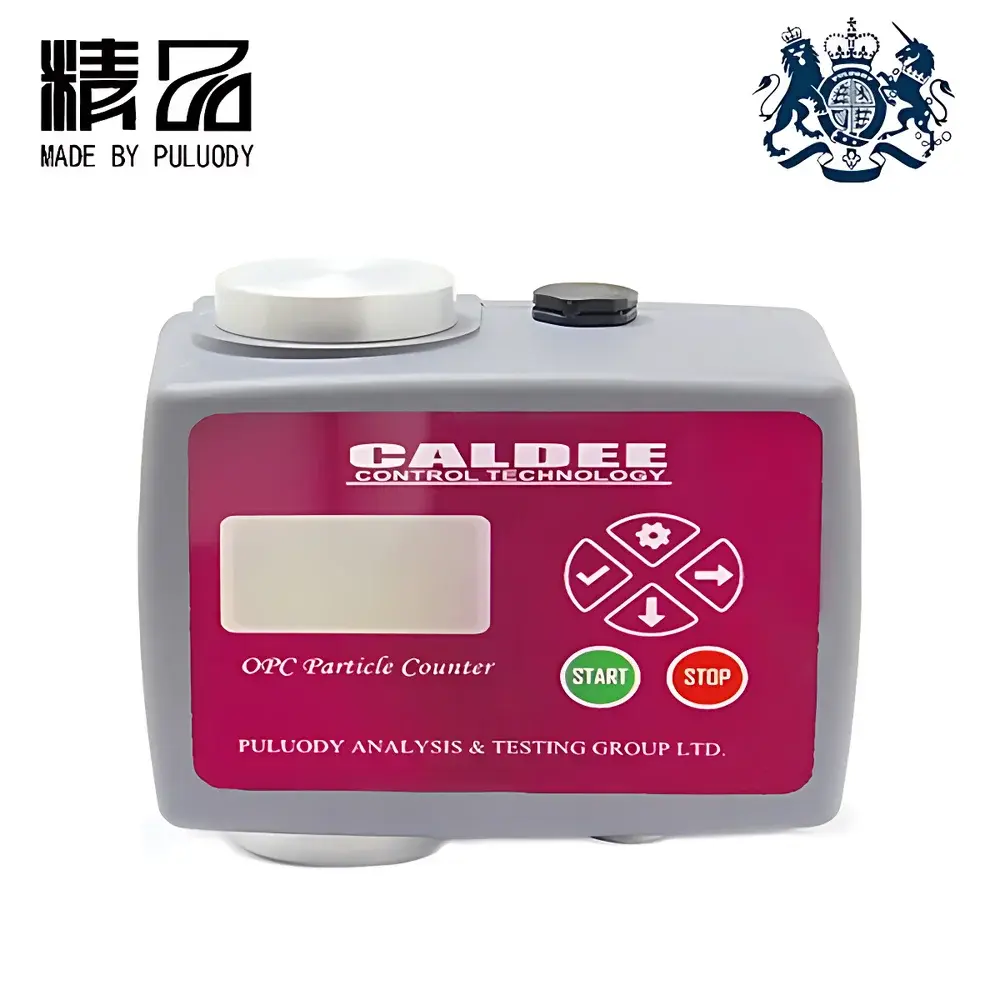
PULUODY OPC-6 Online Particle Counter (Economy Edition)
| Brand | PULUODY |
|---|---|
| Origin | Shaanxi, China |
| Manufacturer Type | Authorized Distributor |
| Country of Origin | China |
| Model | OPC-6 |
| Price | USD 8,100 (FOB) |
| Detection Principle | Dual-Laser Narrow-Beam Light Obscuration |
| Measurement Range | 1–150 µm |
| Channels | 8 |
| Standards Compliance | ISO 4406, NAS 1638, SAE AS4059, ISO 11171, MIL-STD-1246D, GJB 420B, GB/T 14039, DL/T 432, GOST 17216 |
| Max. Operating Pressure | 31.5 MPa (with pressure regulator) |
| Flow Rate | 15–500 mL/min |
| Fluid Temperature Range | −10 °C to +80 °C |
| Viscosity Range | 0–500 cSt |
| Output Interfaces | RS232, RS485, 4–20 mA, 0–5 V |
| Power Supply | 9–30 VDC |
| Reporting | Particles per mL + ISO/NAS/GJB Grade Code |
Overview
The PULUODY OPC-6 Online Particle Counter (Economy Edition) is an industrial-grade, real-time fluid contamination monitoring instrument engineered for continuous in-line measurement of particulate contamination in hydraulic oils, lubricants, turbine oils, and other process fluids. It employs the seventh-generation dual-laser narrow-beam light obscuration principle — a proven, NIST-traceable methodology aligned with ISO 11171:2010 calibration requirements — to deliver high-reproducibility particle counting across eight user-configurable size channels (1–150 µm). Unlike laboratory-based offline analyzers, the OPC-6 integrates directly into pressurized fluid circuits (up to 31.5 MPa with integrated pressure regulation), enabling dynamic wear debris trending, early-stage filter performance evaluation, and predictive maintenance decision support without process interruption.
Key Features
- Real-time, continuous online sampling with automatic alarm triggers upon exceeding user-defined contamination thresholds
- Robust stainless-steel housing rated for IP65 ingress protection, suitable for harsh industrial environments including offshore platforms, mobile hydraulics, and high-temperature engine test cells
- Wide operational flexibility: adjustable flow rate (15–500 mL/min), broad temperature tolerance (−10 °C to +80 °C), and compatibility with fluids up to 500 cSt viscosity
- Dual-output capability: simultaneous digital (RS232/RS485 Modbus RTU) and analog (4–20 mA or 0–5 V) signal transmission for seamless integration into DCS, SCADA, and PLC-based control systems
- Field-calibratable design compliant with ISO 21501-4:2018; supports annual third-party verification and traceable recalibration per ISO/IEC 17025 requirements
- Integrated power management (9–30 VDC wide-input range) eliminates dependency on external power conditioners in variable-voltage plant environments
Sample Compatibility & Compliance
The OPC-6 is validated for use with mineral-based hydraulic oils (HL, HM, HV), synthetic ester and polyalphaolefin (PAO) lubricants, phosphate ester fire-resistant fluids (e.g., Fyrquel), and ultra-pure water systems where insoluble particle quantification is required (e.g., semiconductor rinse water qualification). It meets the optical alignment, sizing accuracy, and counting efficiency criteria specified in ISO 4406:2017, NAS 1638:2019, and GJB 420B-2015. All internal wetted materials (316L SS, fused silica flow cell, fluoropolymer seals) conform to ASTM F2099-21 compatibility guidelines for long-term exposure to aggressive hydrocarbon and polar solvents. The instrument’s firmware architecture supports audit-ready data logging with time-stamped event records, satisfying GLP and GMP documentation prerequisites for regulated sectors including aerospace MRO and power generation asset management.
Software & Data Management
The OPC-6 operates with embedded firmware featuring a configurable web-based interface (accessible via Ethernet or serial terminal) and optional Windows-compatible desktop software (PULUODY ParticleView™ v3.2). Data export supports CSV, PDF, and XML formats with embedded metadata (timestamp, operator ID, system pressure, temperature, flow rate). All measurement sessions are timestamped and stored locally with non-volatile memory retention (>10,000 records). Software modules include automated grade conversion (e.g., raw counts → ISO 4406 code), statistical trend analysis (7-day rolling median, delta-change alerts), and customizable report templates aligned with customer-specific QA/QC workflows. The system supports 21 CFR Part 11-compliant electronic signatures when deployed with validated authentication protocols and audit trail activation.
Applications
- Condition-based monitoring of critical hydraulic systems in wind turbine pitch/yaw actuators and offshore drilling BOP stacks
- Filter validation testing per ISO 16889 and ISO 11171, including beta-ratio determination and multi-pass efficiency profiling
- Wear debris analysis during component endurance testing (e.g., servo-valve life cycle validation per SAE ARP4937)
- Contamination control in aviation ground support equipment (GSE) hydraulic reservoirs and fuel handling systems
- Real-time cleanliness verification for turbine oil systems prior to commissioning (per IEC 60296 and ASTM D6971)
- Monitoring of transformer insulating oil per DL/T 432 and IEC 60429 standards in substation asset health programs
FAQ
Does the OPC-6 require periodic recalibration? How is traceability maintained?
Yes — annual calibration verification is recommended per ISO/IEC 17025 and manufacturer specifications. Calibration uses NIST-traceable PSL reference particles (ISO 11171 compliant) and includes linearity, resolution, and coincidence error assessment. Certificate of Calibration includes uncertainty budget and environmental conditions.
Can the OPC-6 be installed upstream of a filter? What are the pressure drop considerations?
It may be installed either upstream or downstream depending on diagnostic intent. Maximum allowable pressure drop across the sensor is ≤0.15 MPa at 500 mL/min flow. Custom flow restrictors and bypass manifolds are available for high-flow applications.
Is the device compatible with explosion-proof (ATEX/IECEx) hazardous area classifications?
The standard OPC-6 is not intrinsically safe certified. However, an ATEX Zone 2 / IECEx Zone 2 variant (OPC-6-EX) with galvanic isolation and encapsulated electronics is available under separate product documentation.
How does the dual-laser detection improve measurement reliability versus single-laser systems?
Dual-laser geometry enables simultaneous detection of particle transit time and amplitude modulation, reducing false counts from air bubbles, moisture droplets, and refractive index mismatches. This improves sizing fidelity in multi-phase or aged-fluid matrices per ISO 21501-4 Annex C recommendations.
What documentation is provided for regulatory audits or ISO 9001 certification?
Standard delivery includes Factory Acceptance Test (FAT) report, electrical safety certificate (IEC 61000-6-2/6-4), EMC compliance statement, material declarations (RoHS/REACH), and full firmware version log with change history. Optional IQ/OQ documentation packages are available upon request.