
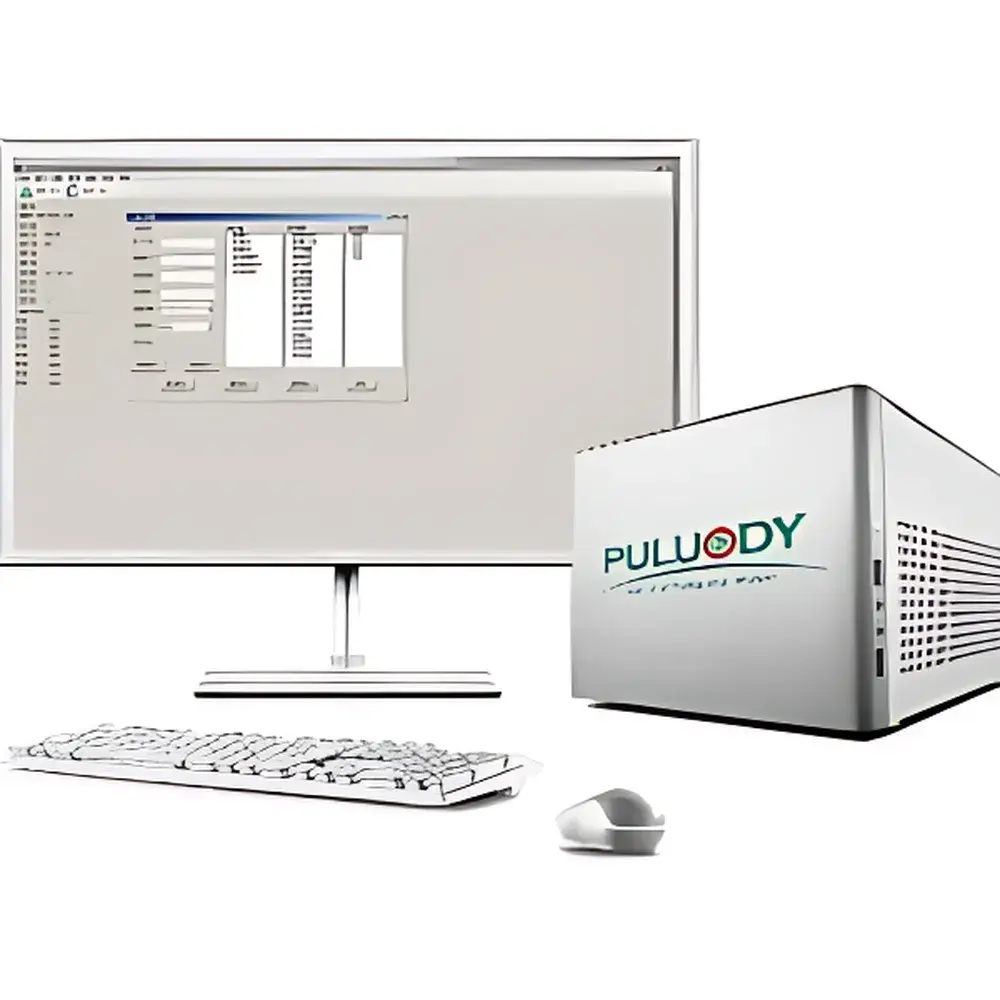
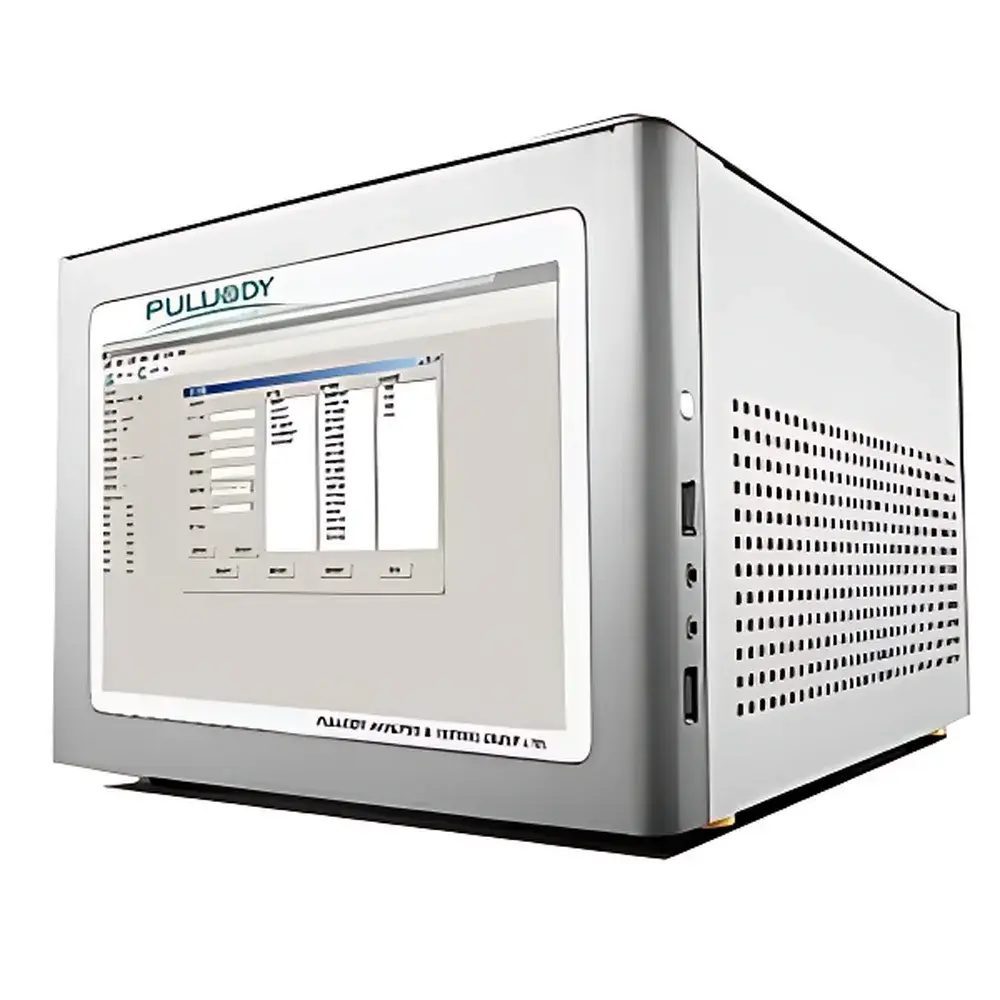
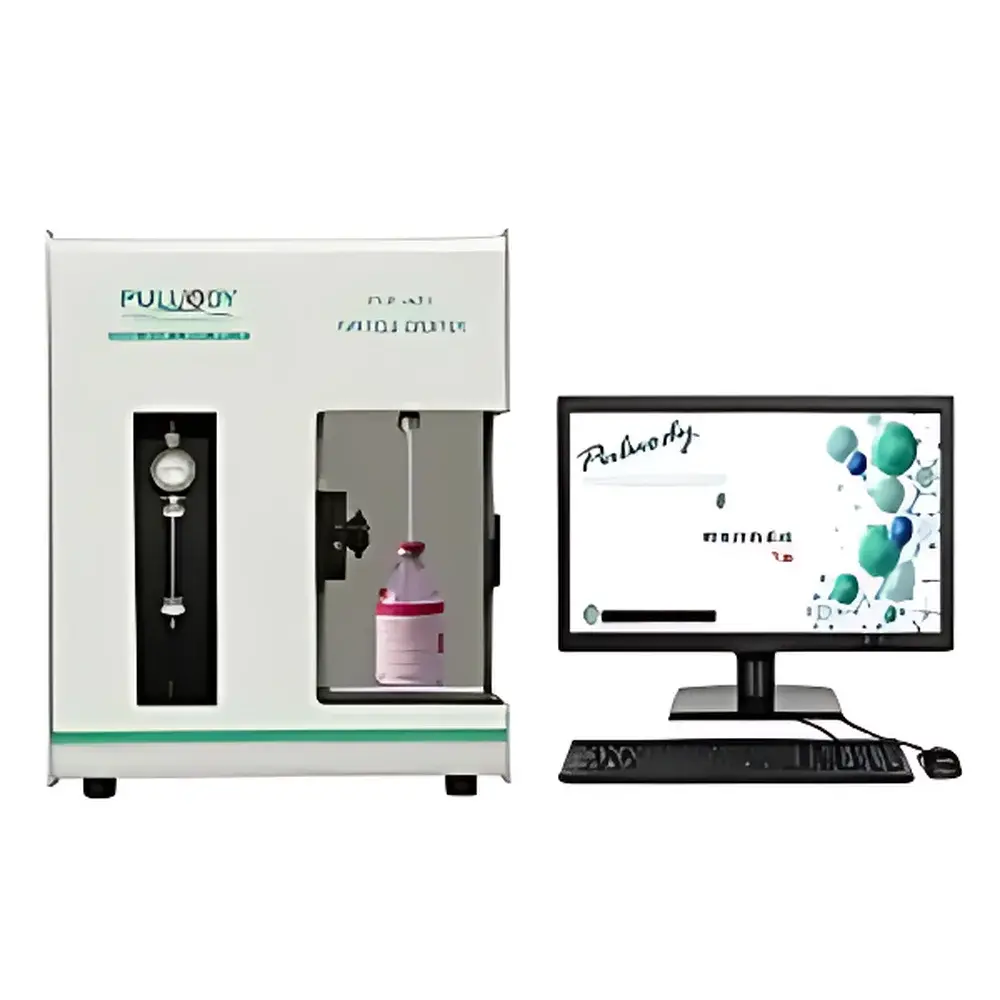
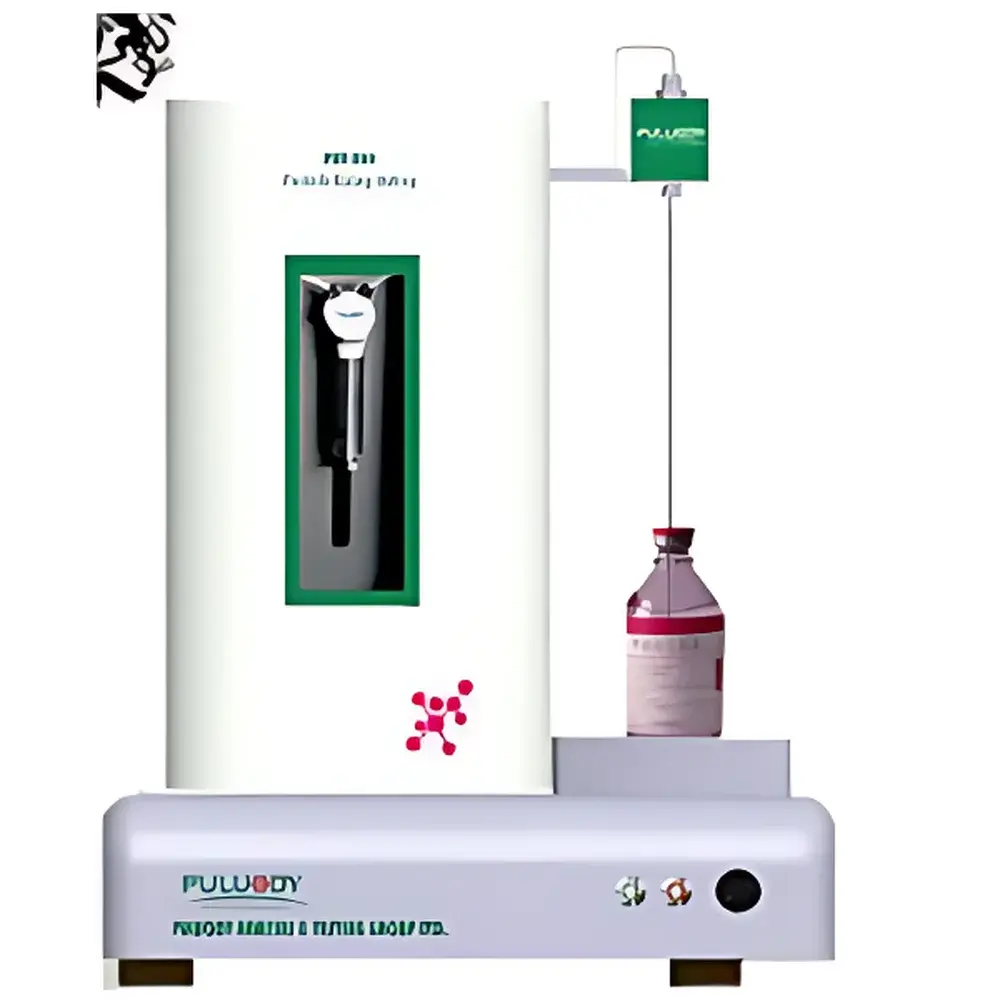
PULUODY PMT-2 Electrostatic-Dissipative Cleanroom Wipe Liquid Particle Counter
| Brand | PULUODY |
|---|---|
| Origin | Shaanxi, China |
| Manufacturer Type | Authorized Distributor |
| Regional Classification | Domestic (China) |
| Model | PMT-2 |
| Instrument Type | Optical Liquid Particle Counter |
| Detection Principle | Dual-Laser Narrow-Beam Light Scattering |
| Sensor Generation | 8th-Generation Dual-Laser Narrow-Beam Detector |
| Measurement Range | 0.03–3000 µm (configurable sub-ranges: 1–100 µm, 4–70 µm(c), or 0.1 µm(c)) |
| Sampling Method | Precision Metering Piston Pump |
| Flow Control | Dual-Stage Electromagnetic + Precision Piston Pump |
| Accuracy | <±3% typical |
| Volume Accuracy | <±1% |
| Coincidence Limit | ≤2.5% error at 1000 particles/mL |
| Calibration Standards | ISO 21501-4, JJG 1061, Polystyrene Latex (PSL) Spheres |
| Compliance | SJ/T 11480–2014, FZ/T 64056–2015, IEST-RP-CC004.3 |
| Software | PULUODY V8.3 Integrated Analysis & Calibration Software (PC & Touchscreen) |
| Data Output | Particle count per mL + ISO 4406 / NAS 1638 / SAE AS4059 contamination grading |
| Analog Output | 4–20 mA with configurable alarm threshold |
| Power Input | 100–265 VAC, 50–60 Hz |
| Interface | Color TFT LCD touchscreen + optional wireless keyboard/mouse |
| Data Acquisition | iPad-compatible real-time streaming |
Overview
The PULUODY PMT-2 Electrostatic-Dissipative Cleanroom Wipe Liquid Particle Counter is an optical liquid particle counter engineered for high-fidelity particulate contamination monitoring in ultra-clean fluid systems and surface-release testing environments. It operates on the principle of dual-laser narrow-beam light scattering—where two spatially offset laser sources illuminate a precisely defined flow path, enabling simultaneous detection of low-concentration sub-100 nm particles and high-resolution sizing across a continuous 0.03–3000 µm dynamic range. Unlike conventional single-beam instruments, this 8th-generation sensor architecture minimizes Mie scattering ambiguity and improves refractive index independence—critical when analyzing heterogeneous suspensions such as polymer solutions, cleaning agents, or ultrapure water containing both organic and inorganic particulates. Designed specifically for cleanroom validation, wipe efficacy verification, and semiconductor process fluid qualification, the PMT-2 delivers traceable, repeatable data under ISO 21501-4 compliant optical calibration protocols.
Key Features
- Dual-laser narrow-beam detection system with independent wavelength alignment and beam collimation—optimized for detecting weak-scattering sub-0.1 µm particles in low-refractive-index media (e.g., deionized water, IPA, HFE solvents)
- Integrated dual-stage flow control: precision metering piston pump (volumetric accuracy <±1%) coupled with electromagnetic flow stabilization—ensuring laminar, pulse-free sampling critical for statistical validity at low particle concentrations
- Modular sensor configuration: field-selectable detection thresholds including 0.1 µm(c), 4–70 µm(c), or user-defined 1–100 µm windows—supporting application-specific compliance with SJ/T 11480–2014 (cleanroom wipes), FZ/T 64056–2015 (nonwoven fabric release), and IEST-RP-CC004.3 (surface sampling)
- Real-time analog output (4–20 mA) with programmable alarm thresholds—enabling direct integration into SCADA, PLC, or MES platforms for automated process intervention
- Touchscreen interface with embedded V8.3 firmware supporting GLP-compliant audit trails, electronic signatures, and 21 CFR Part 11–ready user access controls (role-based permissions, password complexity, session timeout)
Sample Compatibility & Compliance
The PMT-2 accommodates a broad spectrum of liquid matrices relevant to microelectronics manufacturing, pharmaceutical excipient handling, and advanced material fabrication. Validated applications include ultrapure water (UPW), semiconductor process chemicals (SCC), photoresist developers, CMP slurries, cleaning formulations (e.g., terpenes, glycol ethers), and polymer solutions (e.g., PVDF, PTFE dispersions). Its wetted path employs chemically inert materials—electropolished 316L stainless steel, fluoropolymer tubing, and ceramic pump components—ensuring minimal leachables and no catalytic degradation during extended operation. Regulatory alignment includes full traceability to national metrology standards (JJG 1061), international reference materials (NIST-traceable PSL spheres), and industry-specific test methods: SJ/T 11480–2014 (particle shedding from cleanroom wipes), FZ/T 64056–2015 (particulate release from nonwovens), and IEST-RP-CC004.3 (sampling methodology for surface-borne contamination).
Software & Data Management
The V8.3 software suite separates analytical measurement routines from calibration and verification workflows—a design feature that eliminates software-induced bias during routine QC checks. Data acquisition supports synchronized timestamping, GPS-tagged mobile measurements (via iPad tethering), and batch-level metadata tagging (operator ID, lot number, environmental conditions). Reports are exportable in CSV, PDF, and XML formats—with built-in templates conforming to ISO 4406:2017 (fluid cleanliness codes), NAS 1638 Class, and SAE AS4059F contamination grading. Audit logs record all parameter changes, calibration events, and user logins—including IP addresses and device fingerprints—satisfying internal QA requirements and external regulatory inspections under GMP/GLP frameworks.
Applications
- Cleanroom wipe validation: quantifying wet-state particle shedding from electrostatic-dissipative nonwovens, polyester/cellulose blends, and polypropylene wipes per IEST-RP-CC004.3
- Semiconductor front-end process fluids: continuous online monitoring of UPW distribution loops, chemical delivery lines, and rinse tanks for >0.05 µm defect precursors
- Pharmaceutical excipient and solvent qualification: insoluble particle analysis in parenteral-grade solvents per USP and EP 2.9.19 guidelines
- Flat-panel display manufacturing: monitoring nano-scale abrasives in polishing slurries and residual particles in edge-bevel cleaning solutions
- Advanced filtration validation: challenge testing of nanofiltration membranes (1–100 nm cutoff) using calibrated latex standards and real-world process streams
FAQ
Does the PMT-2 support 21 CFR Part 11 compliance?
Yes—the V8.3 software implements role-based authentication, electronic signatures, immutable audit trails, and secure data encryption aligned with FDA expectations for regulated environments.
Can the instrument perform offline wipe testing according to SJ/T 11480–2014?
Yes—its portable configuration (battery-powered option available) enables standardized extraction protocols: 100 mL solvent volume, 30-second sonication, and automated 10 mL subsampling with integrated dilution compensation.
Is sensor recalibration required after changing detection ranges?
No—multi-range functionality is achieved via digital signal processing of raw scatter data; physical optics remain unchanged, eliminating need for revalidation when switching between 0.1 µm(c) and 4–70 µm(c) modes.
What maintenance intervals are recommended for the precision piston pump?
Pump wear parts (ceramic plunger, PTFE seals) require replacement every 12 months under continuous operation or after 5000 cycles—documented in the preventive maintenance log within the V8.3 system.
How is coincidence error managed at high particle concentrations?
The PMT-2 applies real-time pulse deconvolution algorithms and automatically triggers dilution alerts when concentration exceeds 1000 particles/mL—maintaining <2.5% coincidence error per ISO 21501-4 Annex B.



