
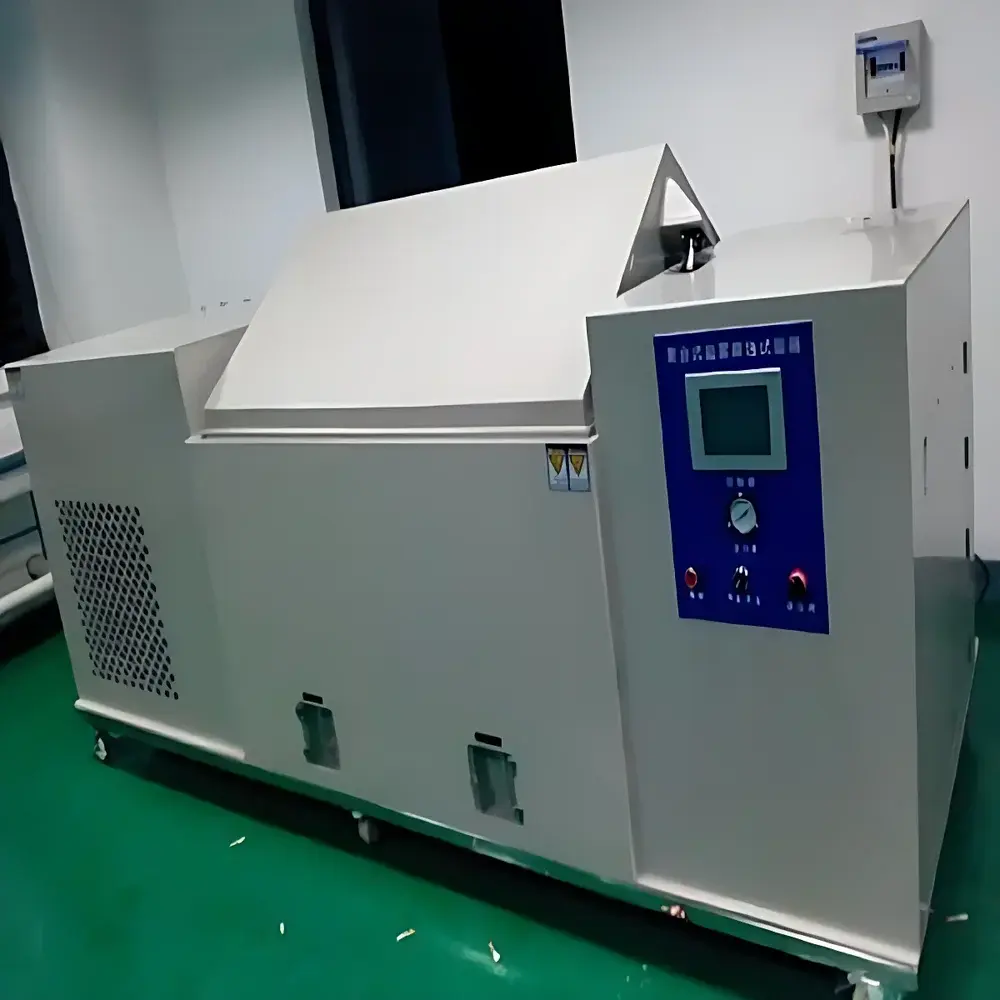
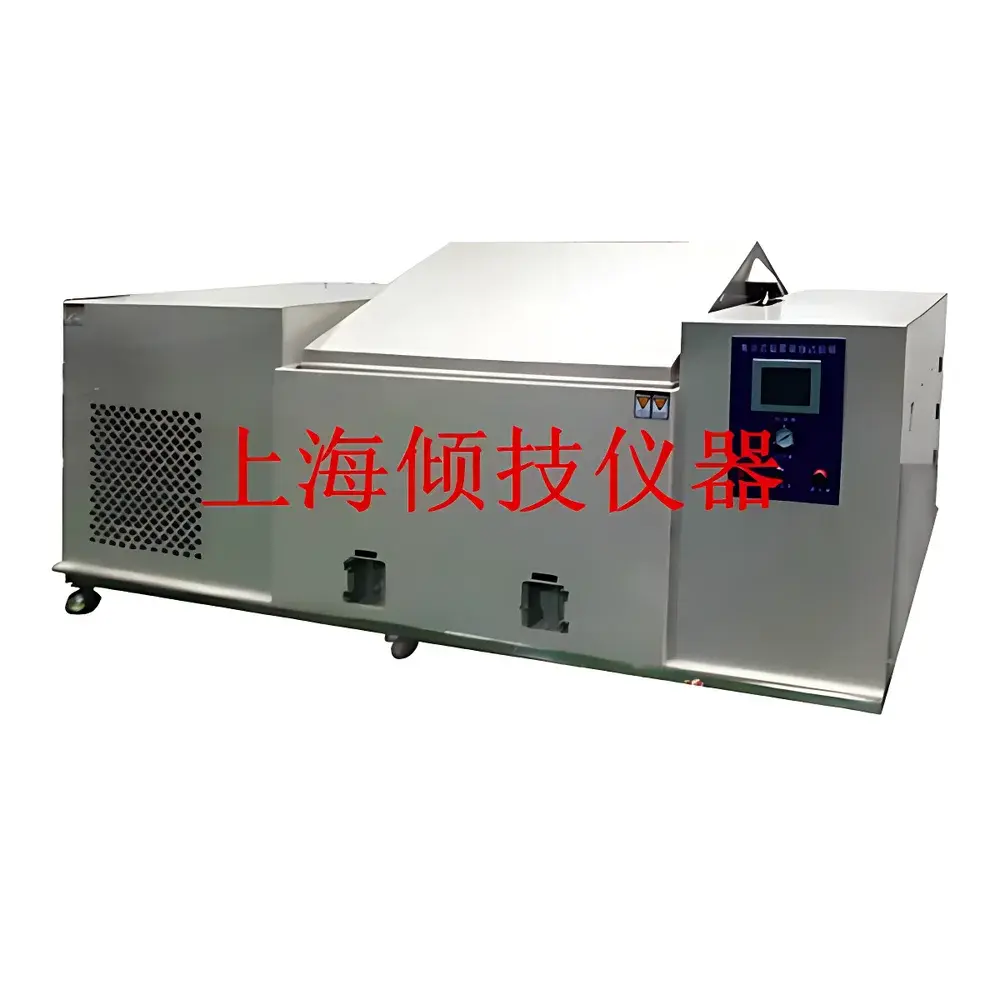
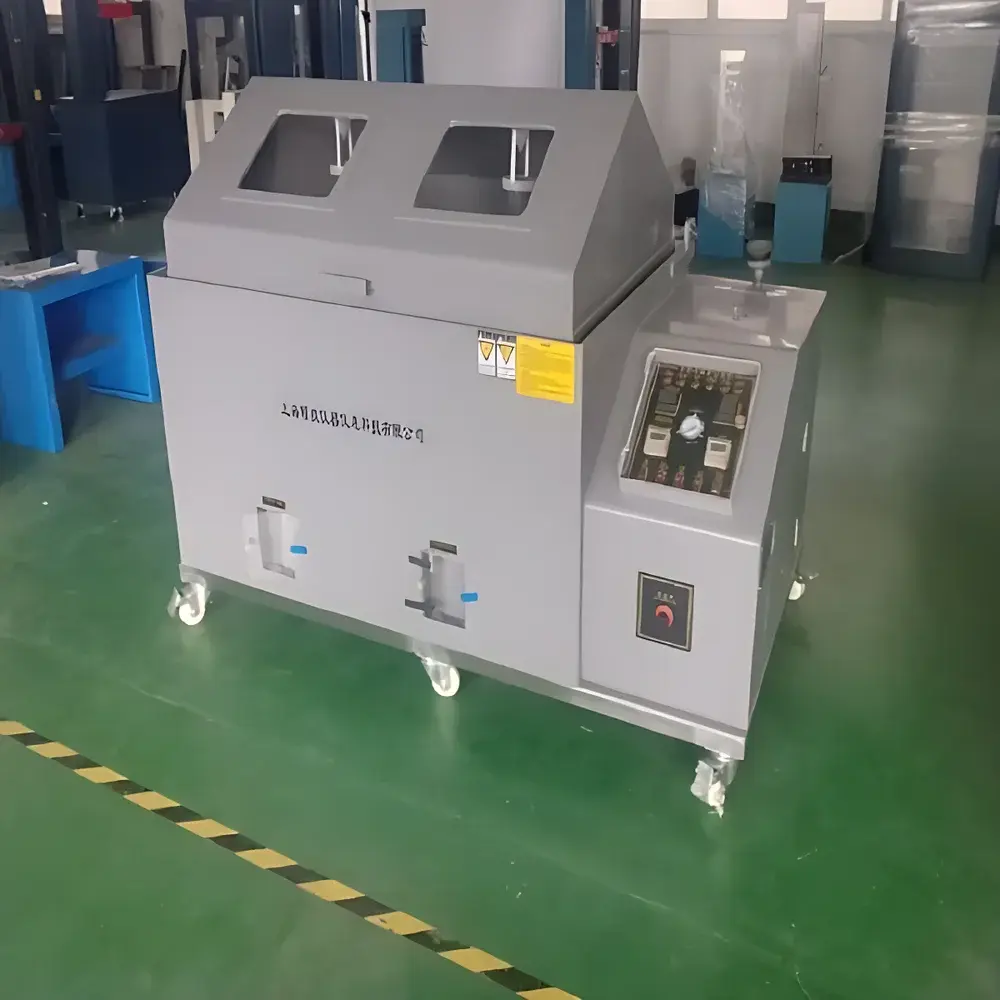
Qinji QJ-YS Combined Salt Spray Corrosion Test Chamber
| Brand | Qinji |
|---|---|
| Origin | Shanghai, China |
| Model | QJ-YS |
| Spray Mode | Continuous Atomization |
| Chamber Volume Range | 108–800 L |
| Salt Solution Tank Capacity | 15–40 L |
| Operating Temperature Range | Ambient to ≥65 °C |
| Compliance | GB/T 2423.17 (Neutral Salt Spray), ASTM B117, ISO 9227 (Acetic Acid Salt Spray option available) |
| Manufacturer Status | Domestic OEM Manufacturer |
Overview
The Qinji QJ-YS Combined Salt Spray Corrosion Test Chamber is an engineered environmental simulation system designed to accelerate corrosion evaluation under controlled, reproducible conditions. It integrates neutral salt spray (NSS), acetic acid salt spray (AASS), and cyclic humidity–temperature conditioning—enabling multi-stress corrosion testing aligned with international standards for product validation in demanding industrial sectors. Unlike single-mode salt fog chambers, the QJ-YS supports programmable test sequences that replicate real-world exposure profiles encountered by automotive components, coated metals, electronic enclosures, and aerospace fasteners. Its core measurement principle relies on calibrated aerosol generation via pneumatic atomization, precise chamber temperature/humidity control, and continuous monitoring of solution pH, conductivity, and collection rate—ensuring traceable, GLP-compliant test execution.
Key Features
- Multi-Mode Corrosion Simulation: Configurable operation modes including Neutral Salt Spray (NSS per GB/T 2423.17 and ASTM B117), Acetic Acid Salt Spray (AASS per ISO 9227), and optional cyclic humidity–temperature steps for combined stress assessment.
- Continuous Precision Atomization: Pneumatically driven nozzle system delivers stable, uniform fog distribution across the test volume with adjustable spray pressure and pre-heated saturated air supply to minimize droplet coalescence.
- Thermal Stability & Uniformity: Chamber temperature range extends from ambient up to ≥65 °C with ±2 °C uniformity (measured at 9 test points per IEC 60068-3-5), supported by double-wall insulation and PID-controlled heating elements.
- Modular Chamber Architecture: Seven standardized internal volume configurations (108 L to 800 L) accommodate diverse sample footprints—from PCB assemblies and small fasteners to full-size automotive door panels—while maintaining strict compliance with ISO 9227 placement geometry requirements.
- Corrosion Solution Management: Dedicated 15–40 L polypropylene salt solution reservoir with level sensor, overflow protection, and integrated filtration to prevent nozzle clogging; compatible with NaCl, CuCl₂-accelerated solutions, and custom electrolytes.
- Structural Integrity: Exterior housing constructed from powder-coated mild steel; interior chamber lined with corrosion-resistant PVC or PP (user-selectable); transparent acrylic viewing window with anti-fog coating and safety interlock.
Sample Compatibility & Compliance
The QJ-YS accommodates a broad spectrum of test specimens—including metallic substrates, electroplated parts, organic coatings (e.g., epoxy, zinc-nickel), printed circuit boards, and polymer-sealed connectors—without compromising chamber integrity or test repeatability. All operational protocols adhere to key regulatory frameworks: GB/T 2423.17 (China), ASTM B117 (U.S.), ISO 9227 (International), and JIS Z 2371 (Japan). Optional data logging modules support 21 CFR Part 11–compliant audit trails when paired with validated software packages. The chamber’s design facilitates routine calibration verification using certified reference salts and NIST-traceable hygrometers, meeting internal QA requirements for ISO/IEC 17025-accredited laboratories.
Software & Data Management
Standard configuration includes a programmable digital controller with 7-inch TFT touchscreen interface, supporting up to 99 test cycles with variable dwell times, ramp rates, and mode transitions. Optional PC-based software (Qinji TestSuite™) enables remote monitoring, real-time parameter graphing (temperature, humidity, spray duration), automated report generation (PDF/CSV), and electronic signature workflows compliant with FDA 21 CFR Part 11 Annex 11 guidelines. All logged data are time-stamped, user-identified, and stored with immutable audit history—fully supporting GMP/GLP documentation needs for automotive Tier-1 suppliers and medical device manufacturers subject to IATF 16949 or ISO 13485 audits.
Applications
- Evaluation of corrosion resistance for zinc-plated steel fasteners per ASTM F1111 and ISO 4042
- Qualification of automotive under-hood components exposed to road-salt environments (SAE J2334)
- Validation of conformal coatings on military-grade PCBs (MIL-STD-810H Method 509.6)
- Comparative lifetime assessment of aluminum anodizing vs. chromate conversion coatings
- Accelerated aging of marine-grade stainless steels (316L, duplex grades) in chloride-rich atmospheres
- Process control verification for electroplating lines (zinc, nickel, tin) per ASTM B633 and ISO 2081
FAQ
Does the QJ-YS meet ASTM B117 requirements for neutral salt spray testing?
Yes—the chamber is configured to satisfy all critical parameters specified in ASTM B117, including fog collection rate (1.0–2.0 mL/80 cm²/h), pH (6.5–7.2), and chamber temperature stability (35 ± 2 °C). Calibration certificates and installation qualification (IQ) documentation are provided upon request.
Can the system perform cyclic corrosion tests (CCT) combining salt spray, drying, and high-humidity phases?
While the base QJ-YS model supports sequential NSS/AASS/humidity modes, full CCT capability (e.g., VDA 621-415 or GMW 14872) requires optional upgrade to the QJ-YS-CCT variant with expanded controller firmware and auxiliary humidification/dehumidification modules.
What maintenance intervals are recommended for long-term reliability?
Daily: Visual inspection of nozzles and solution level; weekly: Cleaning of atomizer head and saturation tower; quarterly: Verification of temperature/humidity sensors against NIST-traceable references; annual: Full system performance qualification (PQ) per ISO/IEC 17025 Clause 6.4.6.



