
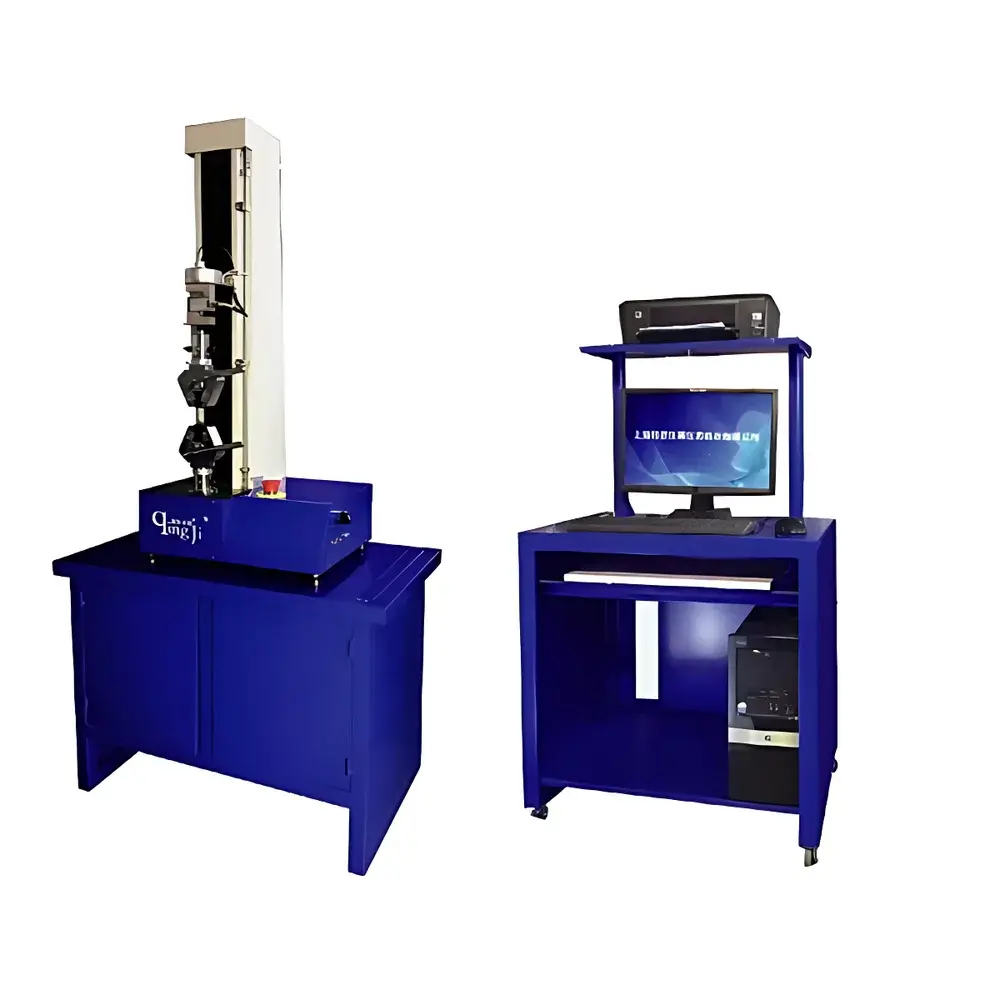
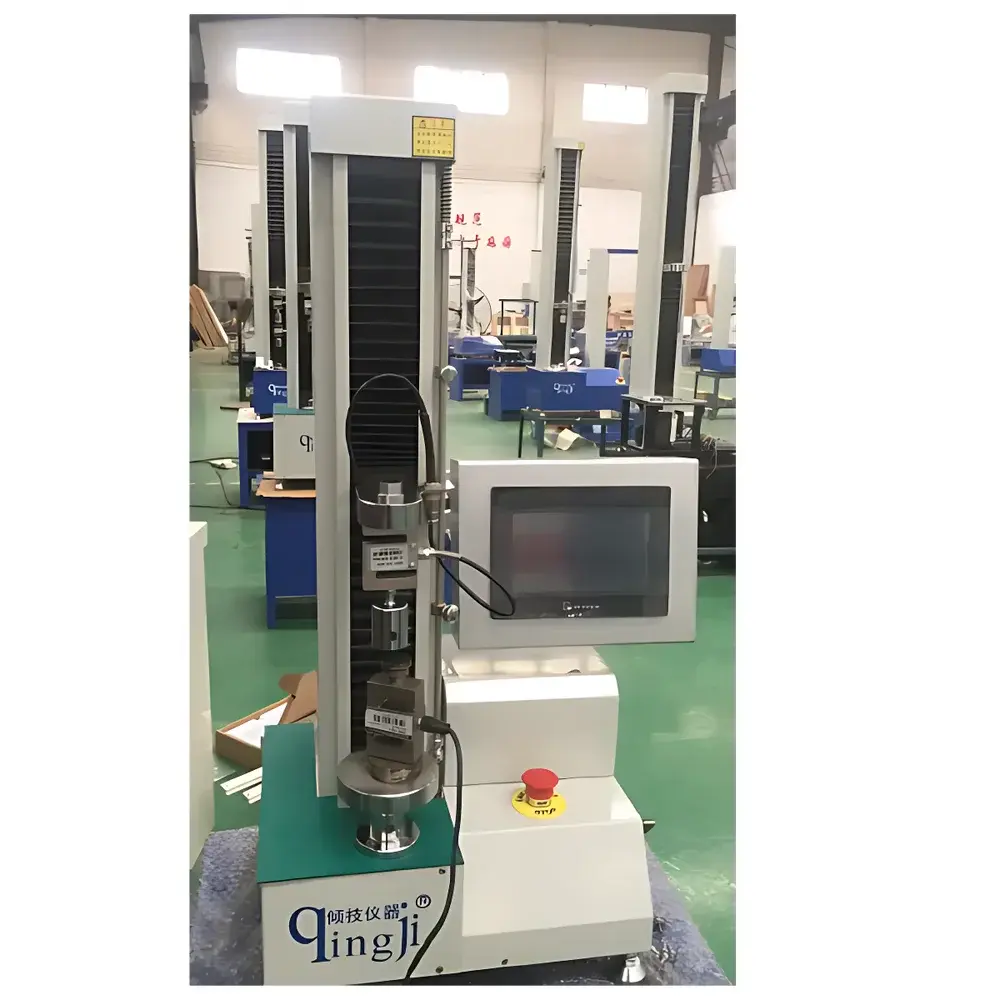
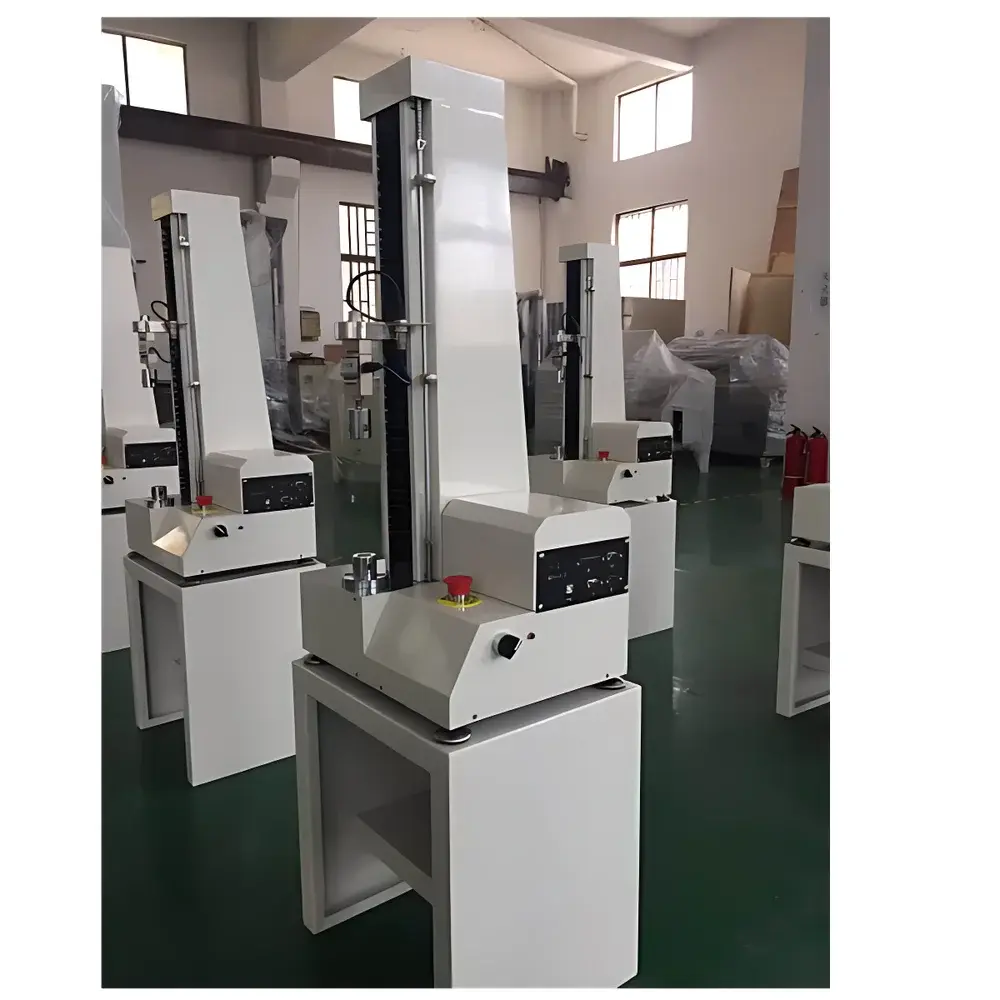
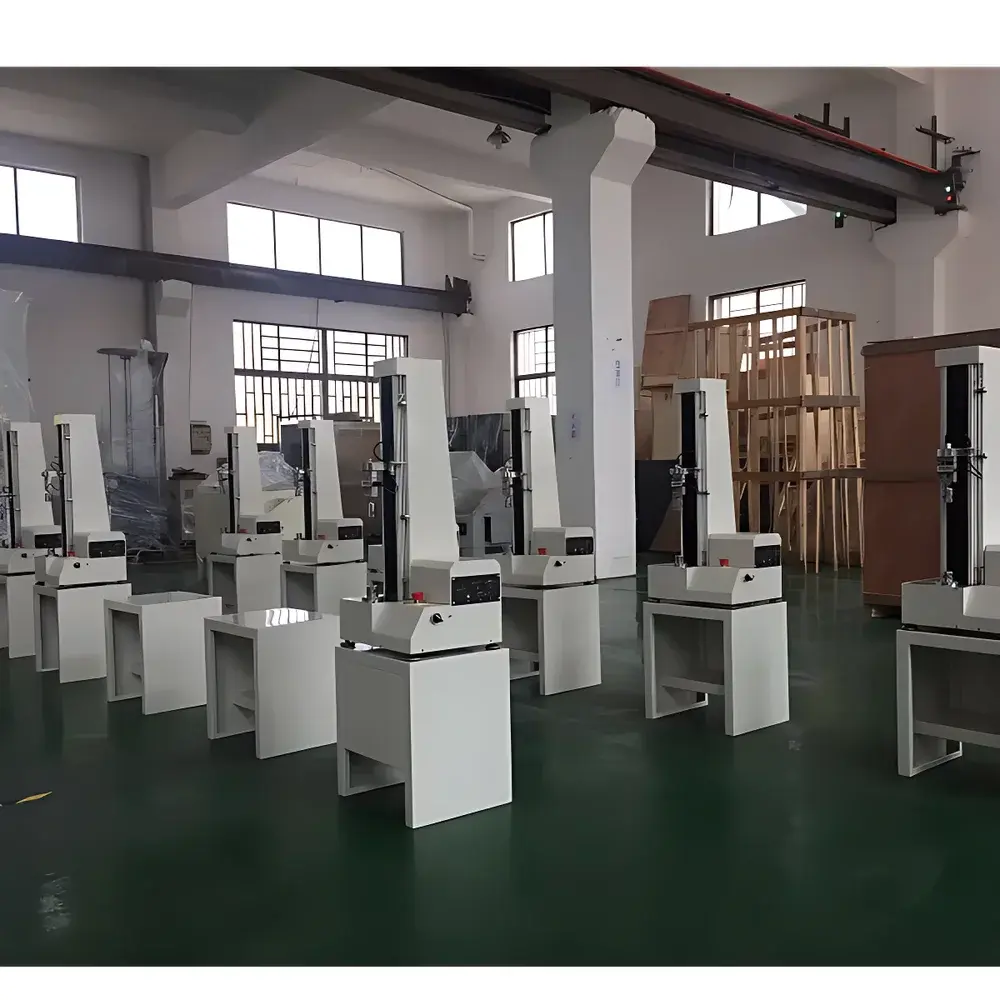
Qinji QJ210-2500N Advanced Tensile Testing Machine for Aerogel Materials
| Brand | Qinji |
|---|---|
| Origin | Shanghai, China |
| Model | QJ210-2500N |
| Max Test Force | 2.5 kN |
| Force Range | 0–2.5 kN |
| Force Accuracy Class | 0.5 |
| Stroke | 300 mm |
| Speed Range | 0.001–300 mm/min |
| Speed Accuracy | ±0.5% |
| Displacement Accuracy | ±0.5% |
| Load Cell Resolution | 0.01% of full scale |
| Effective Width | 150 mm |
| Safety Features | Electronic limit protection, emergency stop button |
| Weight | ~45 kg |
Overview
The Qinji QJ210-2500N Advanced Tensile Testing Machine is a precision-engineered electromechanical system designed specifically for mechanical characterization of low-density, ultra-fragile materials—particularly aerogels and related porous nanostructured solids. Operating on the principle of controlled uniaxial force application with real-time load-displacement feedback, the instrument complies with fundamental test methodologies outlined in ISO 6892-1 (tensile testing of metallic materials), ASTM D882 (tensile properties of thin plastic sheeting), and ISO 1798 (flexural and tensile behavior of flexible cellular materials). Its architecture integrates high-resolution load cell transduction (0.01% FS resolution), closed-loop servo control, and synchronized data acquisition to deliver reproducible measurements of tensile strength, elongation at break, Young’s modulus, compressive yield stress, bending stiffness, peel resistance, and puncture force—all within a single platform. The system is optimized for specimens exhibiting low modulus (80% strain), and nonlinear viscoelastic response—characteristics typical of silica-, carbon-, or polymer-based aerogels.
Key Features
- High-sensitivity load measurement: 2.5 kN capacity with 0.5-class accuracy per GB/T 16491 and ISO 7500-1, traceable to national metrological standards
- Adjustable crosshead speed: Continuously variable from 0.001 to 300 mm/min, enabling quasi-static creep tests and dynamic loading protocols
- Full-digital control interface: Integrated LCD panel supports real-time display of force (N), displacement (mm), strain (%), and stress–strain curves without external software
- PC-integrated operation: USB and RS232 connectivity support bidirectional communication with Windows-based test software for automated method execution, data logging, and report generation compliant with GLP documentation requirements
- Rigid yet compact frame: Extruded aluminum housing with electrostatic powder coating ensures structural stability (deflection < 0.02 mm under max load) while minimizing footprint (W × D × H: 450 × 400 × 1100 mm)
- Dual-safety architecture: Hardware-based electronic stroke limits combined with programmable software safeguards prevent overtravel and specimen overloading
Sample Compatibility & Compliance
The QJ210-2500N accommodates standard aerogel geometries—including monolithic discs (Ø ≤ 50 mm), rectangular monoliths (max 150 mm width × 300 mm length), and thin-film composites—using interchangeable grips (pneumatic, wedge, and custom fixture interfaces available). Its 150 mm effective test width and 300 mm vertical stroke allow evaluation of both as-synthesized monoliths and laminated or reinforced aerogel composites. The system meets essential regulatory expectations for material qualification in R&D environments, including alignment with ISO/IEC 17025 clause 6.4 (equipment verification), ASTM E4 (force verification procedures), and USP (mechanical testing of pharmaceutical excipients where applicable). Calibration certificates are provided with NIST-traceable load cell verification.
Software & Data Management
The bundled Windows-compatible software enables creation of standardized test methods (e.g., pre-load dwell, ramp-to-break, cyclic loading), automatic calculation of ASTM/ISO-defined parameters (e.g., secant modulus, offset yield point), and export of raw time-stamped datasets (CSV, XLSX) and formatted PDF reports. Audit trail functionality records user actions, parameter changes, and calibration events—supporting FDA 21 CFR Part 11 compliance when deployed in regulated laboratories. Data encryption, role-based access control, and electronic signature options are configurable per organizational IT policies.
Applications
- Mechanical benchmarking of sol-gel-derived silica aerogels under ambient and controlled-humidity conditions
- Compression recovery analysis of resilient carbon aerogel foams for thermal insulation qualification
- Tensile adhesion testing of aerogel-polymer hybrid coatings on metallic substrates
- Bending stiffness assessment of fiber-reinforced aerogel composites for aerospace thermal barriers
- Peel strength quantification of aerogel-laminated multilayer insulation (MLI) systems
- Quality control screening of batch-to-batch consistency in industrial-scale aerogel production
FAQ
What standards does the QJ210-2500N conform to for force calibration?
It adheres to ISO 7500-1:2018 and GB/T 16491–2008 for static force verification using certified deadweight standards.
Can the machine perform cyclic loading tests?
Yes—the software supports multi-step loading profiles, including tension-compression cycles with programmable dwell times and amplitude control.
Is third-party calibration support available?
Qinji provides annual recalibration services with accredited metrology labs; certificates include uncertainty budgets and traceability statements.
What grip types are included by default?
Standard configuration includes manual vise grips for flat specimens; pneumatic, roller, and custom-designed fixtures are optional accessories.
Does the system meet GLP audit requirements?
With enabled audit trail, electronic signatures, and version-controlled test methods, it satisfies core GLP principles for nonclinical laboratory studies.



