
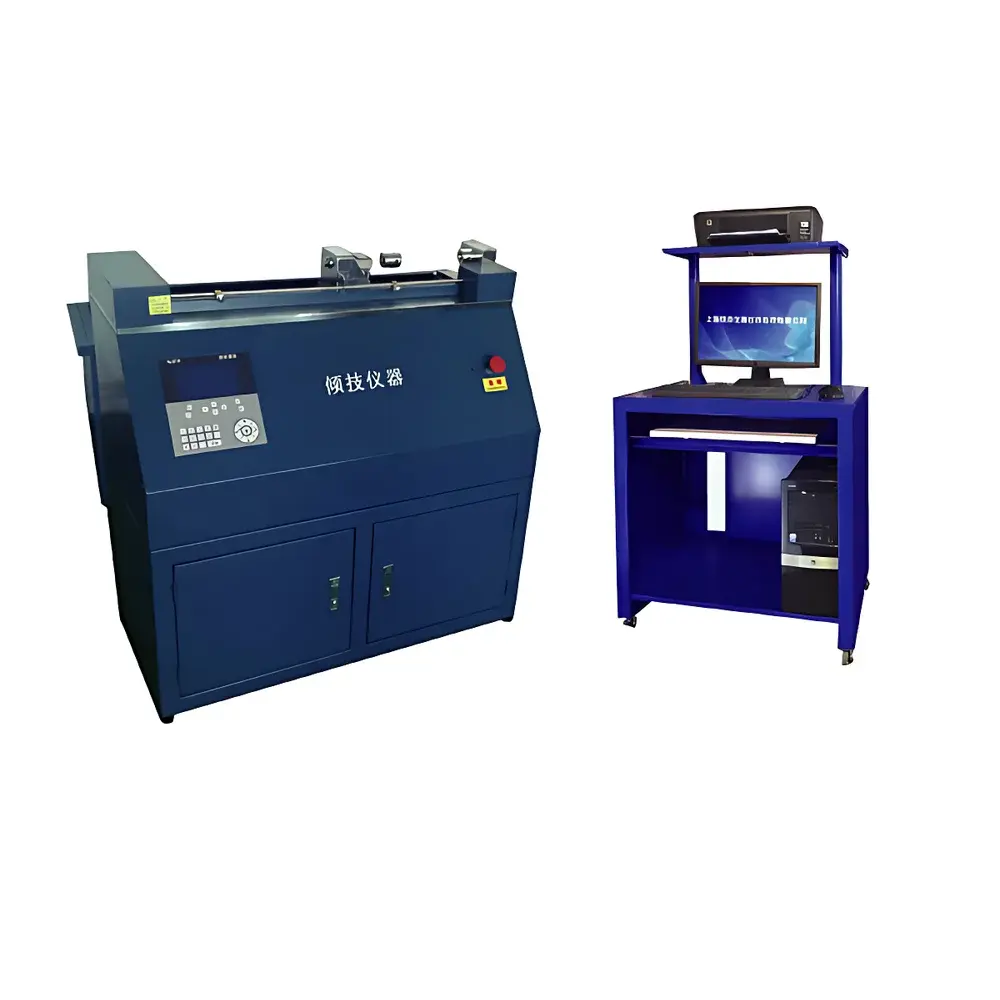
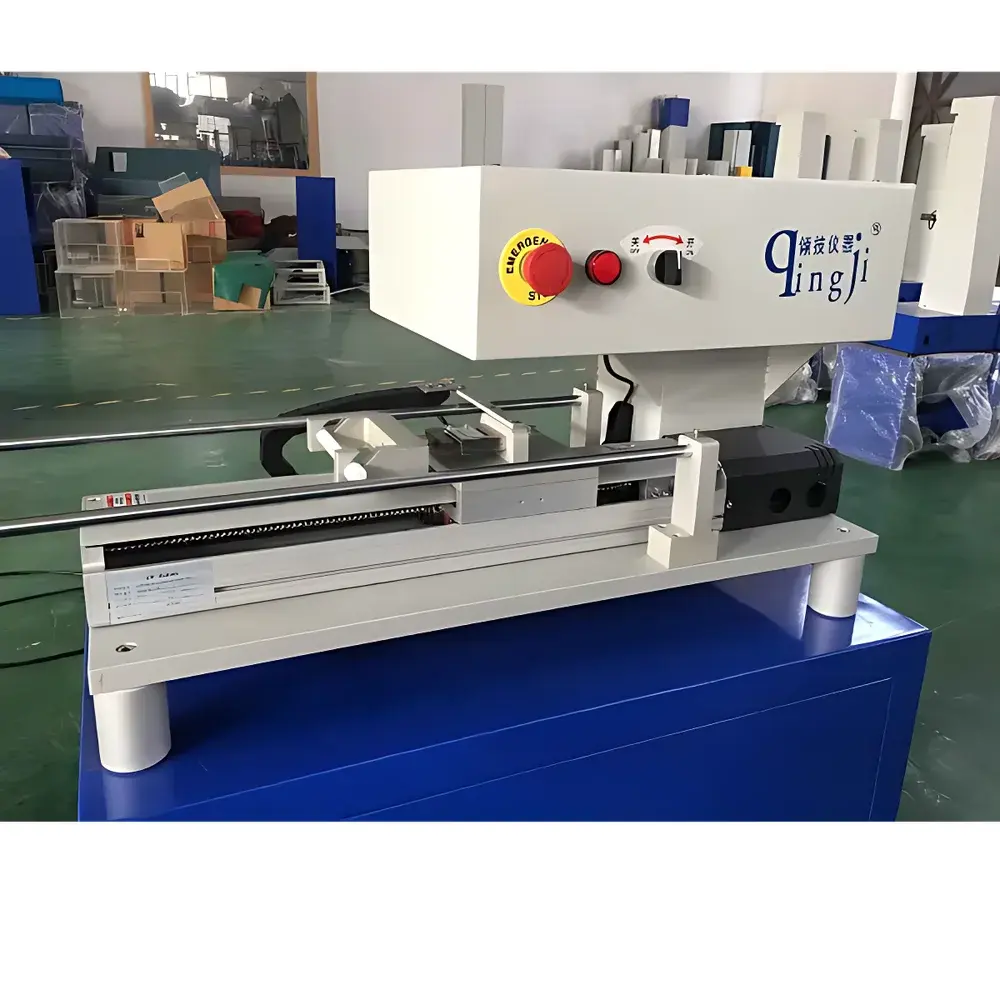
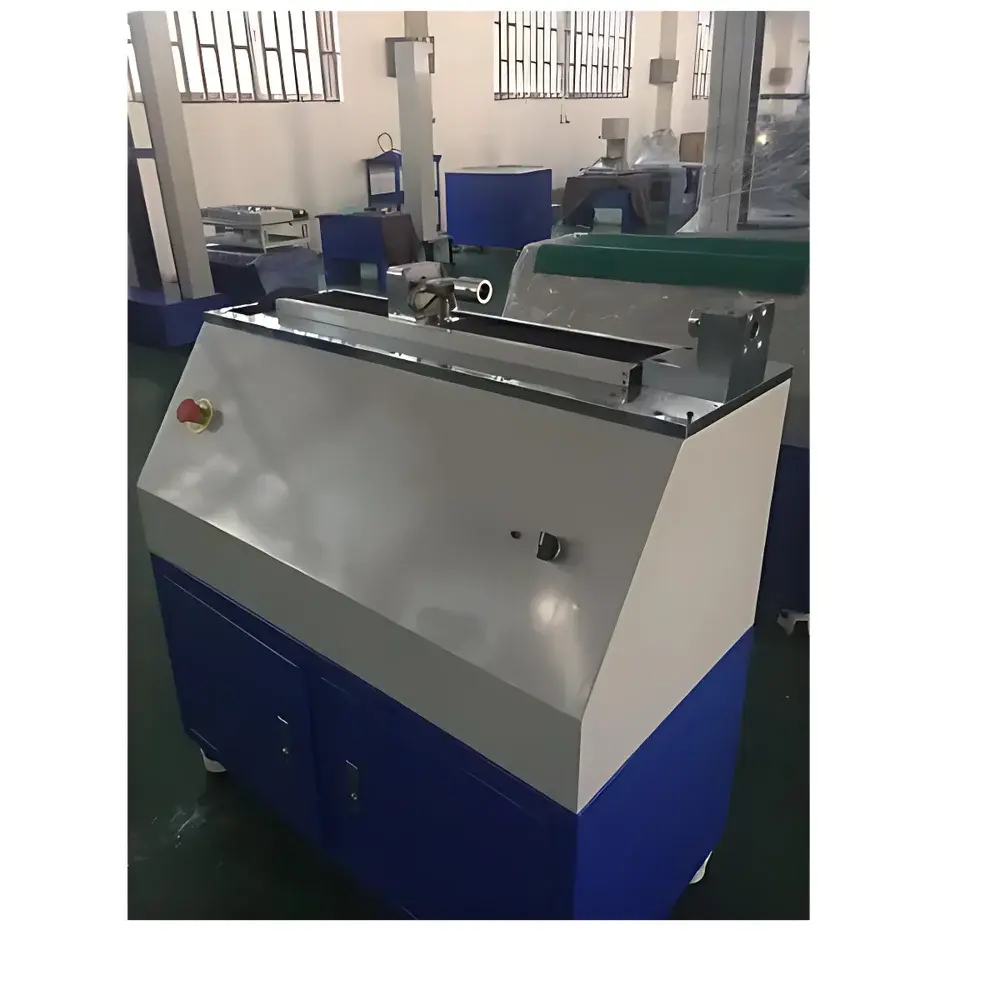
Qinji QJ310 Wire Harness Terminal Pull-Off and Peel Strength Tester
| Brand | Qinji |
|---|---|
| Origin | Shanghai, China |
| Model | QJ310 |
| Instrument Type | Electromechanical Tensile Testing Machine |
| Maximum Test Load | 5 kN |
| Load Range | 0–5 kN (Full Scale) |
| Load Accuracy | ±0.5% FS |
| Crosshead Travel | 500 mm |
| Test Speed Range | 0.001–300 mm/min |
| Power Supply | AC 220 V, 50/60 Hz |
| Dimensions (W×D×H) | 600 × 300 × 300 mm |
| Weight | ~40 kg |
| Load Cell Resolution | 0.01% FS |
Overview
The Qinji QJ310 Wire Harness Terminal Pull-Off and Peel Strength Tester is an electromechanical tensile testing system engineered for precise quantification of mechanical interfacial strength in low-to-medium force applications. Designed specifically for automotive, aerospace, and electronics manufacturing quality control laboratories, it measures pull-off force (terminal retention), peel strength (adhesive bond integrity), and axial separation resistance in wire harness assemblies, crimped terminals, connectors, lamp holders, PCB-mounted components, and pressure-sensitive adhesive joints. The instrument operates on a servo-controlled motor-driven lead screw actuation principle, delivering high positional repeatability and load stability across its 0–5 kN range. Its closed-loop digital control architecture ensures consistent strain rate application per ASTM D903, ISO 8510-2, and IEC 60512-2-1 test protocols—enabling traceable, GLP-compliant validation of crimp quality, solder joint robustness, and material interface adhesion.
Key Features
- High-precision ball screw drive system with backlash-free motion transmission and sub-micron positioning resolution
- Integrated 5 kN load cell calibrated to ±0.5% full-scale accuracy, with internal resolution of 0.01% FS for fine-grained force capture
- Wide-speed actuation capability: programmable crosshead velocity from 0.001 mm/min (for creep or slow peel) up to 300 mm/min (for rapid detachment screening)
- 500 mm vertical travel range accommodates extended stroke tests required for multi-layer harness bundles and deep-draw connector pulls
- Large backlit LCD controller with real-time dynamic plotting of force–displacement curves, peak load identification, and automatic yield point detection
- RS232 and USB interfaces for bidirectional communication with Windows-based PC software supporting automated test sequencing and report generation
- Rigid welded steel frame with powder-coated enclosure and ergonomic front-access design compliant with ISO 13857 safety clearance standards
Sample Compatibility & Compliance
The QJ310 accommodates standardized fixtures—including pneumatic terminal clamps, peel angle jigs (90° and 180°), and custom adapter plates—for repeatable mounting of wire gauges from AWG 30 to AWG 8, crimped FAKRA/USCAR/DFM terminals, molded connectors (e.g., TE Connectivity AMPMODU, Molex MX150), and flexible printed circuit (FPC) laminates. All mechanical configurations align with IPC-TM-650 2.4.1 (pull test method for soldered leads), SAE J2223 (automotive wire harness retention), and UL 1283 (filter connector retention). The system supports audit-ready documentation per FDA 21 CFR Part 11 when used with validated software—providing electronic signatures, user access logs, and immutable test data archives.
Software & Data Management
The bundled PC software enables full test method definition: pre-set profiles for ISO 8510 peel, ASTM D3330 loop tack, and proprietary OEM pull-test sequences can be saved, version-controlled, and recalled with one click. Raw force–displacement data is captured at ≥100 Hz sampling rate and exported in CSV, XML, or PDF formats compatible with LIMS integration. Calibration certificates are digitally embedded and auto-linked to test records. Audit trails record operator ID, timestamp, calibration status, environmental conditions (if external sensor inputs are enabled), and any parameter overrides—meeting ISO/IEC 17025 clause 7.7 requirements for measurement traceability.
Applications
- Quantitative verification of crimp barrel compression integrity per USCAR-21 specifications
- Peel strength assessment of conformal coatings and dielectric tapes on ribbon cables
- Retention force evaluation of LED lamp bases under thermal cycling preconditioning
- Interfacial shear strength measurement of soldered SMT terminations on high-frequency RF connectors
- Validation of ultrasonic welding bond strength in EV battery harness modules
- Comparative analysis of adhesive performance across substrate combinations (e.g., PVC-insulated wire to polyamide housing)
FAQ
What standards does the QJ310 support for terminal pull testing?
It complies with USCAR-21, ISO 6892-1 (tensile testing of metallic materials), and SAE J1794 for crimp retention evaluation.
Can the system perform cyclic loading or dwell tests?
Yes—the software supports step-and-hold sequences, including load dwell, displacement dwell, and ramp-hold-ramp profiles for fatigue simulation.
Is third-party calibration certification available?
Factory calibration is performed using NIST-traceable deadweight standards; optional UKAS-accredited calibration certificates are available upon request.
Does the instrument meet electromagnetic compatibility (EMC) requirements for lab environments?
It conforms to EN 61326-1:2013 for laboratory-use electrical equipment, including immunity to electrostatic discharge and conducted RF disturbances.
What maintenance intervals are recommended for long-term accuracy?
Load cell verification every 6 months and mechanical inspection (lubrication, screw alignment) annually—documented in the included maintenance log template.



