
QL-Scientific QL-HW2000BA High-Frequency Infrared Multi-Element Analyzer
| Brand | QL |
|---|---|
| Origin | Jiangsu, China |
| Model | QL-HW2000BA |
| Carbon Range | 0.0001–99.999 wt% |
| Sulfur Range | 0.0001–99.999 wt% |
| Mn | 0.10–65.00 wt% |
| Si | 0.10–75.00 wt% |
| P | 0.005–1.80 wt% |
| Cr | 0.01–65.0 wt% |
| Ni | 0.010–30.0 wt% |
| Analysis Time | 25–60 s (typ. 35 s) |
| Precision | C RSD ≤0.5%, S RSD ≤1.0% |
| Sensitivity | 0.1 ppm |
| HF Generator | 2.5 kVA, 18–20 MHz |
| Balance Capacity | 0–120 g, d = 0.0001 g |
| Complies With | GB/T 20123–2006, ISO 15350:2000 |
Overview
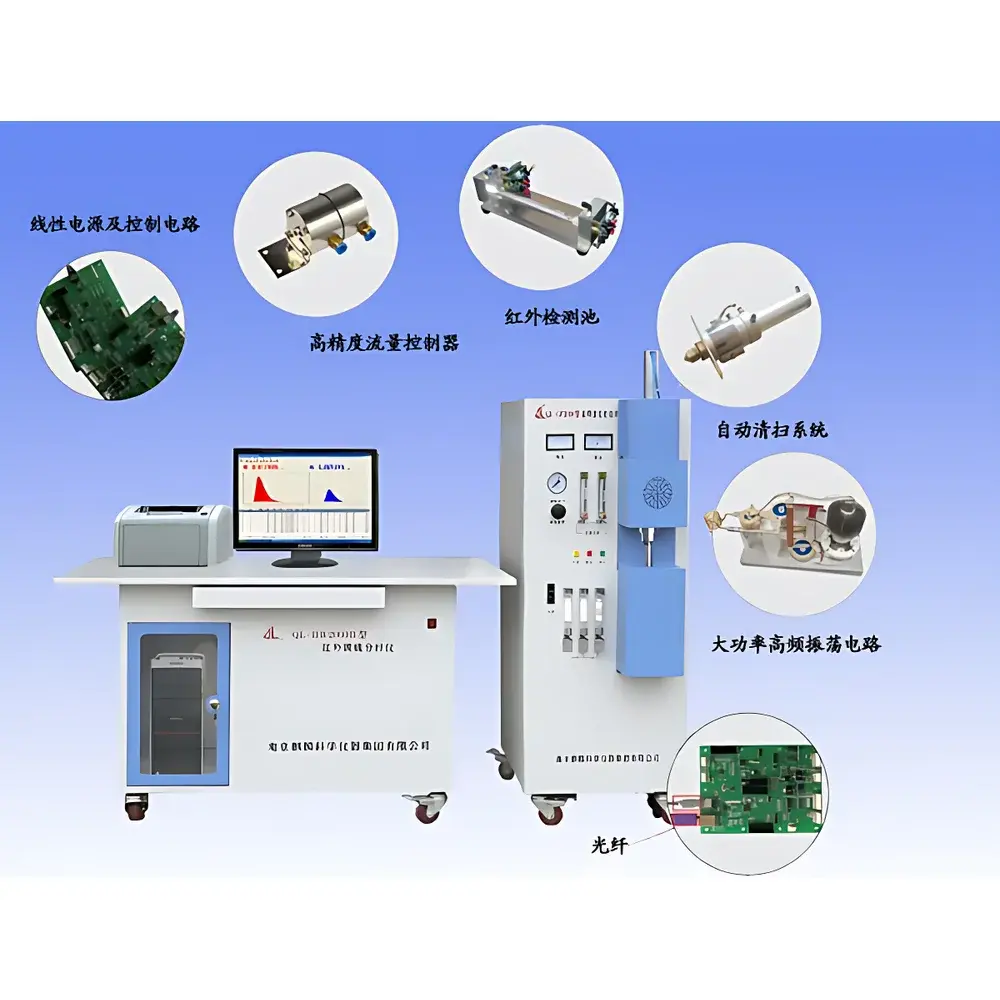
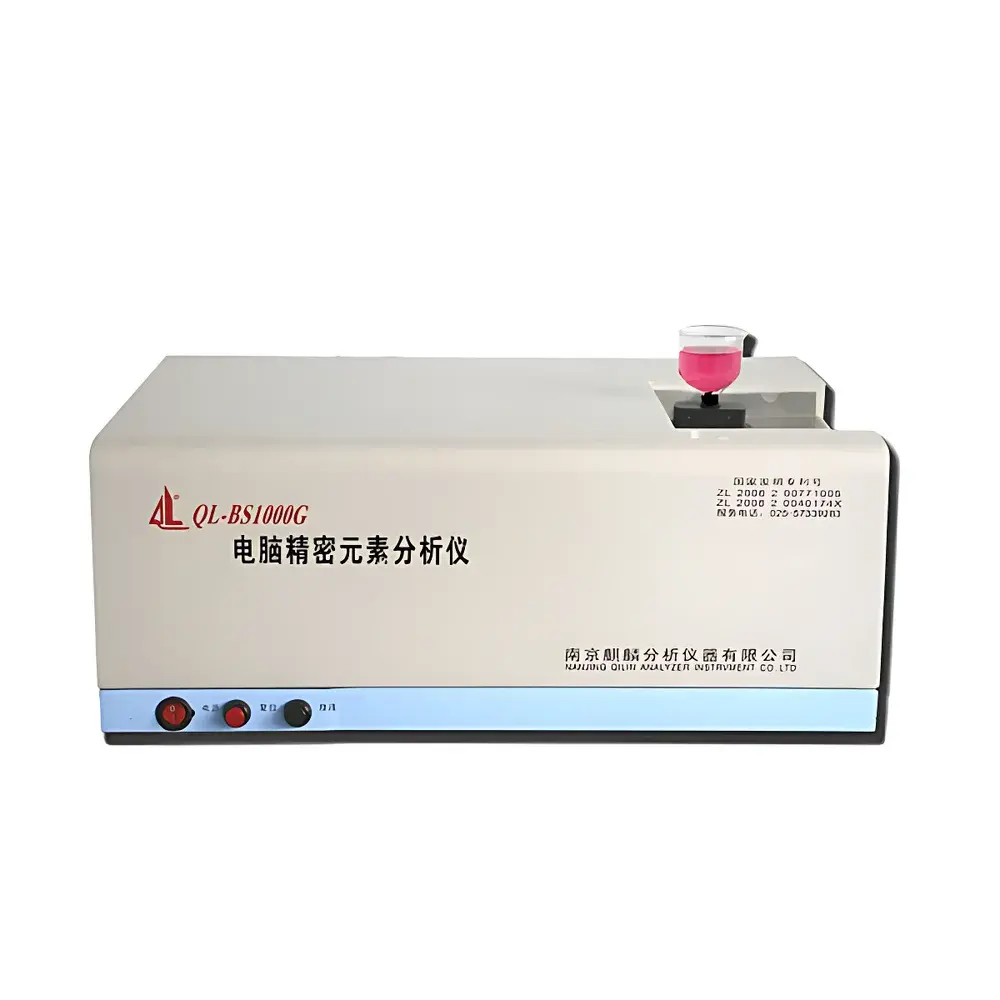
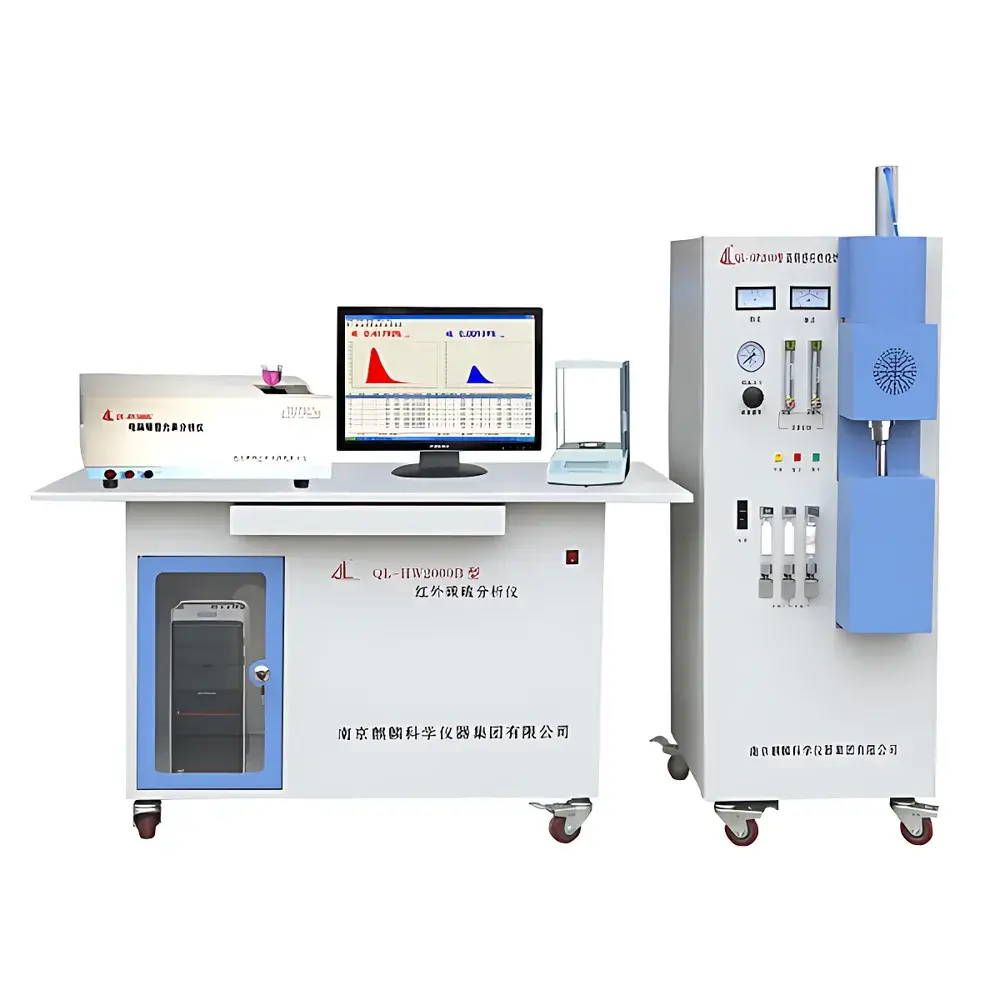
The QL-Scientific QL-HW2000BA High-Frequency Infrared Multi-Element Analyzer is a dual-module analytical platform engineered for simultaneous and independent quantification of carbon and sulfur via high-frequency combustion infrared absorption, coupled with multi-element spectrophotometric analysis for Mn, P, Si, Cr, Ni, Mo, Mg, and rare earths in solid metallic and non-metallic matrices. The system integrates two functionally distinct but synergistically coordinated instruments: the QL-HW2000B high-frequency infrared carbon-sulfur analyzer and the QL-BS1000G optical multi-element analyzer. Combustion-based C/S determination relies on controlled RF-induced oxidation in a high-purity quartz crucible under purified oxygen flow, generating CO₂ and SO₂ gases that pass through temperature- and pressure-compensated infrared absorption cells. Element-specific quantification is achieved by measuring absorbance at precisely defined wavelengths—4.26 µm for CO₂ and 7.4 µm for SO₂—using thermoelectrically cooled pyroelectric detectors and narrow-band interference filters. The optical module employs a digitally controlled grating monochromator with motorized wavelength positioning (≤1 nm step resolution), enabling precise spectral isolation for colorimetric determination of transition metals and metalloids following acid digestion and selective chromophore development.
Key Features
- Dual-CPU architecture with real-time data acquisition at up to four samples per second, ensuring high temporal resolution during dynamic combustion events.
- Industrial-grade modular power supply with EMI/RFI suppression, rated for continuous operation in laboratory environments with variable line voltage and harmonic distortion.
- Pt-coated infrared source operating at 800 °C, delivering stable radiant output over extended service life; modulated at 64 Hz via aerospace-grade synchronous motor to eliminate DC drift and enhance signal-to-noise ratio.
- Gold-plated optical absorption cell with minimized wall adsorption and optimized path length for trace-level detection (0.1 ppm sensitivity) and wide dynamic range (0.0001–99.999 wt%).
- Optional dual-carbon IR cell configuration with automatic valve switching for extended calibration linearity across ultra-low and high-concentration regimes.
- Integrated high-frequency induction furnace (2.5 kVA, 18–20 MHz) with closed-loop thermal control, ensuring reproducible ignition kinetics and complete sample oxidation regardless of matrix heterogeneity.
- Optical module features a programmable dispersive system with stepper-motor-driven grating, enabling automated wavelength selection and spectral calibration traceable to NIST-traceable standards.
Sample Compatibility & Compliance
The QL-HW2000BA accommodates solid samples ranging from ferrous alloys (carbon steels, stainless steels, cast irons, ductile iron), non-ferrous metals (Al, Cu, Zn, Mg, Pb, Sn base alloys), refractory metals (Ti, Mo, W), mineralogical materials (ores, slags, cements, clays), organic matrices (coals, coke, catalysts), and synthetic compounds (carbides, nitrides). Sample mass is precisely weighed using an integrated 0.1 mg readability balance (0–120 g capacity) compliant with ISO 9001 calibration requirements. All C/S measurements adhere to GB/T 20123–2006 and ISO 15350:2000 for combustion-infrared methodology. The system supports GLP-compliant workflow documentation when paired with optional audit trail software modules, including user access logs, method versioning, raw signal archiving, and electronic signature capability aligned with FDA 21 CFR Part 11 principles.
Software & Data Management
Control and data processing are executed via a Windows-based application built on embedded single-board computer (SBC) architecture and host PC communication. The software implements full method scripting—including combustion parameters (power ramp, oxygen flow, delay time), optical measurement sequences (wavelength, integration time, blank subtraction), and calibration curve management (linear, quadratic, or multi-point non-linear fitting). All raw detector signals (analog voltage vs. time), normalized absorbance values, and final elemental mass fractions are stored in encrypted binary format with timestamp, operator ID, sample ID, and instrument configuration metadata. Export options include CSV, XML, and PDF report generation with customizable templates meeting internal QA/QC or external accreditation (e.g., ISO/IEC 17025) formatting requirements. Data integrity safeguards include checksum validation, write-once archive mode, and configurable auto-backup to network drives.
Applications
This analyzer serves quality control laboratories in primary metal production (steel mills, foundries, alloy manufacturers), raw material procurement (mining, scrap sorting), catalyst development (petrochemical, environmental), geological surveying (prospecting, geochemical mapping), and academic metallurgy research. It enables rapid verification of specification compliance for ASTM A29, A370, A751, ISO 6892, and EN 10002-1 mechanical property–correlated compositions. In R&D settings, it supports phase diagram validation, inclusion analysis correlation studies, and process optimization through high-throughput screening of heat-treated or additive-manufactured microstructures. Its ability to quantify both interstitial (C, S) and substitutional (Cr, Ni, Mo) elements within a single sample preparation cycle significantly reduces turnaround time versus sequential standalone techniques.
FAQ
What sample preparation is required prior to analysis?
Solid samples must be machined into chips or drillings (typically 0.2–0.5 g), dried at 105 °C if hygroscopic, and weighed to ±0.0001 g. No acid dissolution is needed for C/S; however, multi-element analysis requires separate HCl/HNO₃ digestion.
Can the instrument analyze coated or surface-treated materials?
Yes—provided the coating thickness is uniform and representative; heterogeneous coatings require cross-sectioning or spark ablation pre-treatment to ensure bulk composition representation.
Is calibration transfer between instruments supported?
Calibration models are instrument-specific due to detector aging and optical alignment drift; cross-instrument transfer requires re-validation using certified reference materials (CRMs) per ISO Guide 35 and ASTM E2905.
How often must the infrared detector be recalibrated?
Detector responsivity is monitored continuously via internal reference channels; full recalibration is recommended every 12 months or after 5000 analyses, using certified gas standards traceable to NIST SRM 1634c.
Does the system support remote diagnostics and firmware updates?
Yes—via secure TLS-encrypted Ethernet connection; diagnostic logs, spectral diagnostics, and firmware patches are delivered through QL-Scientific’s authorized service portal with role-based access control.
Related Products





