
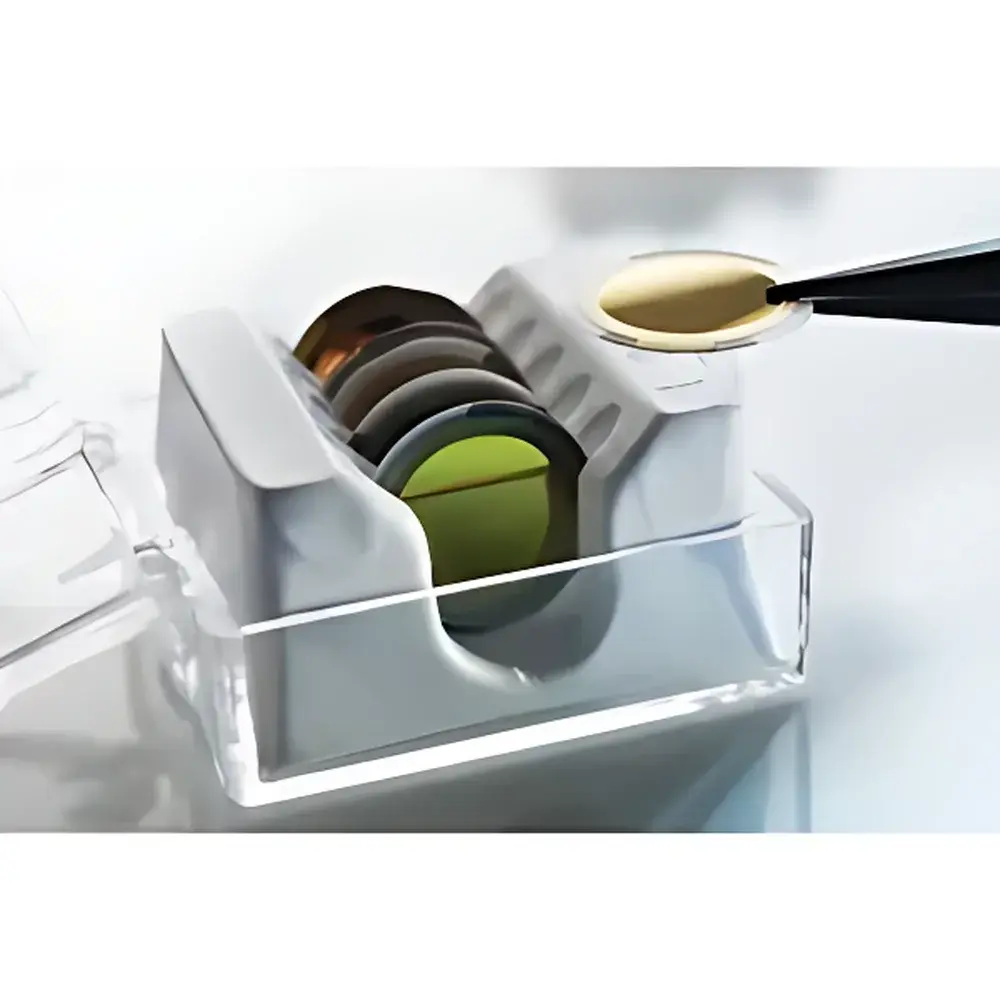
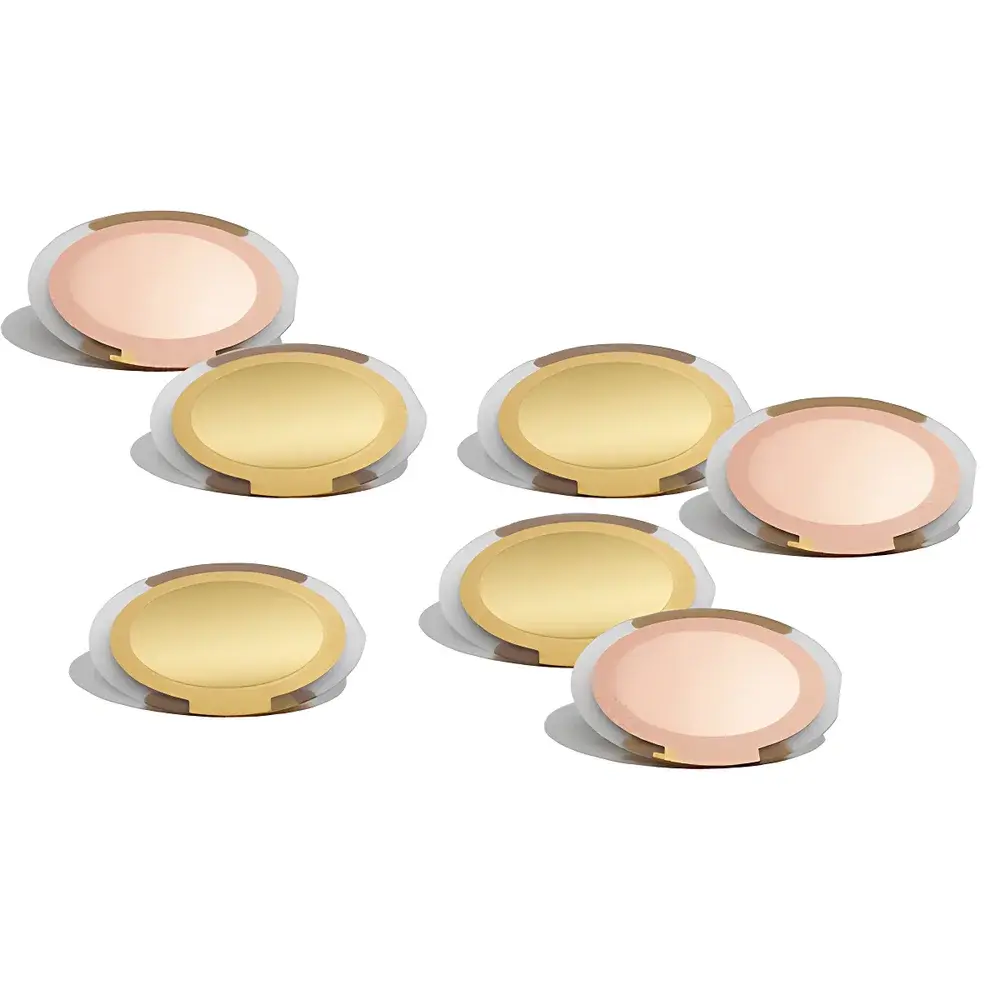
QSense QSensor Quartz Crystal Microbalance (QCM-D) Sensor Chips
| Brand | QSense |
|---|---|
| Origin | Sweden |
| Manufacturer Type | Authorized Distributor |
| Origin Category | Imported |
| Model | QSensor |
| Price Range | USD 1–9,999 |
Overview
The QSense QSensor is a precision-engineered family of quartz crystal microbalance with dissipation monitoring (QCM-D) sensor chips designed for real-time, label-free analysis of interfacial mass changes and viscoelastic properties at solid–liquid and solid–gas interfaces. Based on the piezoelectric resonance principle, each QSensor chip integrates a high-purity AT-cut quartz crystal (5 MHz fundamental frequency) coated with a precisely controlled functional surface layer. When mass adsorbs or desorbs from the sensor surface, the resonant frequency (Δf) decreases proportionally—governed by the Sauerbrey relation—while the energy dissipation (ΔD) provides quantitative insight into structural softness, hydration, and layer rigidity. This dual-parameter measurement enables differentiation between rigidly bound monolayers and hydrated, dissipative polymeric or biological films—critical for mechanistic studies in surface science, biomolecular interaction kinetics, and thin-film process development.
Key Features
- Manufactured under ISO 9001-certified cleanroom conditions at QSense’s Gothenburg headquarters, ensuring batch-to-batch reproducibility and traceable quality control.
- 18 standardized surface chemistries—including Au, SiO₂, TiO₂, Al₂O₃, NHS-activated PEI, biotinylated gold, hydroxyapatite, and fluorinated polymers—each validated for consistent thickness, roughness (<0.5 nm RMS), and surface reactivity.
- All chips feature titanium adhesion layers (where applicable) and undergo rigorous electrical impedance testing to guarantee stable oscillation performance across QCM-D instruments (e.g., QSense QCM-D Analyzer series).
- Compatible with standard 14-mm diameter sensor holders and sealed flow cells; optimized for use with aqueous buffers, organic solvents, and corrosive electrolytes within pH 2–12 and temperature range 4–60 °C.
- Each chip is individually serialized and supplied with a Certificate of Conformance documenting coating method, thickness verification (via ellipsometry or XPS), and baseline resonance stability (Δf < ±0.5 Hz over 30 min in air).
Sample Compatibility & Compliance
QSensor chips support diverse sample classes: proteins, antibodies, nucleic acids, liposomes, polysaccharides, synthetic polymers, nanoparticles, and corrosion inhibitors. Surface chemistries are selected to match binding mechanisms—e.g., thiol–gold covalent coupling, silane–SiO₂ condensation, NHS–amine amidation, or Ca²⁺-mediated carbonate adsorption. All standard coatings comply with ISO 10993-5 (cytotoxicity screening) where biologically relevant. For regulated environments, QSensor usage aligns with GLP principles: raw frequency/dissipation data files retain full audit trails (time-stamped, uneditable binary format), and chip lot numbers are integrated into instrument metadata for full traceability per FDA 21 CFR Part 11 requirements when paired with QTools software.
Software & Data Management
QSensor operation is fully supported by QTools™ v5.x software, which enables automated baseline acquisition, multi-harmonic fitting (n = 1–13), Voigt-based viscoelastic modeling, and kinetic rate constant extraction (ka/kd). Export options include CSV, HDF5, and MATLAB-compatible structures. Raw data files embed chip serial number, coating type, calibration constants, and environmental logs (flow rate, temperature, pressure)—ensuring FAIR (Findable, Accessible, Interoperable, Reusable) data practices. Integration with third-party platforms (e.g., Python via QTools API, LabVIEW drivers) supports automated workflows in high-throughput screening labs.
Applications
- Biointerface Science: Real-time quantification of protein adsorption hysteresis on hydroxyapatite (bone implant mimics) or NHS-PEI (cell capture surfaces); conformational change detection during antibody–antigen binding using dissipation shifts.
- Energy Materials: In situ monitoring of Li⁺ intercalation kinetics on Al electrode chips; sulfide film growth on Cu electrodes during battery cycling simulations.
- Environmental & Corrosion Engineering: Quantifying inhibitor adsorption density and film resilience on Fe/SS2343 chips under dynamic flow; nanoparticle fouling resistance on fluoropolymer (AF1600)-coated sensors.
- Pharmaceutical Development: Binding affinity mapping of mAb–FcRn interactions on Protein A–functionalized chips; polymer–drug matrix swelling behavior on PMMA and PVDF surfaces.
- Surface Chemistry Validation: Cross-comparison of silanization efficiency across SiO₂, Si₃N₄, and TaN chips using contact angle correlation and QCM-D hydration hysteresis.
FAQ
Can QSensor chips be reused?
No—QSensor chips are single-use consumables. Reuse risks coating degradation, contamination carryover, and compromised Sauerbrey applicability due to irreversible viscoelastic history.
What is the shelf life of unopened QSensor chips?
24 months from manufacture date when stored at 4–25 °C in original aluminum-sealed packaging under inert gas (N₂). Exposure to ambient humidity >60% RH accelerates oxidation of reactive surfaces (e.g., Al, Cr, Fe).
Are custom coatings available?
Yes—QSense offers OEM coating services including patterned surfaces (photolithography-assisted), mixed-monolayer formulations, and isotopically labeled (¹⁵N, ¹³C) functional layers for advanced mechanistic studies. Lead time: 8–12 weeks.
How do I select the optimal chip for my application?
Start with surface chemistry compatibility: Au for thiolated ligands; SiO₂ for silane coupling; NHS-PEI for amine-containing analytes; hydroxyapatite for calcium-dependent biomolecules. Consult QSense’s Application Matrix (Document QCM-APP-2024) for empirically validated pairings.
Do QSensor chips require special handling?
Yes—handle only with powder-free nitrile gloves; avoid touching the active sensing area. Use cleanroom-grade tweezers and mount immediately after opening to prevent airborne particulate adsorption or hydrocarbon contamination.





