
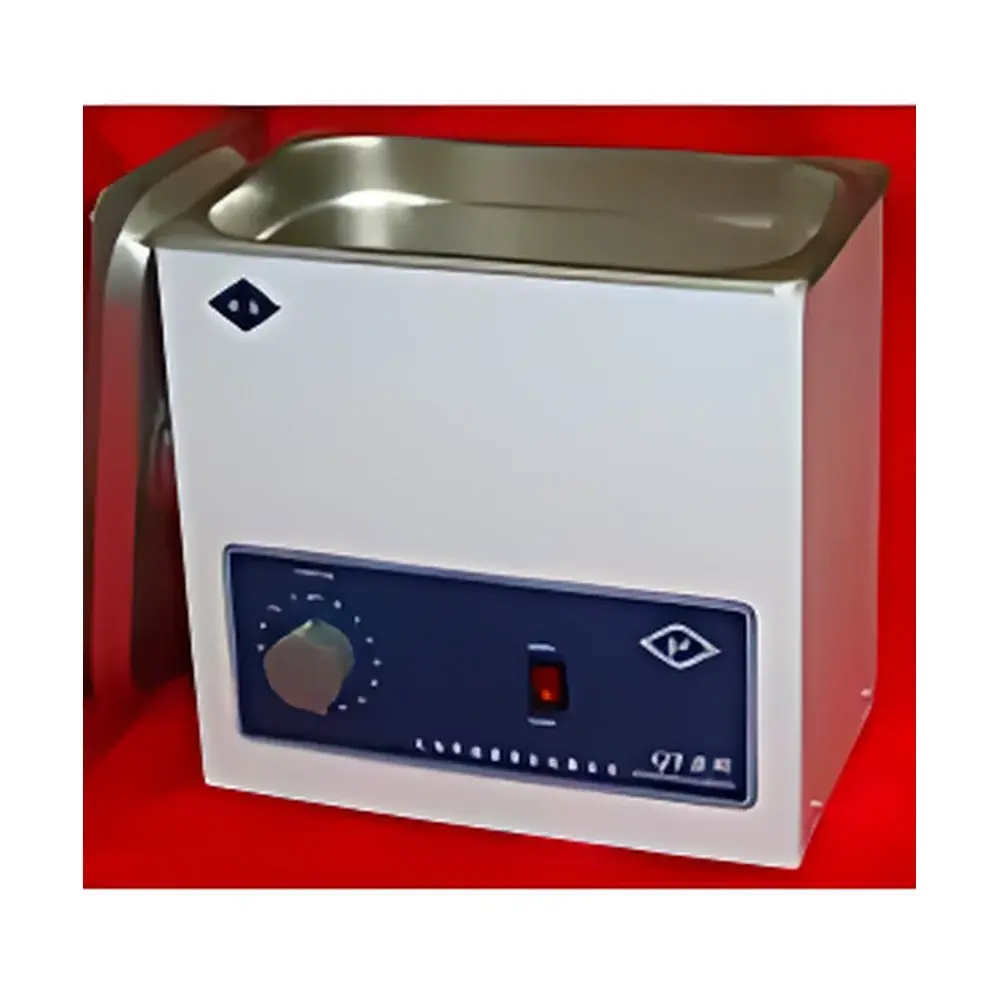
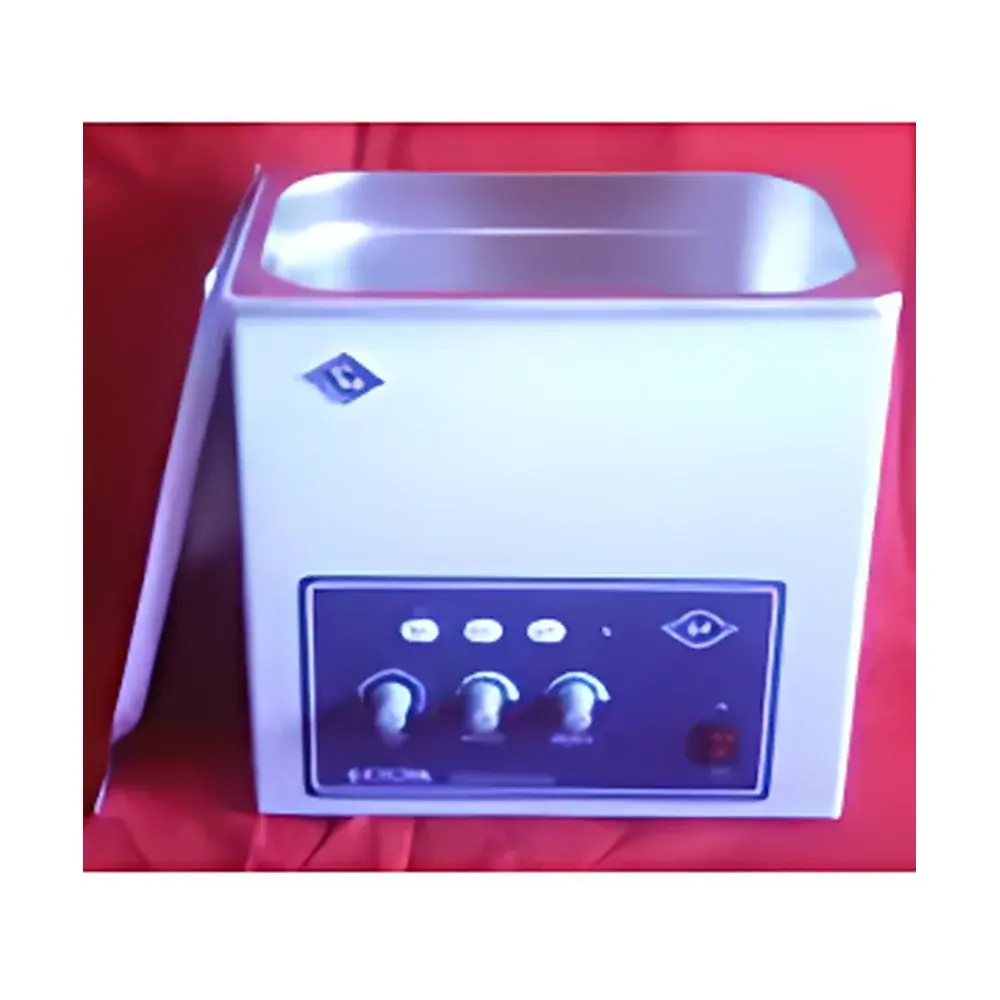
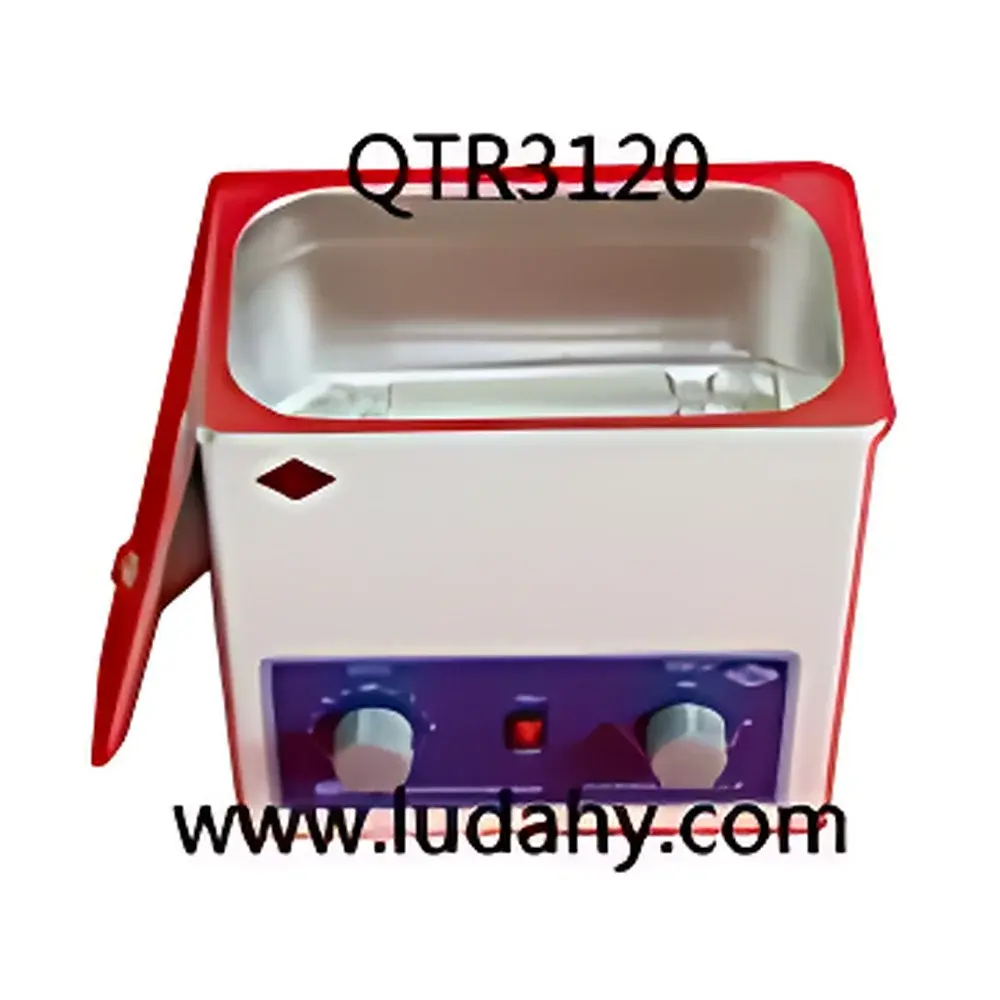
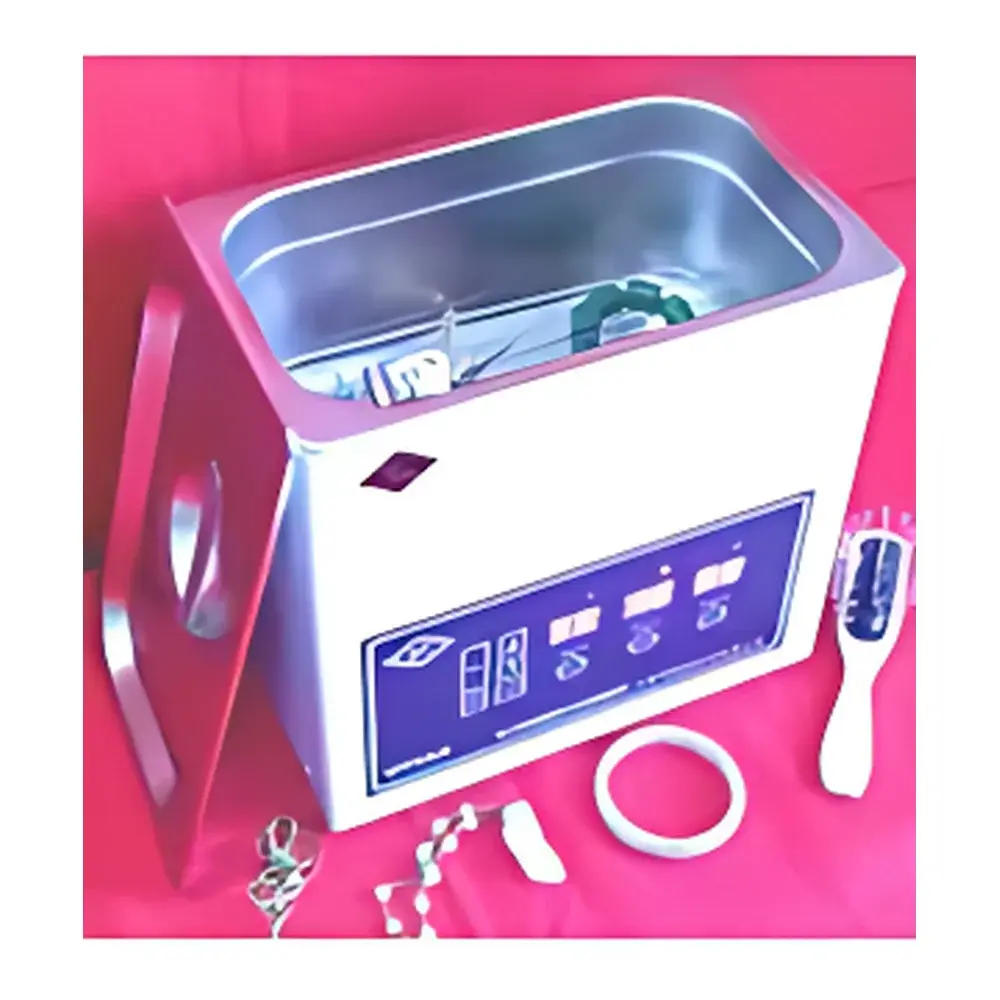
QTR-3120 Ultrasonic Cleaner, 3L Capacity, 40 kHz, Heated & Digital Control Model
| Key | Origin: Tianjin, China |
|---|---|
| Manufacturer Type | Authorized Distributor |
| Country of Origin | China |
| Model | QTR-3120 |
| Capacity | 3 L |
| Ultrasonic Frequency | 40 kHz |
| Tank Material | 304 Stainless Steel (Deep-drawn) |
| External Housing | Anodized Aluminum with Anti-corrosion Coating |
| Internal Dimensions | 240 × 140 × 100 mm (L×W×H) |
| Overall Dimensions | 270 × 160 × 240 mm |
| Ultrasonic Power Output | 120 W (Adjustable: 20–100%) |
| Heating Power | 300 W (Adjustable: 0–80 °C) |
| Timer Range | 1–20 min |
| Display | LED Digital Interface |
| Weight (Net/Gross) | 3.0 / 3.5 kg |
| Standard Accessories | Stainless Steel Lid & Rack |
| Compliance | CE-marked, RoHS-compliant, Designed for ISO/IEC 17025 Laboratory Environment Support |
Overview
The QTR-3120 is a benchtop ultrasonic cleaner engineered for precision cleaning in regulated laboratory, clinical, and industrial quality control environments. It operates on the principle of cavitation—where high-frequency acoustic energy (40 kHz) generates microscopic vacuum bubbles in the cleaning liquid that collapse violently upon contact with submerged surfaces, dislodging particulate contaminants, organic residues, and biofilms without mechanical abrasion. Unlike basic ceramic transducer units prone to thermal degradation under sustained operation, the QTR-3120 integrates industrial-grade piezoelectric transducers with optimized thermal management, enabling continuous duty cycles at full power without performance drift or component failure. Its 3 L stainless steel tank (304 grade, deep-drawn construction) ensures chemical resistance, dimensional stability, and long-term reproducibility—critical for repeatable cleaning validation protocols.
Key Features
- High-reliability piezoelectric transducers—sourced from U.S.-based Fairchild Semiconductor—deliver stable acoustic output over extended operational periods, eliminating thermal runaway risks associated with low-cost ceramic elements.
- Dual-mode digital control: Independent adjustment of ultrasonic intensity (20–100% of 120 W nominal output) and heating temperature (0–80 °C, ±1.5 °C accuracy), enabling method optimization for diverse substrates and soil types.
- LED digital interface with real-time display of time remaining, temperature setpoint, and power level—supports traceable parameter logging when integrated with external data acquisition systems.
- Corrosion-resistant anodized aluminum housing and seamless 304 stainless steel tank meet stringent hygiene requirements for medical device reprocessing and analytical sample preparation workflows.
- Included stainless steel lid functions as both acoustic dampener (reducing ambient noise to ≤55 dB(A)) and vapor containment barrier—essential for volatile solvent use and operator safety compliance per OSHA 1910.1200.
Sample Compatibility & Compliance
The QTR-3120 accommodates a broad range of delicate and complex geometries—including endoscopic instruments, microfluidic chips, optical lenses, dental prostheses, and MEMS components—without compromising structural integrity. Its uniform energy distribution across the 240 × 140 × 100 mm tank minimizes shadowing effects and ensures consistent cleaning efficacy per ASTM F2476-22 (Standard Guide for Ultrasonic Cleaning Validation). The unit complies with IEC 61000-6-3 (EMC emissions) and IEC 61000-6-2 (immunity), and its thermal and acoustic design supports alignment with ISO 13485:2016 clause 7.5.10 (Control of monitoring and measuring equipment) when used in medical device manufacturing cleanrooms. Optional calibration certificates (NIST-traceable temperature and power verification) are available for GLP/GMP audit readiness.
Software & Data Management
While the QTR-3120 operates as a standalone instrument, its digital interface provides RS-232 serial output (optional adapter) for integration into centralized lab management systems. Time-stamped operational logs—including start/stop timestamps, temperature profiles, and power settings—can be exported for 21 CFR Part 11–compliant record retention when paired with validated third-party software. All firmware updates are delivered via secure USB protocol, maintaining version control and change history in accordance with FDA guidance on computerized system validation (CSV).
Applications
- Pre-analytical sample preparation: Removal of residual proteins, lipids, or salts from HPLC vials, pipette tips, and electrophoresis combs prior to reuse.
- Medical device reprocessing: Cleaning of reusable surgical instruments, orthodontic appliances, and hearing aid components in accordance with AAMI ST91:2023.
- Electronics manufacturing: Debris removal from PCB assemblies, solder paste stencils, and semiconductor wafers prior to AOI inspection.
- Research instrumentation maintenance: Restoration of optical clarity in cuvettes, spectrometer cells, and microscope slides without surface scratching.
- Dental and veterinary labs: Disinfection-supportive cleaning of impression trays, scaler tips, and endodontic files before sterilization cycles.
FAQ
What is the maximum recommended operating temperature for aqueous solutions?
For optimal cavitation efficiency and transducer longevity, aqueous cleaning should not exceed 70 °C. Above this threshold, degassing accelerates and bubble collapse energy diminishes—reducing cleaning efficacy and increasing thermal stress on piezoelectric elements.
Can the QTR-3120 be used with flammable solvents?
No. This model lacks explosion-proof certification and is rated for aqueous or water-miscible detergents only. Solvent-based cleaning requires Class I, Division 1 certified ultrasonic systems with inert gas purging and spark-proof controls.
Is the stainless steel tank welded or seam-welded?
The tank is formed via deep-drawing of a single 304 stainless steel sheet, eliminating seams and weld zones—ensuring leak-free integrity and resistance to crevice corrosion during repeated exposure to alkaline or acidic cleaning agents.
How often should the transducer performance be verified?
We recommend quarterly verification using a calibrated hydrophone or calorimetric power measurement per ASTM E1000-21. Documentation of each verification event satisfies internal QA requirements and supports ISO/IEC 17025 Clause 6.4.10 (Equipment Verification).
Does the unit include drainage capability?
No. Drainage is not integrated; manual decanting or siphoning is required. For high-throughput labs requiring automated fluid handling, consider the QTSXR-3120 variant with optional drain valve kit (sold separately).



