RainWise EVAP Evaporation Sensor
| Brand | RainWise |
|---|---|
| Origin | USA |
| Model | EVAP |
| Housing Material | Stainless Steel & PVC |
| Measurement Range | 101–254 mm |
| Resolution | 0.25 mm |
| Accuracy | ±0.25 mm |
Overview
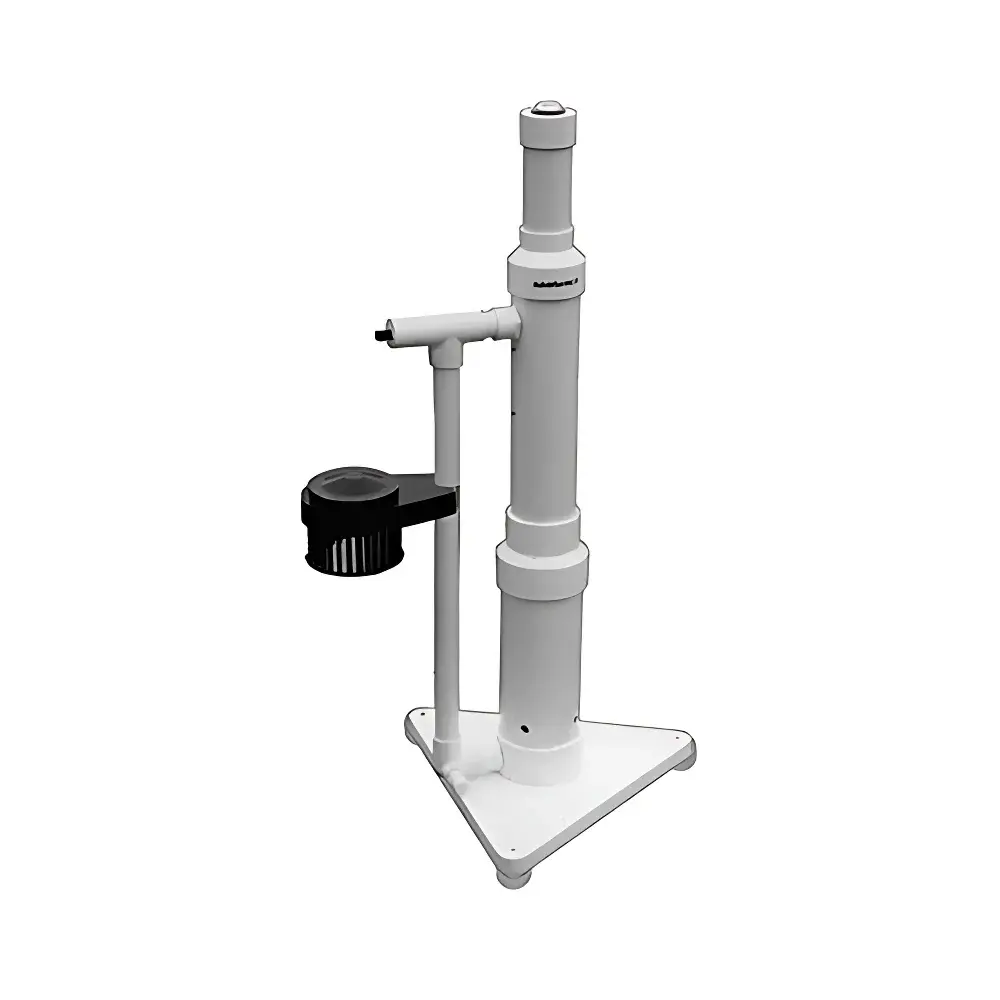
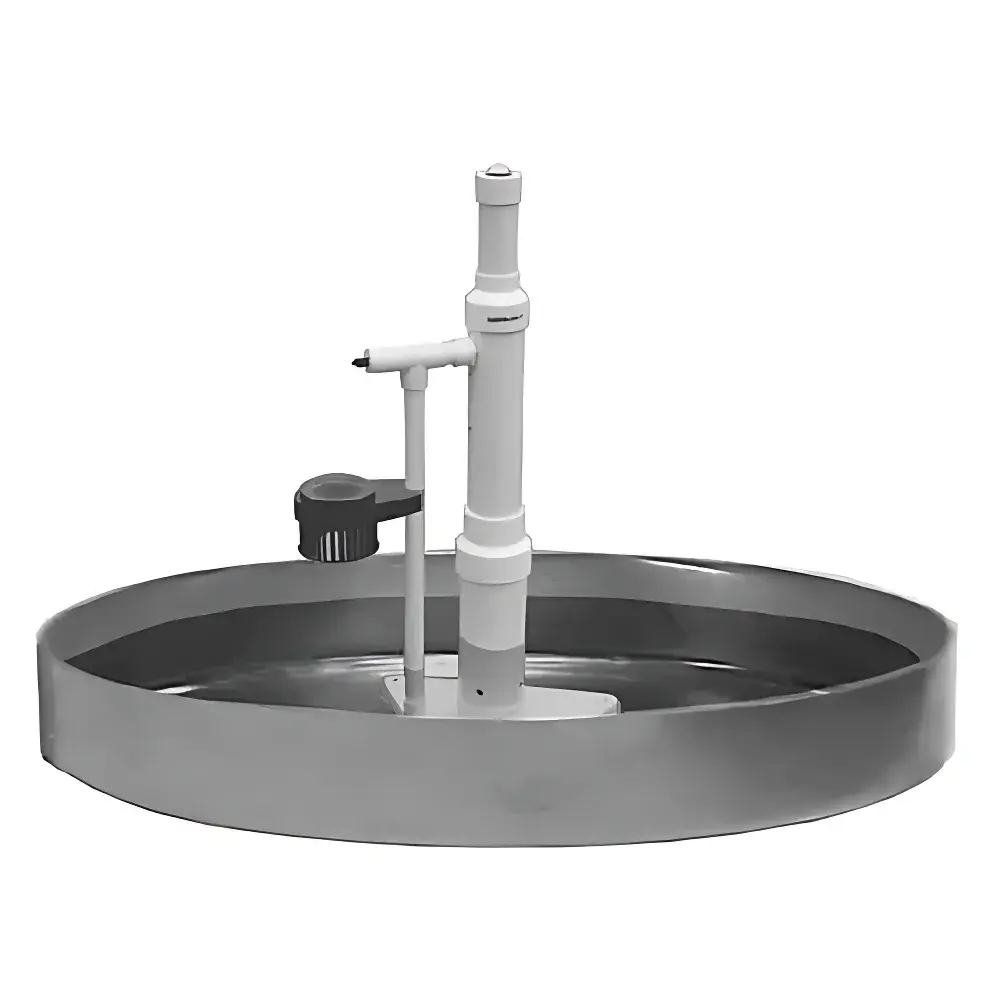
The RainWise EVAP Evaporation Sensor is a precision-engineered, field-deployable instrument designed to quantify open-water evaporation rates under ambient atmospheric conditions. Unlike conventional rain gauges or pan-based estimators, the EVAP sensor operates on the principle of high-resolution water level displacement monitoring within a standardized evaporation pan (typically a Class A or modified U.S. Weather Bureau pan). It integrates a non-contact ultrasonic transducer mounted above a calibrated stainless-steel and PVC evaporation reservoir, enabling continuous, real-time measurement of water surface recession with sub-millimeter fidelity. This physical measurement approach—grounded in direct volumetric loss tracking—provides traceable, physics-based evaporation data essential for hydrological modeling, irrigation scheduling, climate station networks, and water resource management applications where empirical estimation methods (e.g., Penman-Monteith) require ground-truth validation.
Key Features
- Stainless steel and PVC construction ensures long-term corrosion resistance and UV stability in outdoor environments across diverse climatic zones—from arid deserts to humid subtropical regions.
- Ultrasonic sensing technology eliminates mechanical wear, float friction, or seal degradation associated with traditional float-and-cable or pressure-based level sensors.
- 0.25 mm resolution and ±0.25 mm absolute accuracy meet the performance thresholds recommended by the World Meteorological Organization (WMO) for Class A pan evaporation instrumentation.
- Measurement range of 101–254 mm accommodates standard pan fill depths while allowing sufficient dynamic headroom for multi-day unattended operation without refilling.
- Low-power design supports integration with solar-powered dataloggers and cellular or LoRaWAN telemetry systems commonly deployed in remote watershed monitoring sites.
- IP67-rated enclosure provides protection against dust ingress and temporary immersion, ensuring operational integrity during heavy rainfall or ponding events.
Sample Compatibility & Compliance
The EVAP sensor is optimized for use with standardized evaporation pans conforming to ASTM D1193 (Type IV purified water) and WMO No. 8 guidelines for pan geometry, siting, and exposure. It requires no consumables, calibration fluids, or user-replaceable wetted parts—making it compatible with potable water, deionized water, or synthetic calibration solutions used in laboratory verification protocols. The sensor complies with ISO/IEC 17025 traceability requirements when paired with NIST-traceable reference standards during periodic verification. Its output signal (typically 4–20 mA or SDI-12) is compatible with industry-standard environmental data loggers including Campbell Scientific CR1000X, Onset HOBO RX3000, and Delta-T Devices DL2e—enabling seamless integration into existing hydrometeorological infrastructure.
Software & Data Management
Raw level measurements are converted to evaporation depth (mm/day) using time-stamped differential calculations embedded in configurable datalogger firmware. RainWise provides open-protocol documentation for SDI-12 command structure, facilitating custom scripting in Python, R, or MATLAB for automated quality control (e.g., outlier rejection via Hampel filtering), gap-filling using neighboring station correlations, and unit conversion to latent heat flux (W/m²) via psychrometric constants. When deployed in regulated environments—such as USDA ARS research stations or state water board compliance networks—the system supports audit-ready metadata logging, including sensor ID, firmware version, battery voltage, and temperature-compensated transducer diagnostics. While the EVAP sensor itself does not store data onboard, its deterministic analog/digital output architecture ensures full compatibility with FDA 21 CFR Part 11–compliant data acquisition platforms when configured with electronic signatures and change-control logs.
Applications
- Operational evapotranspiration (ETo) validation for satellite-derived and numerical weather prediction models.
- Calibration and bias correction of eddy covariance towers in agricultural and forested ecosystems.
- Long-term trend analysis of regional evaporation dynamics in response to climate variability (e.g., drought intensification or increased vapor pressure deficit).
- Supporting irrigation advisory services by quantifying crop-specific evaporation demand in conjunction with soil moisture and canopy temperature data.
- Hydrologic modeling inputs for SWAT, HEC-HMS, and MIKE SHE simulations requiring spatially distributed evaporation boundary conditions.
- University and government agency field courses in micrometeorology, hydroclimatology, and environmental instrumentation.
FAQ
What pan configuration is required for optimal EVAP sensor performance?
The sensor is calibrated for use with a standard U.S. Weather Bureau Class A evaporation pan (120.7 cm diameter × 25.4 cm depth), installed at 76.2 cm above ground level on a wooden platform with grass-covered surroundings per WMO specifications.
Does the EVAP sensor compensate for temperature-induced speed-of-sound variations in air?
Yes—integrated thermistor feedback enables real-time acoustic velocity correction, maintaining measurement stability across ambient temperatures from −20 °C to +60 °C.
Can the sensor be submerged or cleaned with solvents?
The transducer housing is IP67 rated but not submersible beyond 1 m for extended periods; cleaning should be performed with mild soap and water—avoid chlorinated or acetone-based solvents that may degrade PVC components.
Is factory recalibration required annually?
No scheduled recalibration is mandated; however, biennial verification against a certified gauge block or laser interferometer is recommended for GLP-aligned deployments.
How does the EVAP sensor differ from net radiometers or lysimeters?
It measures only evaporative water loss from an open surface—not energy balance components (Rn, G, H) like net radiometers, nor total evapotranspiration including transpiration like weighing lysimeters—making it a focused, cost-effective tool for pan evaporation benchmarking.