
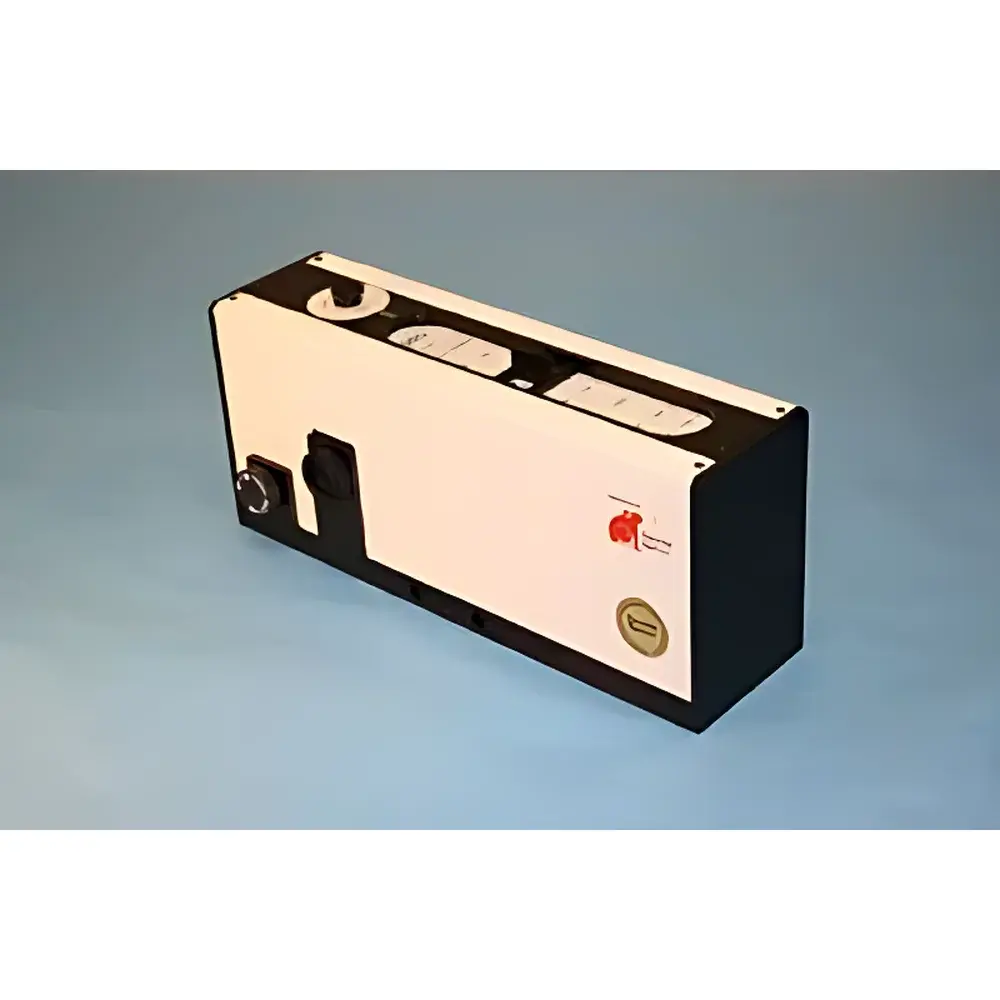
Rayscience BOA Pulse Compressor
| Brand | Rayscience |
|---|---|
| Origin | USA |
| Manufacturer Type | Authorized Distributor |
| Origin Category | Imported |
| Model | BOA |
| Core Component | Semiconductor Laser-Based Optical Pulse Compression System |
| Prism Material | PBH-71 |
| Wavelength Range (BOA-8) | 750–1050 nm |
| Wavelength Range (BOA-10) | 1000–1100 nm |
| GDD Range @ 800 nm | −14,000 to +150 fs² |
| GDD Range @ 1000 nm | −7,000 to +800 fs² |
| Transmission Efficiency | >70% @ 800 nm, >75% @ 1000 nm |
| Maximum Bandwidth (at Minimum GDD) | 300 nm (BOA-8), 100 nm (BOA-10) |
| Maximum Bandwidth (near Maximum GDD) | 40 nm (BOA-8), 60 nm (BOA-10) |
| Peak Power Handling | Up to 500 MW |
Overview
The Rayscience BOA Pulse Compressor is a single-prism-based dispersive pulse compression system engineered for high-fidelity temporal reshaping of ultrashort laser pulses in ultrafast optical laboratories. Based on the principle of angular dispersion and second-order group delay dispersion (GDD) compensation, the BOA leverages optimized prism geometry and high-transmission PBH-71 optical glass to introduce tunable negative or positive GDD across its operational bandwidth. Unlike grating-based compressors requiring precise alignment and large footprints, the BOA achieves robust, alignment-insensitive operation in a compact, monolithic configuration—making it ideal for integration into Ti:sapphire oscillator-amplifier chains, OPCPA front-ends, and fiber-laser-pumped parametric systems where space, stability, and ease of use are critical.
Key Features
- Single-prism architecture with pre-aligned, factory-optimized geometry—no user adjustment required for baseline operation
- Dual-model platform: BOA-8 (750–1050 nm) and BOA-10 (1000–1100 nm), each tailored for distinct ultrafast gain media and nonlinear conversion regimes
- PBH-71 prism material offering high transmission (>70% at 800 nm, >75% at 1000 nm) and low nonlinear index, minimizing self-phase modulation and spectral distortion
- Wide GDD tuning range: −14,000 to +150 fs² @ 800 nm (BOA-8); −7,000 to +800 fs² @ 1000 nm (BOA-10), enabling both chirp reversal and fine dispersion balancing
- High peak power handling up to 500 MW—compatible with amplified femtosecond systems operating at multi-mJ pulse energies and sub-50-fs durations
- Compact, vibration-resistant mechanical housing designed for OEM integration and benchtop deployment without active stabilization
Sample Compatibility & Compliance
The BOA Pulse Compressor is compatible with collimated, spatially clean Gaussian or near-Gaussian beam profiles with diameters between 4 mm and 12 mm (1/e² intensity). It accepts input pulses with durations from 500 fs and supports both transform-limited and chirped inputs. The device meets RoHS Directive 2011/65/EU for hazardous substance restrictions and conforms to IEC 61000-6-3:2019 (EMC emission standards) and IEC 61000-6-2:2016 (immunity requirements). While not a medical or diagnostic device, its optical performance is routinely validated per ISO 10110-2 (surface quality) and ISO 10110-7 (laser damage threshold testing protocols) during production. No FDA 510(k) or CE medical certification applies, as the unit is classified as a Class 1 laser accessory under IEC 60825-1:2014.
Software & Data Management
The BOA operates as a passive optical element and requires no embedded firmware, drivers, or software control. Its GDD is mechanically tuned via precision micrometer-driven translation of the entrance/output interface relative to the prism apex—enabling repeatable, traceable dispersion settings without electronic feedback. For system-level integration, users commonly pair the BOA with commercial pulse characterization tools (e.g., FROG, SPIDER, or d-scan) and LabVIEW- or Python-controlled motorized stages to log GDD vs. position calibration curves. All calibration data—including measured transmission spectra, GDD maps (via white-light interferometry), and damage-threshold test reports—are provided in machine-readable CSV and PDF formats compliant with GLP documentation standards. Audit trails for calibration and handling are maintained per internal QA procedures aligned with ISO/IEC 17025:2017 Annex A.2.
Applications
- Compression of oscillator- and amplifier-generated femtosecond pulses in Ti:sapphire, Yb-doped fiber, and Cr:forsterite laser systems
- Dispersion management in broadband optical parametric amplifiers (OPAs) and optical parametric chirped-pulse amplifiers (OPCPAs)
- Pre-compensation of material-induced chirp in multiphoton microscopy, attosecond science, and strong-field physics experiments
- Temporal pulse shaping in coherent control setups requiring sub-10-fs pulse fidelity
- OEM integration into turnkey ultrafast laser platforms where minimal alignment drift and long-term thermal stability are mandatory
FAQ
Is the BOA compatible with vacuum or UHV environments?
No—the standard BOA housing is not vacuum-rated; however, custom vacuum-compatible versions with CF flange mounts and outgassing-certified adhesives are available upon request.
Can the BOA be used with pulses shorter than 20 fs?
Yes, provided the input spectrum supports sufficient bandwidth and the beam profile remains diffraction-limited; spectral phase retrieval (e.g., via d-scan) is recommended for verification.
Does Rayscience provide GDD calibration certificates?
Yes—each unit ships with a NIST-traceable GDD map measured at three central wavelengths (e.g., 780 nm, 800 nm, 820 nm for BOA-8) using white-light interferometry.
What is the maximum acceptable beam divergence?
Input beam divergence should not exceed ±1.5 mrad (full angle) to maintain GDD linearity and avoid spatial chirp artifacts.
How does thermal drift affect GDD stability over time?
PBH-71’s low thermo-optic coefficient (dn/dT ≈ 1.2 × 10⁻⁶ K⁻¹) and symmetric mechanical design limit GDD drift to <±0.5% over 8 hours at constant ambient temperature (23 ± 1 °C).




