
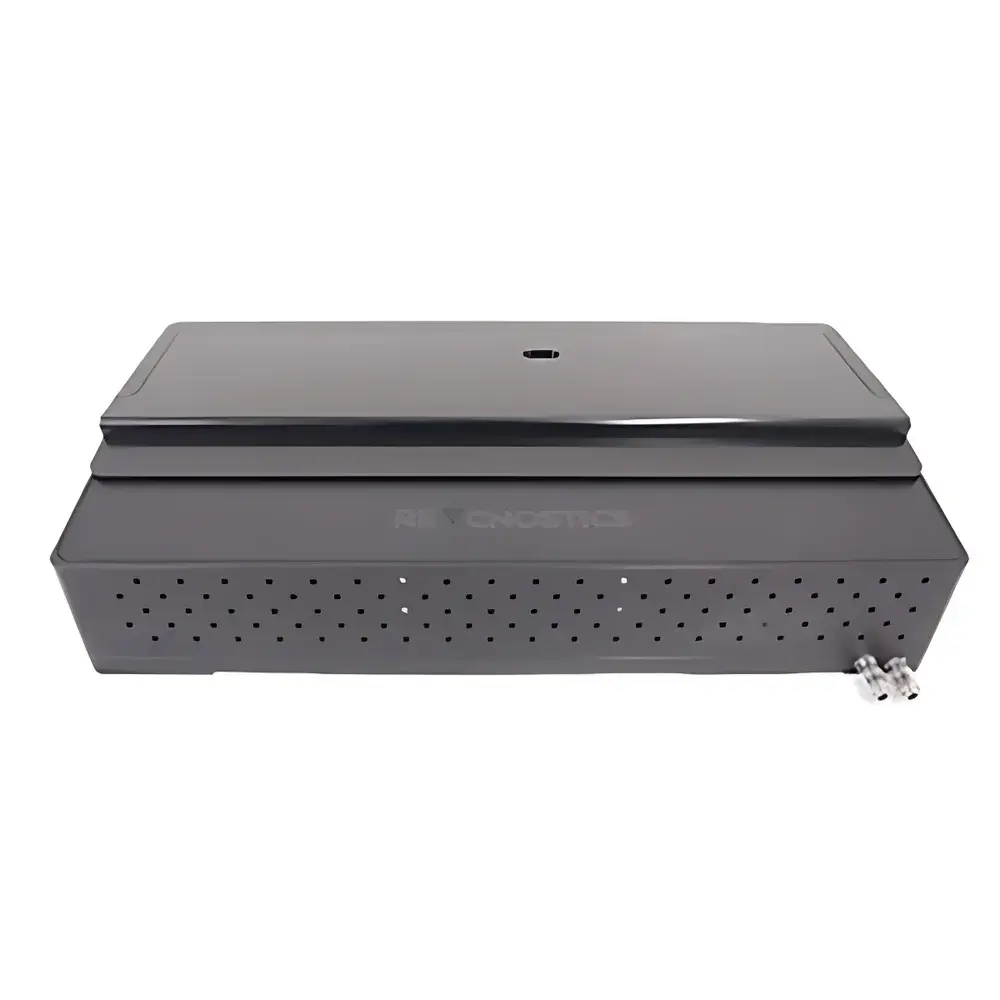
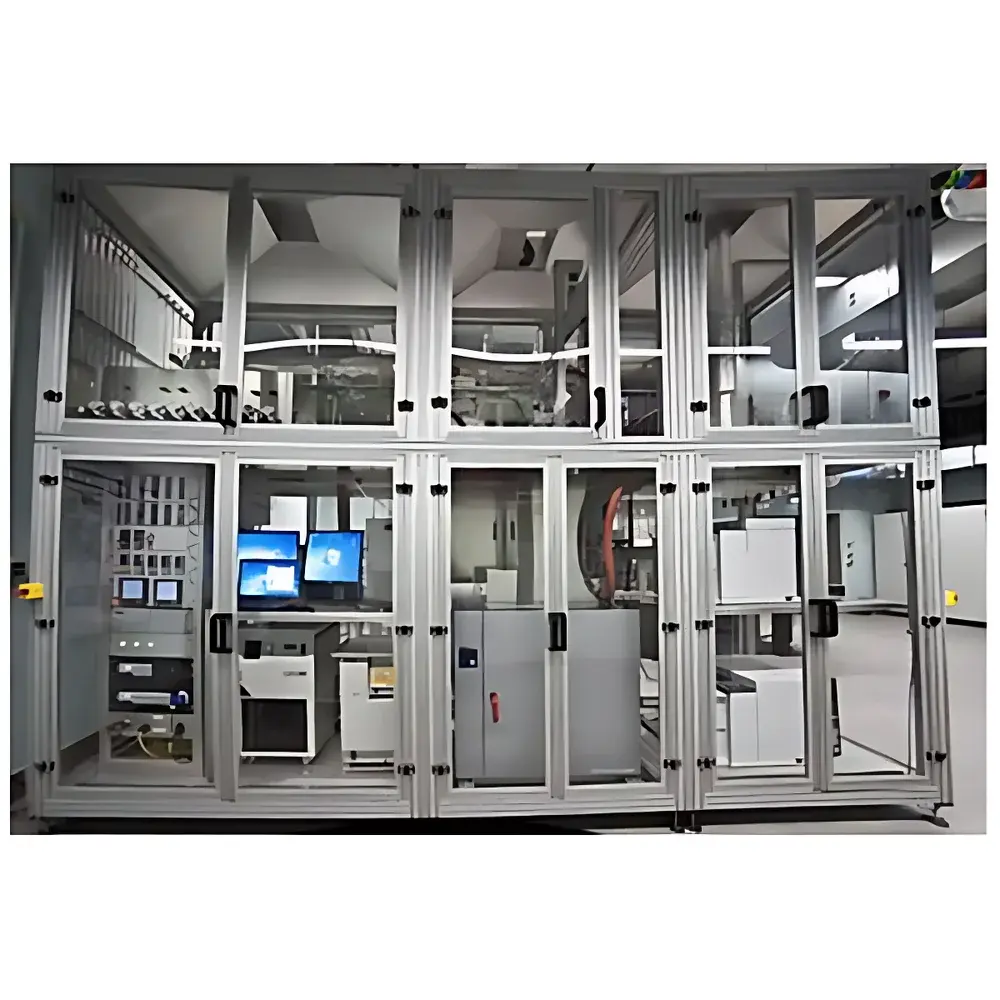
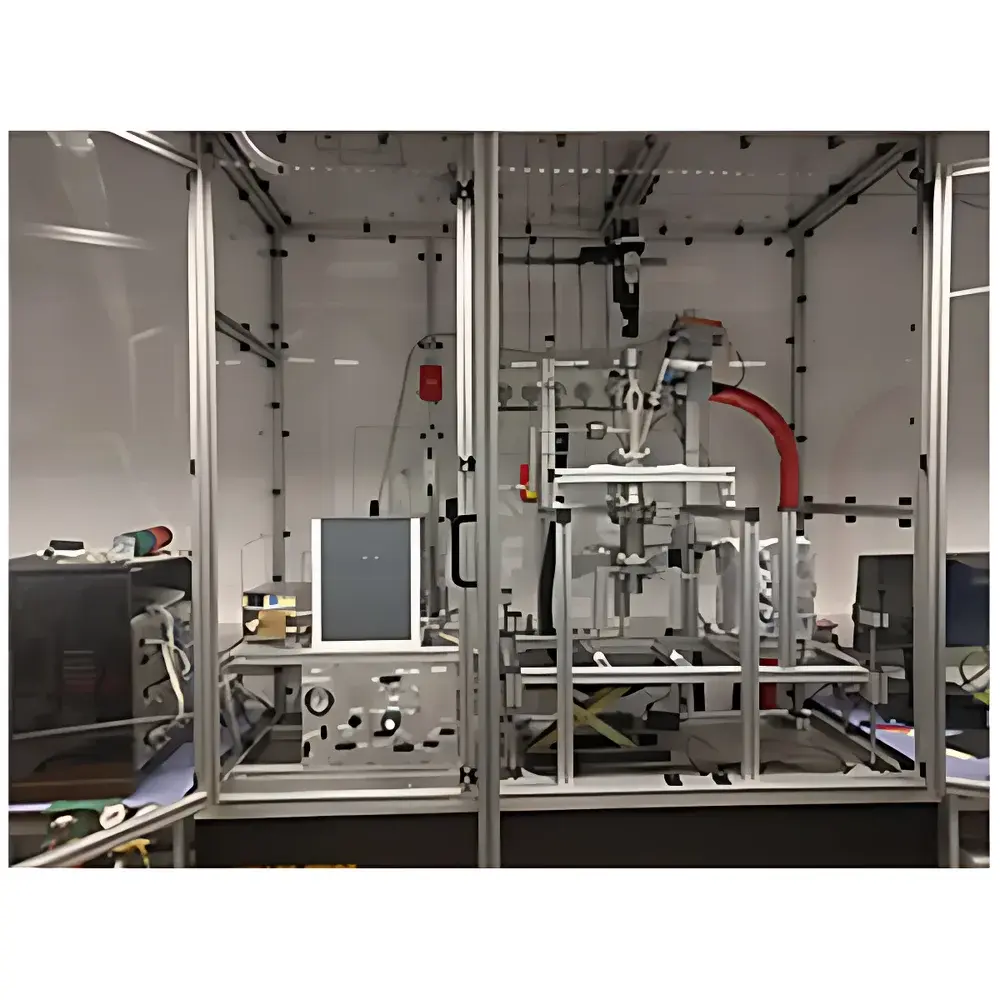
REACNOSTICS CPR Compact Profile Reactor – In-situ Spatially Resolved Catalytic Reaction System
| Brand | REACNOSTICS |
|---|---|
| Origin | Germany |
| Model | CPR |
| Reactor Type | Fixed-Bed |
| Construction Material | Borosilicate Glass |
| Operating Pressure | Up to 50 bar (High-Pressure Variant) |
| Maximum Temperature | 550 °C |
| Catalyst Bed Dimensions | 60 mm isothermal zone, 4 mm inner diameter |
| Optical Access | Integrated quartz windows for Raman, LIF, and UV-Vis spectroscopy |
| Compatibility | Coupled with MS, GC, FTIR, and operando spectroscopic systems |
| Heating Strategy | Zone-controlled external heating to prevent condensation in sampling lines |
| Automation | Fully programmable control unit with real-time data logging and remote operation capability |
Overview
The REACNOSTICS CPR Compact Profile Reactor is an engineered platform for in-situ, spatially resolved catalytic reaction analysis under industrially relevant high-pressure and elevated-temperature conditions. Based on the principle of axial and radial profiling within a fixed-bed geometry, the CPR enables quantitative measurement of concentration gradients, temperature distributions, and species-specific spectral signatures along the catalyst bed—transforming opaque reactor behavior into quantifiable, position-dependent kinetic and transport data. Unlike conventional “black-box” reactors, the CPR integrates optical access ports, precision-machined catalyst zones, and thermally isolated sampling pathways to support operando spectroscopy (e.g., Raman, laser-induced fluorescence [LIF], UV-Vis), enabling direct correlation between local catalyst structure, adsorbed intermediates, and reaction rates. Its design adheres to fundamental requirements for mechanistic catalysis research: isothermal catalyst zones (±1 °C over 60 mm), minimized axial dispersion, and elimination of cold spots that induce condensation or surface deposition. The system operates across pressures up to 50 bar and temperatures up to 550 °C, making it suitable for studying partial oxidation, dry reforming, selective oxidation, and combustion processes under near-industrial conditions.
Key Features
- Compact fixed-bed architecture constructed from high-purity borosilicate glass with integrated quartz optical windows for non-invasive spectroscopic interrogation
- 60 mm isothermal catalyst zone with precise thermal uniformity (<±1 °C) and 4 mm internal diameter for controlled mass transfer and laminar flow regimes
- Externally heated reactor body with independent zone control to maintain sampling lines above dew points—preventing condensation of reactive intermediates (e.g., formaldehyde, acetaldehyde)
- Dual-purpose sampling capillary: serves as both spatially localized gas extraction conduit and fiber-optic waveguide for in situ Raman spectroscopy or pyrometric temperature monitoring
- Modular interface for seamless coupling with external analytical systems including quadrupole mass spectrometry (QMS), gas chromatography (GC), Fourier-transform infrared (FTIR), and time-resolved LIF setups
- Integrated programmable control unit supporting automated pressure ramping, multi-step temperature profiles, and synchronized data acquisition from up to eight analog/digital inputs
- Compliance-ready architecture: supports audit trails, user access levels, and electronic signature protocols aligned with GLP and FDA 21 CFR Part 11 requirements when configured with optional validation packages
Sample Compatibility & Compliance
The CPR accommodates heterogeneous catalysts in pellet, extrudate, foam, or monolithic forms—including Pt/Al2O3, Rh-foam, MoOx/Al2O3, VPO, TS-1, and Ni-based formulations—without modification to the core reactor geometry. Its glass construction ensures chemical inertness toward acidic, oxidizing, and halogenated feed streams (e.g., CH4/O2, CO/H2/H2O, C2H6/O2, NH3/air). All wetted components meet ASTM E438 Type I, Class A specifications for laboratory glassware. For regulatory workflows, the system can be validated per ISO/IEC 17025:2017 for method verification and traceable calibration of thermocouples (Type K, ±0.5 °C), pressure transducers (0–50 bar, ±0.1% FS), and flow controllers (mass flow range: 1–1000 sccm, repeatability ±0.2%). Documentation packages include IQ/OQ protocols, uncertainty budgets, and raw data export in HDF5 or CSV formats compatible with LIMS integration.
Software & Data Management
The REACNOSTICS ControlSuite software provides real-time visualization of spatially indexed datasets—including axial temperature profiles, species concentration maps (via GC/MS peak integration), and time-resolved Raman band intensities—within a unified coordinate framework. It supports batch processing of multi-dimensional profile data using built-in algorithms for axial dispersion correction, local Péclet number estimation, and differential reactor modeling (e.g., solving pseudo-homogeneous energy and species balances). Export modules generate publication-ready figures compliant with ACS, RSC, and Elsevier formatting guidelines. When deployed with optional Analytical Integration Module (AIM), the software enforces data integrity through timestamped metadata tagging, automatic checksum generation, and role-based permissions (administrator, operator, reviewer). All raw spectra, chromatograms, and sensor logs are stored with SHA-256 hash verification and support long-term archival via network-attached storage (NAS) or cloud-synced repositories meeting ISO 27001 security standards.
Applications
The CPR has been rigorously applied across peer-reviewed studies in heterogeneous catalysis, including: (1) Operando Raman mapping of carbon speciation on Pt-foam during methane partial oxidation, identifying D/G band evolution linked to deactivation; (2) LIF-based spatial profiling of formaldehyde intermediates in high-pressure CH4 oxidation; (3) high-resolution axial temperature measurements to determine effective thermal conductivity in structured packings; (4) particle-resolved CFD validation using experimentally derived velocity and temperature fields in open-cell foams; (5) kinetic parameter estimation for ethane ODH on MoOx/Al2O3 via coupled concentration–temperature–spectral profiling; and (6) mechanistic discrimination in ammonia oxidation (Ostwald process) by correlating local NH3 depletion with NO formation profiles. Its adaptability extends to single-pellet diffusion–reaction studies, transient response analysis, and catalyst aging protocols under cyclic redox conditions.
FAQ
What distinguishes the CPR from conventional fixed-bed reactors?
It provides deterministic spatial resolution of physical and chemical variables—temperature, concentration, and spectral signatures—along the catalyst axis, enabled by optical access, thermally isolated sampling, and metrologically traceable sensors.
Can the CPR be used for liquid-phase reactions?
Yes, with optional vaporization modules and pre-heated liquid injection systems; validated applications include HPPO (propylene epoxidation) precursor delivery and aqueous-phase reforming studies.
Is the system compatible with synchrotron-based techniques?
Absolutely—the quartz windows meet beamline compatibility requirements for X-ray absorption spectroscopy (XAS) and micro-tomography; custom flange adapters available upon request.
How is data synchronization handled across multiple instruments (e.g., GC + Raman + thermocouples)?
Via hardware-triggered TTL pulses and NTP-synchronized timestamps; all signals are acquired on a common 100 kHz sampling bus with sub-millisecond alignment accuracy.
Does REACNOSTICS provide application support for method development?
Yes—dedicated catalysis engineers offer remote and on-site assistance for experimental design, profile interpretation, and kinetic modeling (e.g., microkinetic fitting, CFD coupling, sensitivity analysis).



