
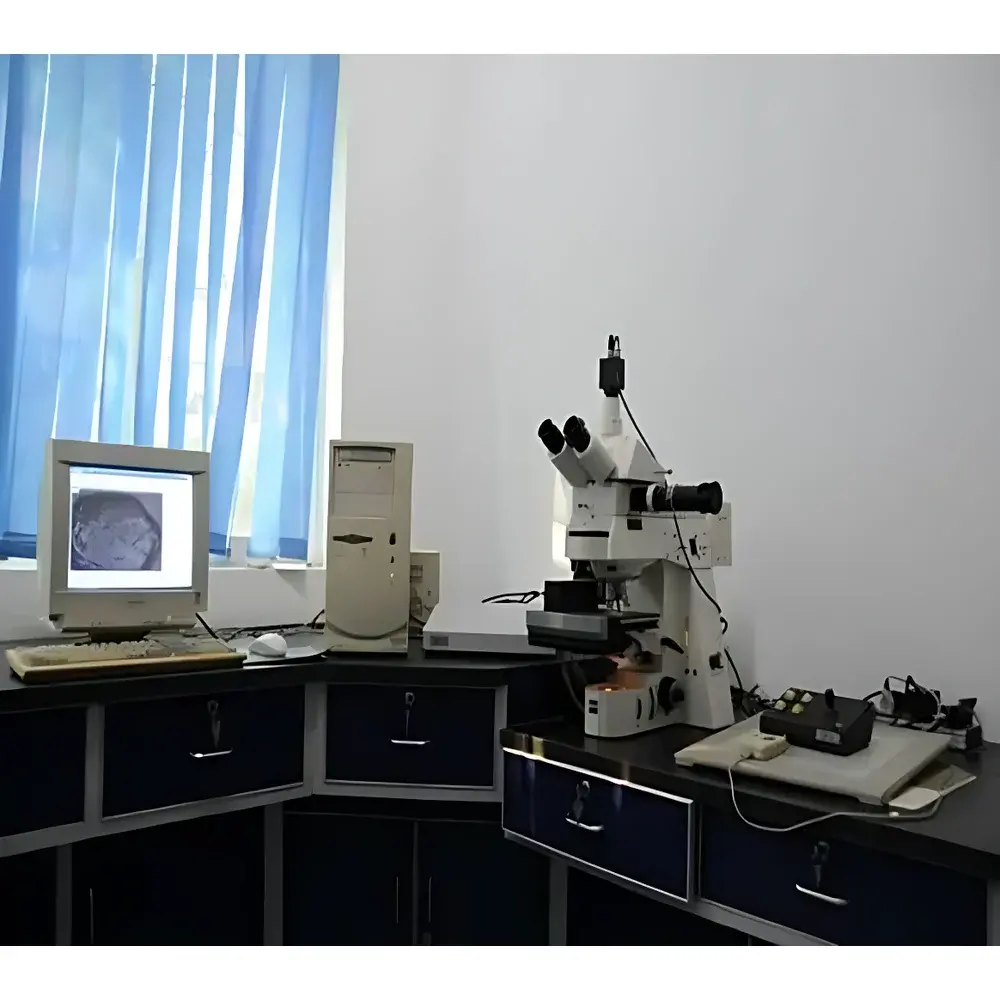
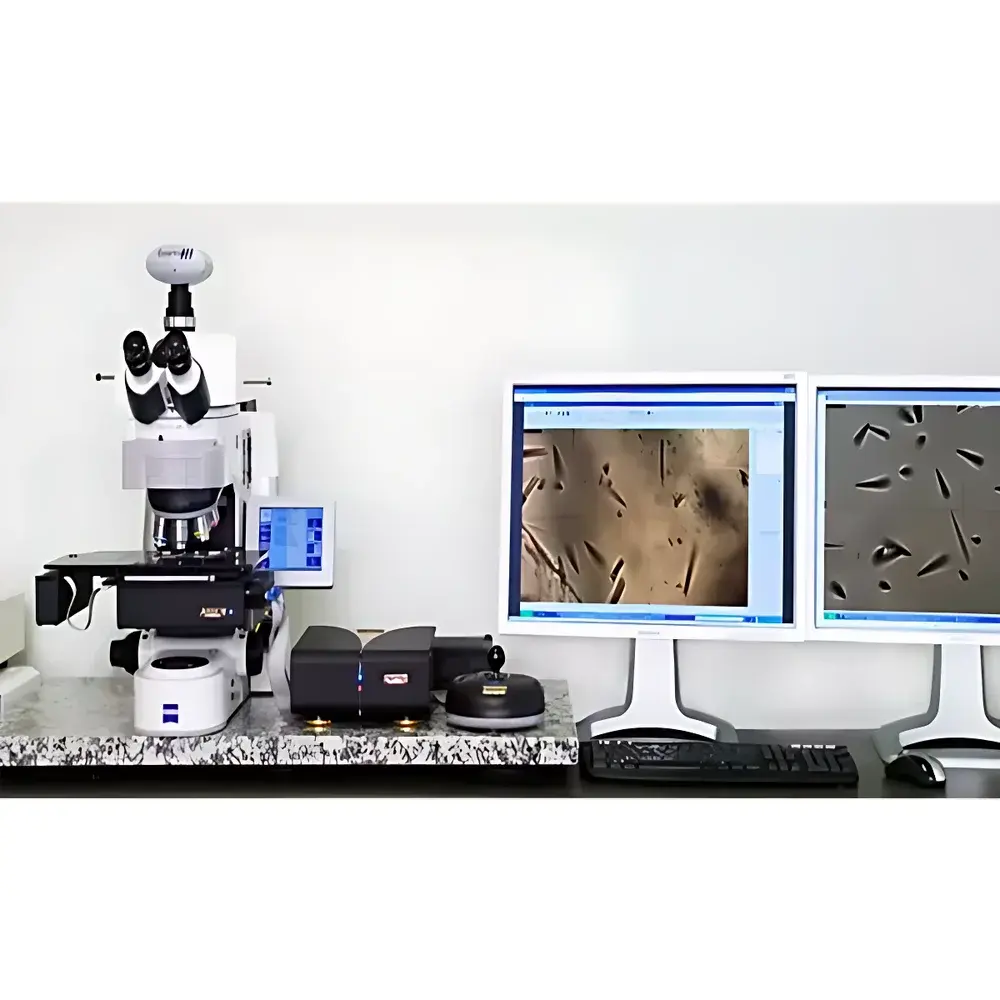
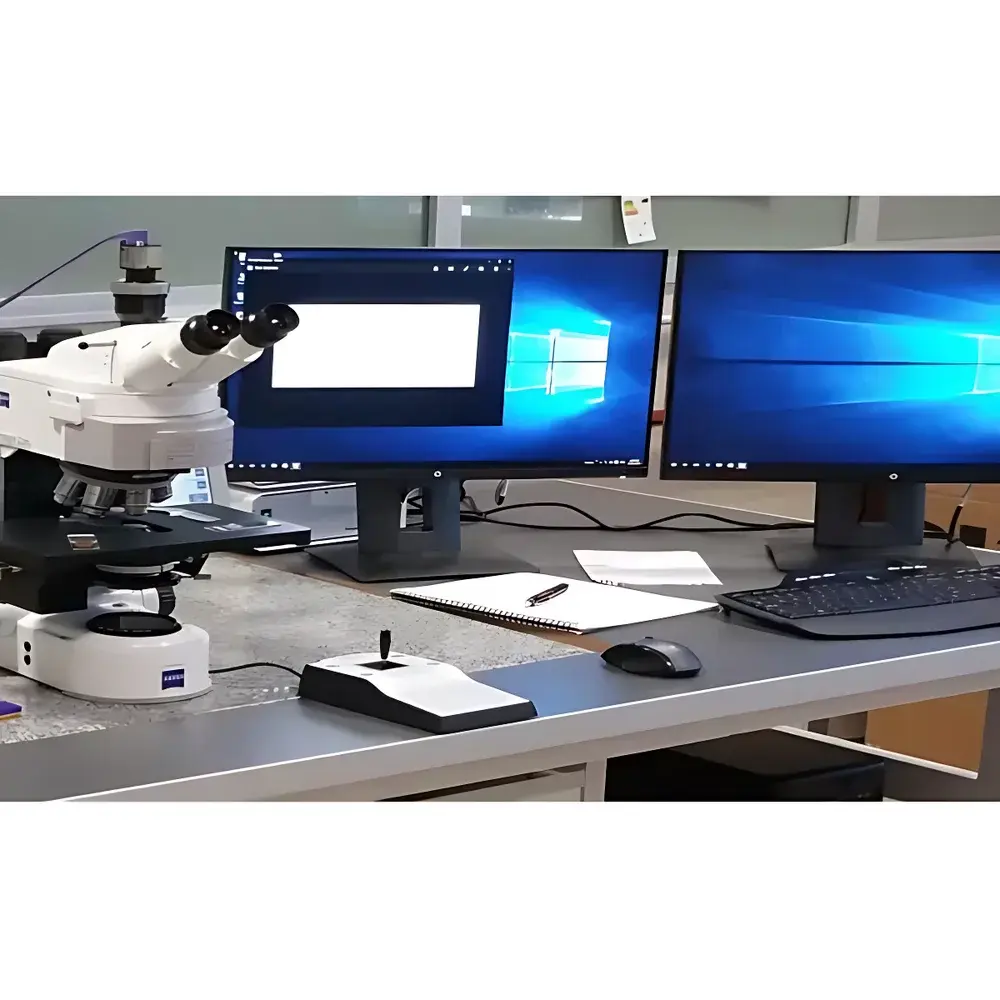
RELION Ni Fission Track Imaging and Analysis System
| Brand | RELION |
|---|---|
| Origin | USA |
| Manufacturer Type | Authorized Distributor |
| Import Status | Imported |
| Model | Ni Host Unit |
| Pricing | Upon Request |
Overview
The RELION Ni Fission Track Imaging and Analysis System is a fully automated, high-precision digital microscopy platform engineered for thermochronological research and geological age determination via fission track analysis (FTA) of apatite and zircon. It operates on the principle of optical detection and quantitative morphometric analysis of latent damage trails—fission tracks—induced by spontaneous fission of 238U atoms and revealed through controlled chemical etching. The system integrates advanced motorized optics, sub-micron precision motion control, and multi-modal illumination (transmitted and reflected light) to support both conventional etched-track counting and state-of-the-art 3D track geometry reconstruction. Designed in collaboration with the Melbourne Thermochronology Group and Autoscan System Pty Ltd, the Ni platform delivers metrologically traceable measurements compliant with ISO/IEC 17025-accredited laboratory practices and aligned with ASTM D7974–16 (Standard Guide for Fission Track Dating) and IUGS-recommended protocols for apatite fission track thermochronology.
Key Features
- Fully automated optical metallographic microscope with EC-design plan-apochromatic objectives (2.5×, 5×, 10×, 20×, 50×, 100×), enabling diffraction-limited resolution across magnification ranges.
- Z-axis autofocus with 10 nm step resolution and repeatable axial positioning—critical for precise focal plane stacking in 3D track reconstruction.
- Motorized XY stage (75 mm × 50 mm travel) with 0.1 µm resolution and ±1 µm repeatability, supporting large-area automated scanning and coordinate-referenced mapping.
- High-speed CMOS camera (≥4.19 MP, 2048 × 2048 pixels; ≥40 fps frame rate) with real-time lag-free preview, synchronized acquisition, and hardware-triggered capture for time-critical etch monitoring.
- Dual-path illumination system featuring a 6-position universal achromatic turret for seamless switching between brightfield transmitted light, reflected light, and reserved functional modes—including DIC-compatible alignment positions.
- Active anti-vibration table (55–90 lb load capacity; horizontal resonance: 6.3 Hz; vertical resonance: 6.8 Hz) ensuring mechanical stability during long-duration auto-scans and nanoscale focusing routines.
Sample Compatibility & Compliance
The RELION Ni system is optimized for polished thin sections and grain mounts of apatite, zircon, and titanite—materials routinely used in low-temperature thermochronology. Its dual-illumination architecture enables simultaneous evaluation of etch pit morphology under transmitted light (for track contrast enhancement) and surface topography under reflected light (for scratch identification and C-axis orientation assessment). All software modules comply with data integrity requirements under FDA 21 CFR Part 11 when configured with audit trail, electronic signature, and role-based access controls. Exported coordinate data (in ASI Resolution, Cameca, NewWave, and Horiba XploRA+ formats) ensures full interoperability with laser ablation ICP-MS, electron microprobe, and Raman microspectroscopy workflows—facilitating multi-technique correlation studies within GLP/GMP-aligned geochronology laboratories.
Software & Data Management
Track Studio Suite Version 4 comprises two tightly integrated components: TrackWorks 4 (microscope control and image acquisition) and FastTracks 4 (automated fission track recognition, measurement, and statistical analysis). Key software capabilities include: automatic confined and semi-confined track length measurement in true 3D space; C-axis identification and calculation of Dpar/Dper anisotropy parameters; holographic stack reconstruction from registered Z-series; and offline radial detection using fused transmitted/reflected image datasets. The new Training Module overlays expert-derived reference annotations onto novice-generated results, automatically highlighting discrepancies for guided review and pedagogical feedback—supporting competency-based analyst qualification per ISO/IEC 17025 Clause 6.2. All image metadata, processing logs, and measurement histories are stored in a relational database with version-controlled backups and exportable CSV/JSON reports for third-party statistical validation.
Applications
The RELION Ni system supports a broad spectrum of applications in tectonic geomorphology, basin evolution modeling, hydrocarbon system analysis, and nuclear forensic sample characterization. It enables quantification of thermal history through track length distribution analysis (e.g., mean length, standard deviation, skewness), closure temperature estimation, and annealing kinetics modeling. Its ability to resolve 3D semi-track geometry beneath the sample surface allows direct calibration of etch bias correction factors—reducing systematic uncertainty in single-grain age calculations. In applied settings, the platform supports regulatory compliance testing for uranium-bearing mineral concentrates, verification of irradiation-dose records in nuclear safeguards, and microstructural characterization of irradiated cladding materials in spent fuel studies.
FAQ
Does the system support both apatite and zircon fission track analysis?
Yes—the Ni platform is validated for apatite, zircon, and titanite, with material-specific etch protocols embedded in FastTracks 4 and adjustable via user-defined parameter sets.
Can track length measurements be performed offline after acquisition?
Yes—Track Studio Suite Version 4 permits full offline reprocessing of acquired Z-stacks, including re-measurement of track lengths, re-identification of C-axis orientation, and re-calculation of Dpar/Dper without requiring re-scanning.
Is the scratch removal algorithm applicable to all etched mineral types?
The automated scratch detection module is calibrated for apatite and has been extended to zircon via user-configurable intensity gradient thresholds and morphological filters.
What hardware upgrades are required to run Version 4 software?
Version 4 leverages modern GPU-accelerated image processing; minimum requirements include an NVIDIA GTX 1060 or equivalent, 32 GB RAM, and Windows 10/11 64-bit with .NET Framework 6.0.
How is measurement traceability ensured across multiple analysts?
Each measurement session logs operator ID, timestamp, instrument configuration hash, and software build number. Audit trails are exportable and support retrospective verification under ISO/IEC 17025 Clause 7.7.






