
RELION VI Cathodoluminescence (CL) Instrument
| Brand | RELION |
|---|---|
| Origin | USA |
| Manufacturer Type | Authorized Distributor |
| Origin Category | Imported |
| Model | RELION VI CL |
| Price Range | USD 42,000 – 70,000 |
| Power Supply | 220 V AC, 50–100 Hz |
| Operating Environment | Temperature < 30 °C, Relative Humidity < 60 % |
| Vacuum Chamber | Dual lead-glass windows (top Reentrant Window & bottom transmission window), minimum working distance 5–7 mm for high-NA objectives (e.g., 50×) |
| Ultimate Vacuum | 0.25 Pa |
| Electron Gun | Horizontal cold-cathode type |
| Acceleration Voltage | 0–30 kV (adjustable in 100 V increments |
| Beam Current | 0.15–1 mA typical, up to 5 mA max (overcurrent protection) |
| Beam Focus | Continuous defocusing-to-point focusing control |
| Sample Holders | Triple-slot thin-section tray, granular sample holder, flat plate holder, and tray mount |
| Vacuum System | High-performance turbomolecular pump with foreline valve, anti-fogging trap, dual vibration-dampened vacuum hoses |
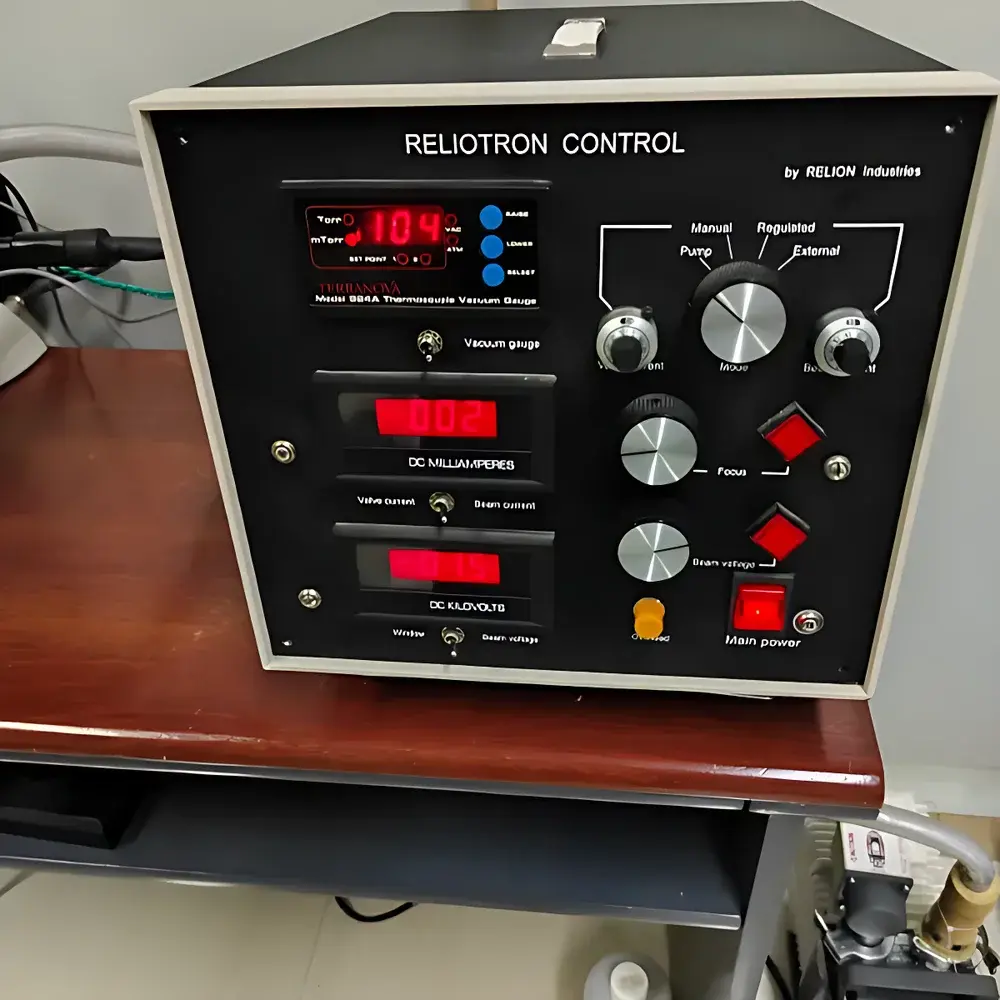
| Digital Interface | Real-time display of voltage, current, vacuum pressure, operation mode (auto/manual), HV status, and electron gun output limits |
Overview
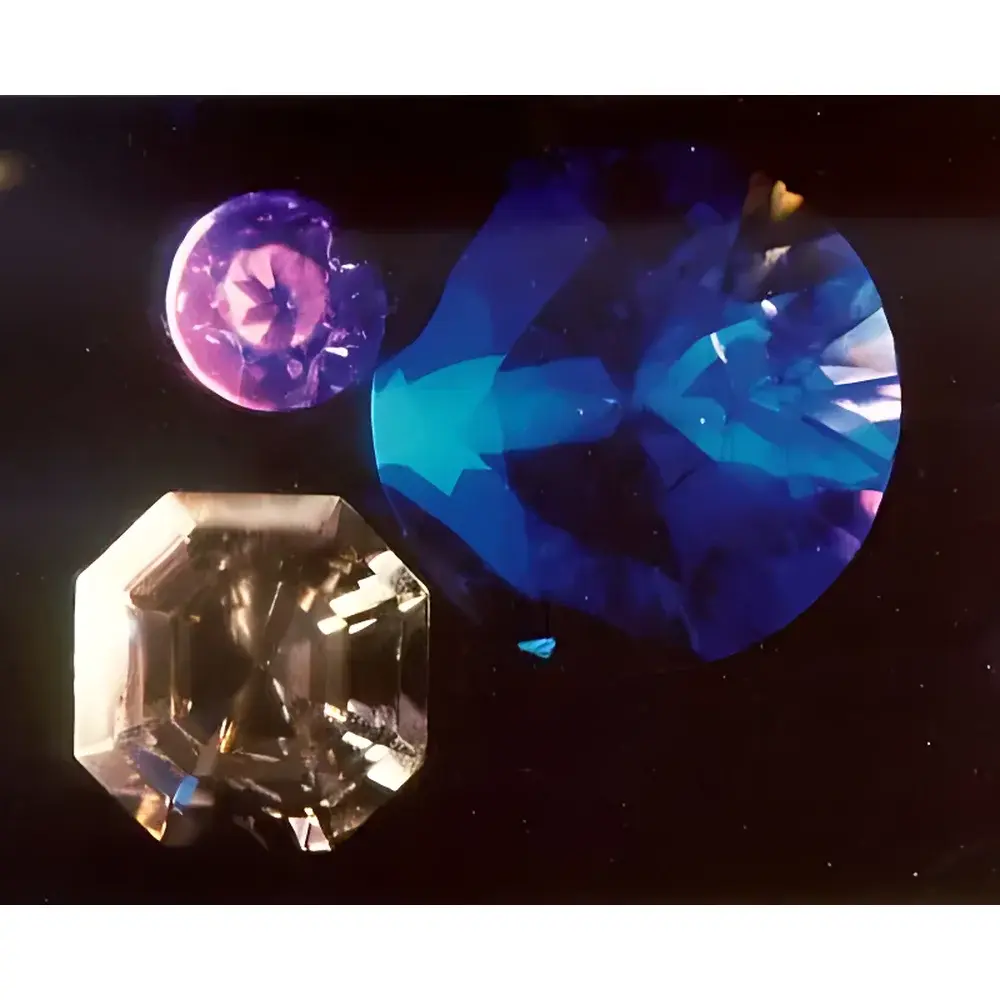
The RELION VI Cathodoluminescence (CL) Instrument is a high-vacuum, microanalytical platform engineered for quantitative and qualitative cathodoluminescence imaging and spectroscopy in geological, metallurgical, and materials science laboratories. It operates on the fundamental principle of electron-beam-induced luminescence: when a focused, high-energy electron beam impinges on a solid specimen under vacuum, lattice defects, trace activator ions (e.g., Eu²⁺, Mn²⁺, Cr³⁺), or structural imperfections within crystalline phases emit photons in the UV–visible–NIR range. This intrinsic optical response provides spatially resolved information on compositional zoning, growth history, radiation damage, and defect distribution—critical parameters for petrographic interpretation, provenance studies, and semiconductor defect analysis. The RELION VI integrates a horizontal cold-cathode electron source with magnetic beam steering—ensuring zero energy loss during directional redirection—and enables rapid vacuum attainment (<60 s to 100 mTorr / 13.3 Pa, <10 min to ultimate 0.25 Pa), minimizing beam-induced sample degradation and maximizing experimental throughput.
Key Features
- Horizontal cold-cathode electron gun with magnetic beam deflection—enabling stable, low-noise emission without thermal drift or filament replacement
- Adjustable acceleration voltage (0–30 kV) and beam current (0.15–5 mA), supporting both high-resolution imaging and deep-penetration excitation
- Dual-window vacuum chamber: bottom transmission window compatible with standard transmitted-light microscopy; top Reentrant Window optimized for high-magnification objectives (≥50×) with 5–7 mm working distance
- Modular sample handling system accommodating standard 26 × 46 mm thin sections (up to three simultaneously), loose grains, chips, and bulk specimens—no conductive coating required for most insulating minerals
- Integrated digital control interface displaying real-time voltage, current, vacuum pressure, operational mode, HV enable status, and gun output limits
- Vibration-isolated vacuum architecture with dual flexible hoses and replaceable foreline components for long-term reliability and serviceability
Sample Compatibility & Compliance
The RELION VI supports direct analysis of uncoated geological thin sections, polished metallographic mounts, ceramic cross-sections, and semiconductor wafers. Its vacuum chamber design conforms to ASTM E1558–22 (Standard Guide for Cathodoluminescence Microscopy of Inorganic Materials) and supports GLP-compliant documentation workflows when paired with validated acquisition software. All mechanical and electrical subsystems comply with IEC 61010-1:2010 for laboratory equipment safety. Lead-glass viewing windows meet ANSI Z87.1 impact and radiation shielding requirements. The instrument is compatible with ISO/IEC 17025-accredited labs performing mineralogical characterization per USGS and BGS analytical protocols.
Software & Data Management
The RELION VI interfaces via USB 3.0 with proprietary CL Acquisition Suite v4.x, enabling synchronized image capture, intensity calibration, spectral mapping, and overlay with optical or SEM reference frames. Software features include timestamped metadata logging, user-accessible audit trails, and export formats compliant with FAIR data principles (TIFF, HDF5, CSV). Optional integration with FDA 21 CFR Part 11–compliant electronic signature modules supports regulated environments. Raw CL intensity data are stored with full traceability to acquisition parameters—including kV, µA, dwell time, stage coordinates, and vacuum history—facilitating retrospective reprocessing and inter-laboratory comparison.
Applications
- Petrographic analysis of zircon, apatite, and feldspar for U–Pb geochronology and metamorphic overprint identification
- Textural mapping of quartz and feldspar in volcanic rocks (e.g., rhyolites, phonolites) to distinguish magmatic vs. hydrothermal histories
- Defect characterization in III–V semiconductors and wide-bandgap oxides (e.g., GaN, AlN, ZnO)
- Metallurgical phase identification in steel microstructures and slag inclusions
- Correlative CL–EDS–EBSD workflows using optional EDX detector and MICRODRILL SAMPLING attachment for site-specific microsampling
- Quantitative CL intensity profiling across growth zones, validated against NIST-traceable luminescent standards
FAQ
What vacuum level is required for optimal CL signal acquisition?
A base pressure ≤0.25 Pa is recommended for high-sensitivity detection; routine imaging achieves stable signal at 100 mTorr (13.3 Pa) within 60 seconds.
Can the RELION VI be used with upright and inverted microscopes?
Yes—its modular mounting interface accommodates both configurations, provided ≥45 mm vertical clearance exists between objective nosepiece and stage surface.
Is conductive coating necessary for non-conductive samples?
No—cold-cathode operation minimizes charging; most silicates, carbonates, and phosphates yield artifact-free CL without sputter coating.
How is beam alignment performed during setup?
Alignment is fully software-guided using integrated beam position sensors and real-time current feedback; no manual collimation tools are required.
What maintenance intervals are recommended for the electron gun and vacuum system?
Cold-cathode gun requires no scheduled replacement; turbomolecular pump service is recommended every 12 months or after 5,000 hours of operation, per manufacturer’s logbook protocol.




