
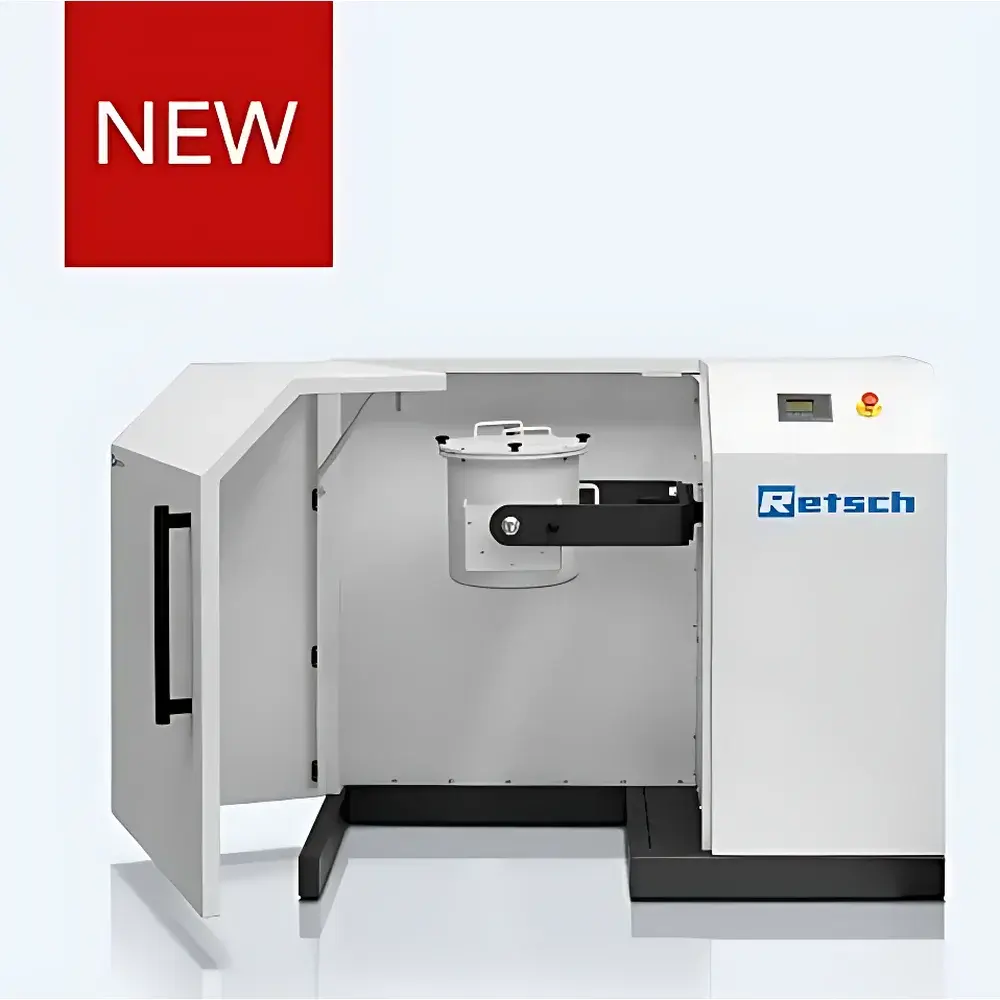
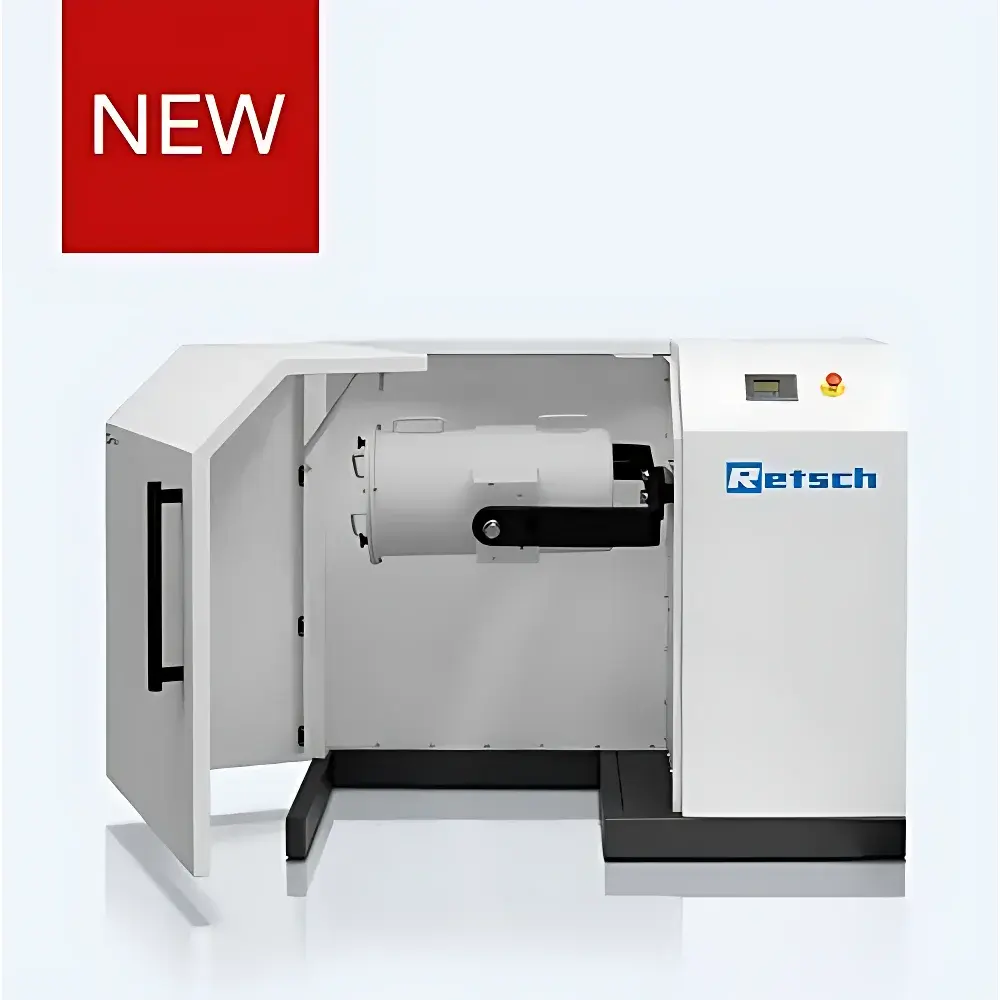
Retsch TM 300 Heavy-Duty Tumbling Ball and Rod Mill
| Brand | Retsch |
|---|---|
| Origin | Germany |
| Model | TM 300 |
| Instrument Type | Tumbling Mill (Ball & Rod) |
| Sample Suitability | Hard, Brittle, Fibrous Materials (Dry or Wet Grinding) |
| Feed Size | < 20 mm |
| Final Particle Size | < 20 µm (ball milling), < 150 µm (rod milling) |
| Batch Capacity | 10–20 L |
| Rotational Speed | 0–80 rpm |
| Motor Power | 750 W |
| Dimensions (W × H × D) | 1500 × 1200 × 700 mm |
| Net Weight | 295 kg |
| Digital Timer Channels | 3 |
| Safety Enclosure | Acoustic & Mechanical Guard Housing |
Overview
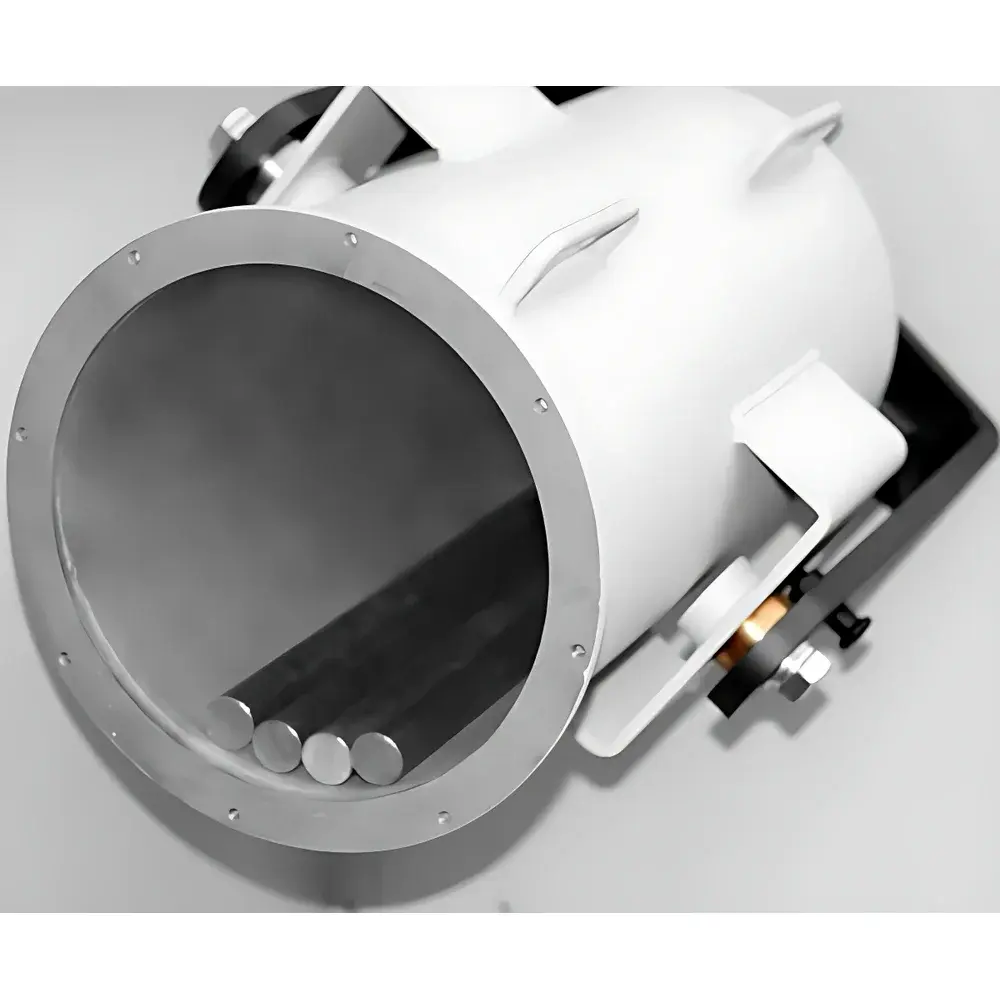
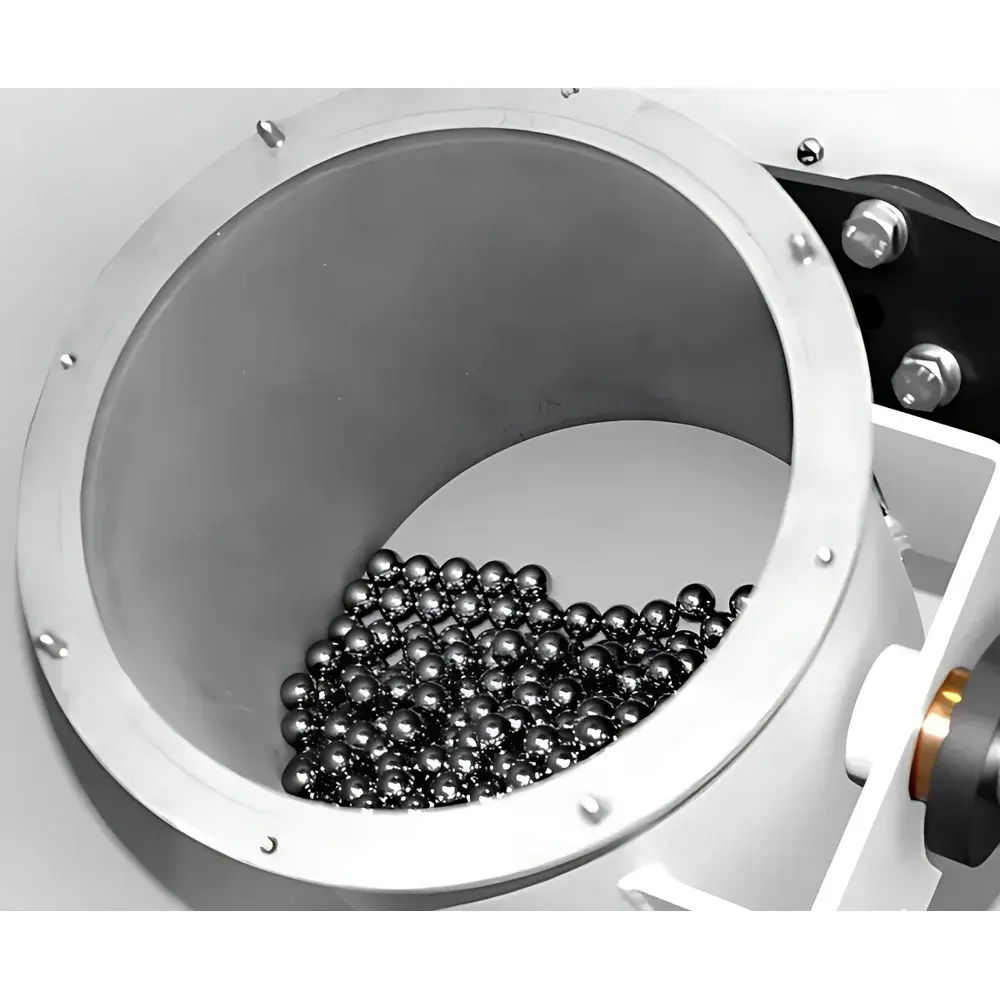
The Retsch TM 300 is a heavy-duty, laboratory-scale tumbling mill engineered for high-capacity size reduction and homogenization of hard, brittle, or fibrous materials under both dry and wet grinding conditions. Operating on the principle of gravitational impact and shear forces, the TM 300 rotates a horizontally mounted cylindrical grinding drum—containing either grinding balls or rods—around its central axis. As the drum rotates, the grinding media lift and cascade, repeatedly impacting and shearing the sample material against the drum wall and each other. This mechanical energy transfer enables controlled comminution down to sub-20 µm particle sizes in ball-milling mode, while rod milling provides gentler, more uniform size reduction suitable for intermediate grinding or blending applications. Designed for reproducible, scalable batch processing, the TM 300 serves as a critical pre-treatment tool in analytical workflows requiring representative sub-sampling, homogenization prior to XRF or ICP analysis, or preparation of feedstock for advanced characterization techniques such as SEM-EDS or laser diffraction particle sizing.
Key Features
- Robust gearmotor drive with solid-state speed controller and integrated thermal overload protection, enabling precise rotational speed adjustment from 0 to 80 rpm
- Interchangeable grinding configurations: standardized ball mill and rod mill assemblies, each optimized for distinct fragmentation mechanisms and final particle distribution profiles
- Quick-release hinged drum lid and tilting drum mechanism for efficient, operator-safe discharge and cleaning
- Modular sample collection system featuring detachable, sieve-integrated buckets with interchangeable mesh inserts (for ball separation only)
- Acoustically insulated safety housing with interlocked access door, compliant with EN 61000-6-4 (EMC) and EN ISO 12100 (machine safety)
- Digital timer with three independent programmable channels for time-controlled start/stop sequences and parameter recall
- Sealed drum gasketing ensures containment integrity during wet grinding and prevents cross-contamination between batches
- Linear rail-guided drum mounting simplifies drum removal and maintenance without specialized tools
Sample Compatibility & Compliance
The TM 300 accommodates a broad spectrum of inorganic and organic sample types—including ores, ceramics, alloys, pharmaceutical granules, soil aggregates, plant tissues, and polymer composites—provided feed particles are ≤20 mm. Its dual-mode capability supports both aggressive attrition (ball milling) and controlled elongation-based fracture (rod milling), making it suitable for applications governed by ASTM E11, ISO 3310-1, and USP <788> particulate matter testing protocols. All wet-grinding operations comply with GLP documentation requirements when paired with Retsch’s optional audit-trail-enabled software (see Software & Data Management). The unit meets CE marking directives and is designed for integration into ISO/IEC 17025-accredited laboratories performing method validation per ICH Q5C and Q7 guidelines.
Software & Data Management
While the TM 300 operates via an intuitive front-panel interface, it is fully compatible with Retsch’s RETSCHcontrol software suite (optional). This platform enables remote parameter configuration, real-time monitoring of rotational speed and elapsed time, automated logging of operational parameters per batch—including date/time stamp, speed setpoint, duration, and user ID—and export of CSV-formatted reports traceable to 21 CFR Part 11-compliant electronic records. Audit trails support regulatory inspections in GMP environments, particularly for raw material qualification in pharmaceutical and medical device manufacturing. Method templates can be saved, version-controlled, and locked to ensure procedural consistency across shifts and operators.
Applications
- Preparation of geochemical reference materials (e.g., certified rock powders for ICP-MS calibration)
- Homogenization of heterogeneous environmental samples (sediments, sludges, fly ash) prior to heavy metal leaching tests (TCLP, SPLP)
- Particle size conditioning of catalyst supports and battery electrode precursors in R&D labs
- Blending of multi-component ceramic formulations with minimal contamination risk
- Reduction of friable pharmaceutical excipients for dissolution rate studies
- Fragmentation of composite materials for microstructural analysis (e.g., fiber dispersion assessment in CFRP)
FAQ
What is the maximum recommended fill level for optimal grinding efficiency?
For consistent results, the drum volume should not exceed 30–40% with grinding media plus sample—typically corresponding to 10–20 L total batch mass depending on material density and desired fineness.
Can the TM 300 be used for cryogenic grinding?
No—the standard configuration is not rated for liquid nitrogen cooling; however, custom jacketed drums with external coolant ports are available upon engineering consultation.
Is the drum seal compatible with organic solvents in wet grinding?
Yes—the FKM (Viton®) sealing ring resists common solvents including ethanol, acetone, and toluene; alternative EPDM or PTFE seals can be specified for aggressive chemistries.
How often does the gearmotor require maintenance?
Under normal operation, lubrication intervals are specified at 5,000 operating hours; full service—including bearing inspection and torque verification—is recommended annually or after 2000 cycles, whichever occurs first.
Does Retsch provide application-specific method development support?
Yes—qualified application scientists offer remote or on-site protocol optimization, including media selection (ball/rod size, material), speed profiling, and time–fineness correlation studies, documented in formal technical notes compliant with ISO/IEC 17025 Annex A.2.



