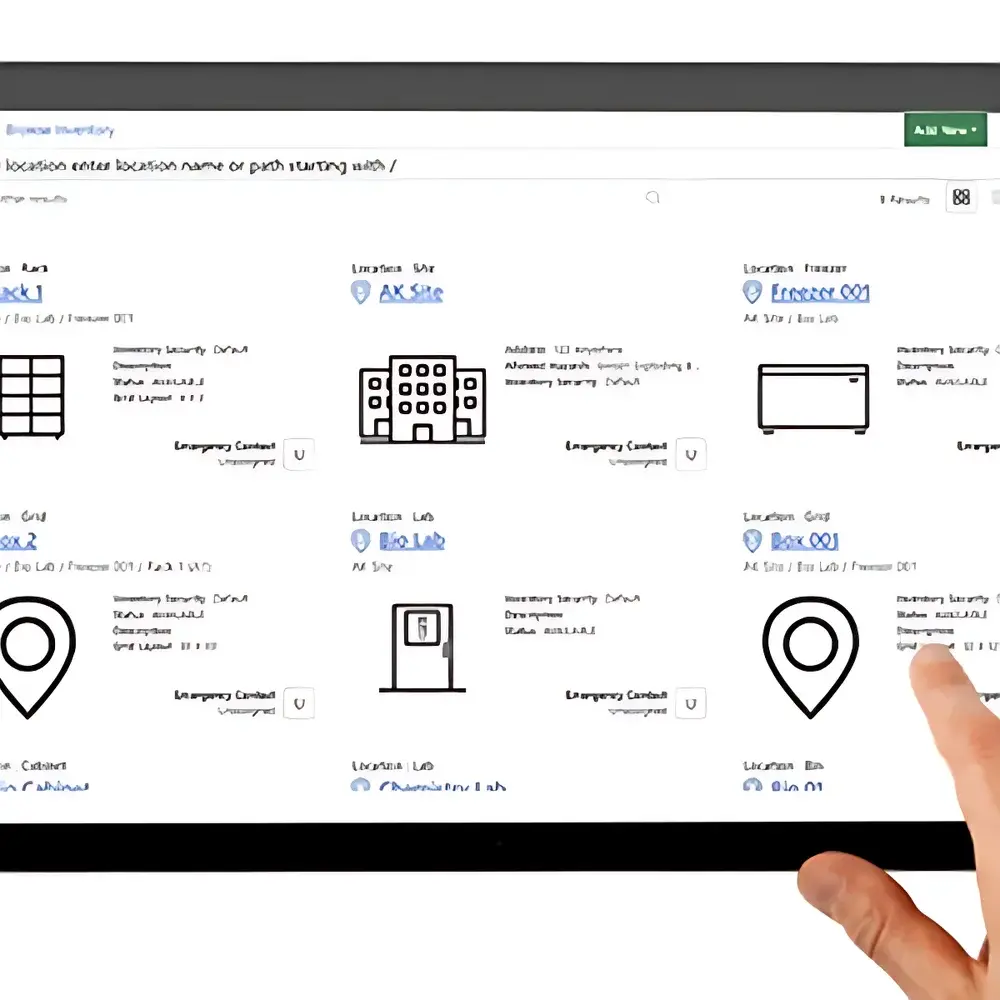
Revvity Signals E-Notebook — Electronic Laboratory Notebook (ELN) Software
| Brand | Revvity |
|---|---|
| Origin | Shanghai, China |
| Manufacturer Type | Original Equipment Manufacturer (OEM) |
| Product Category | Domestic |
| Model | Revvity Signals E-Notebook |
| Pricing | Available upon Request |
Overview
Revvity Signals E-Notebook is a validated, enterprise-grade Electronic Laboratory Notebook (ELN) platform engineered for regulated R&D environments in pharmaceuticals, biotechnology, and chemical development. Built on a secure, scalable architecture, it replaces paper-based lab notebooks with a compliant digital system that captures, organizes, and preserves experimental data as attributable, legible, contemporaneous, original, and accurate (ALCOA+) records. The system implements core principles of Good Documentation Practice (GDP), aligns with FDA 21 CFR Part 11, EU Annex 11, NMPA Guidelines for Computerized Systems in Drug Development, and GLP/GMP requirements for electronic records and signatures. Unlike generic note-taking tools, Signals E-Notebook embeds scientific context directly into the workflow—most notably through native integration of ChemDraw®, enabling real-time chemical structure entry, reaction sketching, and property annotation without external copy-paste or format conversion.
Key Features
- Native ChemDraw® integration for chemical structure drawing, reaction mapping, and molecular property inference within the ELN interface
- Configurable, role-based templates supporting standardized protocols across assay development, synthetic chemistry, analytical method validation, and cell line characterization
- Automated audit trail with immutable, time-stamped entries tracking every action—including creation, modification, deletion, and approval—fully compliant with 21 CFR Part 11 §11.10 and Annex 11 §5.2
- Electronic signature workflows with multi-level authorization (e.g., analyst → reviewer → approver) and justification capture for critical decisions
- Searchable metadata indexing across text, structures, spectra, images, and instrument-generated files (e.g., .csv, .pdf, .dx, .jdx)
- Granular access control enforcing separation of duties: data entry, review, reporting, and system administration permissions are independently assignable
- Version-controlled experiment records with baseline snapshots and change comparison capabilities
- Integrated electronic sign-off for batch records, SOP adherence logs, and deviation documentation
Sample Compatibility & Compliance
Signals E-Notebook does not process physical samples but serves as the authoritative digital repository for all experimental evidence generated across laboratory instruments—including HPLC, LC-MS, NMR, qPCR, plate readers, and automated synthesis platforms. It supports ingestion of structured and unstructured data via API, file upload, and direct instrument connectivity. Regulatory compliance is embedded at the architectural level: cryptographic hashing ensures record integrity; session timeouts and automatic lockout prevent unauthorized access; and periodic validation reports support internal audits and regulatory inspections. The system has undergone formal validation per IQ/OQ/PQ protocols and maintains documented traceability to ISO/IEC 17025:2017 (for testing labs), ICH GCP, and USP Analytical Instrument Qualification guidelines where applicable.
Software & Data Management
The platform operates as a browser-based SaaS or on-premises deployment, compatible with Windows and macOS clients. All data resides in encrypted storage (AES-256 at rest, TLS 1.2+ in transit), with optional integration into enterprise identity management systems (e.g., Active Directory, Okta). Data export adheres to FAIR principles (Findable, Accessible, Interoperable, Reusable): users may generate PDF/A-2b–compliant archival reports, extract structured datasets in CSV/JSON for downstream analytics, or push curated results to LIMS or SDMS via RESTful APIs. Audit logs are retained for minimum 15 years per default policy, configurable to meet jurisdiction-specific retention mandates. System-generated electronic records satisfy FDA 21 CFR Part 11 Subpart B requirements for record retention, authenticity, and reproducibility.
Applications
- Accelerating IND/NDA submissions by ensuring raw experimental data, observations, and conclusions are immediately available in audit-ready format
- Enabling cross-functional collaboration between medicinal chemistry, DMPK, and toxicology teams through shared, versioned project workspaces
- Supporting patent prosecution with timestamped, witnessed experimental records demonstrating conception and reduction to practice
- Reducing rework cycles by eliminating transcription errors and enabling rapid root-cause analysis via full data lineage tracing
- Facilitating AI/ML model training through consistent, semantically enriched experimental metadata—particularly valuable for predictive ADMET modeling and reaction outcome forecasting
- Streamlining internal quality reviews and external regulatory inspections with pre-built compliance dashboards and inspection response packages
FAQ
Is Signals E-Notebook validated for use in GxP-regulated environments?
Yes. Revvity provides documented IQ/OQ protocols and validation support packages. Customers perform site-specific PQ under their own quality oversight per FDA guidance and internal SOPs.
Can the system integrate with existing LIMS or ERP platforms?
Yes. Standard REST APIs, HL7, and flat-file exchange mechanisms enable bidirectional synchronization with major LIMS (e.g., LabWare, Thermo Fisher SampleManager), ERP (e.g., SAP), and electronic batch record (EBR) systems.
Does it support electronic signatures compliant with 21 CFR Part 11?
Yes. The system enforces identity verification, dual authorization for critical actions, and complete audit trail linkage—meeting all technical and procedural requirements of Part 11 Subpart B.
How is data backup and disaster recovery handled?
On-premises deployments follow customer-defined IT policies; cloud-hosted instances include automated daily backups, georedundant storage, and RPO/RTO SLAs aligned with ISO 22301 business continuity standards.
What training and implementation support is provided?
Revvity offers phased deployment services including workflow analysis, template configuration, user training (role-specific), administrator certification, and ongoing technical support via dedicated customer success managers.
Related Products