
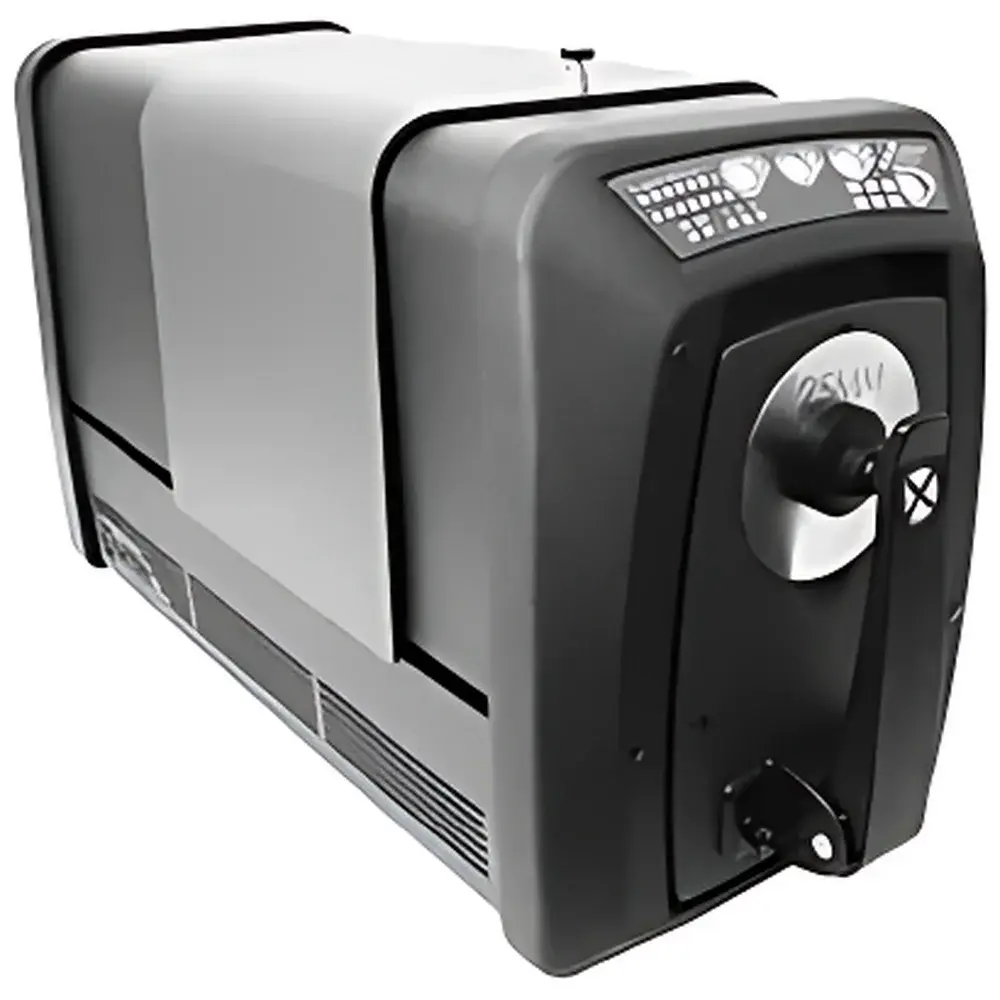
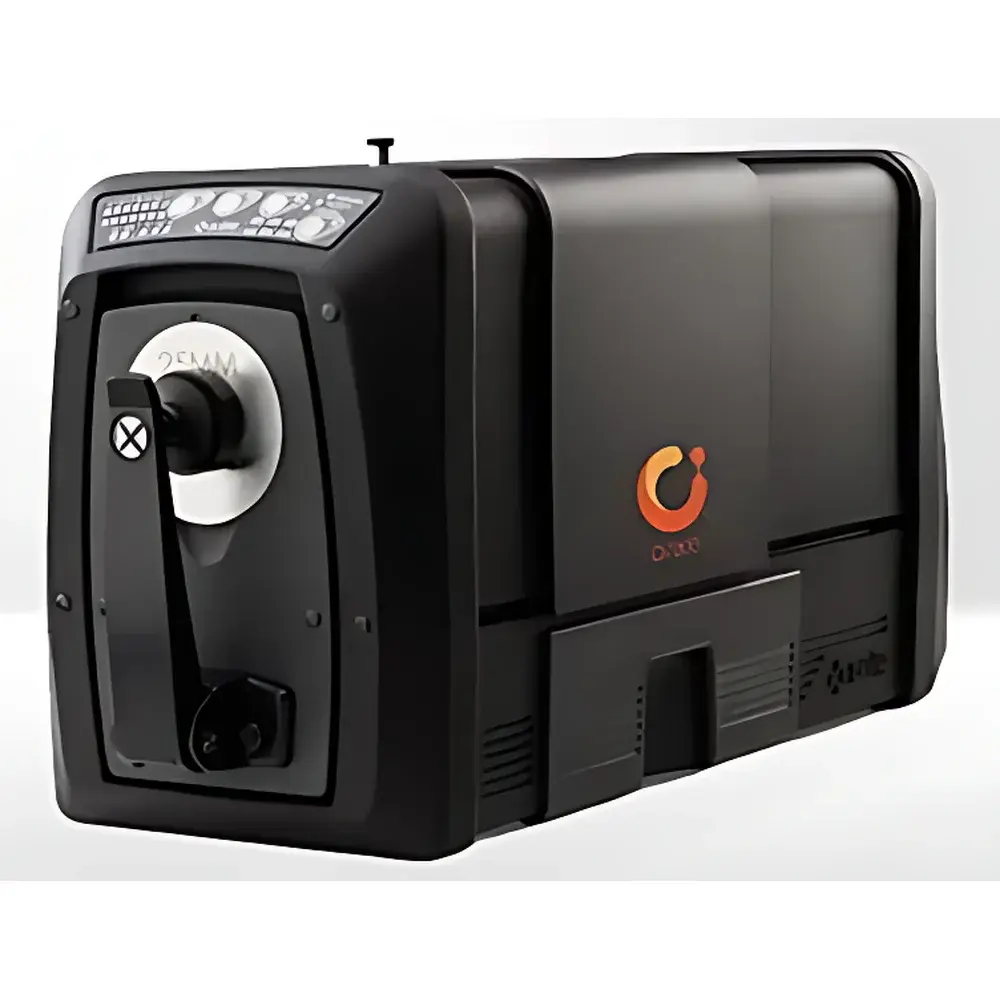
X-Rite Ci7600 Benchtop Spectrophotometer
| Brand | X-Rite |
|---|---|
| Origin | USA |
| Model | Ci7600 |
| Product Type | Spectrophotometric Color Measurement Instrument |
| Instrument Form Factor | Benchtop |
| Optical Geometry | d/8° integrating sphere |
| Light Source | Pulsed Xenon Lamp |
| Spectral Range | 360–750 nm |
| Repeatability (ΔE*₀₀ RMS) | 0.03 |
| UV Control Option | Available |
| Internal Environmental Sensors | Temperature & Relative Humidity |
| Compliance | ASTM E308, CIE No. 15, ISO/CIE 11664, USP <85> (Colorimetric Assay Guidance) |
Overview
The X-Rite Ci7600 Benchtop Spectrophotometer is a precision-engineered instrument designed for high-accuracy color measurement and spectral analysis in industrial quality control laboratories, R&D facilities, and production environments. Operating on the principle of diffuse illumination and 8° viewing geometry (d/8°) with a calibrated integrating sphere, the Ci7600 captures full reflectance and transmittance spectra across the visible spectrum (360–750 nm) using a pulsed xenon lamp—ensuring stable, flash-based illumination without thermal drift or lamp aging artifacts. Its optical architecture meets international standards for colorimetric consistency, including ASTM E308 (for computing tristimulus values from spectral data), ISO/CIE 11664 (CIE colorimetry fundamentals), and CIE Publication No. 15 (specifications for spectrophotometers). The instrument delivers traceable, reproducible color data essential for digital color communication across global supply chains—enabling specification alignment between designers, suppliers, and manufacturing sites under standardized viewing and illuminant conditions (e.g., D65, A, F2).
Key Features
- Pulsed xenon light source providing consistent spectral output over time—eliminating calibration drift associated with tungsten-halogen or LED-based systems.
- d/8° optical geometry with dual-beam compensation and large-area integrating sphere (≥150 mm diameter) for high signal-to-noise ratio and minimized inter-instrument variability.
- Repeatability of ΔE*₀₀ ≤ 0.03 (RMS) under controlled lab conditions, verified against BCRA Series II ceramic standards per ISO 7724-2.
- Integrated temperature and relative humidity sensors log environmental metadata with every measurement—supporting GLP-compliant documentation and root-cause analysis for color shifts attributable to ambient conditions.
- UV-adjustable illumination system with selectable UV cutoff filters (420 nm and 460 nm) for accurate assessment of fluorescent whitening agents (FWAs) in paper, textiles, plastics, and coatings.
- Laser-assisted sample targeting ensures precise aperture alignment; multiple apertures support flexible measurement configurations: three transmission apertures (22 mm, 10 mm, 6 mm) and five reflectance apertures (25 mm, 17 mm, 10 mm, 6 mm, 3.5 mm).
- Robust mechanical design optimized for daily operation in regulated environments—including vibration-dampened base, sealed optical path, and modular electronics for field-replaceable components.
Sample Compatibility & Compliance
The Ci7600 accommodates opaque, translucent, and transparent samples—including solids, powders, pastes, liquids, and films—without requiring custom fixtures in most cases. Its configurable apertures and UV control enable compliant measurement of materials governed by industry-specific color specifications: ISO 2846-1 (printing inks), AATCC Test Method 173 (textile whiteness), TAPPI T485 (paper brightness), and ASTM D2244 (color difference calculation). The instrument supports audit-ready operation under Good Manufacturing Practice (GMP) and Good Laboratory Practice (GLP) frameworks, with optional 21 CFR Part 11–compliant software modules that enforce electronic signatures, role-based access control, and immutable audit trails.
Software & Data Management
The Ci7600 operates natively with X-Rite’s Color iQC and Color iMatch software platforms, enabling seamless integration into enterprise color management workflows. These applications support automated pass/fail evaluation against tolerance ellipsoids (CIEDE2000, CMC, DIN99), spectral database creation, batch reporting, and SPC charting. All spectral data are stored in vendor-neutral formats (e.g., *.qtx, *.cie) compatible with third-party LIMS and PLM systems. Firmware updates and calibration verification reports are digitally signed and timestamped—ensuring data integrity throughout the instrument lifecycle.
Applications
- Quality assurance of incoming raw materials (pigments, resins, fibers) against master standards.
- Process validation and in-line color release testing for automotive trim, packaging films, and consumer electronics housings.
- Formulation development and spectral matching in paint, ink, and cosmetic laboratories.
- Regulatory compliance testing for pharmaceutical tablet coating uniformity (per USP ) and medical device color consistency.
- Inter-laboratory correlation studies supporting ASTM D7919 (inter-instrument agreement protocols) and ISO 13655 (spectral measurement of printed materials).
FAQ
What spectral resolution does the Ci7600 provide?
The Ci7600 acquires spectra at 10 nm intervals across 360–750 nm, with interpolation to 1 nm for CIE tristimulus computation per ASTM E308 Annex A2.
Is the Ci7600 suitable for measuring fluorescent materials?
Yes—the optional UV balance module enables quantitative evaluation of fluorescence intensity and spectral contribution, critical for paper, detergents, and optical brighteners.
How is instrument calibration maintained?
The Ci7600 performs automatic self-calibration at startup and after each temperature shift >1°C; NIST-traceable ceramic calibration tiles are used for daily verification.
Can measurement data be exported to ERP or MES systems?
Yes—CSV, XML, and SQL-compatible outputs are supported via Color iQC’s API interface and scheduled export functions.
Does the Ci7600 meet FDA requirements for color-critical pharmaceutical applications?
When deployed with validated software (Color iQC v7.5+), it satisfies 21 CFR Part 11 requirements for electronic records and signatures in regulated environments.




